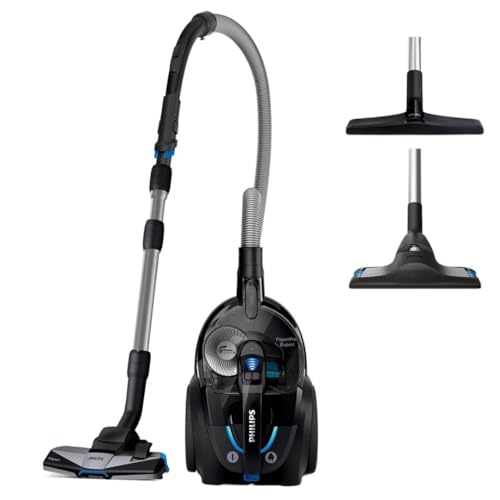
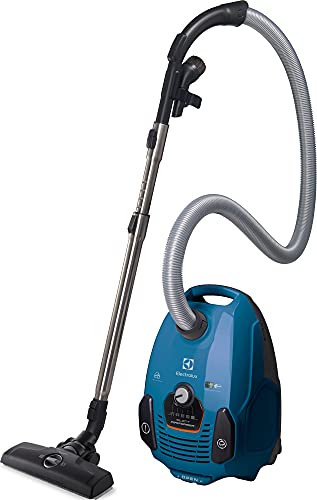
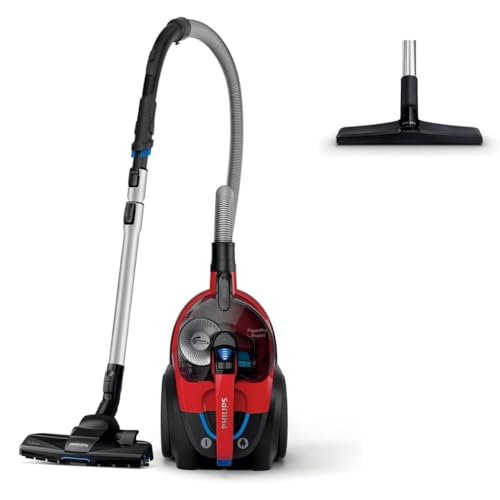
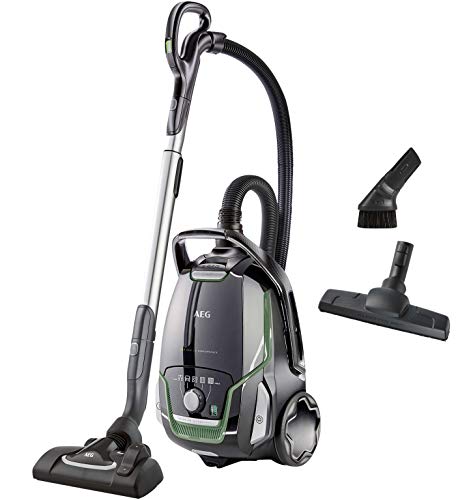
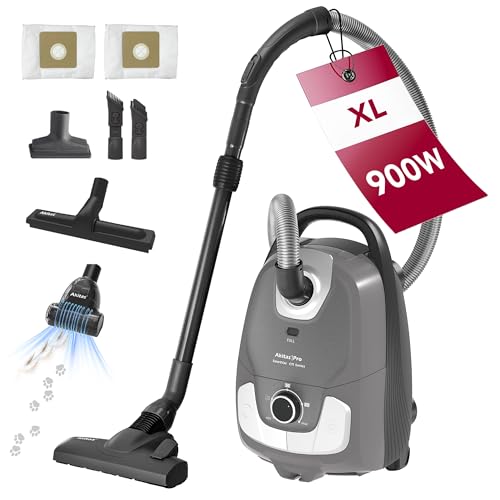
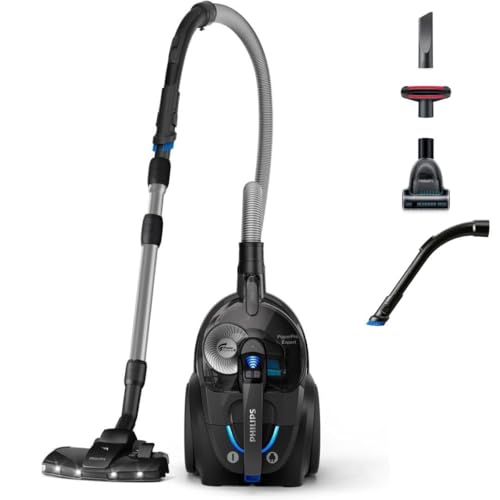
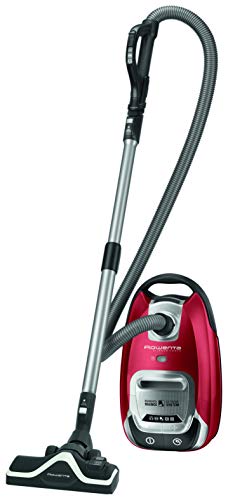
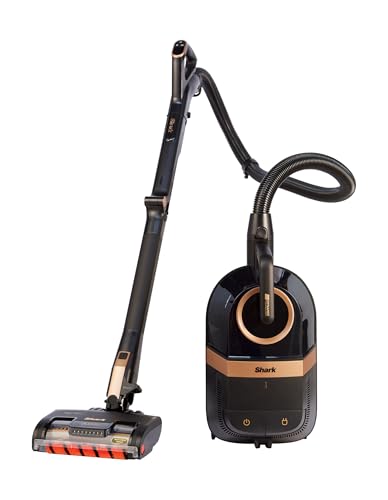
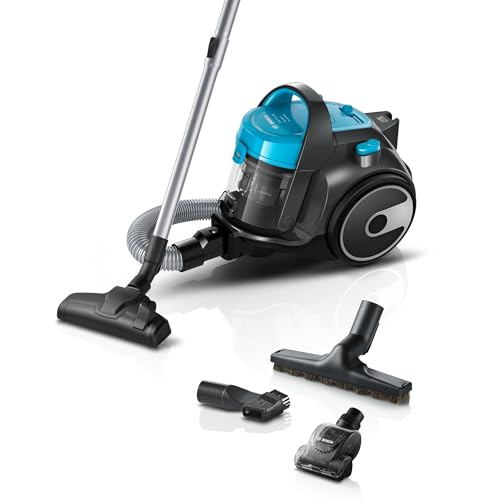
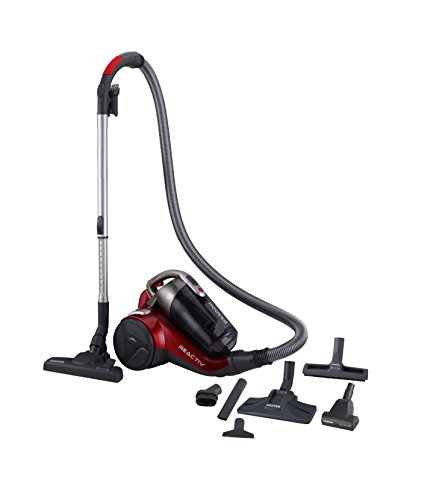
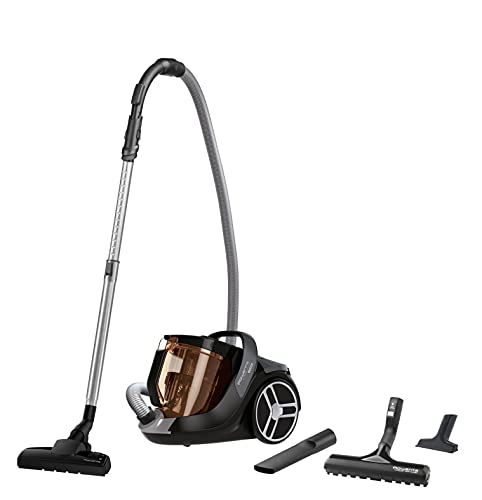
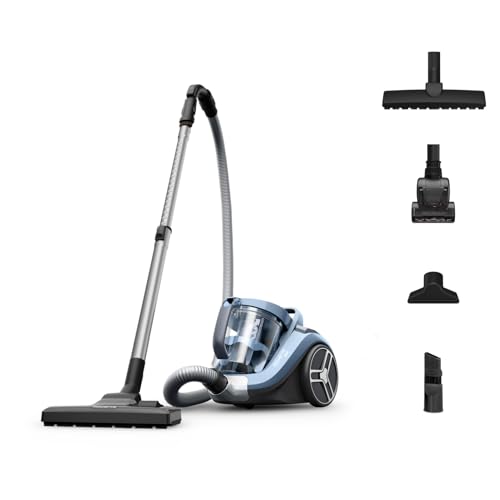
Which brands make the best canister vacuums in 2026?
The best canister-vacuum brands in 2026 are ranked below:
- Rowenta (Average overall score: 7.5)
- Philips (Average overall score: 7.2)
- AEG (Average overall score: 7.1)
- Hoover (Average overall score: 7.1)
- Bosch (Average overall score: 7)
The chart below ranks canister-vacuum brands by average overall score.
[horizontal-chart-11550473923830089802091683732961427938972436012562]
When should you consider buying a canister vacuum?
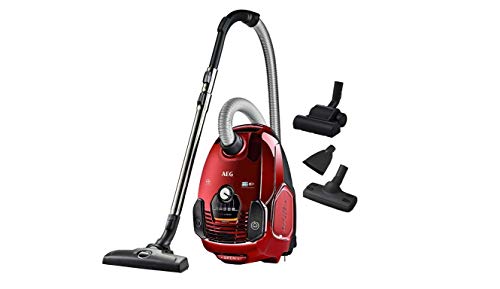
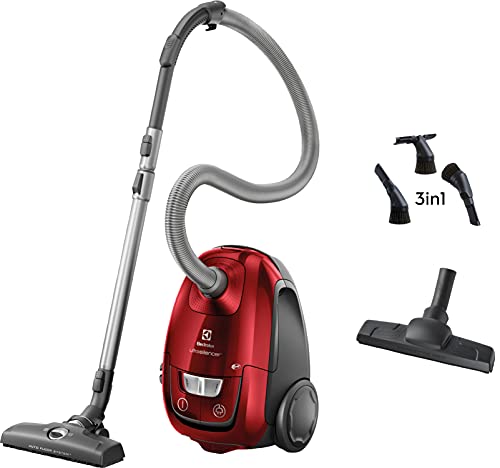
You should consider a canister vacuum if you often clean several floor types, need long uninterrupted sessions or want the motor and dust container to remain on the floor instead of in your hand. The hose and wand make canisters particularly useful under furniture, on stairs and with specialist tools for parquet, upholstery and narrow gaps.
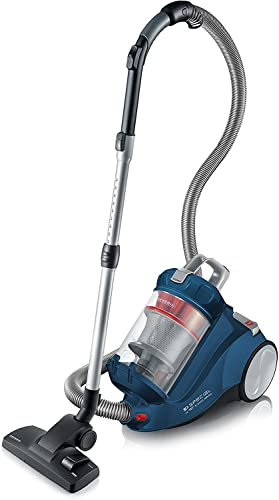
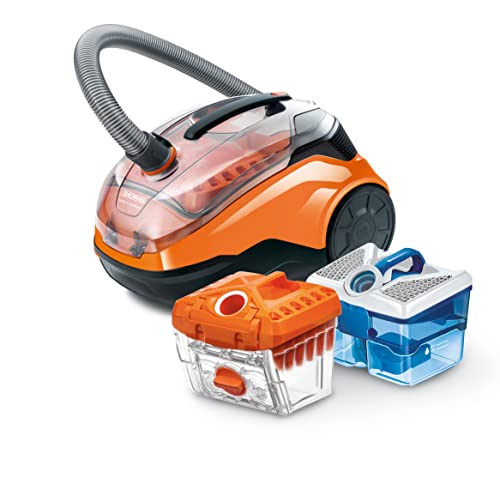
Capacity and reach are major strengths. Models we reviewed typically hold around 2.5–3 L and use a cable close to 7 m, with many extending toward 9 m; the hose and wand add further operating radius. Bagged designs suit cleaner disposal, while bagless models avoid replacement bags but expose the filter and bin to more dust during maintenance.
A canister is less convenient when storage is very limited or the body must be carried frequently between floors. Check wheel movement, hose flexibility and stair-carrying grip because a nominal weight around 5.5 kg feels very different when the machine rolls smoothly than when it catches on thresholds and furniture.
Are canister vacuums better than upright or stick models?
Canister vacuums are usually better than upright or stick models for attachment work, under-furniture reach and large-capacity corded cleaning, while uprights are simpler on open carpet and sticks are lighter for quick sessions. The best format therefore depends on where the motor weight, cleaning head and dust container are most convenient.
Based on our research, canisters with published figures average around 240 AW and 3 L of capacity, compared with roughly 160 AW and 2 L for uprights and 130 AW and 0.7 L for sticks. Canisters and uprights both weigh about 5.5 kg in total, but a stick averages closer to 3 kg and places much of that weight near the hand; a canister leaves the heavy body on the floor but must follow behind the user.
What makes a canister vacuum easy to use?
A canister vacuum is easy to use when the body rolls predictably, the hose turns without twisting and the wand adjusts to the user and floorhead. Large rubberised wheels cross thresholds more smoothly than small hard casters, while a rotating hose joint prevents the body from being pulled sideways whenever direction changes.
Reach should be judged as a complete system. A 6–9 m cable is common, but the useful operating radius also includes the hose and telescopic tube; automatic cord rewind saves storage time only when the retraction is controlled and the plug does not strike furniture.
Total weight matters mainly for stairs and storage. The models we reviewed typically weigh around 5.5 kg, with many falling between roughly 4 and 8 kg. A stable carrying handle, tool parking point and compact upright storage position can therefore matter more than saving a few hundred grams.
The chart below shows the weight distribution of canister vacuums.
[vertical-chart-12989712329259150314171124576013973814703686160269]
Which floorheads and attachments matter most?
The most useful canister-vacuum floorheads and attachments are as follows:
- Powered carpet head: A motor-driven brush agitates carpet more effectively than a passive combination nozzle. Height adjustment, a bypass vent or suction control prevents the head from clamping to thick pile.
- Parquet brush or soft roller: Dense soft bristles or a cushioned roller collect grit without dragging hard plastic across delicate floors. Check that the underside has no exposed screws or sharp moulding edges.
- Upholstery and mini turbo tools: A wide upholstery nozzle handles flat fabric, while a compact turbine or motorized brush lifts pet hair from stairs and sofas. Confirm the exact package because similar model names can include different tool sets.
- Crevice and dusting tools: A long crevice nozzle reaches beside radiators and between cushions, while a soft brush protects shelves and furniture. On-board storage is useful only when the tools remain secure while the body rolls.
- Telescopic tube and adapter fit: A metal telescopic wand should lock firmly and adjust without slipping. Standardised or well-supported connectors make it easier to replace a damaged head or add a specialist tool later.
How much do canister vacuums cost?
Canister vacuums generally cost about £100-£300, with the middle of the market near £130. Budget models around £90 tend to use simpler combination heads, shorter cables or more basic filter access, although they can still suit hard floors and routine cleaning.
From about £130 to £260, longer reach, better sealing, quieter operation and dedicated floorheads become more common. Premium models above roughly £260 should justify the price with durable tools, excellent filtration, strong parts support or an effective powered head rather than only a larger motor-input figure.
The chart below shows the price distribution of canister vacuums.
[vertical-chart-09424684849248817827041230244300107027952230206166]
What should you check before buying a canister vacuum?
You should check the following factors before buying a canister vacuum:
- Suction, airflow and controls: For mixed-floor cleaning, aim for roughly 180 AW or more when air watts are measured comparably; 200–250 AW gives more headroom for deep carpet and pet hair. If only pressure or airflow is published, around 20 kPa or 30–35 L/s is a useful target, but these metrics are not interchangeable; adjustable suction or a bypass vent should keep the floorhead movable on rugs.
- Cable and operating radius: Aim for at least a 7 m cable for normal room-to-room cleaning, or 8–9 m and roughly 11–12 m of total operating radius for a larger home. Add the hose and wand when judging coverage, then check automatic rewind and whether the hose rotates without pulling the body sideways.
- Capacity and dust system: Roughly 1.5–4.5 L covers most canister designs, with about 2.5–3 L providing a useful balance. Bags offer cleaner disposal, while bagless cyclones avoid bag purchases but require more direct filter and bin maintenance.
- Weight, wheels and carrying: If the vacuum will be carried on stairs, aim for roughly 6 kg or less; models around 7–8 kg need a well-positioned handle and stable body to remain manageable. Also test wheel material and threshold clearance rather than judging manoeuvrability from weight alone.
- Floorheads and attachments: Match the package to the floors: powered brush for carpet, soft parquet head for delicate hard floors and upholstery or mini turbo tools for fabric and pet hair. Verify that replacements use the exact connector and are sold locally.
- Filtration and noise: Prefer about 75 dB or below in normal mode when quieter operation matters; 80 dB is noticeably louder during a long session. A sealed path and correctly fitted filter matter more than a HEPA label on a leaky body, so also check whether filters are washable and what replacements cost.
- Storage and serviceability: Measure the stored body, hose and wand rather than only the canister shell. Accessible filters, available bags, rollers and belts, and a replaceable hose can extend the useful life far beyond the warranty period.