
Are LG vacuum cleaners good?
LG vacuum cleaners have an average overall score of 8, ranking #6 among comparable vacuum-cleaner brands, and a user rating of 8.3, placing them at #27 based on user reviews.
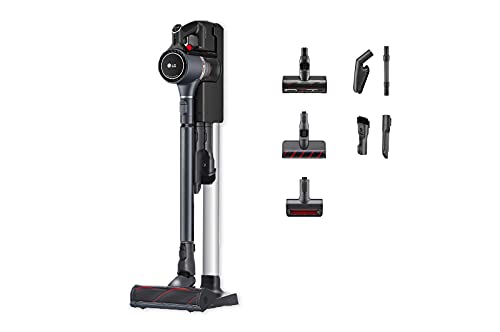
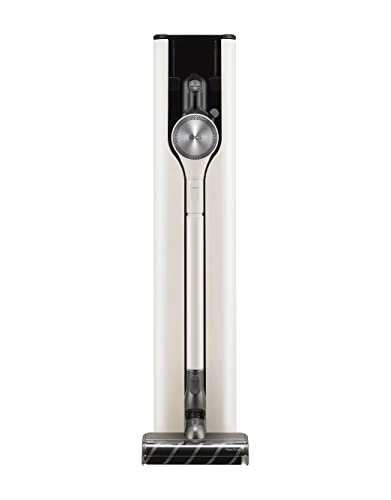
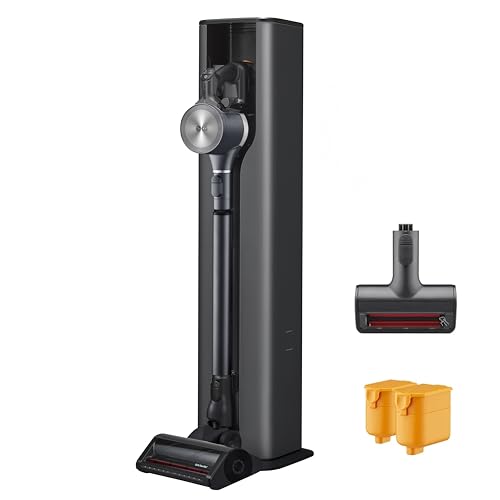
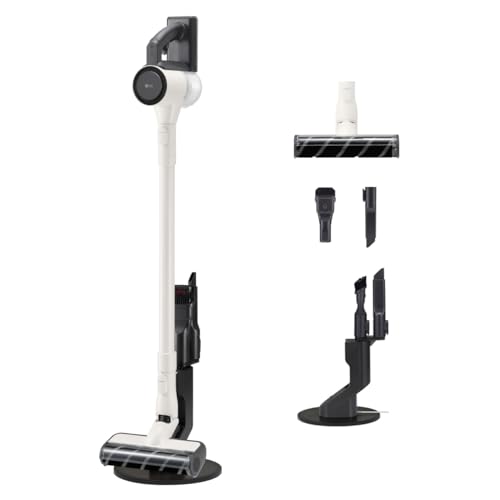
LG vacuum cleaners are a strong option when a buyer wants removable batteries, a telescopic wand and Kompressor bin compaction in one cordless platform. A9T models add an all-in-one tower that stores, charges and empties the vacuum, reducing direct contact with loose dust.
LG vacuum cleaners with an all-in-one tower are less worthwhile if the station cannot be given permanent floor space or its disposable bags are undesirable. Basic VC/VK canisters offer much lower prices and continuous suction, while still serving buyers who do not need cordless conversion.
The chart below compares vacuum-cleaner brands by average overall score.
[horizontal-chart-05060405232908929908180547999782892589572867802681]
What are the main advantages of LG vacuum cleaners?
The main advantages of LG vacuum cleaners are as follows:
- Removable cordless batteries: CordZero A9 packs can be swapped, and selected packages include two batteries for sessions approaching two hours in low mode under qualifying conditions.
- Kompressor bin system: A sliding lever compresses debris and helps push it out, increasing usable capacity and reducing the need to reach into the bin.
- Adjustable wand and storage: The telescopic wand adapts to different users, while wall docks or A9T towers organise the body, tools and charging position.
- Auto-empty option: CordZero A9T stations draw debris into a sealed bag and can charge a spare battery, improving convenience for users who dislike open-bin disposal.
- Strong cordless output: Many A9 models publish roughly 150–250 AW, providing useful mixed-floor and pet-hair headroom when paired with the correct powered head.
What are the main disadvantages of LG vacuum cleaners?
The main disadvantages of LG vacuum cleaners are as follows:
- High station prices: A9T and premium Kompressor packages can cost roughly £300-£600, while a basic LG canister may be below £150.
- Station bags and space: Auto-emptying introduces an ongoing bag cost and requires a permanent tower footprint near a socket.
- Runtime depends on the configuration: A 60-minute claim normally uses a low setting and may exclude a powered floorhead. Turbo operation is substantially shorter.
- Package complexity: A9, A9K, A9T, Prime and Ultra names change batteries, heads, mopping tools and station features by market.
- Small raw bins: CordZero bins remain compact even with compression. The Kompressor improves usable volume but does not eliminate filter and cyclone maintenance.
Who makes LG vacuum cleaners?
LG vacuum cleaners are made and sold by LG Electronics, the South Korean electronics and home-appliance company within LG Group. Design, component sourcing and assembly are distributed internationally, so the country printed on a vacuum can differ between CordZero and corded canister models.
CordZero sits within LG's wider appliance ecosystem, but its batteries and accessories are purpose-built rather than interchangeable with general LG consumer devices.
Use the full regional model code when ordering a battery, power nozzle, A9T bag or filter. Similar A9 names can hide differences in voltage, connector and supplied station.
What are the main series of LG vacuum cleaners?
The main LG vacuum-cleaner series are as follows:
- CordZero A9: This is LG’s core cordless family, using a removable battery, adjustable wand and convertible handheld body. It suits general mixed-floor and above-floor cleaning.
- CordZero A9K: A9K packages add Kompressor debris compaction on selected models, reducing how often the bin needs manual emptying. Lite versions lower the price or simplify the accessory set.
- CordZero A9T and A9TX: These families pair the stick with an all-in-one auto-empty tower. Prime and Ultra packages may add a second battery, mop head, pet nozzle or stronger motor, but contents vary by country.
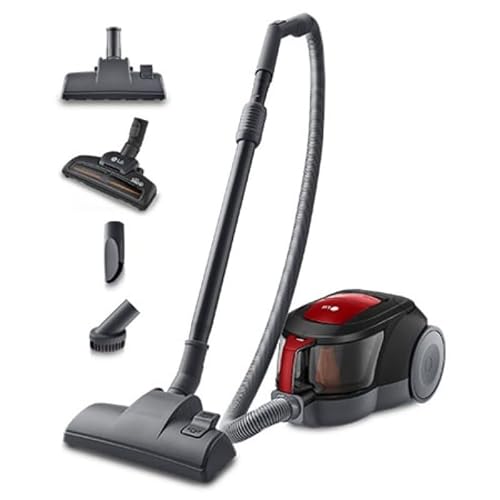
- VC5506 and VK8506: These are conventional corded canister models rather than CordZero generations. They provide lower-cost continuous cleaning without a battery or tower.
How much do LG vacuum cleaners cost?
LG vacuum cleaners generally cost about £80-£600. Corded VC and VK canisters occupy the £80-£150 range, and simpler CordZero A9 or A9K packages begin around £150-£300.
A9T auto-empty systems commonly cost about £300-£500, while premium bundles can approach £600. The station, second battery and genuinely useful power nozzles should explain the premium; a basic single-battery package is better value when those extras would go unused.
The chart below shows the price distribution of LG vacuum cleaners.
[vertical-chart-15381990626439973332047236958392266275102768189492]
How do LG vacuum cleaners compare with Samsung?
LG and Samsung both build premium cordless systems with removable batteries and auto-empty stations. LG CordZero emphasises a telescopic wand and Kompressor lever, while Samsung Bespoke Jet focuses on Clean Station integration, a broad Jet series and output reaching 280–400 AW on its newest premium models.
Based on our research, LG cordless vacuums average roughly 190 AW and about £340, while Samsung spans a wider range and many Jet models sit around £200-£400. Lower-mode runtime is usually around 50–60 minutes per battery for both, with larger claims dependent on a second pack or special mode.
Choose LG when adjustable wand length, bin compression or its tower layout is preferable. Choose Samsung when a particular Jet head, lighter package or higher-output Bespoke tier fits better. Compare battery count, station bags and ready-to-clean weight rather than brand alone.
What should you check before buying an LG vacuum cleaner?
Consider the following factors before buying an LG vacuum cleaner:
- CordZero or canister: CordZero adds cordless conversion and removable batteries; VC/VK canisters cost less, run continuously and avoid battery ageing.
- Suction and head: Many A9 models publish roughly 150–250 AW. Match the universal power nozzle to mixed floors, a soft roller to hard floors and a mini motorised tool to upholstery hair.
- Runtime and battery count: Expect about 50–60 minutes per battery only in a lower mode. Confirm duration with the powered head and whether the box includes one or two packs.
- Bin and Kompressor: Check raw bin capacity, usable compressed volume and how well the lever ejects long hair. Compression does not replace cyclone and filter cleaning.
- Auto-empty station: Measure its footprint, price replacement bags and verify whether it charges a spare battery. A tower is useful only if it can remain accessible near a socket.
- Weight and adjustment: Test the telescopic wand at the intended height, stair carrying and handheld balance. Complete weight matters more than the bare main unit.
- Exact package and support: A9K, A9T, Prime and Ultra labels vary by region. Confirm nozzles, mop head, charger, batteries, filters and warranty against the full model code.