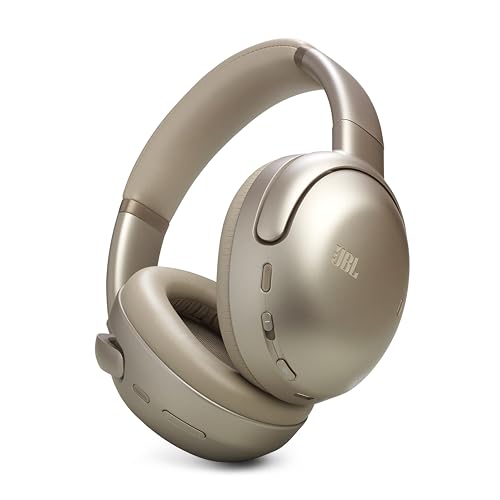
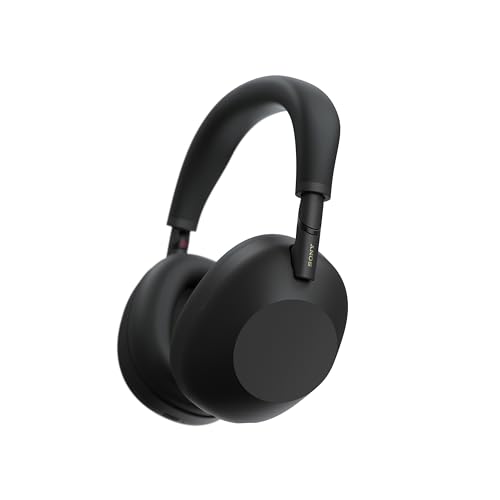
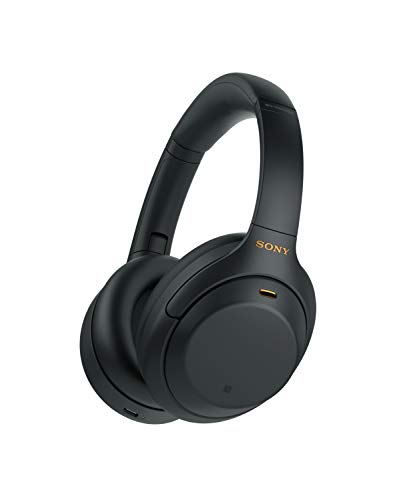
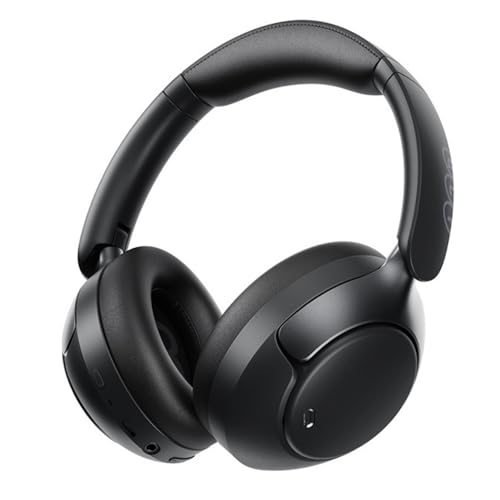
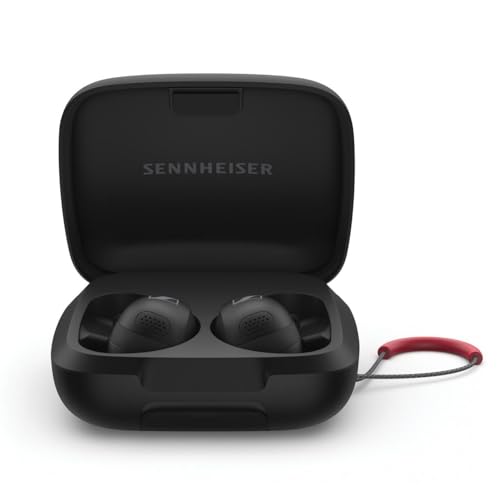
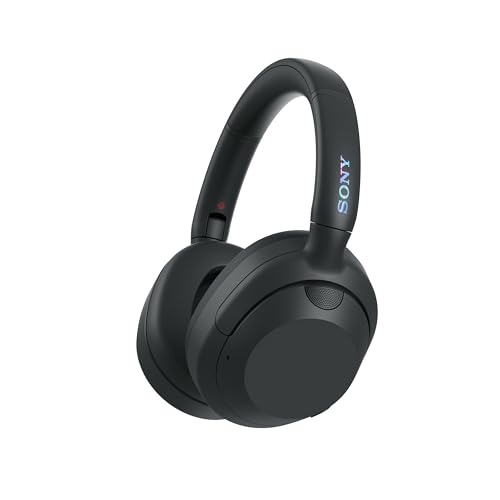
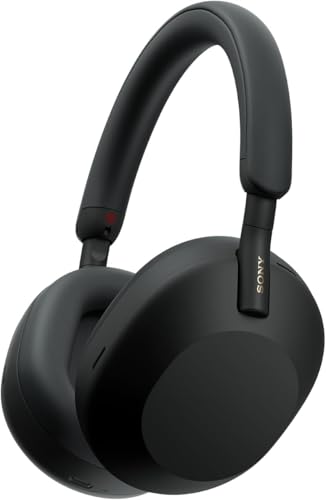
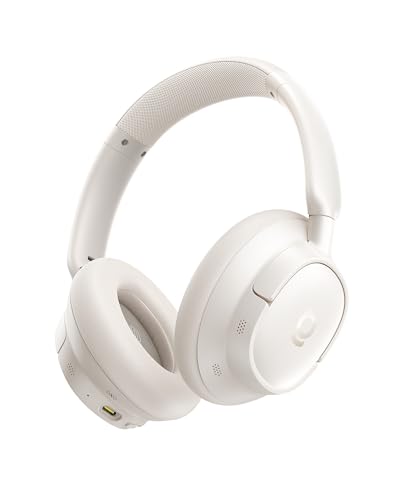
Which brands make the best wireless headphones?
The best wireless headphone brands are as follows.
- Sony (Average overall score: 8.3)
- JBL (Average overall score: 8.2)
- Anker (Average overall score: 8.1)
The chart below ranks wireless headphone brands by average overall score.
[horizontal-chart-05188472997821845124153045731764901845940536683510]
Which wireless headphone brands have the highest average user ratings?
The wireless headphone brands with the highest average user ratings are as follows.
- Bose (Average user rating: 9.4 points)
- Anker (Average user rating: 9.3 points)
- Marshall (Average user rating: 9.3 points)
The chart below ranks wireless headphone brands by average user rating.
[horizontal-chart-04869737961369738710050395399265573111371686363518]
Are wireless headphones worth buying?
Yes, wireless headphones are worth buying if you want everyday convenience, cable-free movement, and better support for phone, laptop, and travel use.
Wireless headphones make the most sense when you move between devices, take calls, commute, or simply do not want a cable catching on clothing, bags, or gym equipment. Better models also add useful extras like active noise cancellation, app control, touch controls, and stronger microphones.
The tradeoff is that wireless headphones depend on battery life, charging, and codec stability. They also tend to age less gracefully than simple wired models, because battery wear, latency, and long-term repairability matter more over time.
Are in-ear, on-ear, or over-ear wireless headphones better?
No single wireless headphone form factor is better for everyone, because over-ear, on-ear, and in-ear models solve different problems.
Over-ear wireless headphones are usually the best choice for comfort, passive isolation, stronger ANC, and longer single-charge battery life. They are the least portable option, but they are often the easiest to live with for office use, long flights, or extended listening at home.
On-ear wireless headphones are lighter and easier to carry, but they usually isolate less and can feel less comfortable over long sessions. In-ear wireless models are the most compact and easiest to use for commuting or workouts, but fit, seal, and ear-tip comfort matter much more than they do with larger designs.
How much do the best wireless headphones cost?
The best wireless headphones usually cost about 80-£260, while premium models can go beyond that range when ANC, materials, codecs, and tuning all move up a level.
A lot of cheaper wireless options exist below £70, but the strongest balance of sound quality, comfort, battery life, and microphones is usually easier to find around 100-£220. On-ear models often stay toward the lower half of that range, while stronger over-ear models and premium in-ear sets push higher.
Very cheap wireless headphones can still be useful for casual listening, but battery endurance, codec support, call quality, and long-term comfort are usually where the budget tier gives up the most.
What core technical specs matter most for wireless headphones?
The core technical specs that matter most for wireless headphones are as follows.
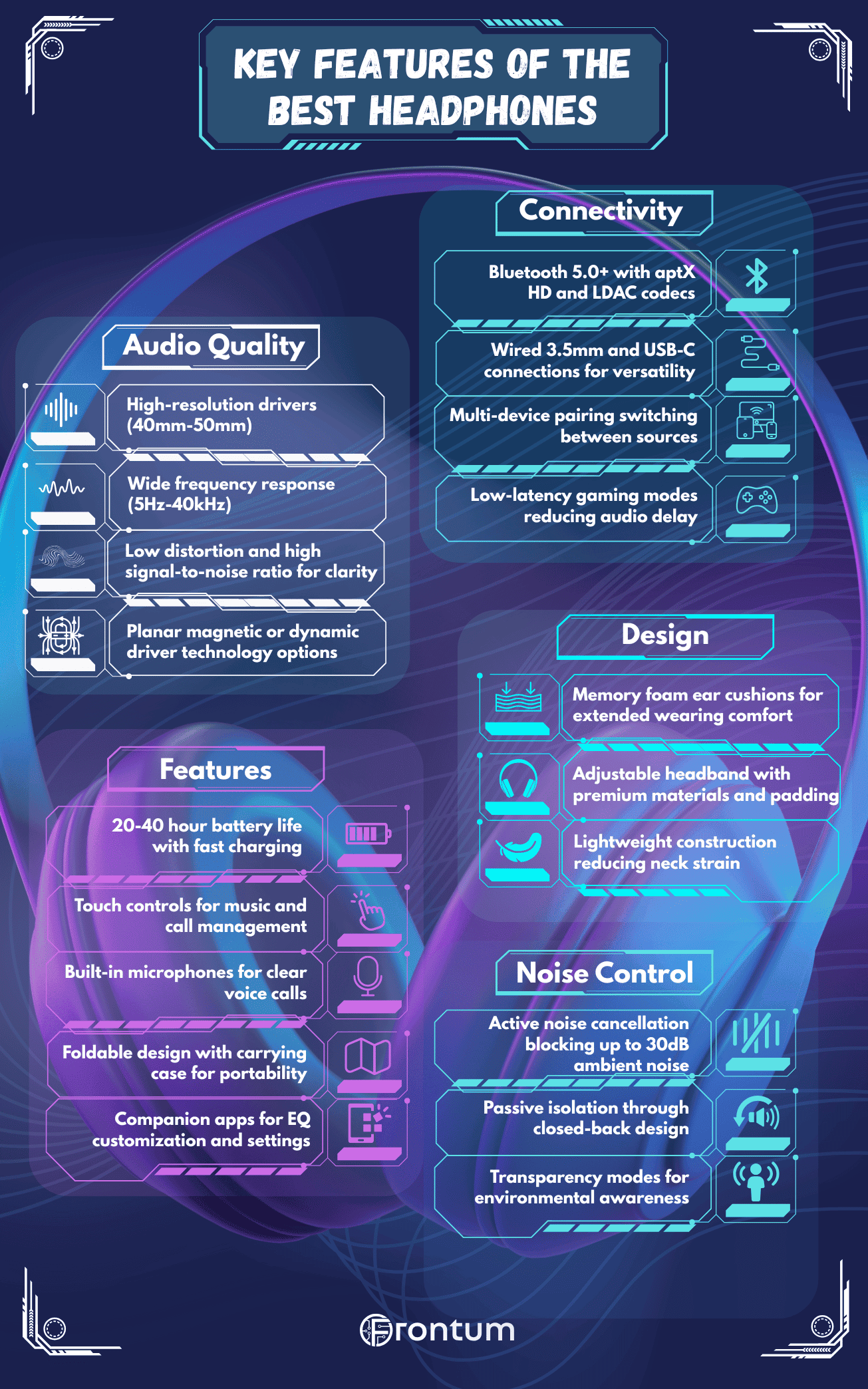
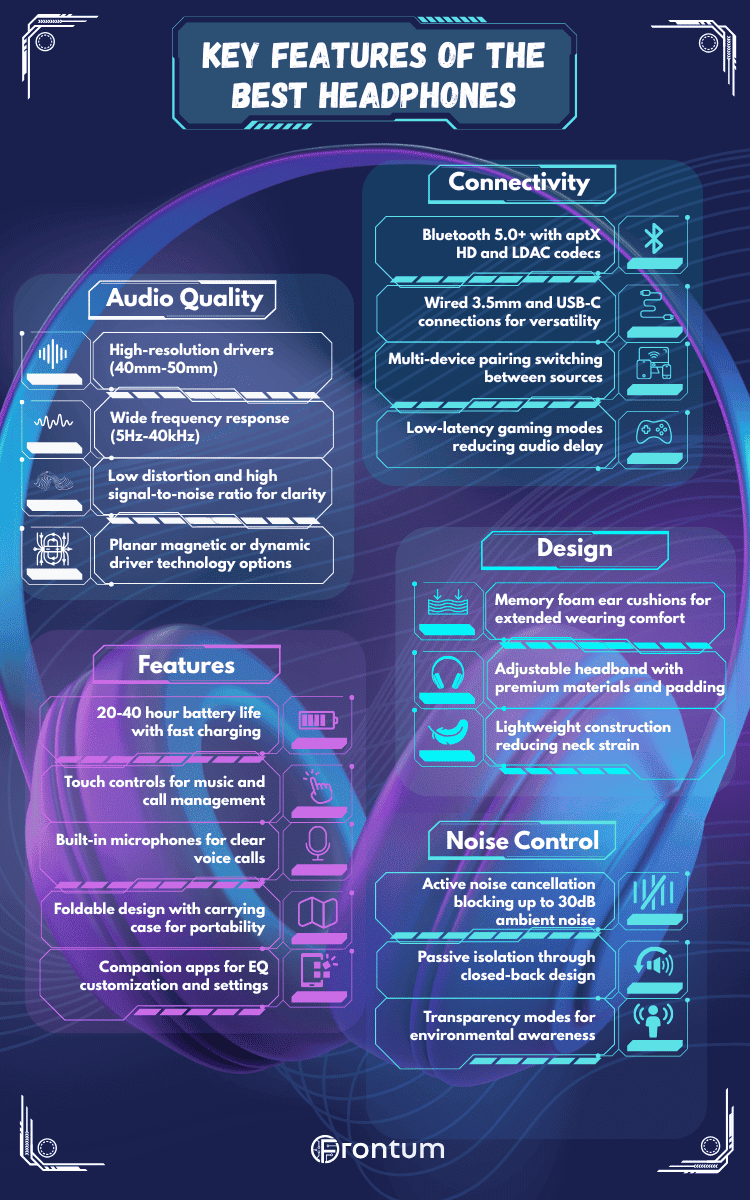
- Form factor: Over-ear, on-ear, in-ear, and open-ear designs behave very differently in comfort, isolation, portability, and battery size.
- Battery life: Wireless headphones range from short-runtime performance designs to long-running travel models, so quoted hours still matter as a first filter.
- ANC and passive isolation: Stronger wireless headphones are often separated by how well they block travel noise, office rumble, or street noise rather than by driver size alone.
- Bluetooth and codec support: Bluetooth generation, multipoint behavior, and codecs such as AAC, aptX, or LDAC affect compatibility, convenience, and sometimes sound quality.
- Latency behavior: Some wireless headphones are clearly better for video, gaming, or mixed-device use because they offer lower delay or better sync behavior.
- Charging system: USB-C charging speed, quick-charge support, and wired-use fallback can matter a lot in daily use once the battery is no longer theoretical.
How long does the battery last on the best wireless headphones?
Battery life on the best wireless headphones is usually strong, with about 20-50 hours being the most useful real-world target band and around 30 hours already counting as a solid benchmark.
The broader wireless category stretches further than that, but a lot of the market still clusters around the 18-50 hour range for ordinary listening. Models with ANC active often land closer to about 20-45 hours, because noise cancellation adds a constant power draw.
Battery claims always depend on volume, codec use, microphone activity, and ANC intensity. Over-ear models usually have the easiest time delivering long single-charge endurance, while smaller in-ear designs often trade shorter per-charge runtime for better portability.
What connectivity and codec options do the best wireless headphones support?
The most common connectivity and codec options on the best wireless headphones are as follows.
- Core Bluetooth support: Bluetooth 5.x is now the normal baseline on stronger wireless headphones, giving them the expected stability for mainstream phone and laptop use.
- Baseline codecs: SBC is universal and AAC is widely supported, especially on models that are meant to behave well with Apple devices.
- Upgraded codec paths: Better-equipped models may add aptX, aptX Adaptive, LDAC, or similar upgrades when the brand is aiming for stronger Android audio support or lower-latency behavior.
- Multipoint and switching: Many of the better wireless headphones now support two-device multipoint, which is one of the most useful real-world upgrades for mixed phone and computer use.
- Special low-latency or LE paths: A smaller part of the market adds LE Audio, dedicated low-latency modes, or gaming-leaning wireless tuning, but these remain selective upgrades rather than universal features.