What are the best air purifier brands of 2026?
The best air purifier brands in 2026 are ranked below:
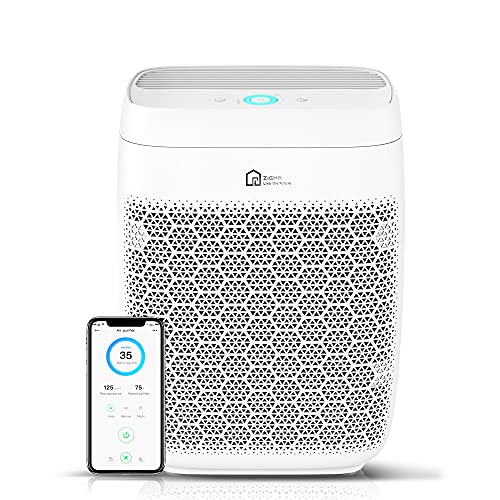
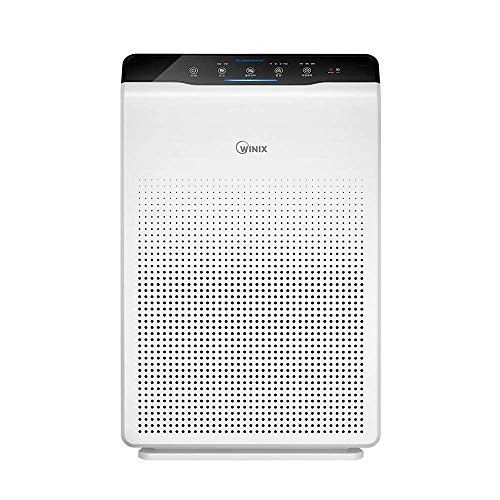
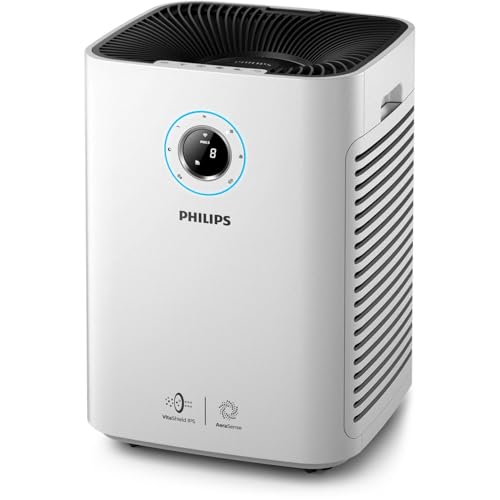
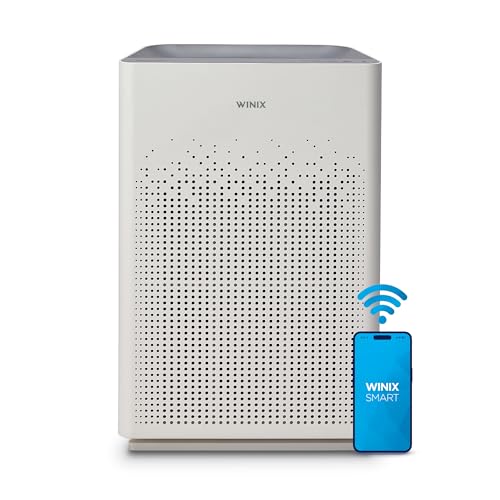
- Winix (Average overall score: 7.9)
- Philips (Average overall score: 7.7)
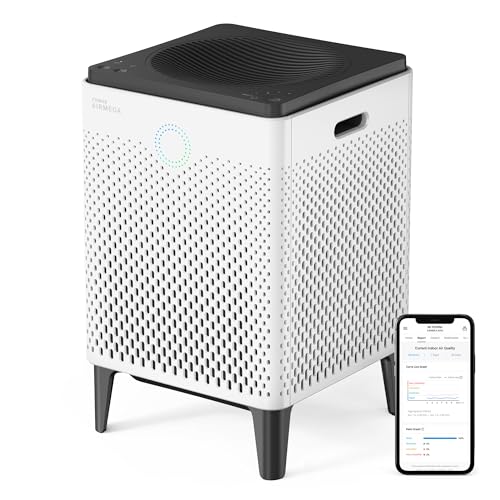
- COWAY (Average overall score: 7.6)
The chart below ranks air purifier brands by average overall score.
[horizontal-chart-14864484804626698665012994058484894238043460741084]
Which air purifier brands have the highest user ratings?
The best-rated air purifier brands according to users are ranked below:
- LEVOIT (Average user rating: 9.5)
- Winix (Average user rating: 9.4)
- COWAY (Average user rating: 9.4)
The chart below compares air purifier brands by average user rating.
[horizontal-chart-17911434767520186739044875317269124814772889728633]
Which air purifier brands offer the best value for money?
The best air purifier brands for value for money are ranked below:
- Winix (Average quality-price ratio: 8.3)
- Xiaomi (Average quality-price ratio: 8)
- COWAY (Average quality-price ratio: 7.9)
The chart below compares air purifier brands by average quality-price ratio.
[horizontal-chart-09689031604091122909101897061919696574222230017696]
How much do the best air purifiers cost?
The best air purifiers typically cost about £100-£400, while compact entry-level models can start near £40 and premium high-CADR or multifunction units can exceed £600.
Below £90, expect smaller room coverage, less activated carbon, simpler sensors, or higher noise at useful fan speeds. The £100-£300 range contains many capable bedroom and medium-room models with HEPA filtration, automatic control, and filter reminders. From £300-£400, buyers generally gain higher CADR, larger-room coverage, quieter engineering, stronger sensors, or better app control; above that, the extra cost often pays for distinctive design, heating or fan functions, or unusually high airflow rather than proportionally better particle removal.
The chart below shows the price distribution of air purifiers.
[vertical-chart-07802893228814539570110408173953195432023755236288]
What CADR and room coverage do the best air purifiers have?
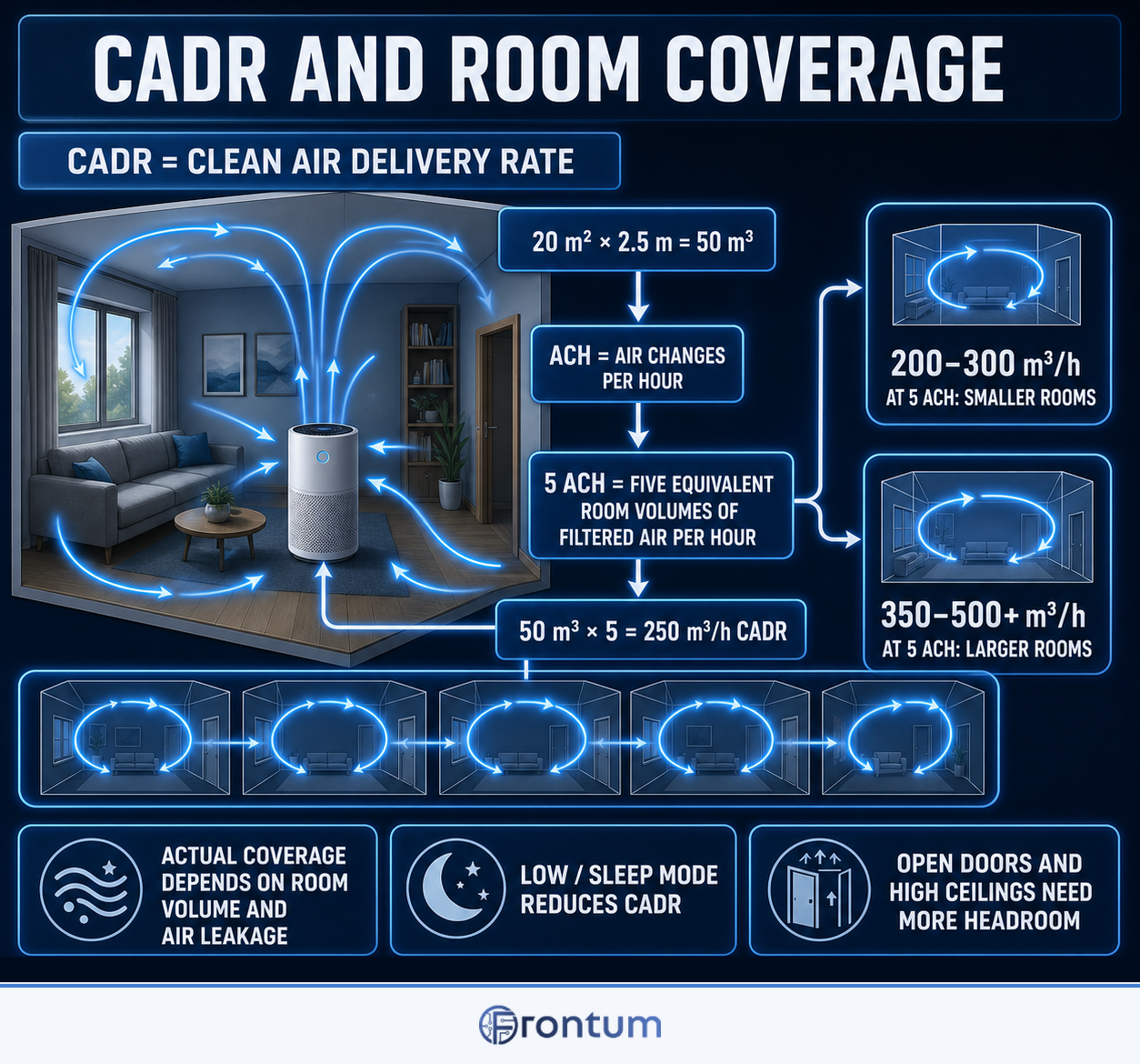
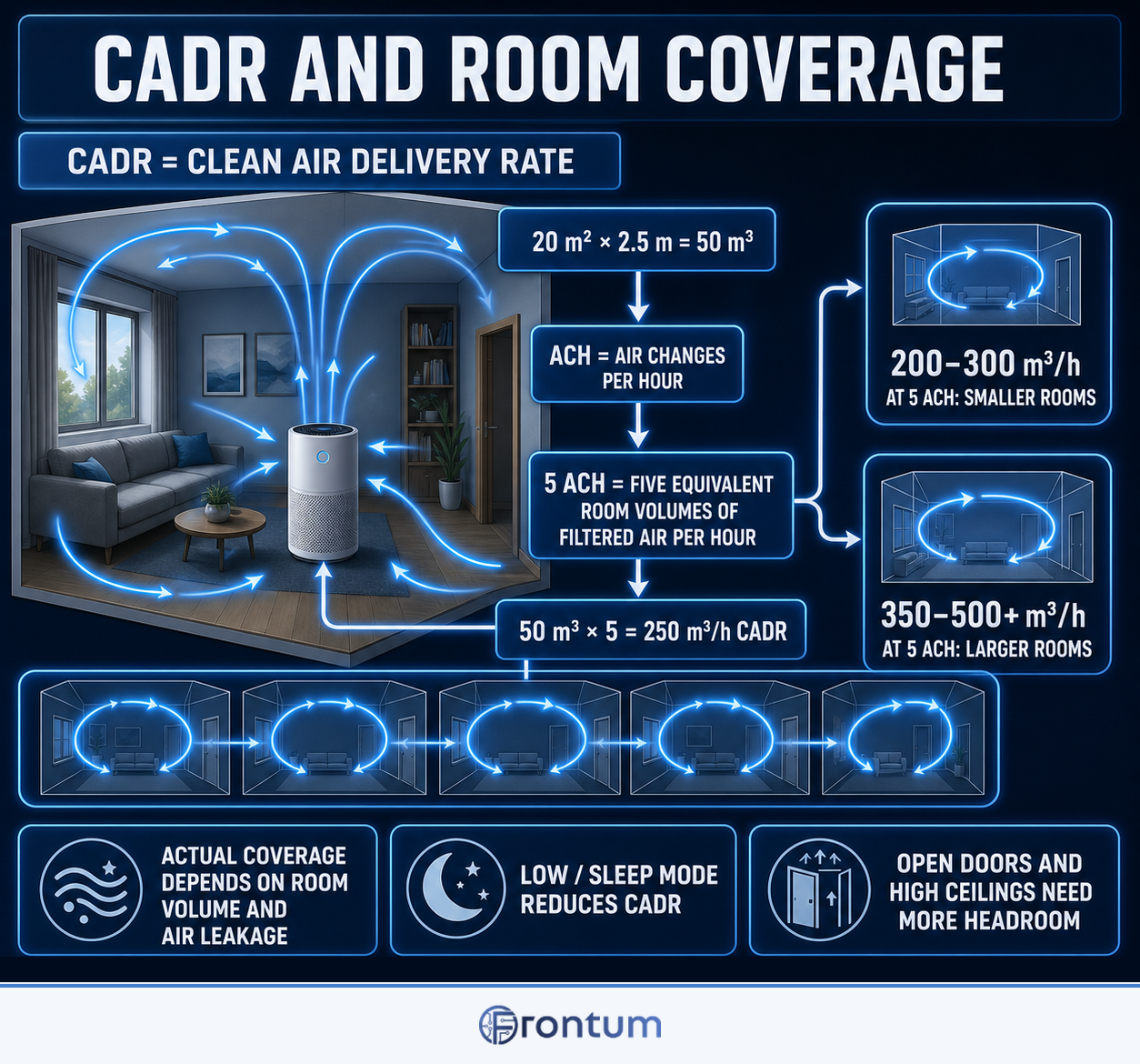
The best air purifiers pair CADR with room size: roughly 200–300 m³/h suits many small or medium rooms, while larger open spaces often need 350–500 m³/h or more.
CADR measures the volume of cleaned air delivered per hour. A practical starting point is to multiply room volume by the desired air changes per hour: a 20 m² room with a 2.5 m ceiling holds 50 m³, so five air changes per hour require about 250 m³/h of clean-air delivery.
Manufacturer room-area claims are not directly comparable unless they use the same air-change target. A model advertised for a very large room may achieve only one or two air changes per hour there, which is much slower than the four to five changes often preferred for smoke, pollen, or other persistent particle loads.
Choose the CADR for the pollutant and run speed you will actually use. Allow extra capacity for high ceilings, open doors, heavy pollution, or quiet operation, because low and sleep modes move less air than the maximum-speed specification.
What filter technologies do the best air purifiers use?
The main filter technologies used by air purifiers are as follows:
- Prefilter: A mesh or foam layer catches hair, lint, and coarse dust before they reach the finer media. A washable prefilter reduces loading on the main filter, but it does not replace particle filtration.
- HEPA filter: Dense pleated media captures fine airborne particles such as pollen, dust, smoke particles, and many mold spores. Look for a stated HEPA class or test standard rather than vague HEPA-type wording.
- Activated carbon: Porous carbon adsorbs some odors, volatile organic compounds, and gases that particle filters cannot capture. Carbon weight and contact time matter, so thin carbon sheets have limited capacity for persistent smoke or chemical odors.
- UV light: Enclosed ultraviolet treatment may inactivate some microorganisms that receive a sufficient dose. It should complement, not replace, airflow and particle filtration, and the design should prevent direct user exposure.
- Ionizer: Charged particles can become easier to collect, but some ionizing technologies may produce ozone. Prefer independently verified low-emission operation and the ability to disable the ionizer.
How do HEPA and activated carbon filters differ?
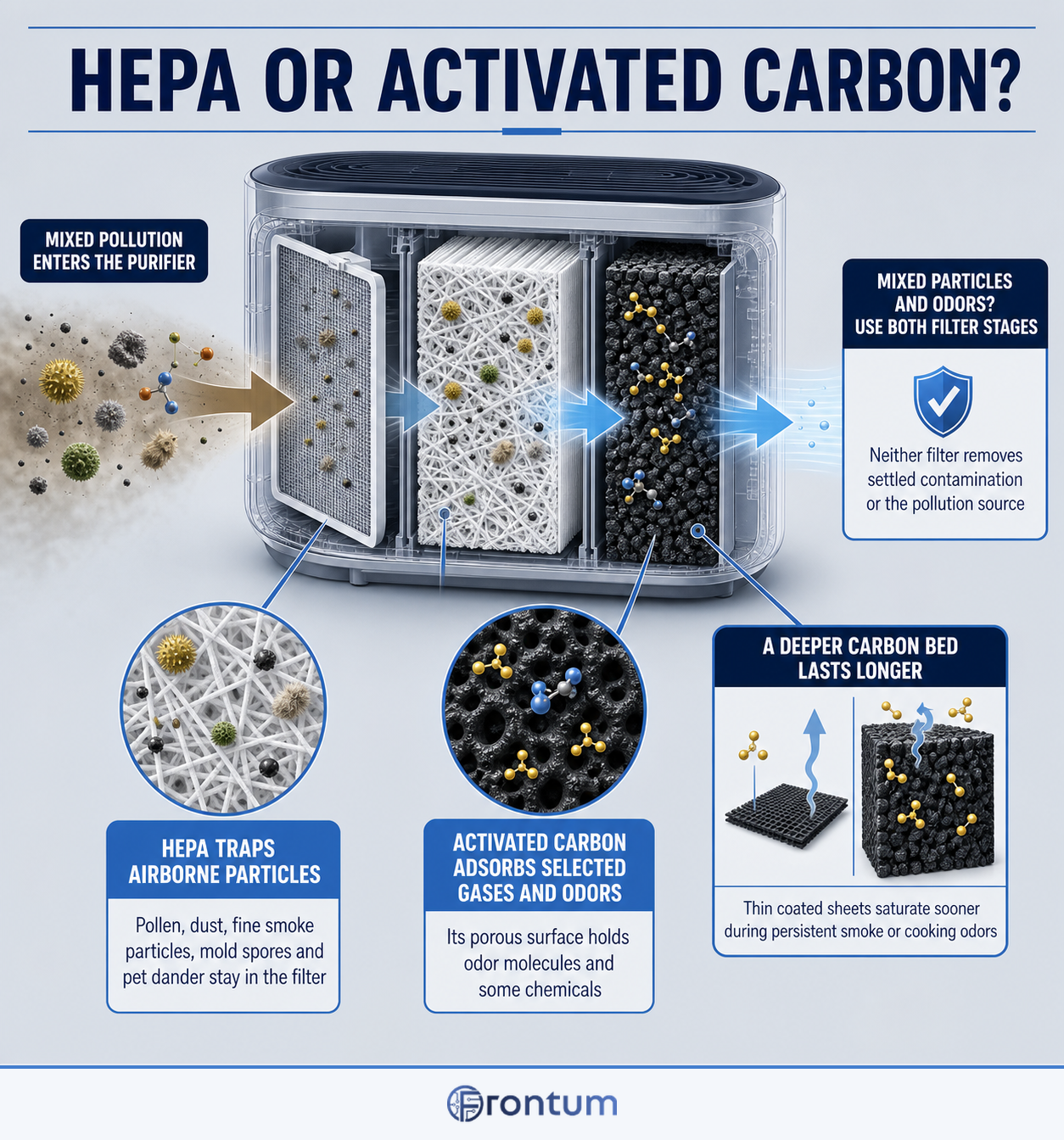
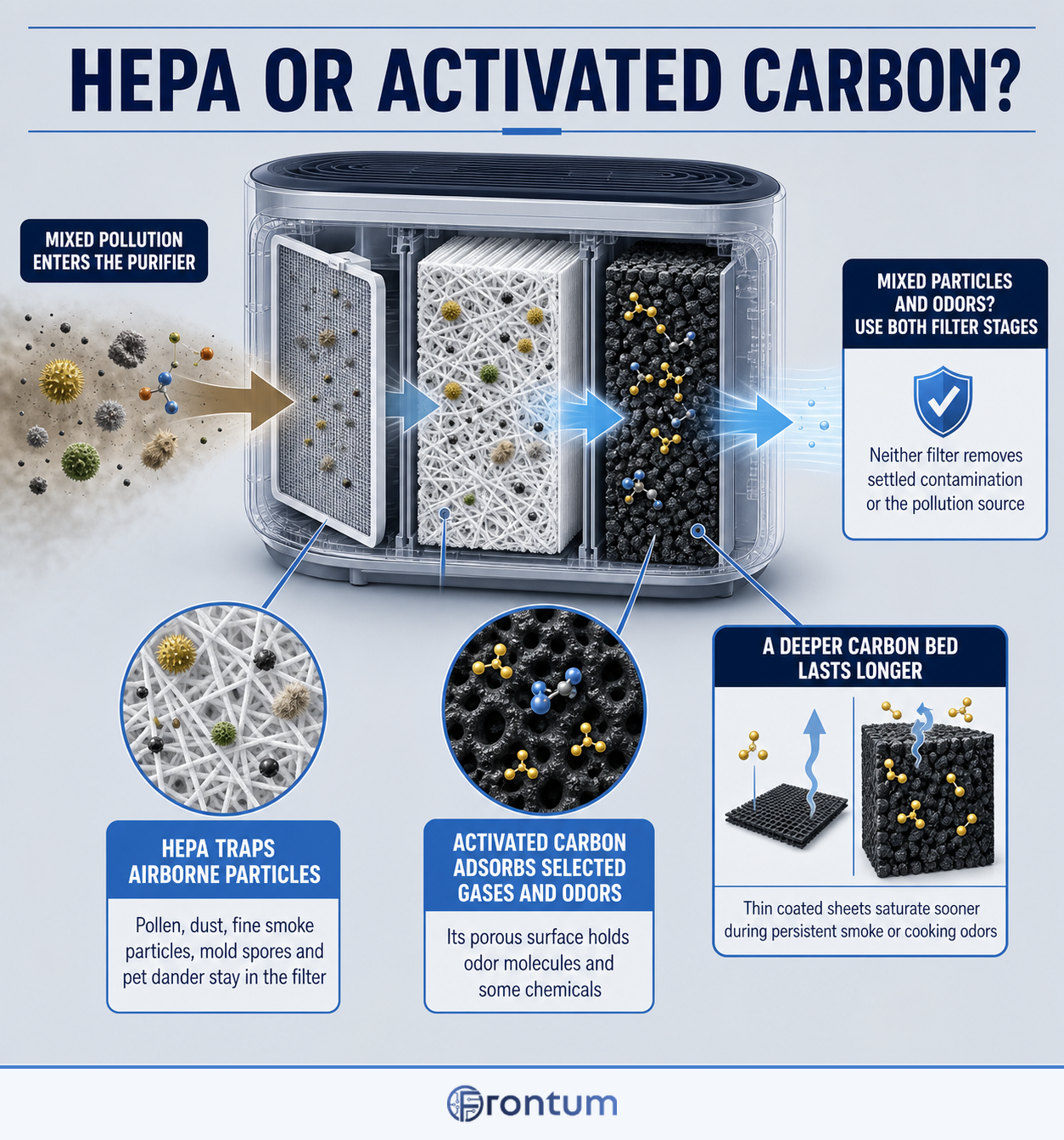
HEPA and activated carbon filters target different pollutants: HEPA media captures airborne particles, while activated carbon adsorbs selected gases and odors. A purifier needs both when the problem includes particles and gaseous pollution.
A HEPA filter works mechanically as air passes through densely packed fibres. It is the important stage for pollen, household dust, fine smoke particles, many mold spores, and pet dander, but it does not remove most odors or volatile organic compounds. Performance depends on the filter grade, airflow, sealing, and replacement condition.
Activated carbon provides a large adsorptive surface for odors and some chemicals. A substantial carbon bed lasts longer and handles persistent cooking or smoke odors better than a thin coated sheet, but even good carbon eventually saturates. Carbon does not replace HEPA filtration, and neither filter removes settled contamination or the source of moisture, smoke, or gas.
How quiet are the best air purifiers?
The best air purifiers are quiet enough for their intended room: sleep modes commonly run around 20–35 dB, while useful daytime settings are often near 40–50 dB and maximum speed can reach roughly 50–60 dB.
Noise must be compared at the airflow you need, not only at the lowest advertised setting. A silent sleep mode may clean the room too slowly, so a larger purifier running at a lower fan speed can be more comfortable than a small unit working at maximum. For a bedroom, look for a dimmable display, a genuine night mode, and enough low-speed CADR to maintain the chosen air-change target overnight.
How easy are the best air purifiers to maintain?
Air purifier maintenance is usually straightforward with the following routine:
- Prefilter cleaning: Vacuum or wash the prefilter about every two to four weeks, following the manufacturer instructions. Let washable parts dry completely before refitting them so moisture does not reach the main filter.
- Main-filter replacement: HEPA and combined filters often last roughly 6–12 months, but smoke, pets, dust, humidity, and continuous operation can shorten that interval. Use the filter indicator as a reminder rather than ignoring reduced airflow, odor breakthrough, or visible loading.
- Carbon-filter condition: Activated carbon can become saturated before the particle filter looks dirty. Replace it when odors return quickly, and compare the price and availability of genuine replacements before choosing a purifier.
- Sensor and air-path cleaning: Dust on the air-quality sensor, intake grille, or outlet can distort automatic control and restrict airflow. Clean these areas gently at the interval in the manual without spraying cleaner into the electronics.
- Placement and seals: Leave the specified clearance around the intake and outlet, and check that every filter is seated in the correct direction. Gaps around the filter let polluted air bypass the media and can reduce real cleaning performance.