
Which brands make the best bagless canister vacuums in 2026?
The best bagless canister-vacuum brands in 2026 are ranked below:
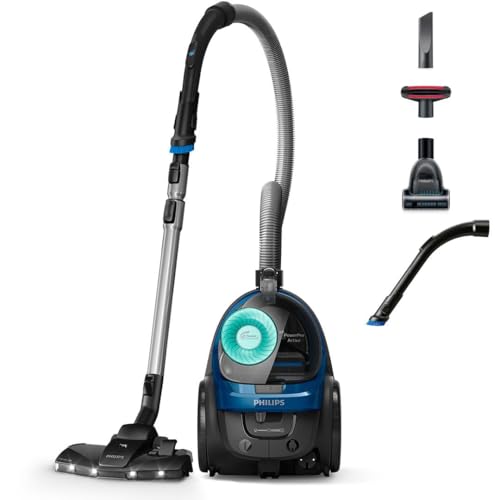
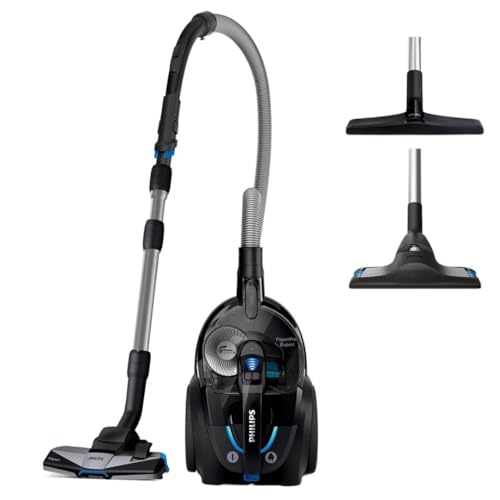
- Philips (Average overall score: 7.2)
- Hoover (Average overall score: 7.1)
- Bosch (Average overall score: 7)
- Miele (Average overall score: 7)
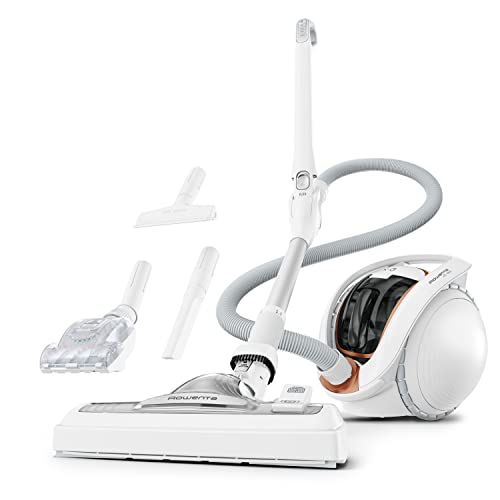
- Rowenta (Average overall score: 7)
The chart below ranks bagless canister-vacuum brands by average overall score.
[horizontal-chart-04560836698502477838097799497712897394331017601690]


When should you consider buying a bagless canister vacuum?
You should consider a bagless canister vacuum if you want strong floor-to-ceiling reach without carrying the motor and dust container in your hand. The hose and wand work well under low furniture, on stairs and with crevice or upholstery tools, while the body provides more room for a 1.5–3 L bin than a typical cordless stick.
This format is less suitable if you dislike pulling a body behind you, have very limited storage or need the cleanest possible dust disposal. Emptying a bagless bin can release fine particles, so allergy-sensitive households may prefer a sealed bagged canister unless the bagless model has controlled emptying and a genuinely sealed exhaust path.
How much do bagless canister vacuums cost?
Bagless canister vacuums generally cost about £40-£220. Basic compact models can start below £40, but they often have shorter cords, simpler floorheads and less refined filtration.
Around £100-£200 is the practical middle of the market, with 1.5–2.5 L bins, automatic cord rewind and a broader tool set becoming more common.
Premium models can reach approximately £300-£600 when they add quieter motors, stronger sealing, advanced floorheads or unusually complete accessories. Check filter prices and replacement intervals because bagless operation removes bag costs but does not eliminate consumable maintenance.
The chart below shows the price distribution of bagless canister vacuums.
[vertical-chart-03050576850133534078033007981074152729400289289709]
What should you check before buying a bagless canister vacuum?
You should check the following factors before buying a bagless canister vacuum:
- Suction and airflow: Published output is commonly around 180–200 AW or 15–25 kPa, while airflow near 20–35 L/s can support debris transport. Compare only the same metric and test condition; a 750 W motor rating describes electrical input rather than pickup performance.
- Cord length and operating radius: About 6 m of cable is typical, while 7–9 m reduces socket changes in larger rooms. Operating radius must also include the hose and wand, so prefer the manufacturer’s complete reach figure and check whether automatic rewind leaves the final section usable.
- Bin capacity and emptying: Around 1.5–2.5 L is practical for routine household cleaning, and 3 L or more reduces interruptions when collecting pet hair. Check the maximum-fill line, dust-release mechanism and whether the cyclone and seals can be removed and refitted without leaks.
- Weight, wheels and hose: Roughly 4.5–6 kg is normal for a full-size canister, while models above 8 kg require more effort on stairs. Large rotating wheels, a hose that does not kink and a stable body matter more in use than a low body weight alone.
- Floorhead and cleaning width: A 250–300 mm head balances coverage with access around furniture. Choose a powered or turbine brush for carpet, a soft parquet head for delicate hard floors and an adjustable vent or suction control to prevent clamping on thick rugs.
- Filtration and maintenance: A sealed HEPA or HEPA 13 exhaust path is preferable for fine dust, while a washable pre-filter reduces replacement frequency. Confirm how often the main filter needs cleaning because clogged media raises noise and reduces airflow even when the cyclone still spins.
- Noise and replacement parts: Around 70–78 dB is reasonable for this format, while more than 80 dB is intrusive during long sessions. Check local prices and availability for filters, hoses, floorhead rollers, clips and bin seals before choosing a discontinued or uncommon model.
The chart below shows the dust-capacity distribution of bagless canister vacuums.
[vertical-chart-11047509340430068608009219818256431891873164975476]