
What are the best wet-dry vacuum brands of 2026?
The best wet-dry vacuum brands of 2026 are ranked below:
- Roborock (Average overall score: 7.7)
- Cecotec (Average overall score: 7.7)
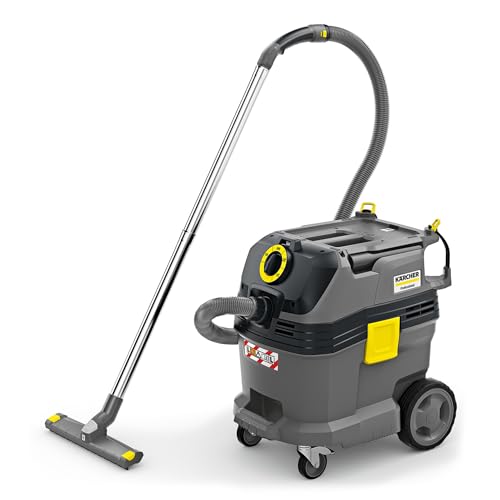
- Kärcher (Average overall score: 7.7)
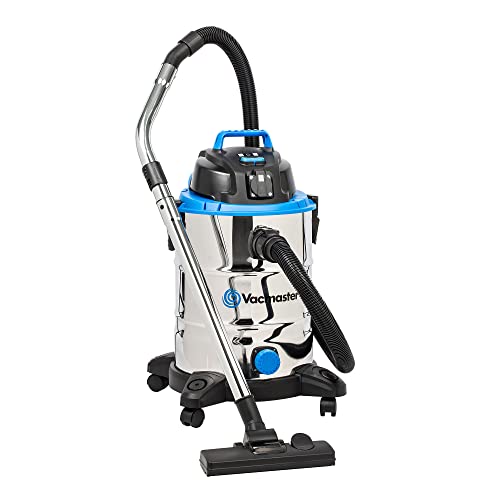
- Vacmaster (Average overall score: 7.6)
- Tineco (Average overall score: 7.4)
The chart below ranks wet-dry vacuum brands by average overall score.
[horizontal-chart-11886932346268468034146667223140412694972275145767]
Which wet-dry vacuum brands have the highest user ratings?
There is no dependable brand-wide user-rating winner for wet-dry vacuums because ratings are published for individual models and vary by retailer and market.
Use the rating for each model together with its review count and date, then compare suction, cleaning format, capacity, and intended surface. A consistent score across several established models is more informative than one high score from a lightly reviewed unit.
Which wet-dry vacuum brands offer the best value for money?
The wet-dry vacuum brands offering the best value for money are ranked below:
- Cecotec (Average quality-price ratio: 8.4)
- Vacmaster (Average quality-price ratio: 8.3)
- Kärcher (Average quality-price ratio: 8.1)
- Nilfisk (Average quality-price ratio: 8)
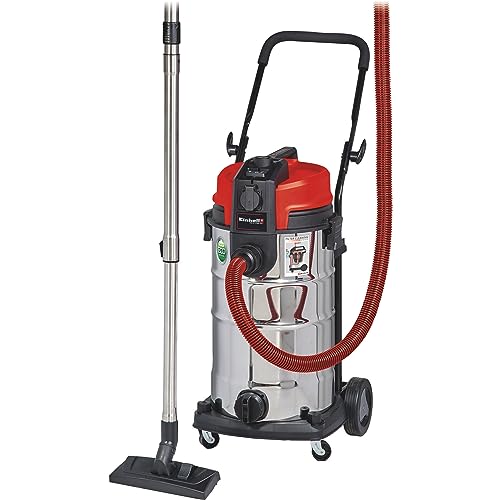
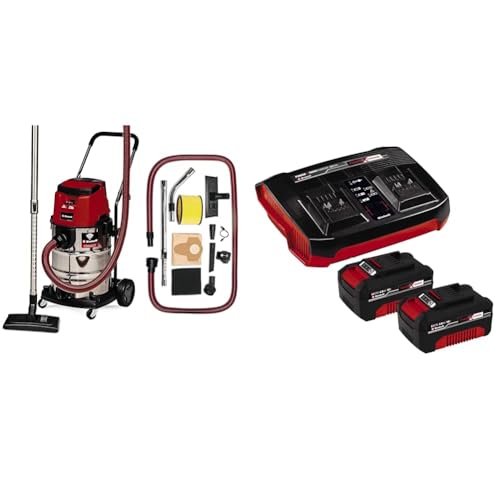
- Einhell (Average quality-price ratio: 8)
The chart below compares wet-dry vacuum brands by average quality-price ratio.
[horizontal-chart-15720208604605749613053357715709325152992912477084]
How much do the best wet-dry vacuums cost?
The best wet-dry vacuums generally cost about £40-£430, while £90-£220 covers many capable full-size models for routine dry debris, moderate spills, and workshop cleanup.
Below £90, expect a smaller tank, shorter hose, simpler filtration, fewer nozzles, or lighter-duty fittings. Budget models can still suit occasional garage and car cleaning if replacement filters are available and the wet shut-off is dependable.
Above £220, the price increasingly reflects stronger construction, larger tanks, quieter motors, automatic filter cleaning, power-tool sockets, battery systems, or powered floor-washing heads. Premium cordless cleaners can approach £730, so compare the cleaning format and included tools rather than assuming the highest price means the strongest shop-vac performance.
The chart below shows the price distribution of wet-dry vacuums.
[vertical-chart-08030557263420039783030955824414886248733721149053]
Are corded wet-dry vacuums better than cordless models?
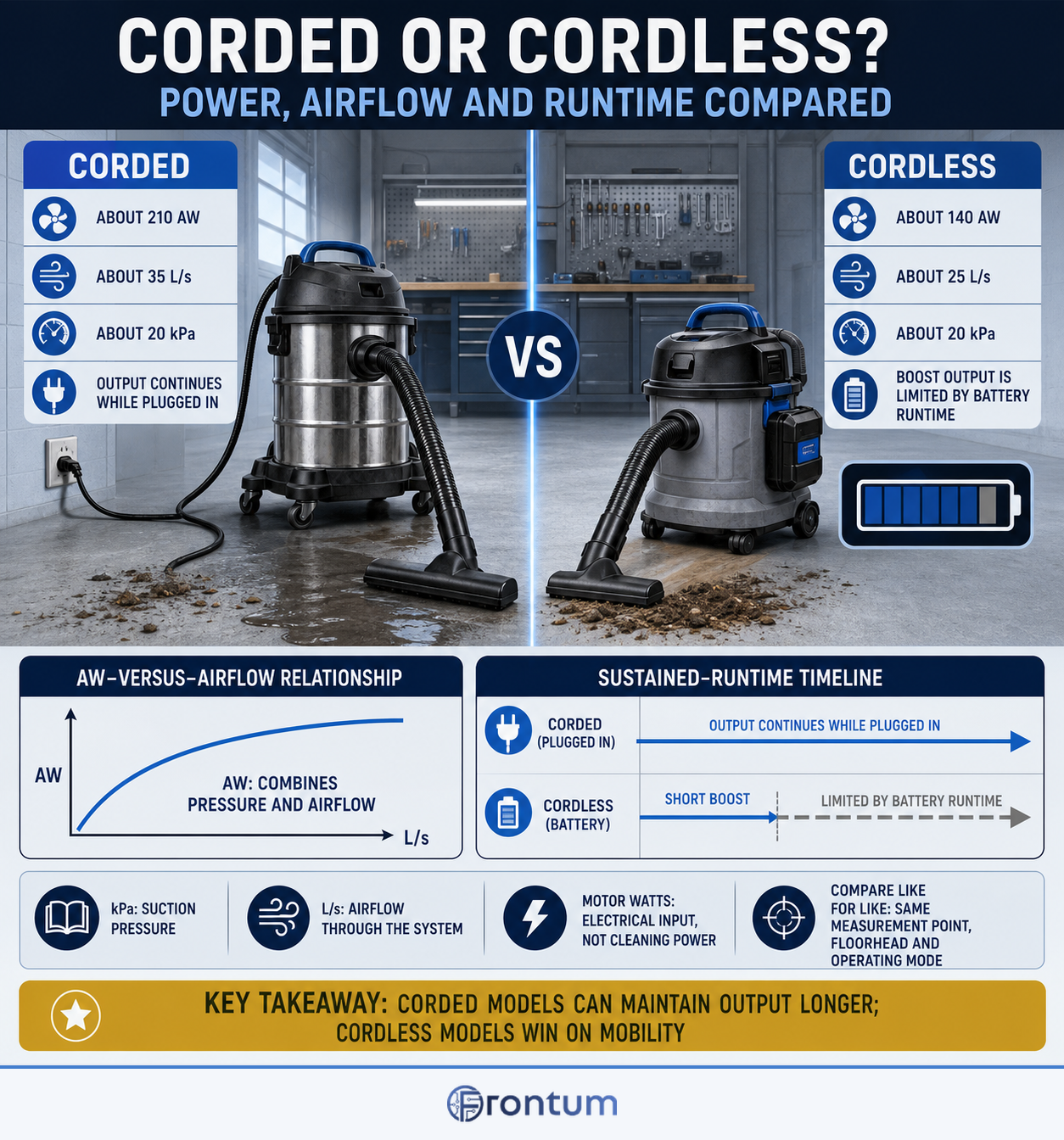
Corded wet-dry vacuums are usually better for long, demanding cleanup, while cordless models are better when fast setup and freedom of movement matter more than unlimited runtime.
A corded canister model suits workshops, renovation debris, large garages, and repeated liquid pickup because it can maintain full output without a battery limit. A cable around 4–6 m and an operating radius near 7–10 m reduce socket changes, while a power-tool socket can start extraction with a connected saw or sander.
Cordless machines are easier to carry between rooms, vehicles, stairs, and small spill locations. Many cordless wet-dry products are floor washers with small clean- and dirty-water tanks rather than miniature shop vacuums, so check whether the machine can collect loose dry debris independently and whether its tools fit the intended job.
Choose corded for sustained suction, large tanks, and rough debris; choose cordless for short sessions and quick wet-floor maintenance. A removable battery is valuable for repeated use, but only when spare packs are realistically available.

What power and suction do the best wet-dry vacuums have?
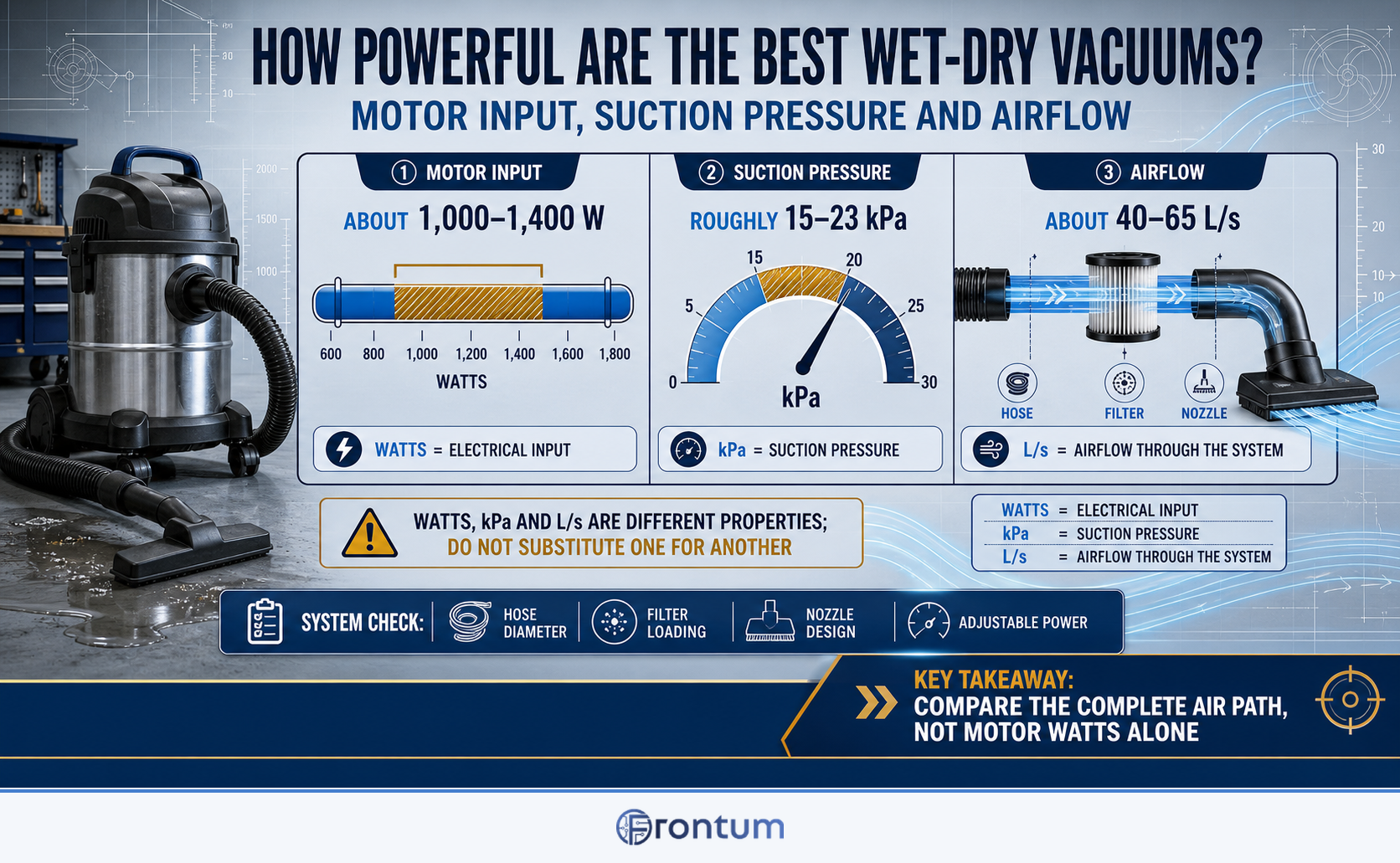
The best full-size wet-dry vacuums commonly combine about 1,000–1,400 W of motor input with roughly 15–23 kPa of suction pressure and about 40–65 L/s of airflow, but those three figures describe different parts of performance and are not interchangeable.
Suction pressure indicates how strongly the machine can lift dense material or pull through a restriction, whereas airflow moves loose dust and larger debris through the hose. A high kPa figure with a narrow or obstructed hose can still clear slowly, and a high airflow figure is useful only when the nozzle and filter preserve it under load.
Motor watts show electrical consumption, not cleaning efficiency. Compare kPa with kPa and L/s with L/s under similar test conditions, then consider hose diameter, filter loading, nozzle design, and whether power can be adjusted for delicate surfaces or liquid pickup.

What capacity and weight do the best wet-dry vacuums have?
The best tank size and weight depend on the cleaning format: a full-size wet-dry canister commonly balances a 15–30 L tank with a dry weight around 5–9 kg, while cordless floor washers often carry less than 1 L of liquid and weigh roughly 4–6 kg. Larger tanks reduce emptying stops but become much heavier once filled with water.
For stairs, cars, and frequent carrying, prioritize a stable handle, large wheels, and a manageable empty weight rather than maximum capacity. For workshops and larger spills, a 20–30 L tank is more practical, especially when a drain outlet lets you empty liquid without lifting the complete machine.
What filtration systems do the best wet-dry vacuums use?
The best wet-dry vacuums use a filter system that can handle fine dry dust without obstructing safe liquid pickup. A pleated cartridge is effective for dry debris, while wet operation may require a foam sleeve, a dedicated wet filter, or removal of the dry paper element according to the manufacturer's instructions.
HEPA media can improve fine-particle capture, but the label matters less if air leaks around the tank, hose connection, or filter seat. For allergy-sensitive indoor use, look for a sealed exhaust path and a filter with a stated efficiency class rather than relying on HEPA wording alone.
Washable filters reduce consumable cost, although they must be completely dry before dry-dust use to prevent clogging and odour. Keep a spare filter if the vacuum must switch quickly between wet and dry work.
Automatic filter cleaning is valuable for repeated fine dust from sanding or masonry because it restores airflow without stopping to shake out the filter, but it is uncommon and raises the price. Occasional household users can usually manage with an accessible cartridge and a clear cleaning schedule.
What wet-pickup features do the best wet-dry vacuums have?
The best wet-dry vacuums include the following wet-pickup features:
- Automatic liquid shut-off: A float or electronic sensor should stop suction before liquid reaches the motor. A clear change in motor sound or an indicator helps the user recognise when the tank is full.
- Wet-compatible filtration: The manual should state exactly which filter, foam sleeve, or filter-removal procedure is required for liquids. Using a dry paper filter for wet pickup can block airflow and damage the element.
- Practical drainage: A low drain outlet is useful on tanks around 20 L or larger because a full tank can be too heavy to lift safely. Smaller tanks should have a controlled lip and a handle that remains stable while pouring.
- Sealed tank and fittings: The lid, hose inlet, and tank seams must resist leaks when the machine moves over thresholds. Stainless steel resists knocks and is easy to rinse, while thick plastic is lighter and does not dent.
- Easy cleanout: Smooth internal surfaces, a removable separator, and accessible seals make it easier to remove dirty water before odour develops. Floor-washing models should also separate clean and dirty water clearly.
What accessories do the best wet-dry vacuums include?
The most useful wet-dry vacuum accessories are as follows:
- Universal floor nozzle: A switchable or interchangeable floor head should collect both dry debris and surface liquid without pushing it ahead. A rubber squeegee insert improves wet pickup on hard floors.
- Flexible hose: A crush-resistant hose around 2–3 m gives useful reach without creating excessive drag. A wider bore is preferable for wood chips and coarse debris, while a narrower hose is easier to handle in a car.
- Rigid extension tubes: Metal or reinforced plastic tubes allow upright floor cleaning and keep the nozzle stable. Check that the joints lock securely and use a standard diameter if you expect to add tools later.
- Crevice and upholstery tools: A flat crevice nozzle reaches seat rails, edges, and workshop corners, while an upholstery nozzle spreads suction across fabric. A soft brush is useful for dashboards and delicate trim but is less effective on embedded hair.
- Drainage and blowing attachments: A drain hose simplifies large liquid recovery, and a blowing outlet can clear leaves or dust from inaccessible spaces. Confirm that the blower uses filtered exhaust and that the hose connects securely.
- Power-tool extraction parts: Workshop users should look for a power-tool socket, tapered adapters, and antistatic hose options. The socket's maximum connected load must suit the tool, and automatic start should leave enough electrical headroom for the vacuum motor.
How noisy are the best wet-dry vacuums?
The best wet-dry vacuums are commonly around 72–80 dB, while models above roughly 82 dB are intrusive during a long indoor session. Compare figures in the same operating mode and at a similar measuring distance, because maximum power, airflow restrictions, and a hard-floor nozzle can change the result.
Lower noise is valuable in flats, occupied workshops, and homes with children, but it should not come from heavily restricting airflow. A clean filter, correctly fitted hose, rubberised wheels, and a lower-pitched motor tone can make a machine more comfortable even when its published dB figure is not the lowest.
The chart below shows the noise-level distribution of wet-dry vacuums.
[vertical-chart-10494387899397529106083916013398171313012017069831]