
Are Henry vacuum cleaners good?
Henry vacuum cleaners have an average overall score of 7.1, ranking #22 among comparable vacuum-cleaner brands, and a user rating of 9.6, placing them at #1 based on user reviews.
Henry vacuum cleaners are a strong choice for buyers who value a large sealed bag, simple construction and readily replaceable hoses, tools and switches. The classic canister is especially practical for long hard-floor and commercial-style cleaning where 6 L capacity and continuous mains power matter.
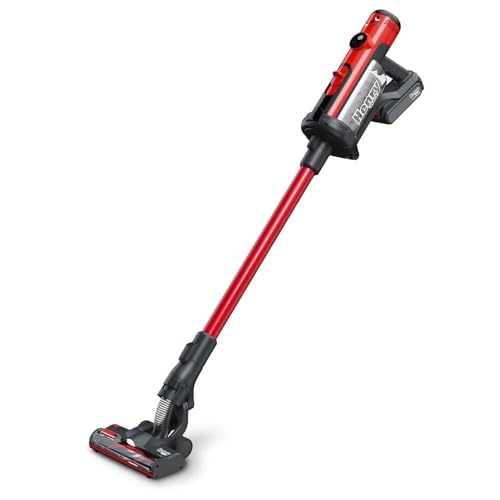
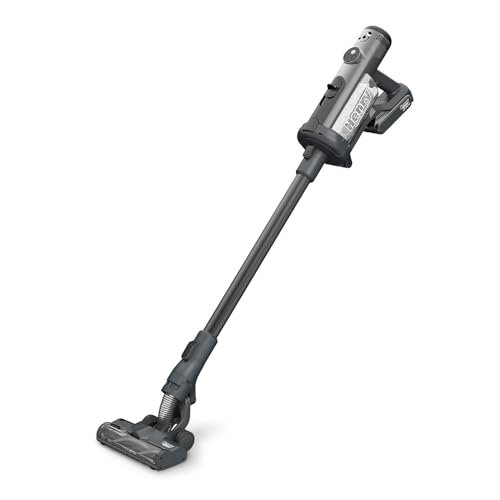
Henry vacuum cleaners are less suitable when compact stair carrying, automatic cable rewind or a powered carpet head is required from the basic package. Henry Quick solves mobility but introduces a battery, charging and disposable pods, so it should be evaluated separately from the canister.
The chart below compares vacuum-cleaner brands by average overall score.
[horizontal-chart-05060405232908929908180547999782892589572867802681]
What are the main advantages of Henry vacuum cleaners?
The main advantages of Henry vacuum cleaners are as follows:
- Large, hygienic bags: Standard compact canisters use roughly 6 L HepaFlo bags, far more than a typical cordless bin and cleaner to remove than an open cyclone cup.
- Simple, repairable design: Hoses, wands, switches, castors and floor tools are widely available, and the classic body avoids unnecessary electronics.
- Long working reach: A cable around 10 m plus the hose and wand covers large areas without frequent socket changes.
- Strong pet packages: Henry Pet and Pet XL add turbo or hair-oriented tools while retaining the bag capacity and continuous power of the canister.
- Cordless alternative: Henry Quick brings the brand into stick-vacuum use with a 1 L pod, replaceable battery and roughly 60-minute lower-mode runtime.
What are the main disadvantages of Henry vacuum cleaners?
The main disadvantages of Henry vacuum cleaners are as follows:
- Bulky stair handling: Classic canisters weigh roughly 7–9 kg with tools and use a round body that is less convenient to balance on steps.
- Manual cable management: Many Henry models use a hand-wound cable reel rather than a spring-loaded automatic rewind.
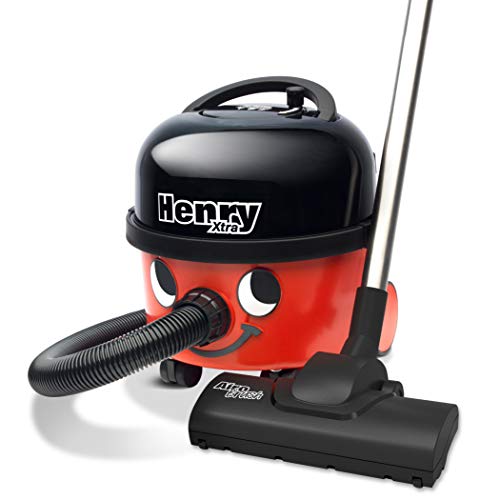
- Basic floorhead in entry packages: A passive combination head is durable but may not agitate deep carpet or remove hair as effectively as a powered brush.
- Ongoing consumables: HepaFlo bags are large and reliable but add recurring cost; Quick also uses proprietary dust pods.
- Quick is a separate platform: Its battery, head, 1 L pod and charging system do not share the simple operating economics of the classic corded Henry.

Who makes Henry vacuum cleaners?
Henry vacuum cleaners are made by Numatic International, a British cleaning-equipment company based in Chard, Somerset. Henry was introduced as the company's friendly-faced dry vacuum and became the best-known member of a wider professional and household range.
Numatic also makes Hetty, James, Charles, George and several professional machines. Shared body ideas do not make every bag, hose or wet-use component interchangeable.
Use the full HVR, HET, PET, NRV or Quick product code when buying bags, filters, batteries and heads. The Henry face identifies the brand family, not the complete specification.
What are the main series of Henry vacuum cleaners?
The main Henry vacuum-cleaner series are as follows:
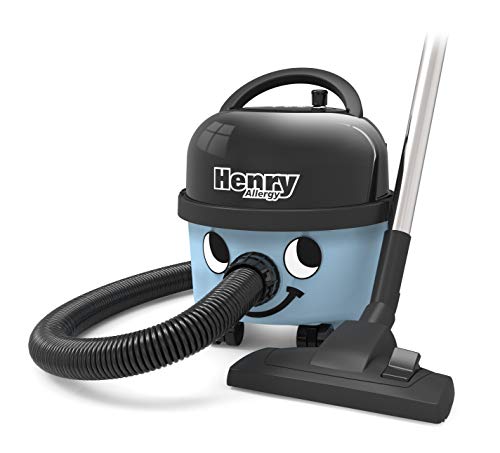
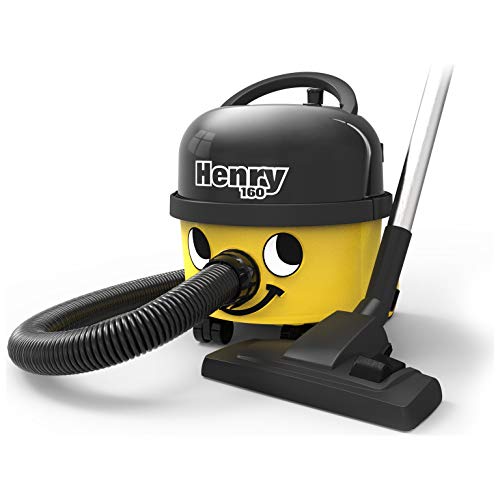
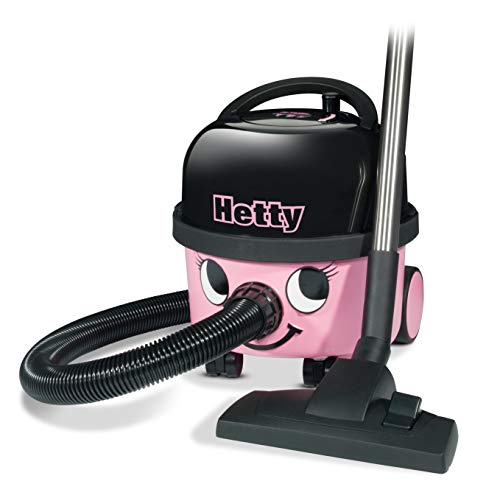
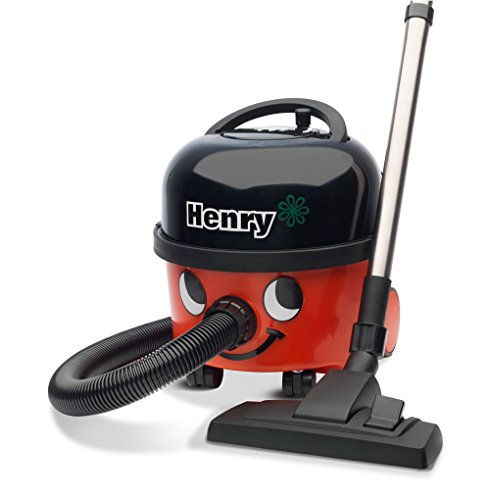
- Henry HVR160 and Hetty HET160: HVR160 is the compact classic with a roughly 6 L bag and long cable for everyday dry cleaning. Hetty is mechanically similar with a different color and character.
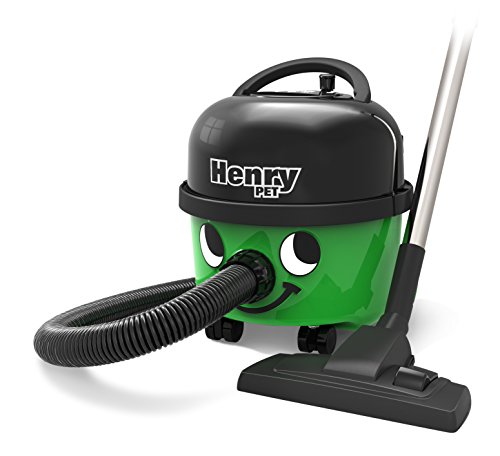
- Henry Pet PET160 and Pet XL NRV370: PET160 adds a turbo-oriented pet package, while Pet XL increases capacity for larger debris loads and longer sessions. They retain corded canister operation.
- Henry Quick: Quick is the cordless stick family, using a roughly 1 L dust pod and about 60 minutes in a lower mode. It should be compared with other sticks rather than the much larger HVR canister.
- Quick Pet, Quick Turbo and Quick Pro: These packages add a motorized pet tool, stronger short bursts, or a broader accessory and battery bundle. The exact tools and battery contents vary by version.
How much do Henry vacuum cleaners cost?
Henry vacuum cleaners generally cost about £140-£430. HVR160 and Hetty occupy roughly £140-£150, while Pet and Pet XL canisters sit around £160-£230 depending on size and tools.
Henry Quick models range from about £220 to £430. The premium should reflect the powered head, battery count and tool package. Buyers who do not need cordless handling obtain much more capacity from the cheaper canister.
The chart below shows the price distribution of Henry vacuum cleaners.
[vertical-chart-12016383880998536304106834317971665217352919597475]
How do Henry vacuum cleaners compare with Miele?
Henry and Miele both offer durable bagged canisters, but they approach the format differently. Henry uses a simple drum body, large HepaFlo bag and long manual cable; Miele uses a more refined low canister with automatic rewind, integrated tools and a wider selection of parquet or powered heads.
Based on our research, Henry models average roughly £230 across canisters and Quick sticks, while Miele averages around £300. Classic Henry provides about 6 L capacity, compared with roughly 3.5–4.5 L in many Miele canisters, but Miele generally offers quieter handling and more sophisticated floorheads.
Choose Henry for capacity, simplicity, serviceable parts and long dry-cleaning sessions. Choose Miele for compact manoeuvring, cleaner cable management, premium filtration packages and specialised heads. Compare the bag and head costs over several years.
What should you check before buying a Henry vacuum cleaner?
Consider the following factors before buying a Henry vacuum cleaner:
- Classic or Quick: HVR/Hetty/Pet canisters provide continuous power and large bags; Quick is a cordless stick with a 1 L pod and battery-limited runtime.
- Capacity: A compact classic Henry holds roughly 6 L, and Pet XL can be much larger. Quick's 1 L pod is generous for a stick but still far smaller.
- Floorhead: The standard combination tool suits hard floors and light carpet. For pets or deep carpet, verify a turbo or motorised head and its hair-removal access.
- Reach or runtime: Classic models use about a 10 m cable plus hose and wand. Quick offers roughly 60 minutes at low power and much less in Turbo.
- Weight and storage: A canister with tools is roughly 7–9 kg and needs hose space; Quick is easier on stairs but requires a charging location.
- Bags and filtration: Price genuine HepaFlo bags or Quick pods and check the filter grade and seals. Large capacity is useful only if the bag remains well fitted.
- Parts and model code: Match HVR160, PET160, NRV370 or the exact Quick version when ordering hoses, heads, batteries or chargers.