
When should you consider buying a Dyson canister vacuum?
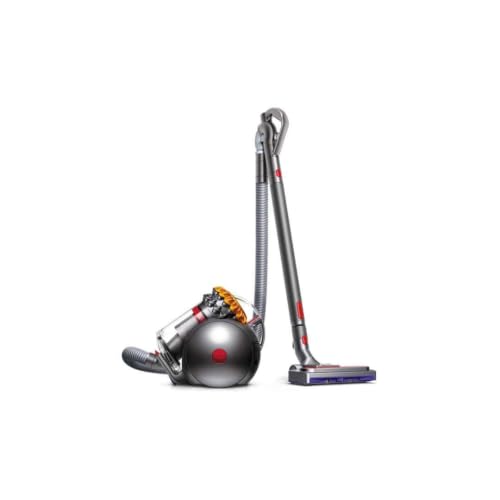
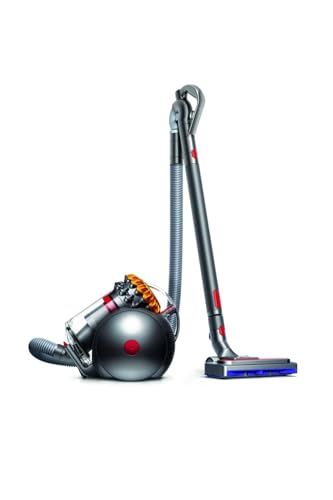
You should consider buying a Dyson canister vacuum when uninterrupted cleaning, above-floor reach and a larger bin matter more than cordless convenience. The hose and wand work well around furniture, curtains and stairs, while the low body follows behind instead of placing the motor and battery in the hand.
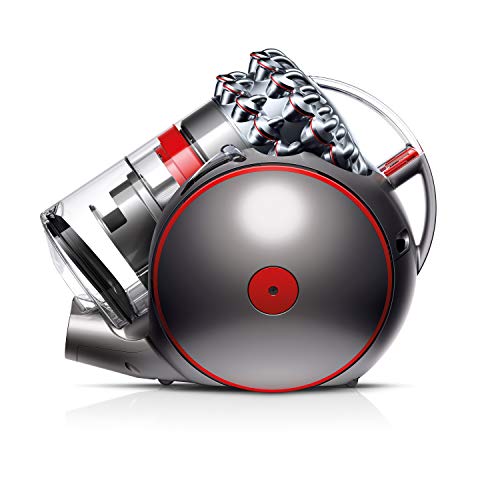
Big Ball suits mixed-floor homes that want straightforward cyclone filtration and self-righting stability. Cinetic Big Ball is more attractive when reducing filter maintenance matters, although its fine cyclone system still needs the bin, shroud and tools kept clear.
Choose carefully if the machine must be carried frequently. A body near 8 kg and a cable around 6.5 m can be awkward in a multi-level home, and 80 dB is relatively loud for long sessions.

What are the main Dyson canister vacuum series?
The main Dyson canister-vacuum series are as follows:
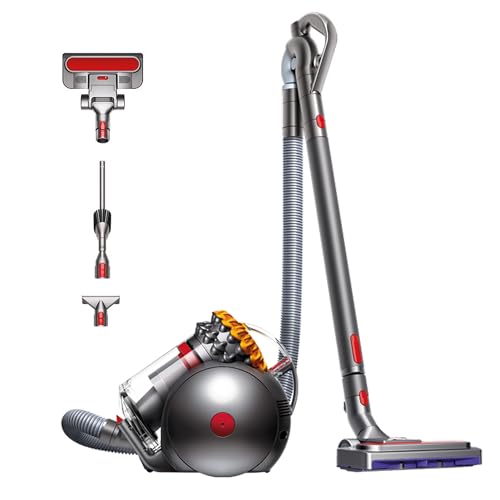
- Big Ball: This is Dyson’s standard canister family, represented by Multifloor, Allergy and Absolute packages. Its roughly 1.5 L bin and self-righting body suit sustained mixed-floor cleaning, while the suffix determines the included floorhead and tools.
- Cinetic Big Ball: This family adds oscillating cyclone tips designed to separate finer dust with less filter maintenance. Animal and Animal Pro packages include more hair-focused tools and use a bin around 1.6 L, but the machine weighs close to 8 kg.
How much do Dyson canister vacuums cost?
Dyson canister vacuums generally cost about £280-£390. Big Ball Multifloor and Allergy models occupy the lower end near £280-£300, while Absolute and Cinetic Animal packages move toward £390.
Because the price band is narrow, the better value usually comes from the useful floorheads and tools rather than a cheaper body. Pay more when the package adds a parquet head, tangle-free pet tool or Cinetic system that suits the home; avoid paying for accessories that will remain stored.
What should you check before buying a Dyson canister vacuum?
You should check the following factors before buying a Dyson canister vacuum:
- Big Ball or Cinetic: Choose Big Ball for a simpler cyclone and washable-filter system, or Cinetic when reduced filter maintenance matters. The actual floorhead package is still more important than the family label.
- Suction and floorhead: Published output is roughly 150–180 AW. Match a parquet head to hard floors, a turbine or musclehead to mixed floors and a tangle-free tool to upholstery hair.
- Bin capacity: Expect about 1.5–1.6 L. Check the usable fill line and ejector because long hair can bridge inside the bin even when its nominal capacity looks adequate.
- Cable and reach: The cable is approximately 6.5–6.7 m, so total operating radius depends heavily on hose and wand length. In a large home, confirm that the reach avoids frequent socket changes.
- Weight and steering: These models weigh around 7.5–8 kg. Test the carry handle, stair balance, self-righting action and whether the canister follows without catching around furniture.
- Noise and filtration: Operation is close to 80 dB, which is clearly audible. Require a sealed path, keep the bin seals clean and follow filter instructions for the exact Big Ball version.
- Package and parts: Allergy, Absolute, Multifloor and Animal names change the supplied tools. Confirm local hoses, heads, filters and seals by the complete model code before choosing a discounted regional version.