
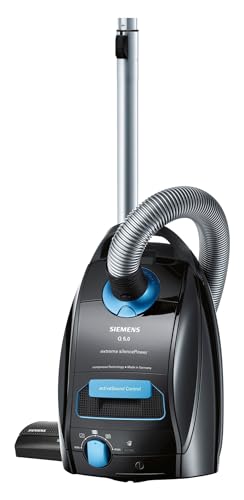
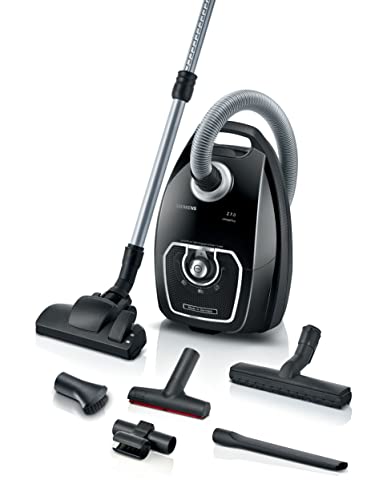
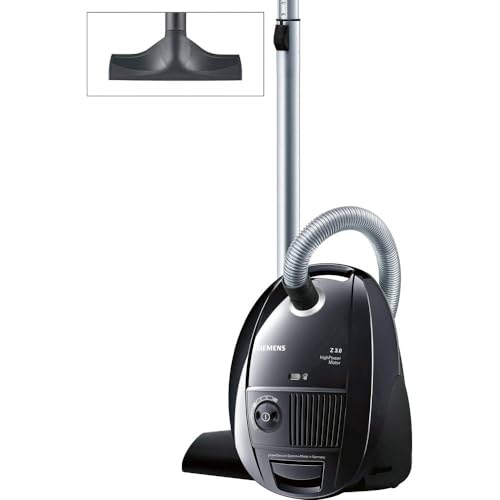
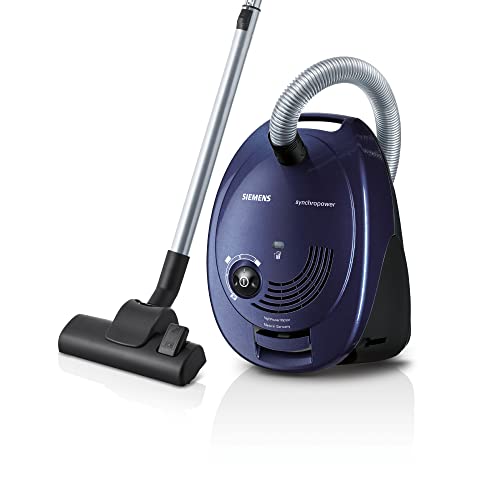
Are Siemens vacuum cleaners good?
Siemens vacuum cleaners have an average overall score of 7, ranking #27 among comparable vacuum-cleaner brands, and a user rating of 9.2, placing them at #4 based on user reviews.
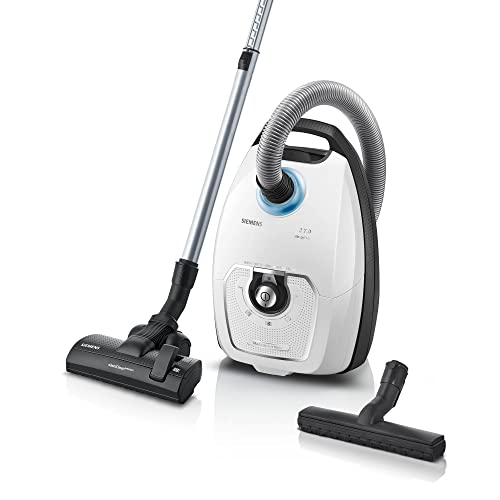
Siemens vacuum cleaners are a good choice for buyers who want a traditional bagged canister with 4–5 L capacity, adjustable suction and a long operating radius. Q 5.0 and VSZ7 models offer quieter operation and large bags, while Extreme Power packages add turbo-oriented floor tools.
Siemens vacuum cleaners are less suitable for stairs, quick spot cleaning or buyers who want a current cordless ecosystem. Many models also use dense codes rather than clear retail tiers, so the head, bag and filter must be checked individually.
The chart below compares vacuum-cleaner brands by average overall score.
[horizontal-chart-05060405232908929908180547999782892589572867802681]
What are the main advantages of Siemens vacuum cleaners?
The main advantages of Siemens vacuum cleaners are as follows:
- Large bag capacity: Many VSZ and VSQ models hold 4–5 L, reducing bag changes during long sessions.
- Quiet options: Q 5.0 Extreme SilencePower and selected VSC7/VSZ7 models operate around the high-60s dB, noticeably calmer than 80 dB canisters.
- Long operating radius: Higher models commonly reach 11–12 m, which covers large rooms with fewer socket changes.
- Adjustable suction: Electronic power control helps move from curtains and upholstery to rugs without making the head difficult to push.
- Mature consumables: PowerProtect-style bags, filters and standard canister tools are widely established within the BSH appliance ecosystem, though exact compatibility still depends on the model.
What are the main disadvantages of Siemens vacuum cleaners?
The main disadvantages of Siemens vacuum cleaners are as follows:
- Little cordless choice: The models here are canisters, so users must manage a cable, hose and body on stairs.
- Dense model numbers: VS06, VSC, VSQ, VSX and VSZ codes do not clearly explain bag, capacity, noise or supplied head without reading the full specification.
- Input power is easy to misread: A 600–850 W motor figure describes electricity use, not suction output or floor pickup.
- Large models need storage: A 5 L canister and long hose provide capacity and reach but occupy more cupboard space than a stick.
- Bagless versions require more maintenance: VSX cyclone bins avoid consumable bags but expose the user to dust and require filter and separator cleaning.
Who makes Siemens vacuum cleaners?
Siemens-branded household vacuum cleaners were produced within BSH Hausgeräte, the home-appliance group now wholly owned by Bosch. BSH manufactures and markets domestic appliances under several licensed brands, including Siemens.
This corporate relationship explains technical overlap with Bosch canisters, but the exterior, package and service code remain brand- and market-specific.
Use the full E-number from the rating plate for bags, filters, hoses and heads. A Bosch part that appears similar is not automatically approved for a Siemens model.
What are the main series of Siemens vacuum cleaners?
The main Siemens vacuum-cleaner series are as follows:
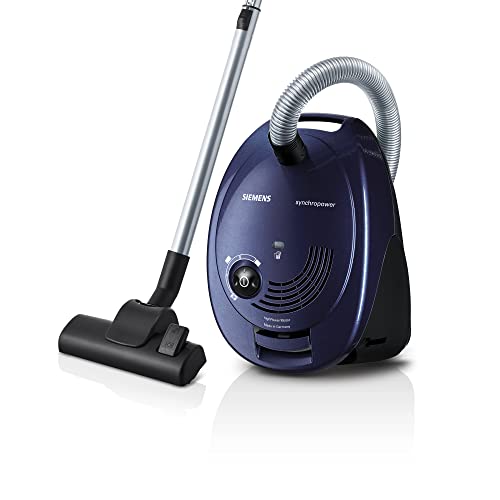
- VS06 and VSC3: These are compact entry bagged canisters, generally with about 4 L capacity and moderate operating reach. They suit straightforward household cleaning.
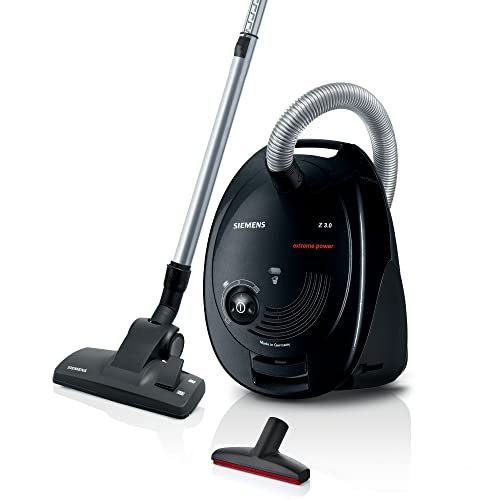
- VSZ3 and Z 3.0: These families continue the compact bagged format, with Extreme Power packages adding carpet-oriented tools. Motor input should not be read as suction output.
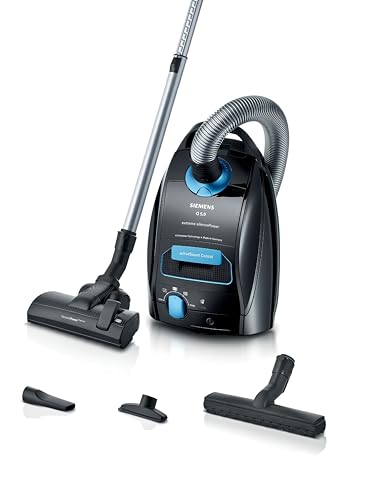
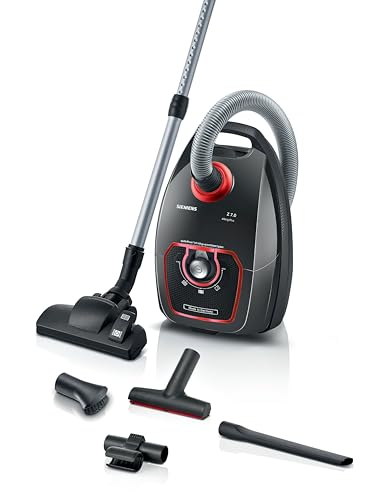
- VSQ5 Q 5.0, VSZ7 and VSC7: Q 5.0 focuses on quieter operation and a large bag, while VSZ7 is the higher-capacity long-reach branch. VSC7 also includes quiet packages.
- VSX21 and VSX41: These are bagless cyclone canisters with roughly 2–3 L bins. They avoid replacement bags but require more separator and filter maintenance.
How much do Siemens vacuum cleaners cost?
Siemens vacuum cleaners generally cost about £100-£300. Compact VS06, VSC3 and VSZ3 models occupy roughly £90-£130, while Q 5.0 and better-equipped bagged versions sit around £120-£220.
Large VSZ7 and premium VSX bagless models reach about £220-£260. The higher price should buy a longer radius, quieter motor, larger bag or genuinely useful turbo head, not simply a bigger wattage figure.
The chart below shows the price distribution of Siemens vacuum cleaners.
[vertical-chart-02010351844601935995099945674067311645762883733706]
How do Siemens vacuum cleaners compare with Bosch?
Siemens and Bosch canisters share BSH engineering roots and often use similar bag and motor concepts. Bosch now has the broader visible range, including Unlimited cordless sticks and clearly numbered Series 2–8 canisters, while Siemens in this comparison remains focused on corded VS models.
Based on our research, Siemens averages roughly £150, compared with about £220 across Bosch's wider cordless and corded range. Comparable bagged canisters from both brands provide 3.5–5 L capacity and 9–15 m reach depending on tier.
Choose Siemens when a discounted Q 5.0, VSZ7 or familiar bagged canister matches the home. Choose Bosch for a newer cordless platform, broader current support or a specific ProAnimal/ProSilence package. The exact head and E-number matter more than the corporate relationship.
What should you check before buying a Siemens vacuum cleaner?
Consider the following factors before buying a Siemens vacuum cleaner:
- Bagged or bagless: VS06/VSC/VSQ/VSZ models are generally bagged with 4–5 L capacity; VSX uses 2–3 L cyclone bins and needs more direct maintenance.
- Floorhead: A passive combination head suits hard floors and light carpet; Extreme Power or turbo packages add agitation for deeper carpet and pet hair.
- Reach: Entry models offer roughly 8–10 m, while higher Q/VSZ models reach about 11–12 m. Compare operating radius rather than cable length alone.
- Noise: Quiet versions around 66–70 dB are preferable for long sessions. Ordinary models near 78–81 dB will sound much more intrusive.
- Filtration and bags: Check HEPA or hygiene-filter class, body sealing and the exact PowerProtect-compatible bag. Poorly fitted third-party bags can leak and reduce airflow.
- Weight and storage: Larger 5 L bodies reduce bag changes but are harder on stairs. Measure cupboard space for the hose and telescopic wand.
- E-number: Use the complete service code for bags, filters, nozzles and repairs. Retail names such as Extreme Power do not identify every compatible part.