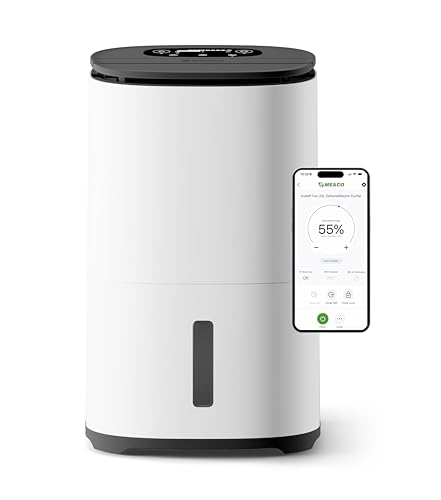
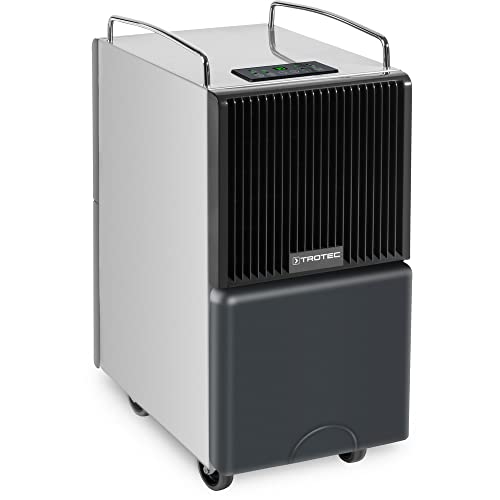
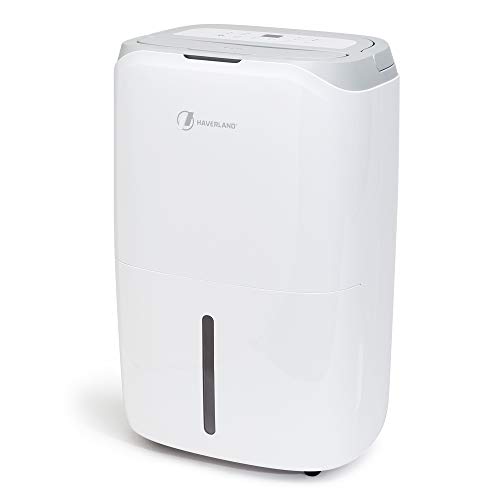
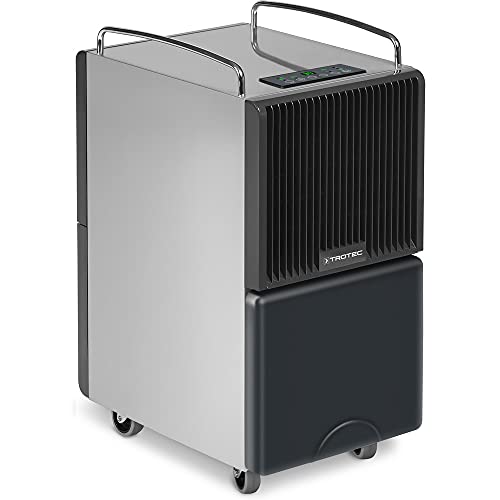
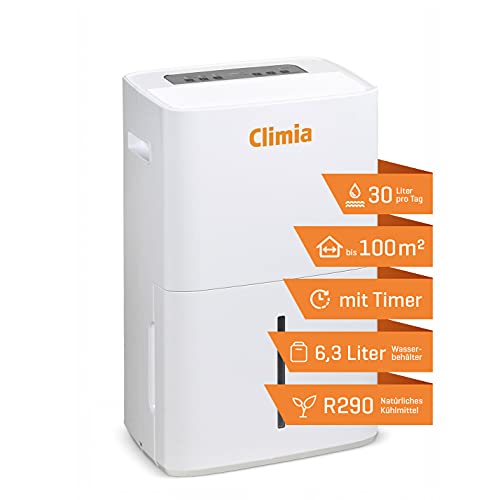
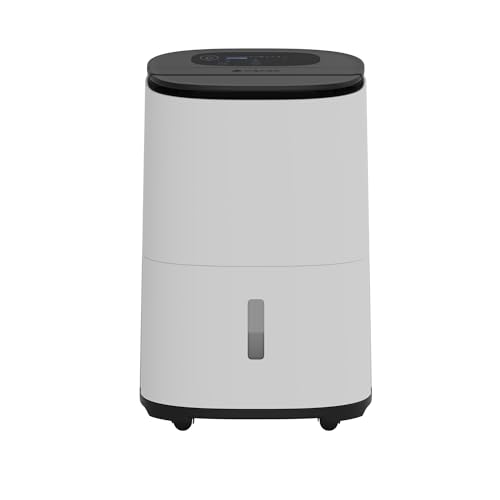
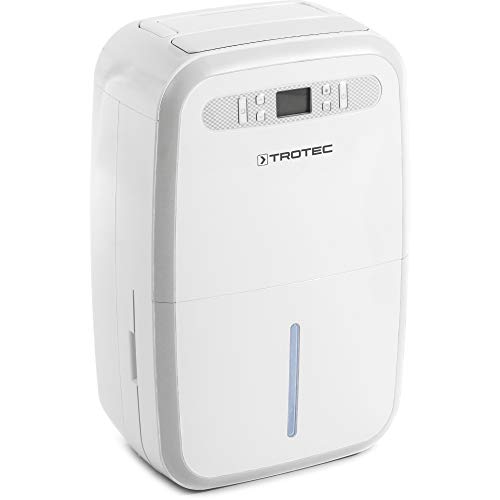
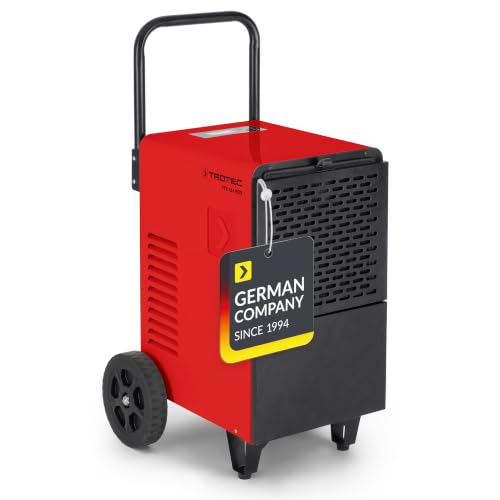
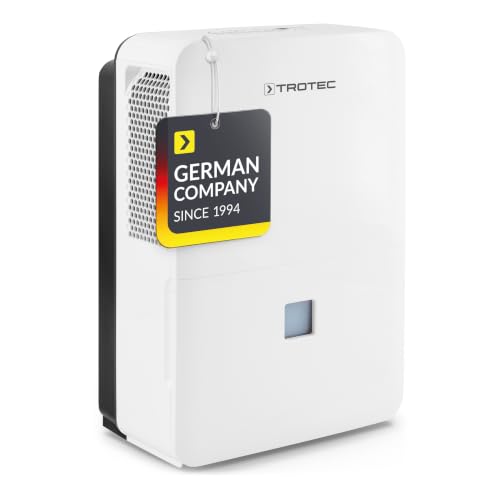
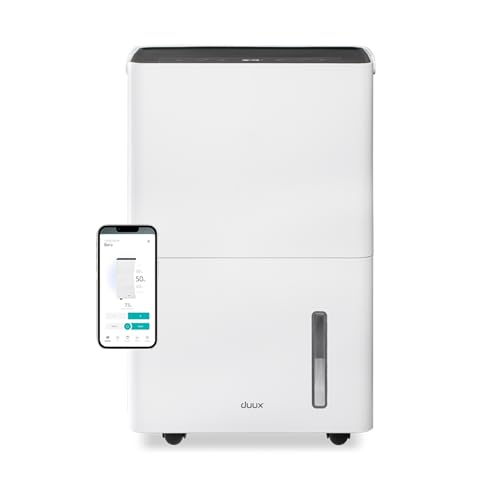
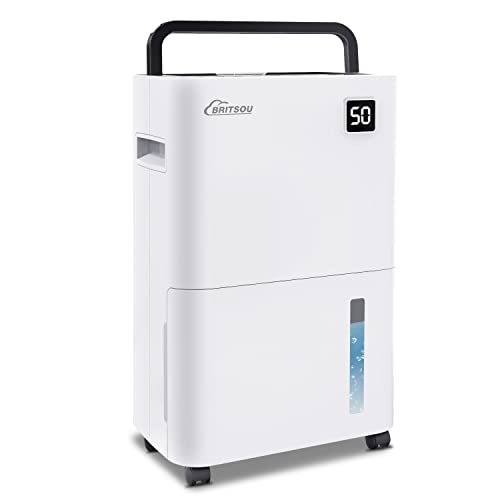
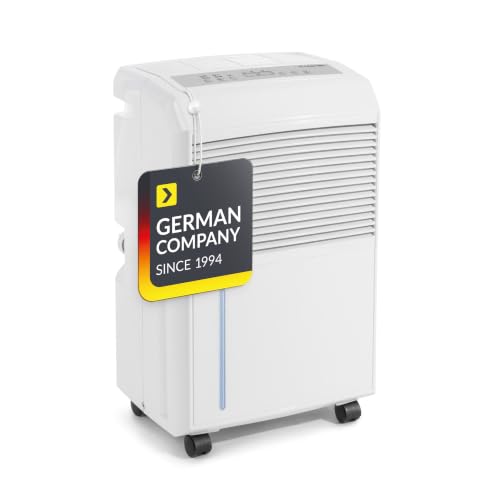
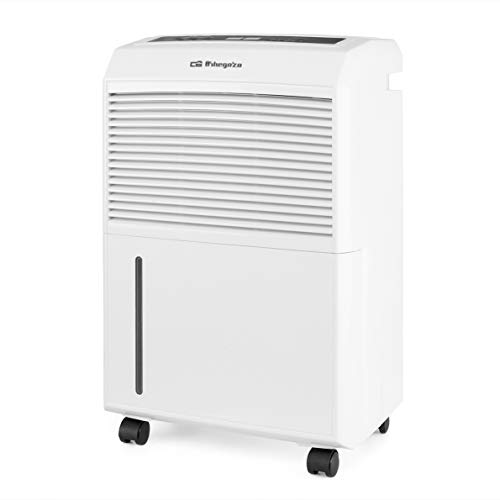
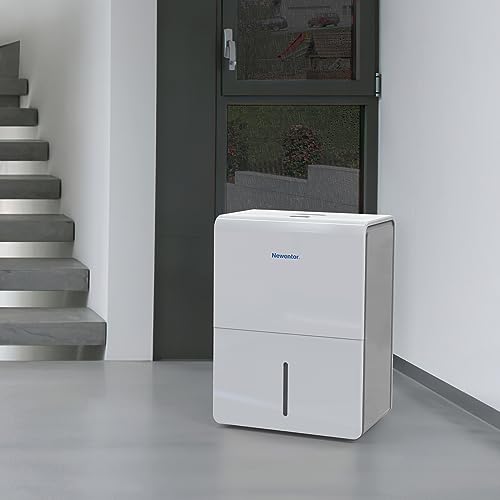
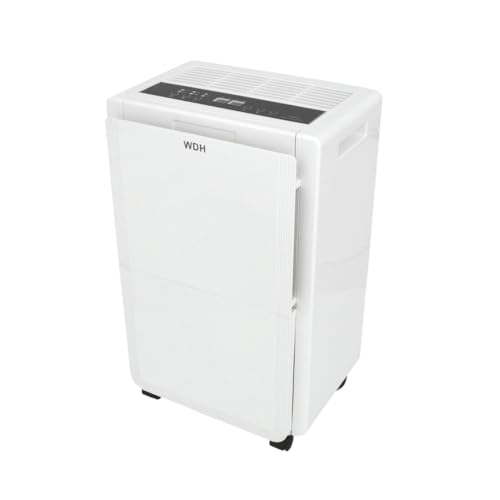
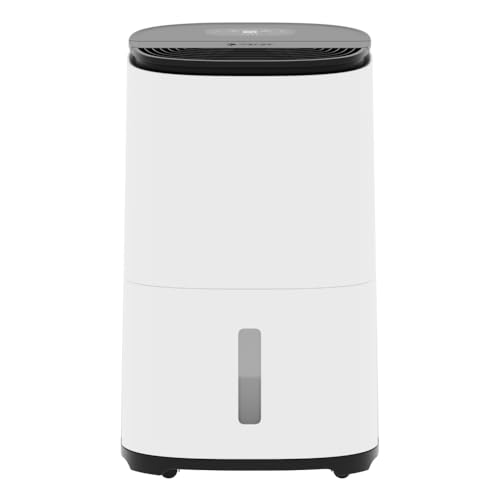
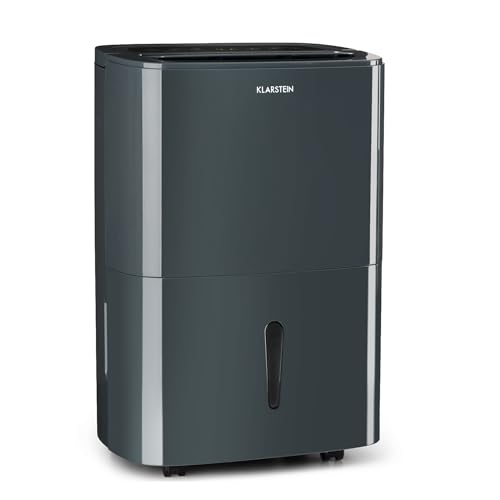
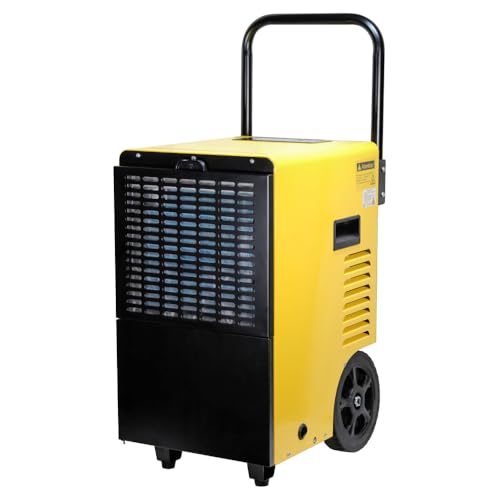
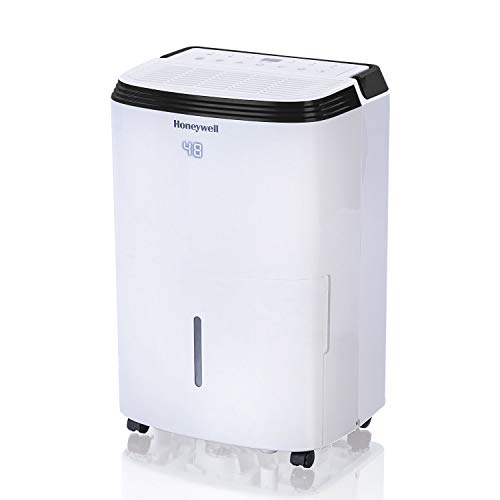
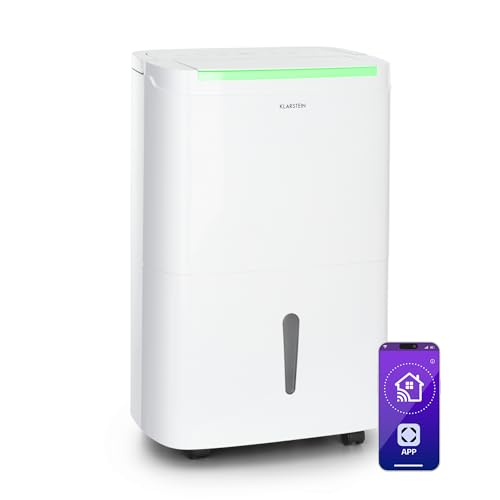
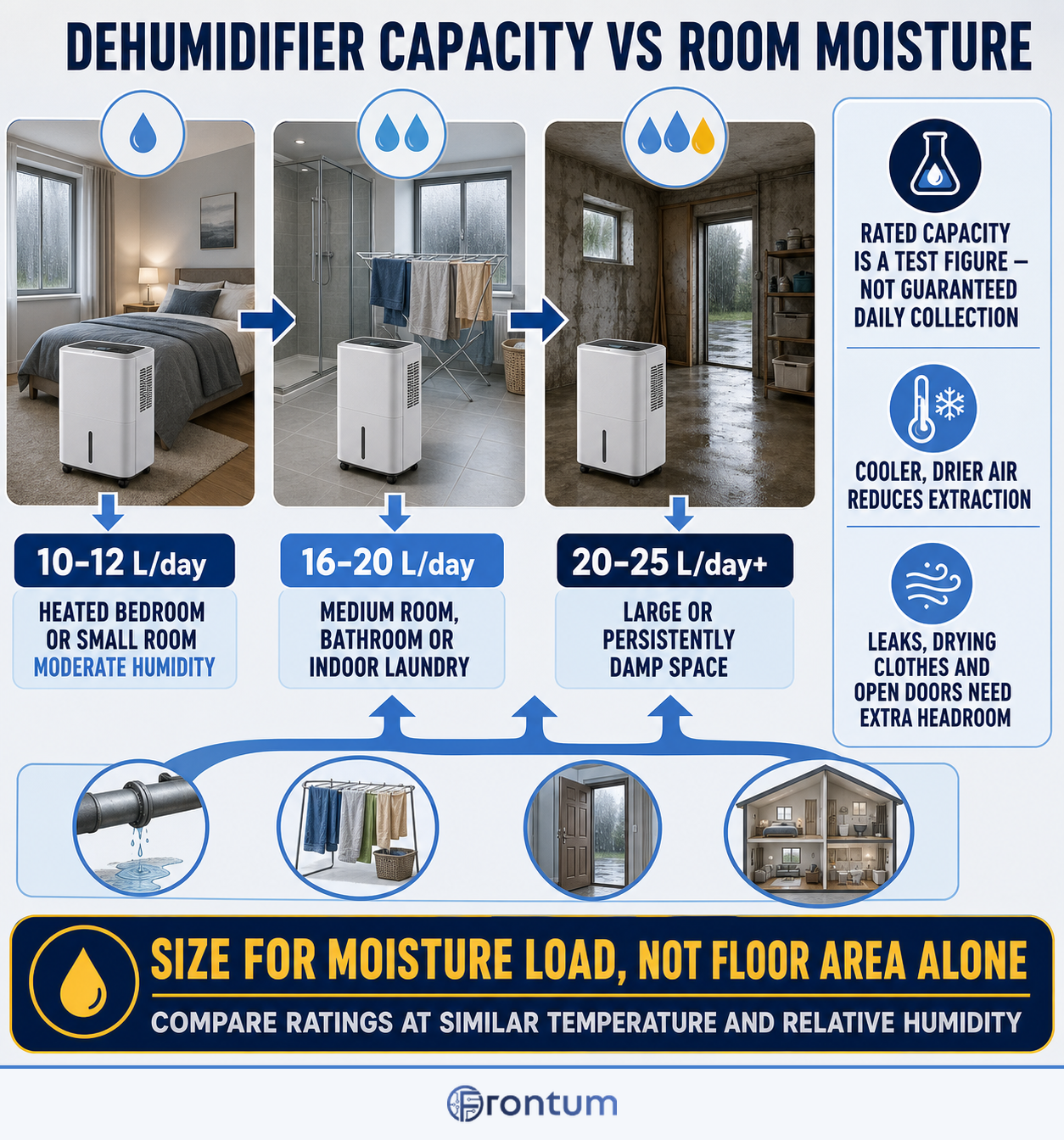
The best dehumidifiers for normal homes usually extract about 10–25 L/day under the manufacturer’s test conditions. A 10–12 L/day model is often sufficient for a heated bedroom or small room with moderate humidity, while 16–20 L/day gives more headroom for indoor laundry, bathrooms, and recurring condensation. Large or persistently damp spaces may justify 20–25 L/day or more.
The rated figure is not the amount the tank will collect every day. Extraction falls as air becomes cooler and drier, so two machines with the same headline capacity can perform differently at normal room conditions. Compare ratings measured at similar temperature and relative humidity whenever those conditions are published.
Capacity should match the moisture load rather than floor area alone. Leaks, porous walls, drying clothes, open doors, and movement between several rooms all increase the required margin, while a reliable hygrostat lets an adequately sized unit cycle off after reaching the target humidity.
The chart below shows the distribution of dehumidification capacity among dehumidifiers.
[vertical-chart-14125846367065711353080143856113264022060660002331]
What room size can the best dehumidifiers handle?
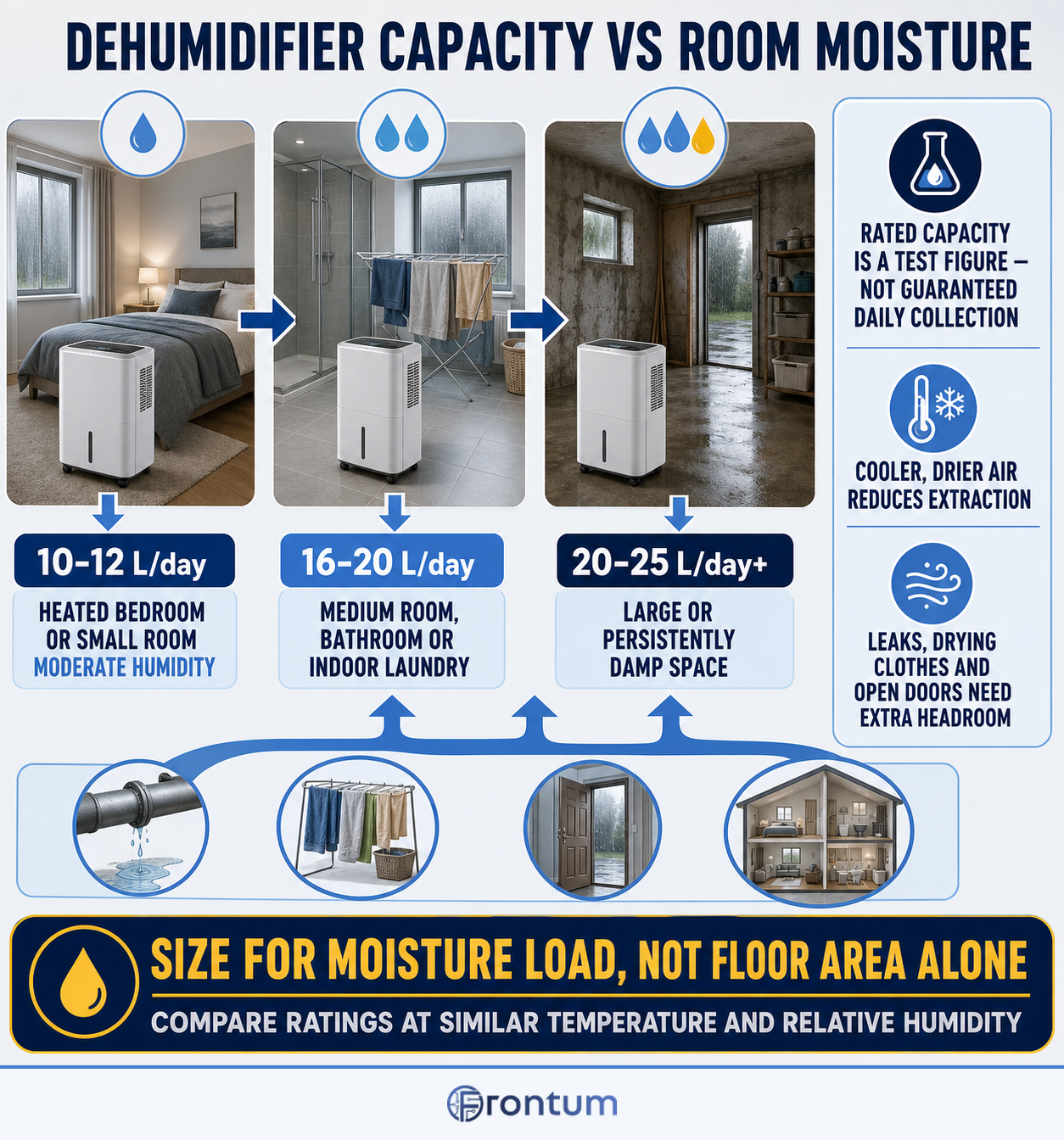
The best dehumidifiers can serve rooms from roughly 15 to 80 m², but extraction rate and building conditions matter more than a marketing room-size claim. A 10–12 L/day unit is a sensible starting point for many small heated rooms, 16–20 L/day gives more headroom in medium rooms or for laundry, and 20–25 L/day is better suited to larger or persistently damp spaces.
Increase capacity when the room is cold, doors are frequently opened, moisture enters through walls, or several rooms share one machine. Manufacturers may calculate room coverage under different temperature and humidity conditions, so compare extraction ratings measured under similar conditions and allow spare capacity instead of choosing exactly at the stated limit.
What capacity and drainage options do the best dehumidifiers have?
The main capacity and drainage options are as follows:
- Extraction rate: A rating of 10–12 L/day suits many small heated rooms, 16–20 L/day provides a useful margin for medium rooms and laundry, and 20–25 L/day is preferable for larger or persistently damp areas. Treat these figures as comparative test ratings because real extraction falls as temperature and humidity decrease.
- Tank capacity: A 2–3 L tank is manageable for moderate use, while 4–5.5 L reduces emptying on higher-capacity machines. A larger tank also increases size and weight, so it matters less when continuous drainage will be used.
- Continuous drainage: A gravity hose lets the machine run without repeated tank emptying when a drain is below the outlet. Check whether the hose is included, the outlet size, and whether the installation can maintain a steady downward slope.
- Pump drainage: An integrated pump can move water upward to a sink or through a window when no floor-level drain is available. Verify the supported lift height and hose length because pump capability varies between models.
- Full-tank protection: Automatic shut-off and a clear full-tank warning prevent overflow when collecting water manually. Auto restart is also valuable after a power interruption, especially in basements or unattended rooms.