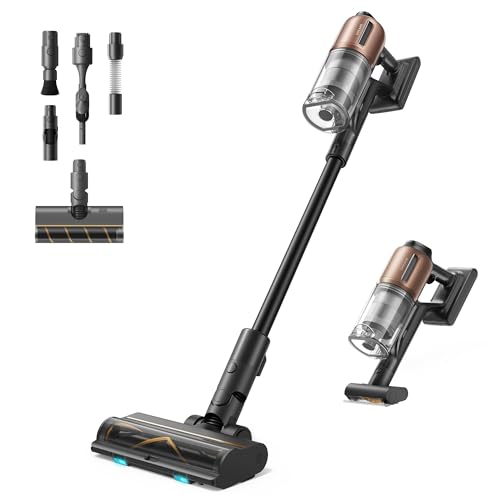
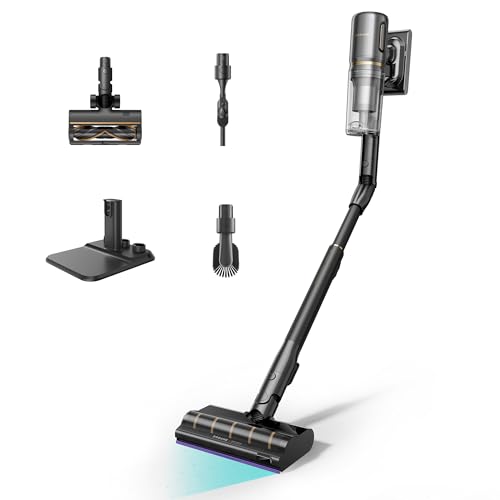
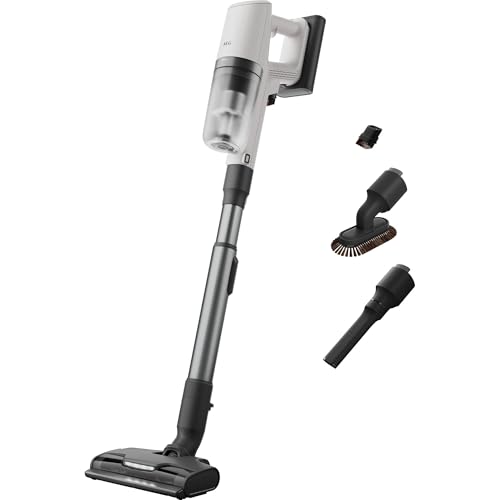
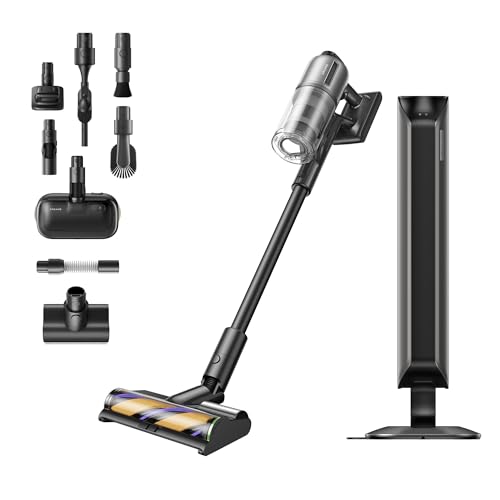
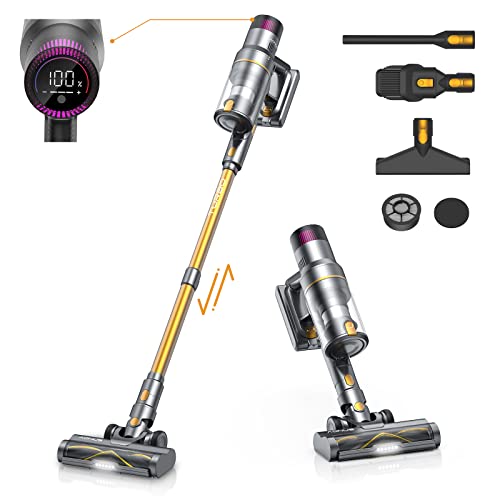
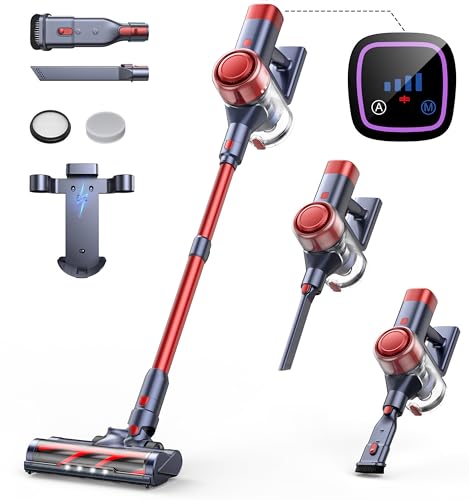
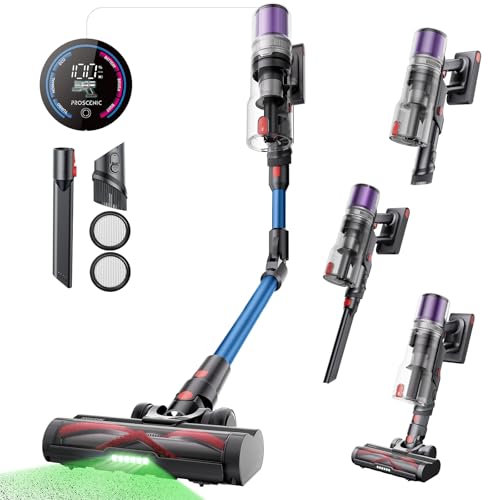
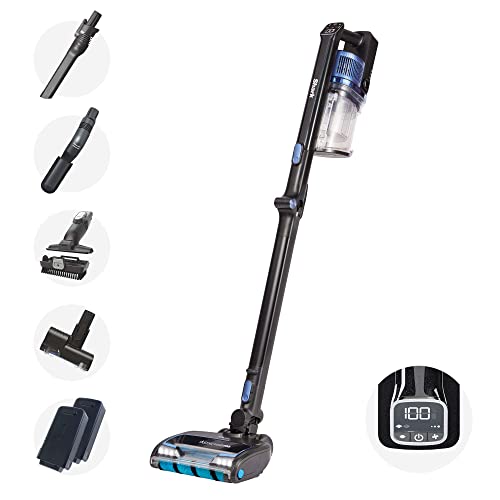
Which brands make the best cordless vacuums in 2026?
The best cordless-vacuum brands in 2026 are ranked below:
- BuTure (Average overall score: 8.5)
- Dreame (Average overall score: 8.4)
- LG (Average overall score: 8.3)
- Shark (Average overall score: 8.2)
- Proscenic (Average overall score: 8.2)
The chart below ranks cordless-vacuum brands by average overall score.
[horizontal-chart-00353438093506599761013685998412526889353169417487]
When should you consider buying a cordless vacuum?
You should consider a cordless vacuum if you often clean several small areas, stairs, or rooms where moving a cable between sockets is inconvenient. It is particularly useful for frequent pickup around furniture, cars, and entrances because it can be ready without setting up a hose or power cord.
The format also works as a main vacuum when its normal-mode runtime covers the home and the floorhead suits every important surface. Larger homes may benefit from a removable second battery or a model that can recharge one pack while the other is in use.
A corded vacuum remains the safer choice for long uninterrupted sessions, heavy workshop debris, or maximum power without battery ageing. Base the decision on the typical cleaning session rather than on convenience alone.
Are cordless vacuums better than corded models?
Cordless vacuums are better than corded models for mobility, but corded vacuums are stronger on average and can run continuously. Models with published figures average about 140 AW and 25 L/s for cordless vacuums, compared with roughly 210 AW and 35 L/s for corded models.
Pressure is close to 20 kPa for both groups, but kPa does not include airflow and therefore does not settle the comparison. Cordless models also average roughly 350 W of electrical input versus 750 W for corded models; input watts describe energy use rather than suction.
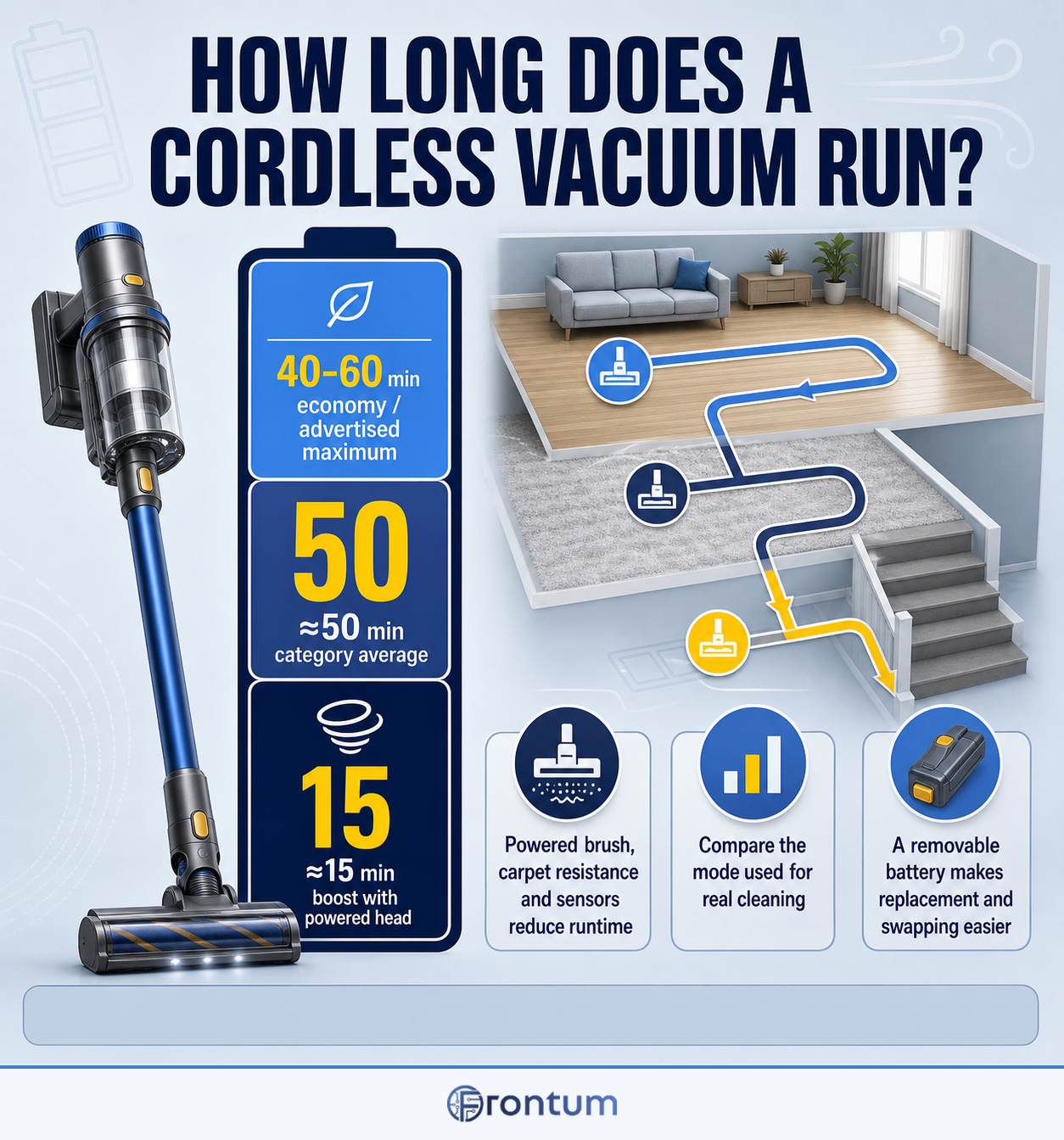
A cordless vacuum averages about 50 minutes in its advertised lower-power runtime, but maximum mode averages only around 15 minutes. Choose cordless for quick setup, stairs and short sessions; choose corded for sustained carpet cleaning or large areas where recharging would interrupt the job.
How long do cordless vacuums run?
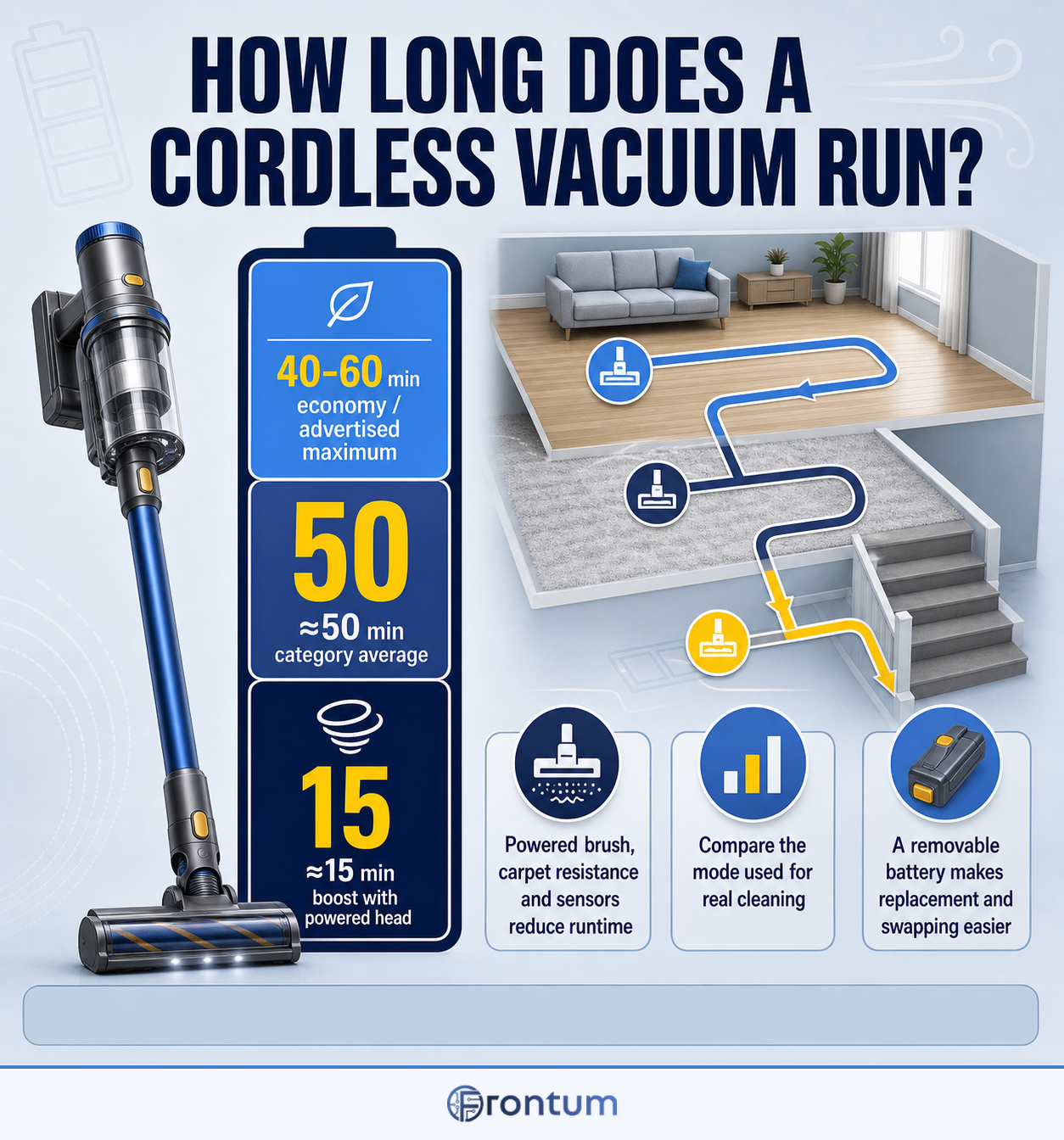
Cordless vacuums average about 50 minutes of advertised runtime, with many models falling near 40–60 minutes. This is normally the maximum figure in an economical mode and may be measured without a powered floorhead.
Maximum or boost mode averages only about 15 minutes, and normal cleaning with a motorised brush also uses more energy than the advertised economical mode. Compare mode-specific figures instead of treating the longest claim as the expected result.
Battery condition, floor resistance, dirt sensors, and tool choice also affect a session. A removable battery lets the user swap packs and makes eventual replacement easier, but a second pack is useful only if it can be charged and stored conveniently.
Estimate how long one normal cleaning round takes, then leave a margin rather than sizing the battery exactly to that duration.
The chart below compares the stated battery runtime of cordless vacuums.
[vertical-chart-18216389618215259384170450972673969789643738921133]
How long do cordless vacuums take to charge?
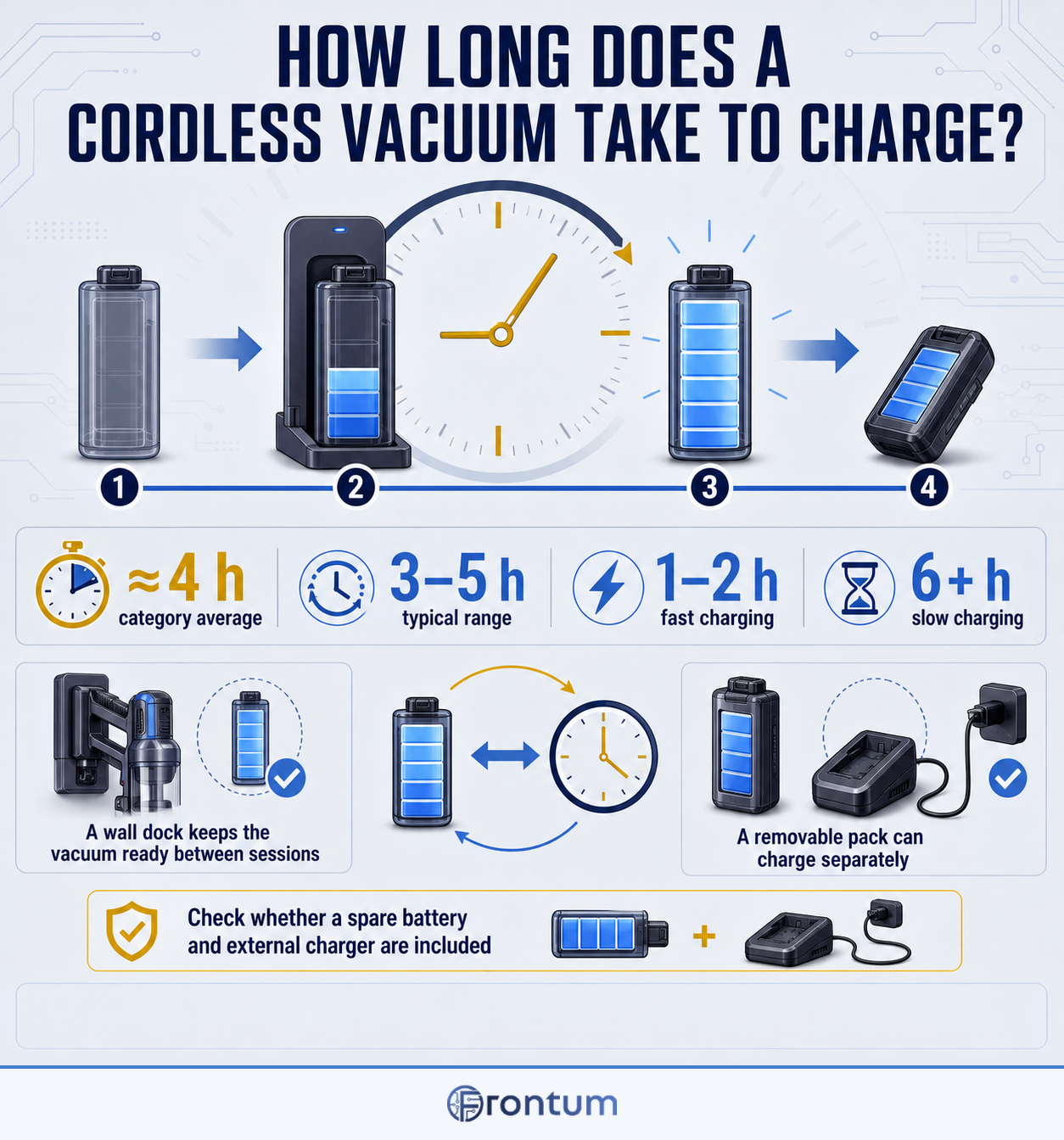
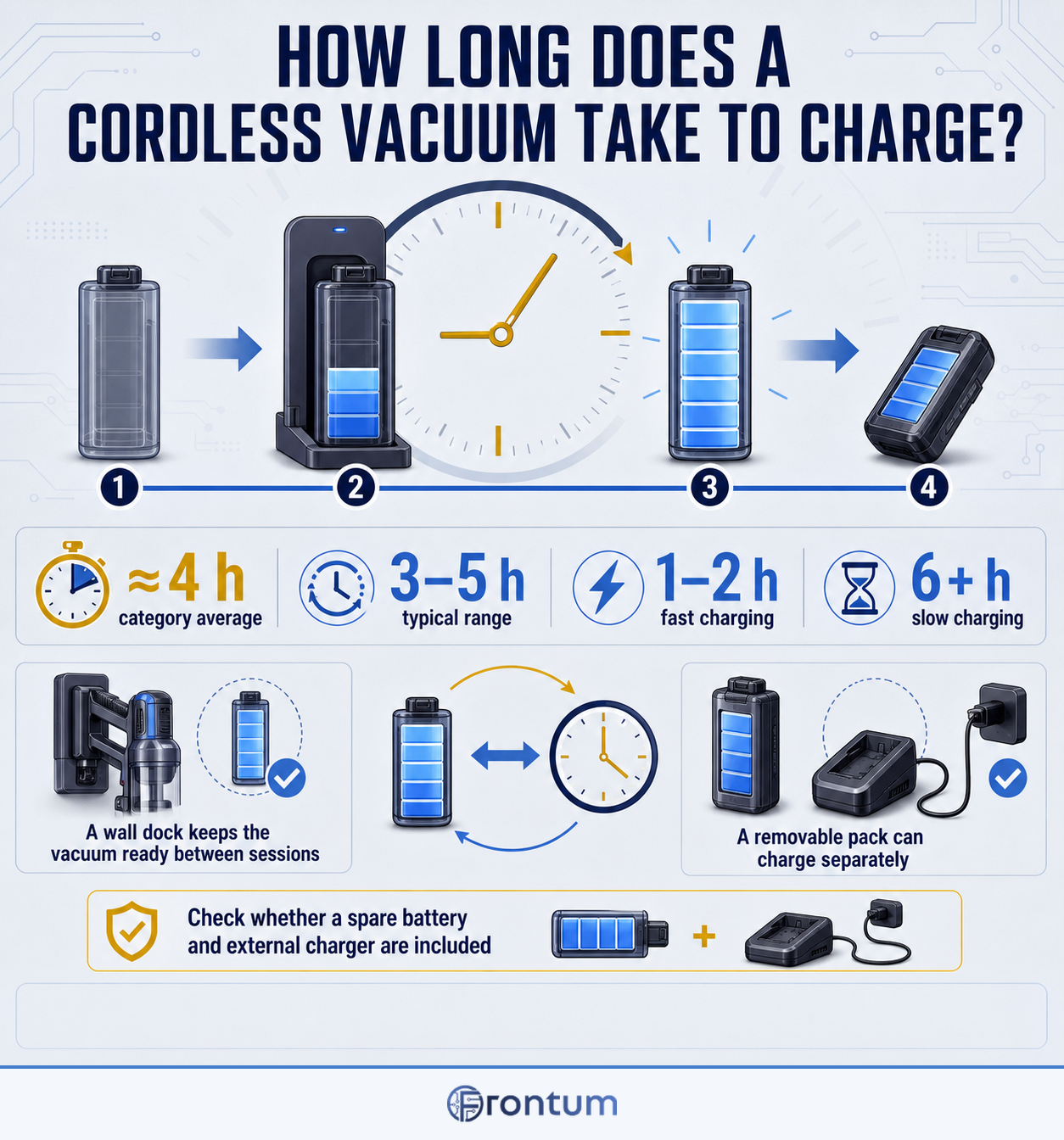
Cordless vacuums average about four hours to recharge, and 3–5 hours is a practical normal range. Fast models can take 1–2 hours, while 6 hours or more makes repeated same-day use difficult. Charging time matters most when the battery cannot finish the normal cleaning session or the vacuum is used repeatedly during the day.
A wall dock keeps the machine topped up between uses, while a removable pack can be charged separately and replaced when its capacity declines. Check whether a spare battery and external charger are included or merely optional, and avoid comparing charging time without also considering the battery capacity and runtime it restores.
How much do cordless vacuums cost?
Cordless vacuums generally cost about £70-£600, although basic handheld and entry-level stick models can start near £30. Many capable everyday models fall between roughly £140 and £340, while premium systems with automatic-emptying docks or multiple batteries can reach £800-£900.
The battery, powered floorhead, filtration, and included tools account for much of the price difference. Check whether the advertised package includes a second battery, charger, dock, miniature motorised tool, and hard-floor head, because bundles with the same vacuum body can differ substantially.
Long-term value depends on the cost and availability of batteries, filters, and brush rolls. A replaceable battery can extend the service life, but only if a compatible replacement remains obtainable at a reasonable price.
The chart below shows the price distribution of cordless vacuums.
[vertical-chart-13529778375416996618130267092340545437973855622499]
What should you check before buying a cordless vacuum?
You should check the following factors before buying a cordless vacuum:
- Runtime by power mode: Around 40–60 minutes in eco or low power can cover many routine sessions, but maximum mode commonly lasts only about 8–15 minutes. Compare runtime with the powered floorhead attached, because carpet resistance, dirt sensors, and motorised tools shorten the result.
- Charging and battery design: Roughly four hours is a normal full-charge time, while one to two hours is unusually fast and six hours or more limits repeated use. Batteries around 18–25 V and 2,000–3,000 mAh are common, but watt-hours are more useful for capacity: for example, 25.2 V × 2.5 Ah equals 63 Wh.
- Suction power and cleaning head: Around 100–150 AW is a useful everyday range, while approximately 150–250 AW provides more headroom for carpet and pet hair; figures approaching 300–400 AW belong to the highest-output models. Compare the same mode and test point, do not treat kPa or motor input watts as equivalent, and pair the number with a powered head roughly 230–270 mm wide.
- Weight and balance: A total weight around 2–3 kg is manageable for routine use, while a model above about 3.5 kg becomes more tiring on stairs or in handheld mode. Wrist load also depends on whether the motor and battery sit near the hand, so compare handheld weight and balance as well as total mass.
- Capacity and emptying: A bin around 0.5–0.8 L balances size with reasonable emptying intervals. Pet hair can fill a compact bin quickly, so inspect whether compacted debris is pushed out and whether the bin and shroud are accessible for cleaning.
- Filtration and noise: Look for a sealed exhaust path rather than relying only on the word HEPA, because air bypassing the filter is not cleaned. Noise around 70–75 dB is comparatively restrained, while 80–86 dB is loud for sustained use; compare values in the same power mode.
- Tools, dock, and spares: A miniature motorised head is more effective on upholstery than a passive brush, while a soft roller is useful for fine dust and larger debris on hard floors. Confirm the dock location and power connection, then check prices and availability for filters, brush rolls, and replacement batteries.