
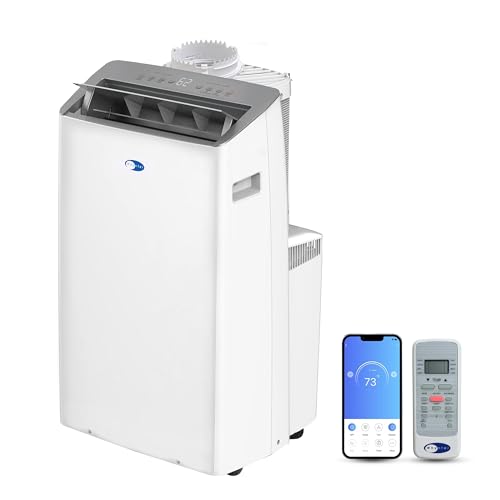
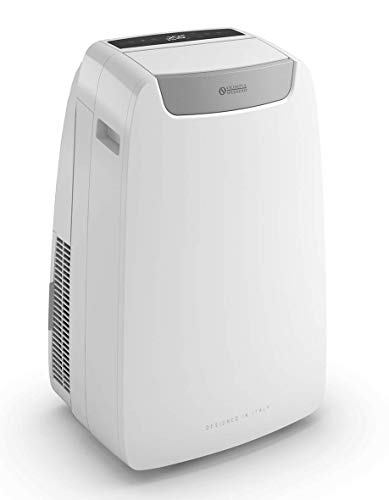
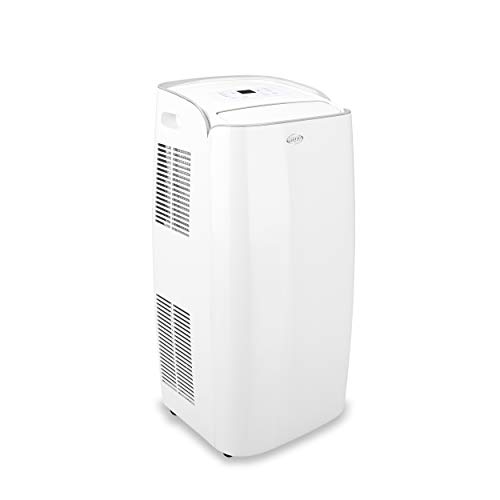
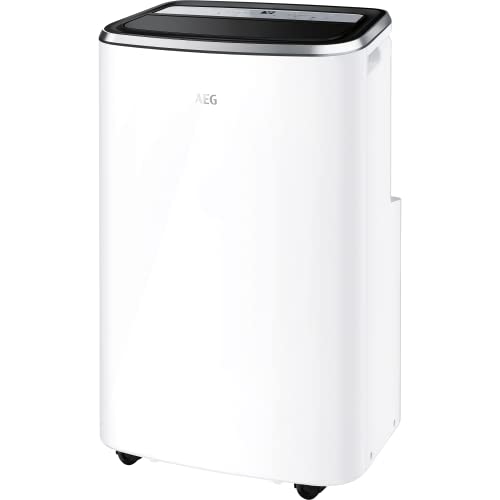
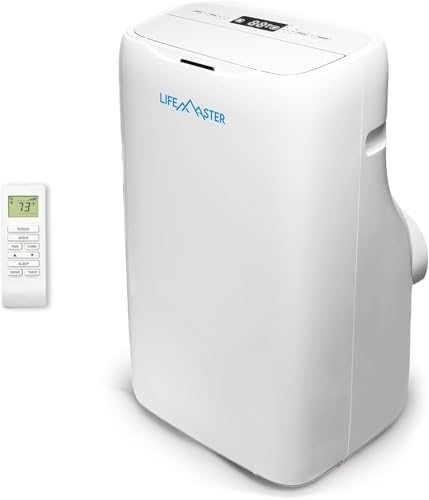
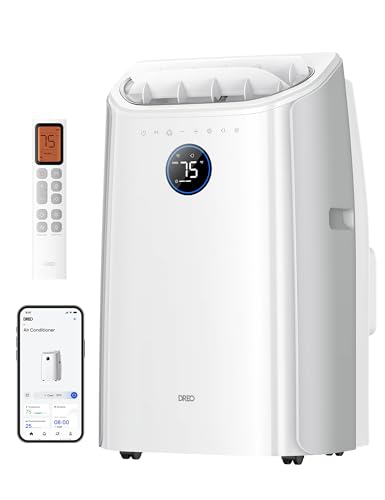
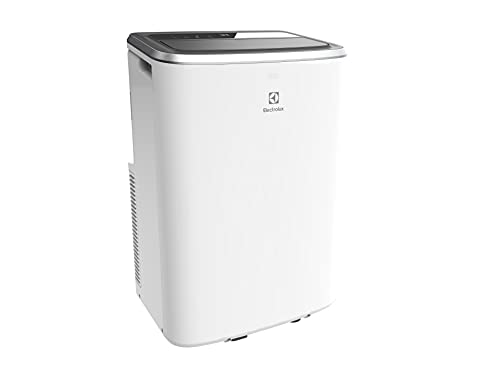
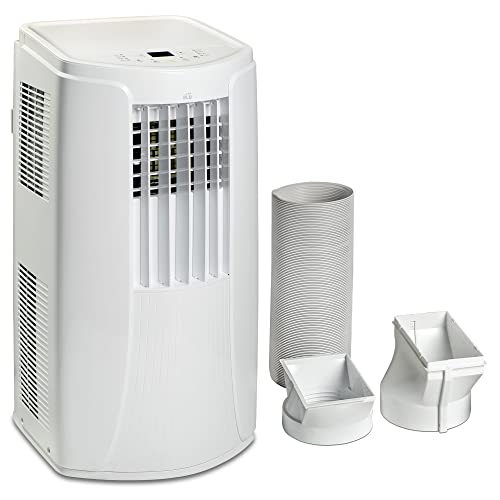
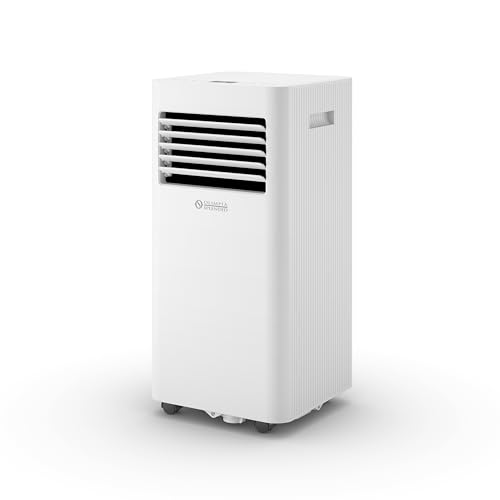
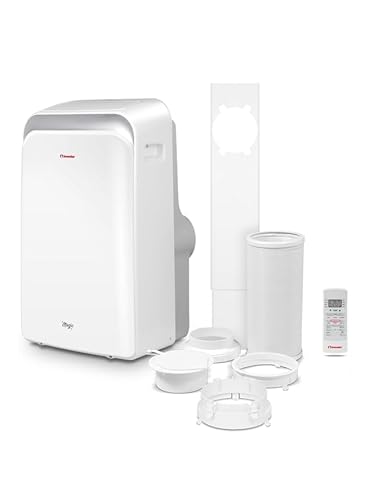
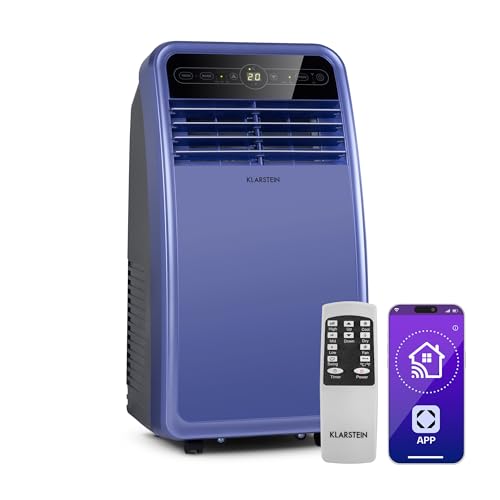
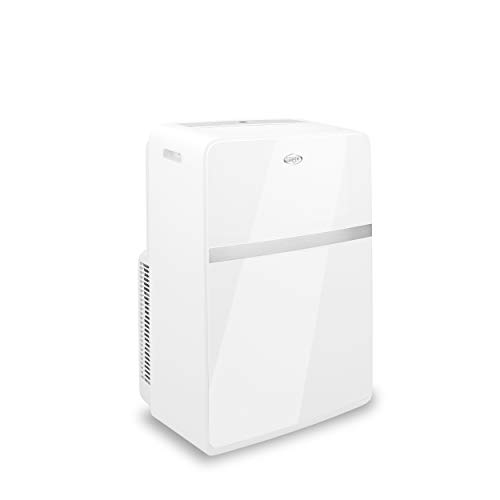
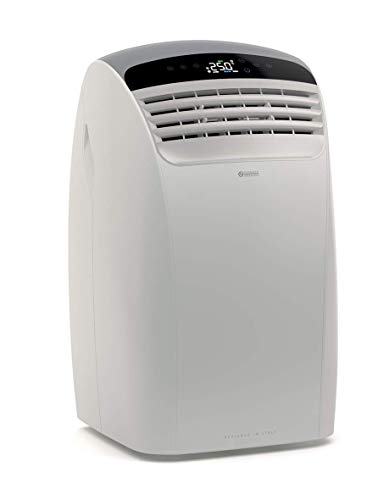
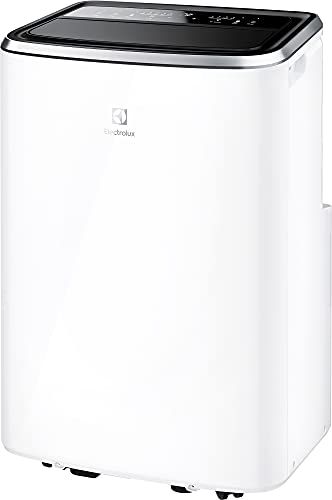
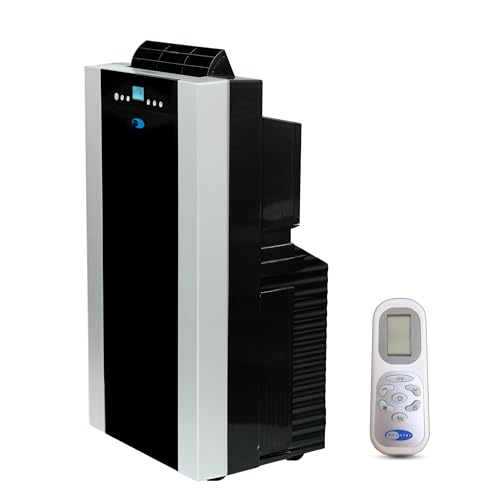
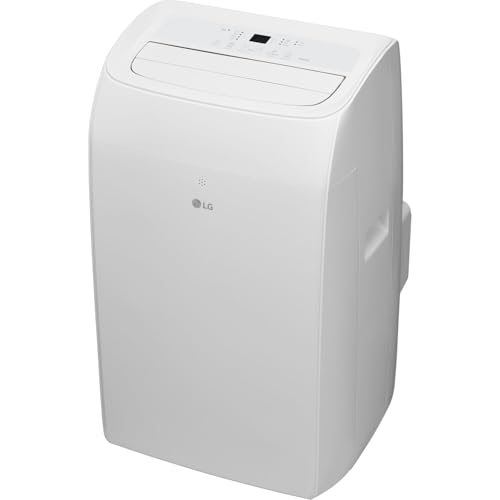
What are the best portable air conditioner brands of 2026?
The best portable air conditioner brands in 2026 are ranked below:
- [shortcode-17812335121372612695174023537206065572550732629677] (Average overall score: [shortcode-01859342008455476018151653228108646962514079158881])
- [shortcode-16154609599573674042158109250745527503902982418278] (Average overall score: [shortcode-00763190249635240459011822603189667439704022866212])
- [shortcode-13947988553099798001110280336279225636404174298170] (Average overall score: [shortcode-04490683239981435776070555175239349823890084706925])
- [shortcode-08709192790574923005143978139017380694530710422481] (Average overall score: [shortcode-06286985922673781066101516142817188989213426852500])
- [shortcode-11302088380597636028159613975186976342311812259805] (Average overall score: [shortcode-05618517295167360267010505126387324397564065252035])
The chart below ranks portable air conditioner brands by average overall score.
[horizontal-chart-02839060684686217927017168216412032633021333716521]
Which portable air conditioner brands have the highest user ratings?
There is no dependable brand-wide user-rating winner for portable air conditioners because ratings are published for individual models and vary by retailer and market.
The most useful comparison is to read each model’s rating together with its review count, review date, cooling capacity, and maximum noise figure. A consistent score across several established models is more informative than one high score from a lightly reviewed unit.
Which portable air conditioner brands offer the best value for money?
The portable air conditioner brands offering the best value for money are ranked below:
- [shortcode-10647497655407185577182538728832125026382689110178] (Average quality-price ratio: [shortcode-03752143800075490632140361581572355477421517976521])
- [shortcode-01072699110655765846144072627160114827270967316262] (Average quality-price ratio: [shortcode-03724218471988553367167058936573203383701030495469])
- [shortcode-12591436877094970296128779169844302050041041326205] (Average quality-price ratio: [shortcode-06922304678991350728060427758226517505922599607568])
- [shortcode-01714442230021825212075451188516872274632815745499] (Average quality-price ratio: [shortcode-00120486473997621690063253537764881518083901721124])
- [shortcode-09809782822436545442114827975594559111560008037697] (Average quality-price ratio: [shortcode-18321386626532003636004808916097265861843368056917])
The chart below compares portable air conditioner brands by average quality-price ratio.
[horizontal-chart-18302141257862383949125392457690700680293020763948]
How much do the best portable air conditioners cost?
The best portable air conditioners usually cost about £400-£900. Basic entry models around £220-£300 can cool smaller rooms with a fan, dehumidification, timer, and window kit, but they normally involve more compromises in noise, controls, efficiency, or capacity.
The stronger all-round choices are usually around £400-£600, where you are more likely to find 9,000–12,000 BTU/h cooling, better controls, quieter night settings, stronger room coverage, or inverter operation. Premium models from roughly £600-£900 add higher capacity, refined noise control, heating, or smart-app features; they are worthwhile when those extras match the room and usage rather than simply because they cost more.
The chart below shows the price distribution of portable air conditioners.
[vertical-chart-03065505429483368896090205384246119601833263929947]
What cooling capacity do the best portable air conditioners have?
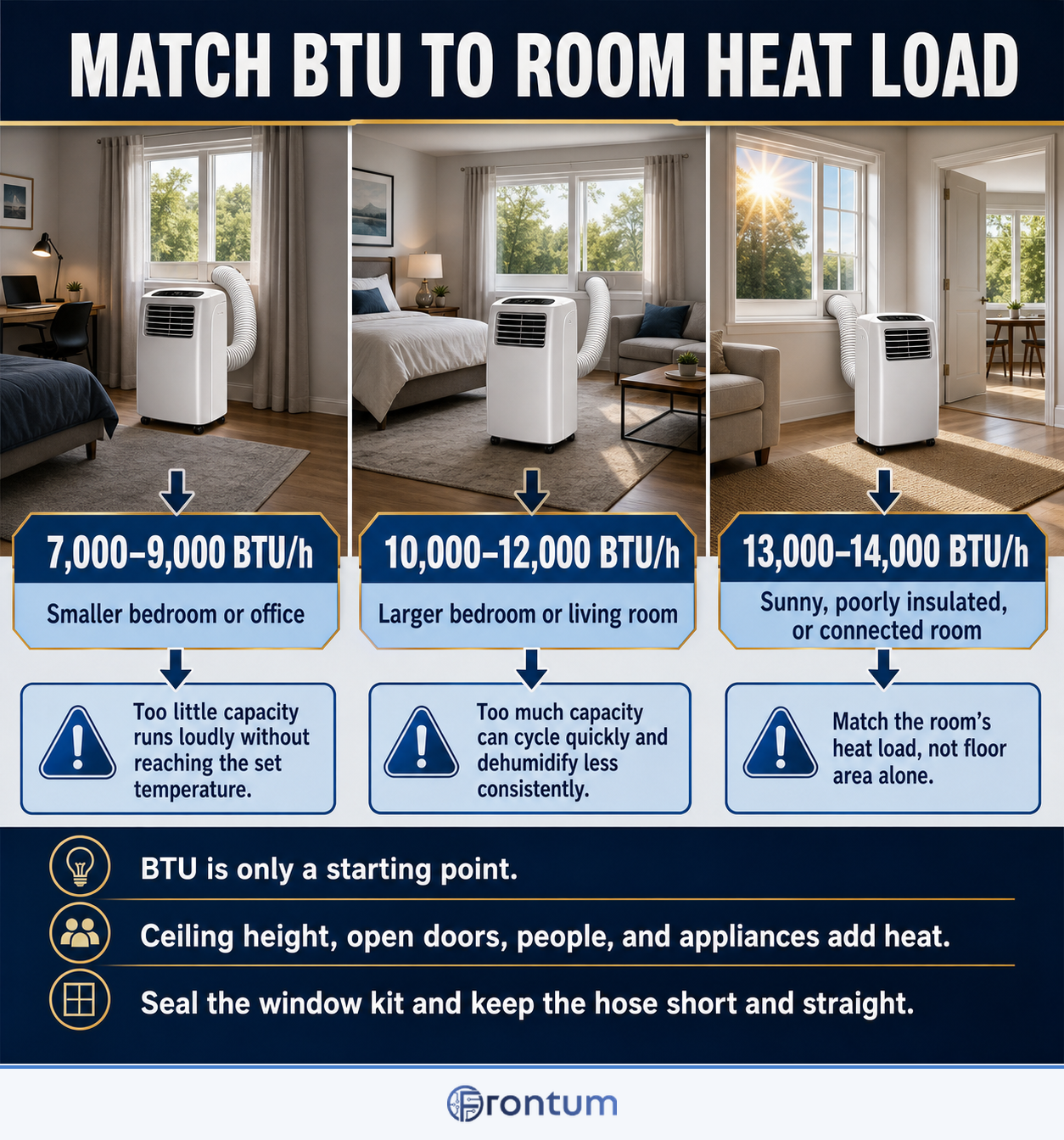
The best portable air conditioners usually provide about 7,000–14,000 BTU/h of cooling. A 7,000–9,000 BTU/h model is suitable for a smaller bedroom or office, while 10,000–12,000 BTU/h is a practical middle range for larger bedrooms and living rooms.
Choose around 13,000–14,000 BTU/h when the room is larger, sunny, poorly insulated, or connected to another space, but do not use BTU alone: a poorly sealed hose or undersized window kit can waste the extra output. Check the manufacturer’s room-size guidance against your climate, ceiling height, and heat load.
The chart below shows the cooling-capacity distribution of portable air conditioners.
[vertical-chart-13347244444474580746144024382131865857852543976608]

What room size can the best portable air conditioners cool?
The best portable air conditioners commonly cover roughly 20–50 m², but the useful figure depends on heat entering the room. A well-insulated bedroom may be comfortable near the lower end of a model’s claim, whereas a sunny living room with high ceilings needs more capacity or a smaller zone.
Use the room-size number as a starting point, then allow for windows, insulation, people, appliances, and open doors.
Oversizing can cool quickly but cycle noisily and dehumidify less consistently; an undersized unit may run continuously without reaching the set temperature.
The chart below shows the maximum-room-size distribution of portable air conditioners.
[vertical-chart-00307086173632290503174820272903316401740486391484]
Are dual-hose portable air conditioners better than single-hose models?
Dual-hose portable air conditioners are usually more efficient than single-hose models in hot, demanding rooms, but they are less common and more involved to install. One hose brings in outside air for the condenser and the other expels hot air, so the room is less likely to draw warm replacement air through gaps.
Single-hose units are simpler, lighter to position, and adequate for many bedrooms when the window seal is good. Their exhaust can create slight negative pressure, which may pull warm air into the room and make the compressor work longer during very hot weather.
Choose dual hose when the room is sunny, large, or difficult to keep sealed and the window can accept two ducts. Otherwise, a well-sealed single-hose unit with the right BTU capacity is often quieter, easier to store, and better value.
Are inverter portable air conditioners more energy-efficient?
Inverter portable air conditioners can be more energy-efficient because they vary compressor speed instead of repeatedly switching between full output and off. That smoother control can maintain temperature with less cycling, reduce start-up noise, and avoid large swings in a moderately loaded room.
The saving is not automatic: compare the rated input power and efficiency class, and make sure the inverter model is correctly sized. A poorly sealed hose, extreme outdoor heat, or constant maximum cooling can outweigh the benefit, while a fixed-speed model may cost less up front for occasional use.
How much electricity do the best portable air conditioners use?
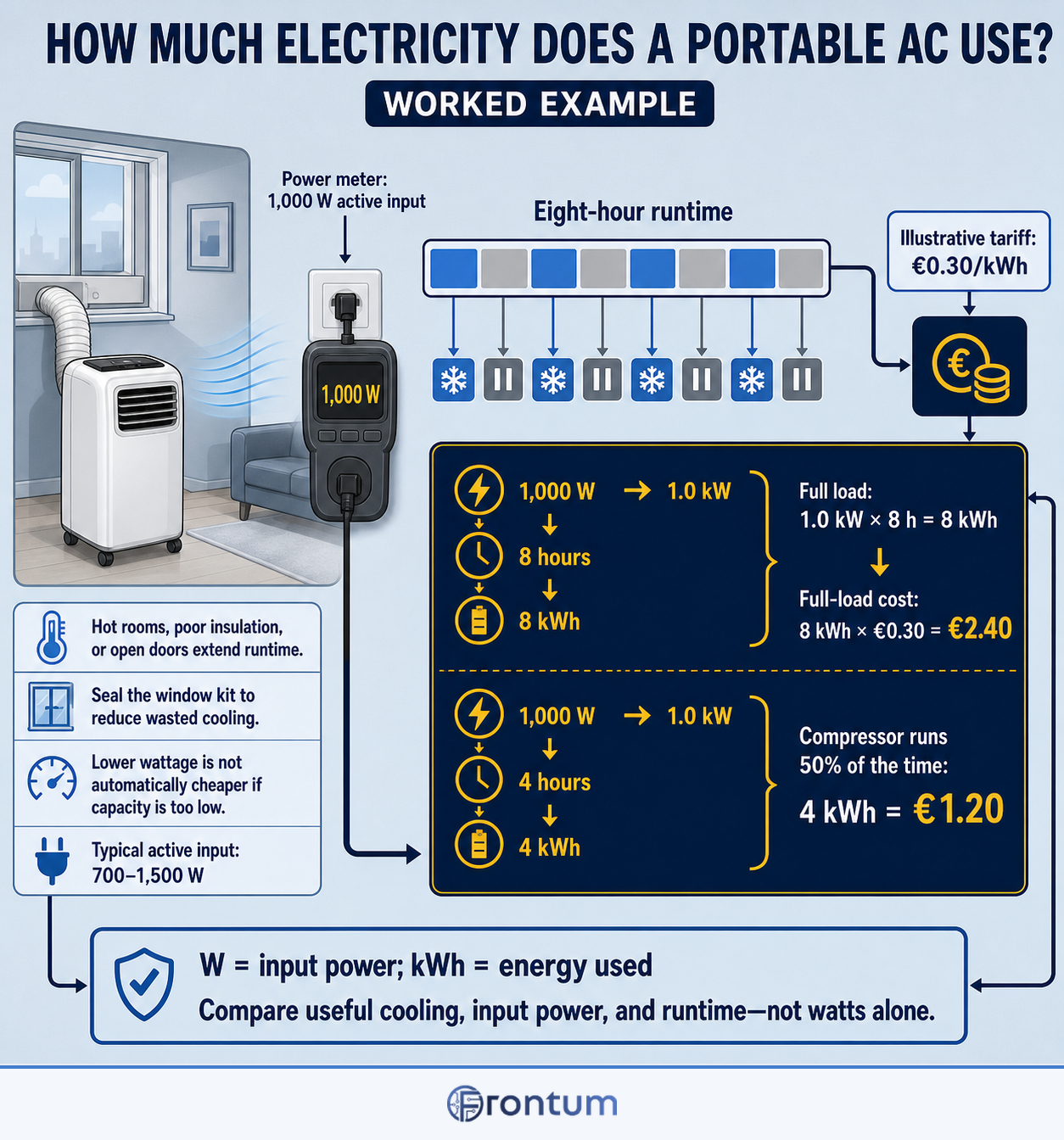
A typical portable air conditioner draws roughly 700–1,500 W while actively cooling, so eight hours of full-load operation can use about 5.6–12 kWh before cycling and thermostat pauses are considered. The exact figure depends on BTU capacity, efficiency, outdoor heat, and whether the compressor is running.
Lower input power is not automatically cheaper if the unit removes less heat. Match the capacity to the room and seal the window kit.
Use a sensible set temperature and select inverter or eco operation when the room is already close to comfortable; these measures reduce run time without sacrificing useful cooling.

How quiet are the best portable air conditioners?
The quietest portable air conditioners are usually rated around 52–55 dB at their maximum setting, while many ordinary models reach about 60–65 dB. A lower number is easier to live with in a bedroom or office, but published tests can use different fan speeds and distances.
Look for a night or sleep mode, several fan speeds, and a compressor design that can run steadily rather than restarting often. Place the unit on a solid floor, keep the hose short and straight, and avoid directing the exhaust or vibration against a wall; these details can change the perceived sound as much as a small rating difference.
The chart below shows the maximum-noise distribution of portable air conditioners.
[vertical-chart-09734129099320542353121777846630641102632128431176]
Which modes and comfort features do the best portable air conditioners have?
The main comfort features of a portable air conditioner are as follows:
- Cooling and dehumidification: Cooling lowers room temperature while dehumidification helps when the air feels damp; check whether the unit can run the compressor and fan independently.
- Fan-only operation: A fan mode circulates air without active cooling, useful during mild evenings when compressor noise and energy use are unnecessary.
- Night or sleep mode: This normally lowers fan speed or adjusts the set point gradually, but verify that it does not disable the timer or raise the room temperature too far.
- Timer and restart: An adjustable timer can stop the unit after bedtime, while automatic restart matters if power interruptions are common.
- Airflow direction: Oscillation or adjustable louvers spread cool air more evenly; fixed discharge can leave hot and cold zones in a larger room.
- Heating and smart control: Heat pumps, Wi-Fi, voice control, or a useful remote can add convenience, but only pay for them when the season, network, and app support fit your routine.
How easy are the best portable air conditioners to install and move?
Portable air conditioners are reasonably easy to move and install when the window kit, hose, and drainage are planned before purchase. The main checks are as follows:
- Window compatibility: Measure the opening and confirm that the supplied panel seals it; a loose seal lets hot air back in and wastes cooling.
- Hose route: Keep the exhaust hose short, straight, and free of sharp bends. Every extra restriction makes heat rejection harder and can increase noise.
- Drainage: Check whether normal humidity is handled continuously or requires a tank to be emptied. A full tank can stop cooling at an inconvenient time.
- Weight and wheels: Many units weigh about 20–35 kg, so sturdy casters and recessed handles matter when crossing thresholds or storing the machine.
- Clearance and power: Leave the manufacturer’s intake and outlet space, use a properly rated wall socket, and avoid extension leads unless explicitly approved.
- Storage: Plan a dry upright storage spot for the off-season and keep the hose, window parts, remote, and drain accessories together so the next installation is quick.