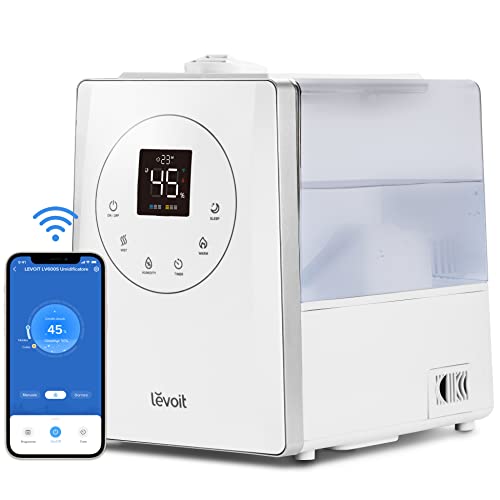
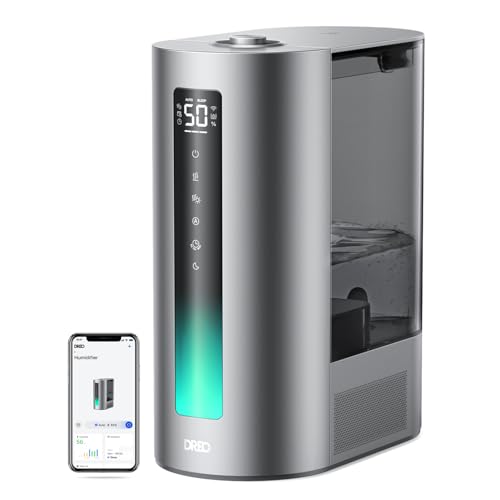
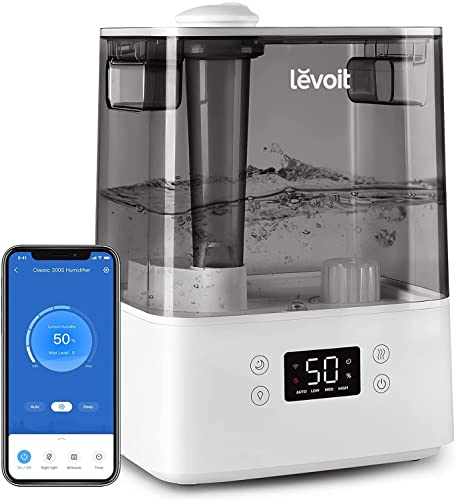
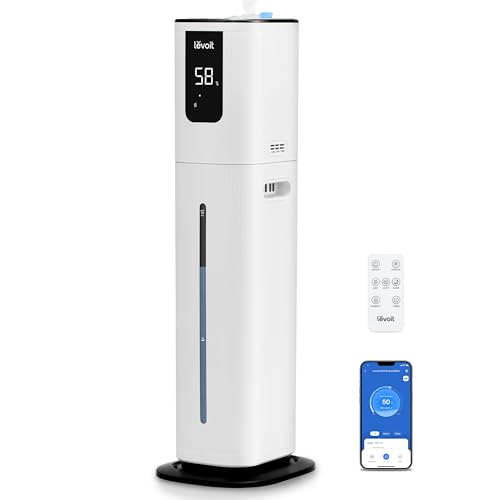
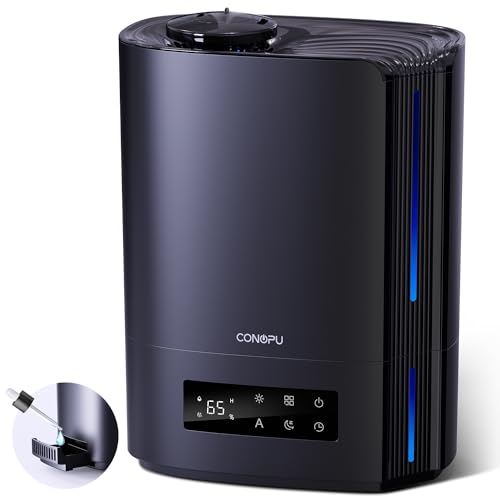
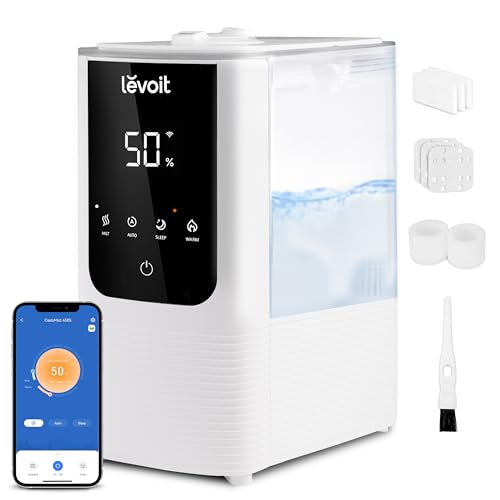
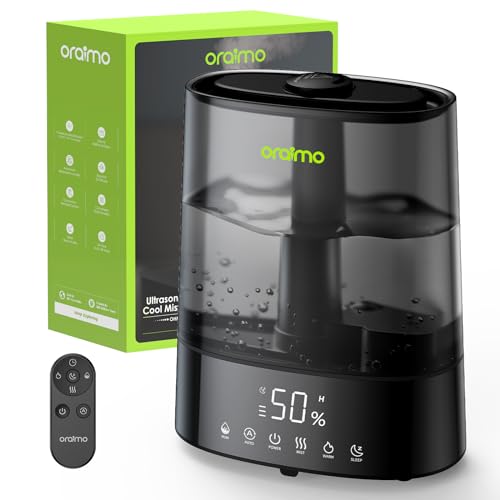
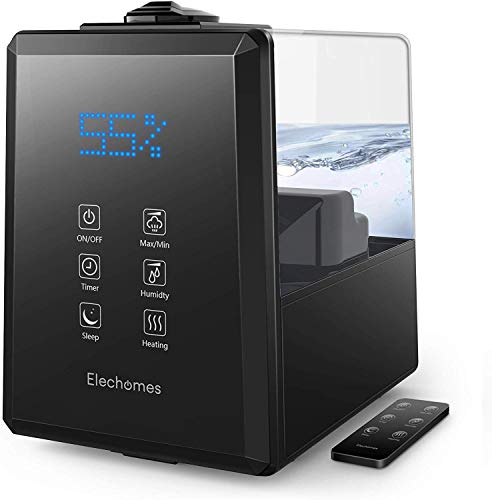
What are the best humidifier brands?
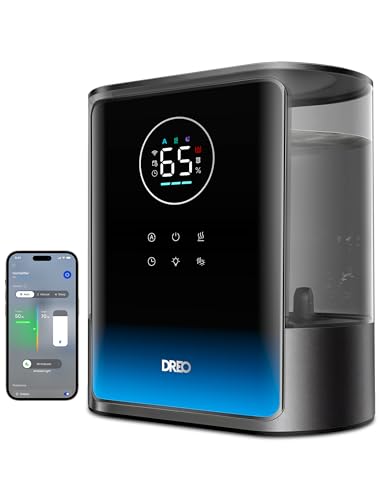
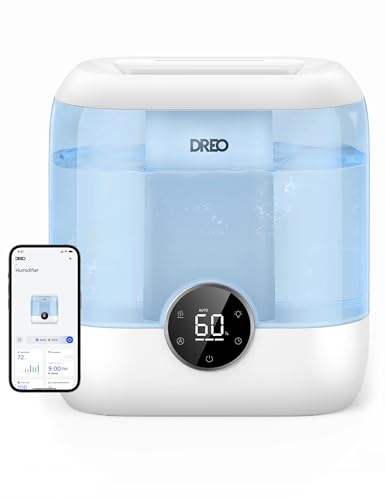
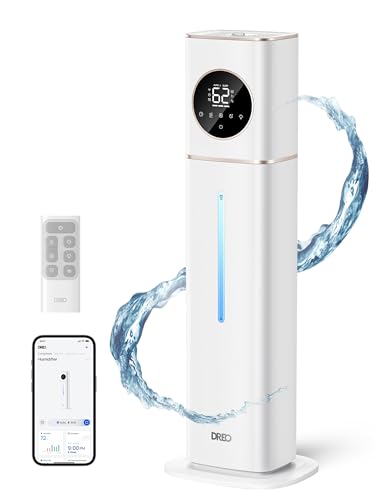
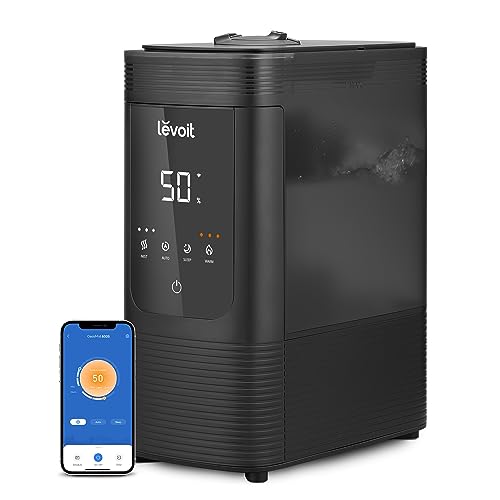
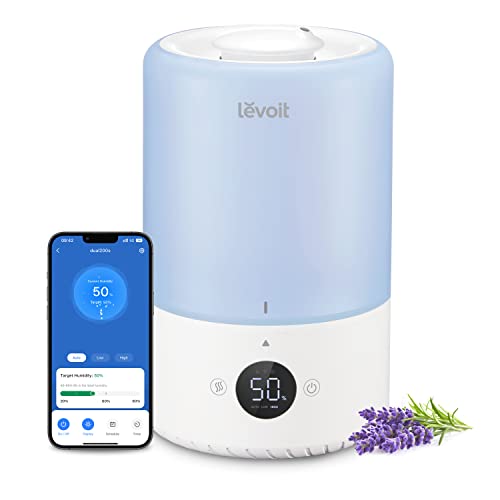
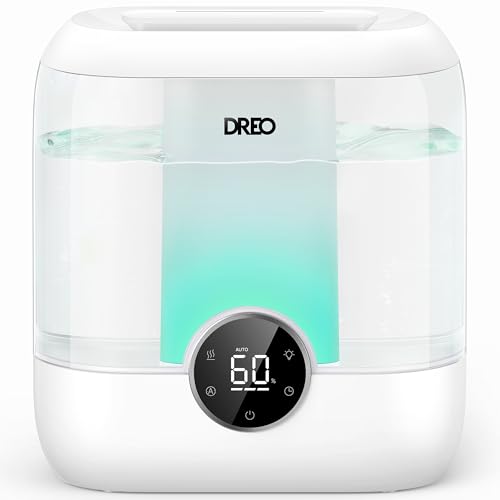
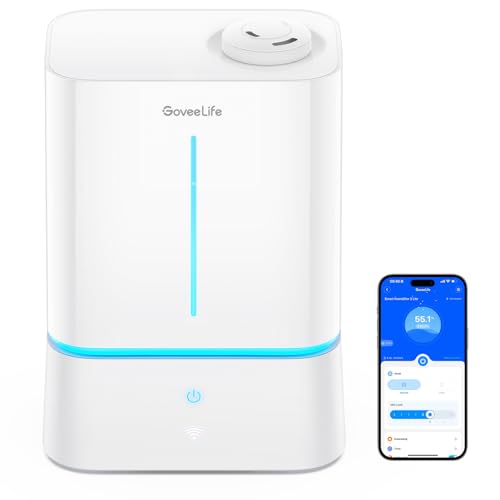
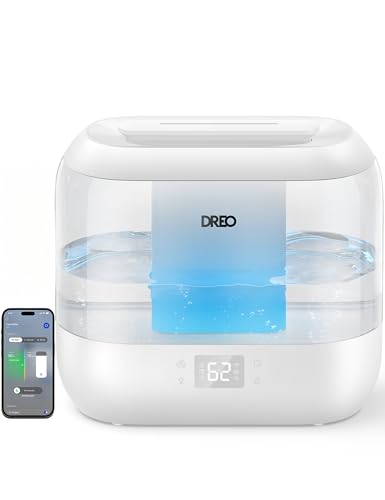
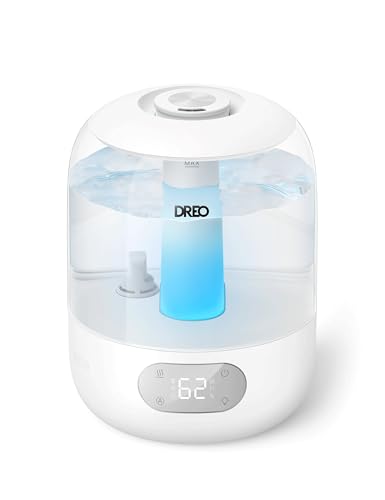
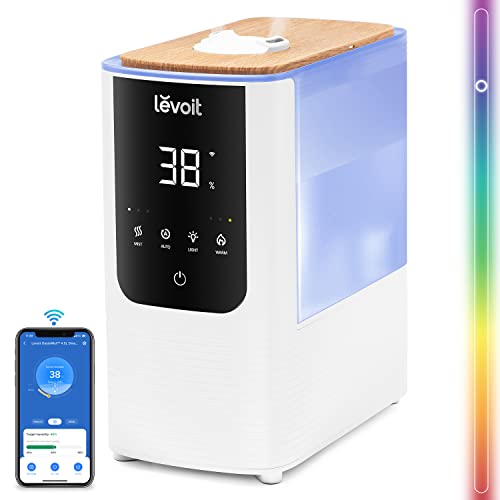
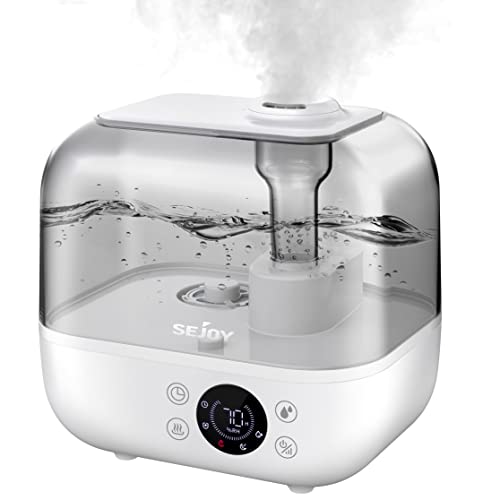
The best humidifier brands, ranked by average overall score, are as follows:
- Dreo (Average overall score: 8.3)
- LEVOIT (Average overall score: 7.8)
- Sejoy (Average overall score: 7.7)
The chart below ranks humidifier brands by average overall score.
[horizontal-chart-02668668939914719101041846797898946685933330701769]
What are the main types of humidifiers?
The main humidifier types are as follows:
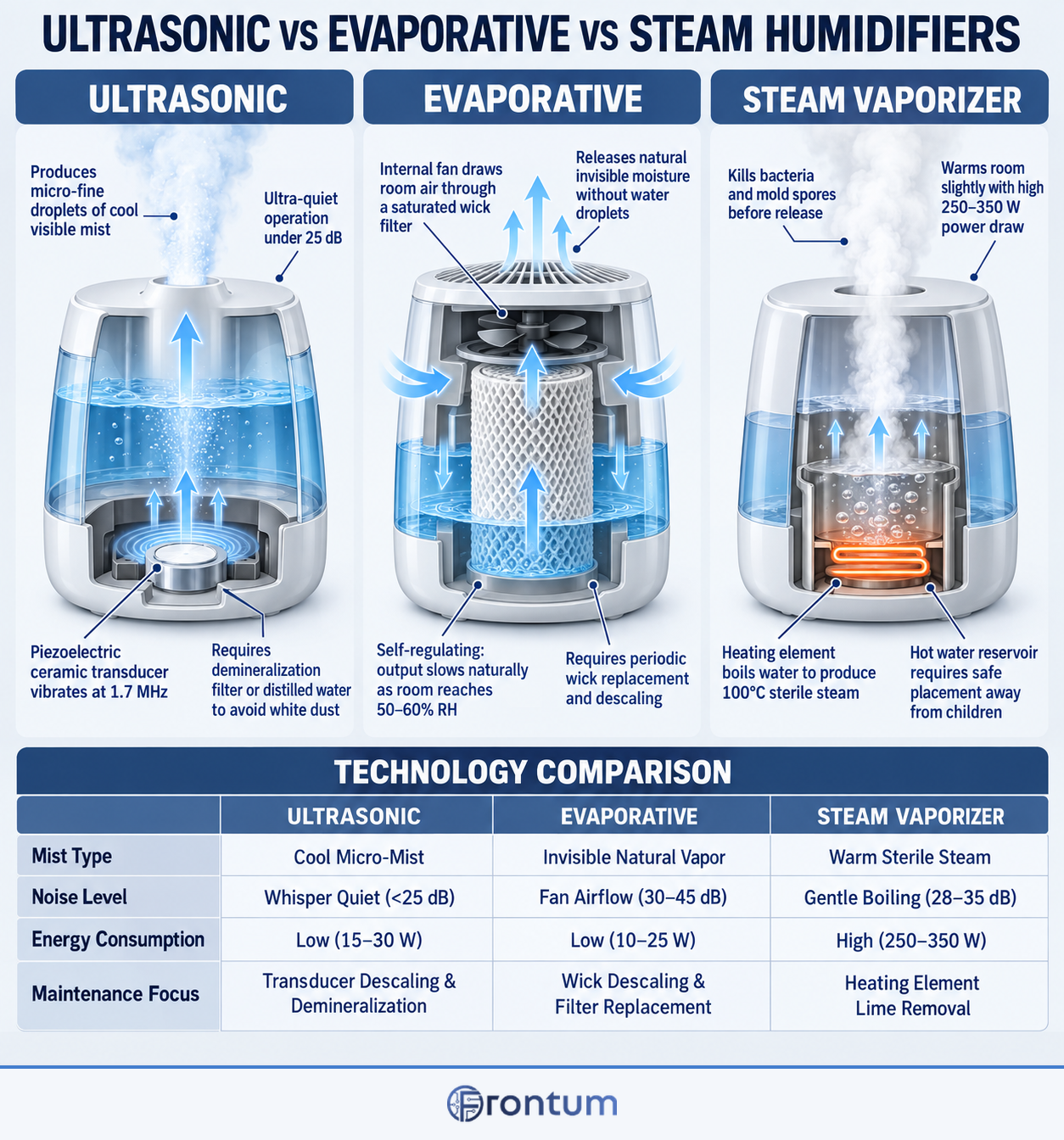
- Ultrasonic humidifiers: A vibrating membrane creates a fine mist quietly and with low electricity use. They suit bedrooms and compact rooms, but hard water can leave mineral dust unless you use low-mineral water and clean the tank regularly.
- Evaporative humidifiers: A fan moves air through a wet wick or filter. Output naturally slows as the room becomes more humid, and dissolved minerals are less likely to become airborne. The trade-offs are fan noise, wick replacement, and a larger housing.
- Warm-mist or steam humidifiers: A heater boils water and releases warm moisture. They can be useful in cool rooms, but the hot tank and steam path create burn risks and use more electricity.
- Passive or radiator-mounted humidifiers: A container uses room heat or natural evaporation without a fan. They are inexpensive and silent, but their output and coverage are limited, so they suit small spaces and modest humidity needs rather than whole-room control.
Are cool-mist or warm-mist humidifiers better?
Cool-mist humidifiers are usually safer around children because they do not expose the room to a hot water reservoir or a steam plume. Warm-mist models boil water and can reduce some microbes in the output, but hot surfaces and spills create burn risks.
Warm mist can be useful in a cool room or when a user specifically wants heated output, but it should be placed where a child cannot reach the tank, outlet, or power cable. Cool mist is the easier default for bedrooms, nurseries, and shared living spaces; either technology still needs humidity control and regular cleaning.
What humidification rate and room coverage do the best humidifiers have?
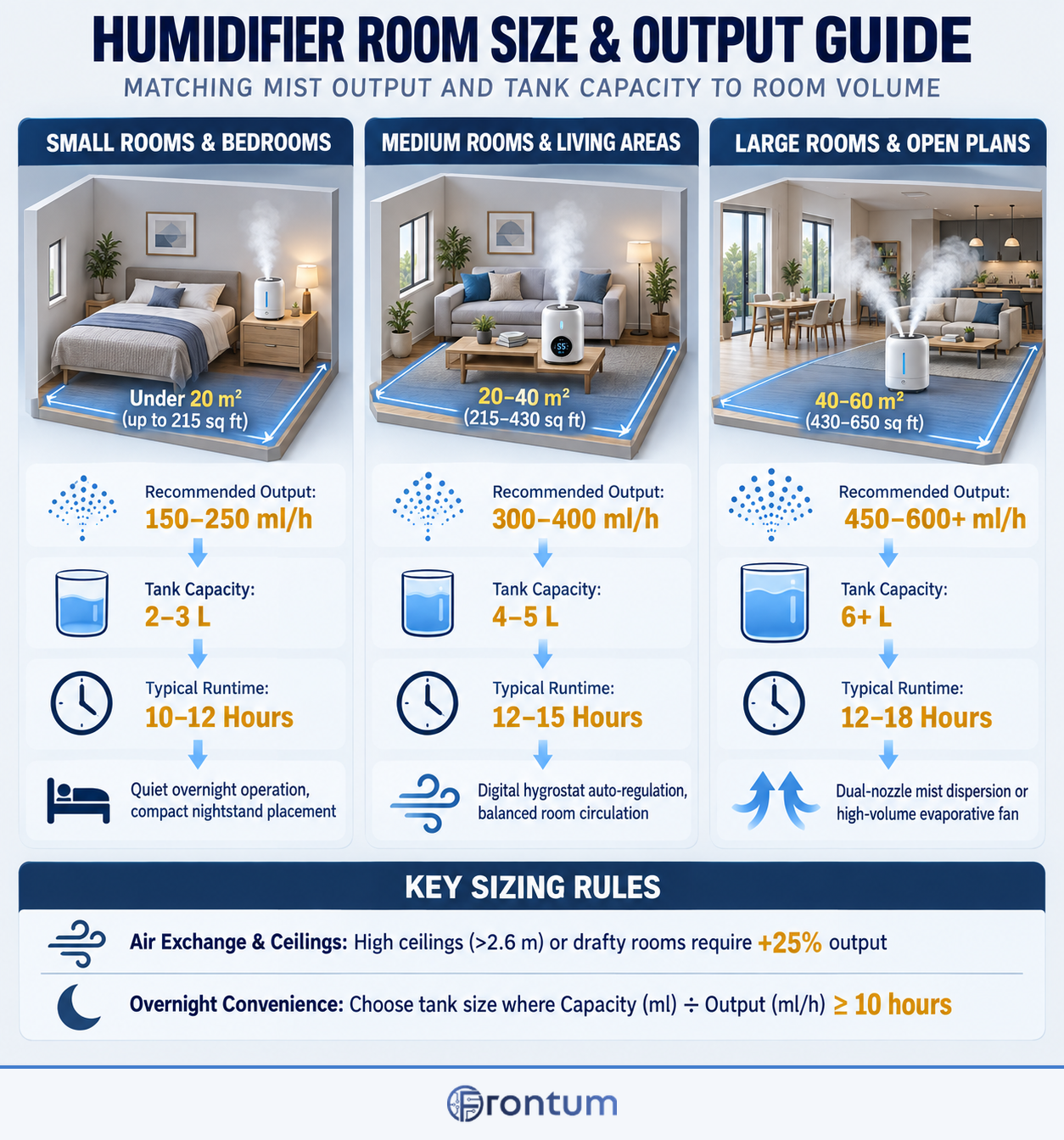
The best humidifiers usually deliver about 150–550 ml/h and advertise coverage from roughly 20 to 50 m², with larger units reaching 70 m² or more.
A practical starting point is about 200–300 ml/h for a typical bedroom or small living room, while an open-plan space may need 400 ml/h or more. Room-area labels are only comparable when manufacturers use similar ceiling heights, air circulation, and target humidity.
Tank size changes how often that output is interrupted. A 3–5 L reservoir can cover much of a night at moderate output, whereas a high-output unit may need 6–8 L for long unattended operation. Choose enough capacity for the mode you will actually use, not only the maximum laboratory rate.
How quiet are the best humidifiers?
Humidifiers intended for bedrooms can be very quiet: low or night settings commonly measure about 20–30 dB, while stronger output often reaches 35–45 dB.
Compare noise at the humidity output you need rather than relying on the lowest quoted number. A small unit at maximum power can sound more intrusive than a larger humidifier running slowly. A dimmable display, timer, and stable low-speed control also matter because clicks, bright LEDs, or pump cycling can disturb sleep even when the fan is quiet.
How easy are the best humidifiers to refill and clean?
Refilling and cleaning are easiest when the humidifier has a top-fill tank, a wide opening, a removable water container, and few narrow passages. These details let you reach the base and wipe away biofilm instead of relying on a small brush.
Empty leftover water daily when practical, rinse the tank, and let it dry before the next fill. Descale mineral deposits about weekly or every one to two weeks in hard-water areas, following the manual and using only an approved cleaning solution. Never leave diluted cleaner in the reservoir during operation.
Check that the mist outlet, float, sensor, and any wick or filter can be removed without special tools. Replacement wicks and filters should be easy to find, because a unit that is simple to fill but difficult to service will not stay hygienic for long.
What safety features should a good humidifier have?
The most important safety features in a good humidifier are as follows:
- Automatic low-water shut-off: The unit stops when the reservoir is empty, preventing dry running and overheating. This is especially important when the humidifier operates overnight or when nobody is watching it.
- Hygrostat: A humidity sensor and target control stop or reduce mist when the room reaches the selected relative humidity. Use a separate hygrometer as a cross-check because a sensor close to the mist outlet can read higher than the rest of the room.
- Cool-mist or protected warm-mist design: Cool mist avoids a hot water reservoir and steam plume. If warm mist is used, the heating chamber and outlet must be inaccessible and the casing must remain stable when the tank is handled.
- Stable base and safe clearances: A broad, non-slip base and protected cable reduce tip-over and pull-down risks. Keep the unit away from cots, curtains, walls, and electrical sockets, and never direct mist at a sleeping child.
- Water-level indicator and timer: A visible level indicator shows when the tank needs attention, while a timer limits unattended operation. Choose controls that cannot be changed accidentally by a child.
- Cleanable tank and water path: A wide opening, removable tray, smooth surfaces, and reachable mist channels make regular rinsing and descaling realistic. Stagnant water and hidden residue can undermine an otherwise safe humidifier.
How much do the best humidifiers cost?
The best humidifiers usually cost about £70-£260, while basic personal models can start near £20 and premium smart or large-room units can exceed £300.
Below £40, expect a smaller tank and output, simpler controls, and fewer service features. Around £40-£100 covers capable bedroom and medium-room models with a hygrostat, timer, automatic shut-off, and a 3–5 L tank. From £100-£220, buyers generally gain larger coverage, quieter engineering, app control, warm mist, or better materials; above £220, the premium is mainly for high capacity, distinctive design, or combined functions rather than proportionally more humidity.
The chart below shows the price distribution of humidifiers.
[vertical-chart-05535084278375035708070928496888353081641820207002]