
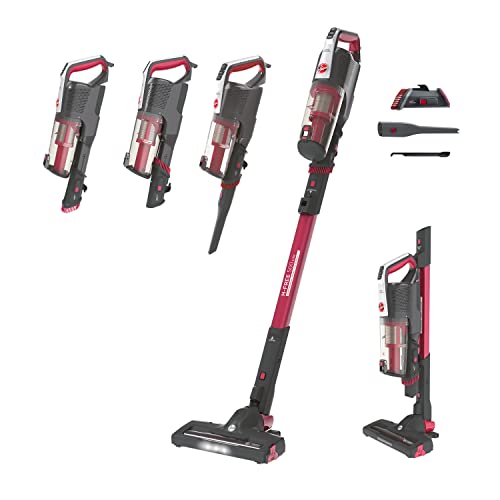
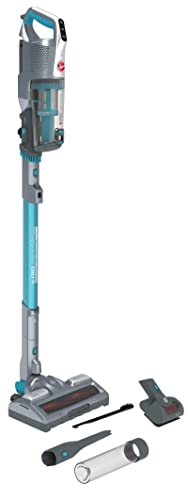
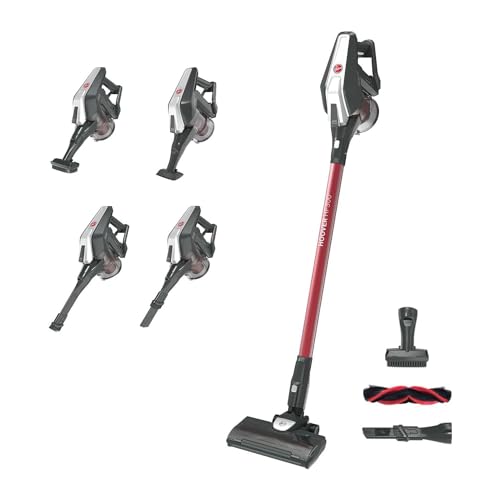
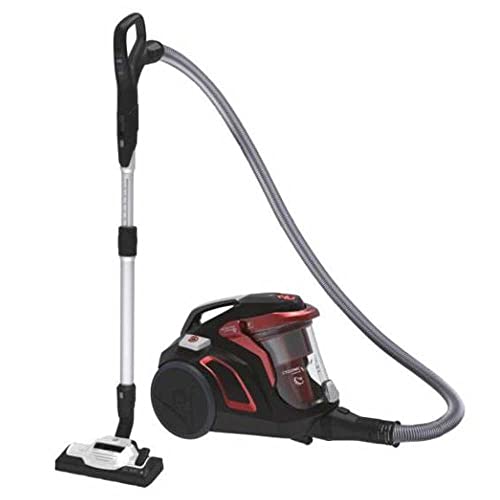
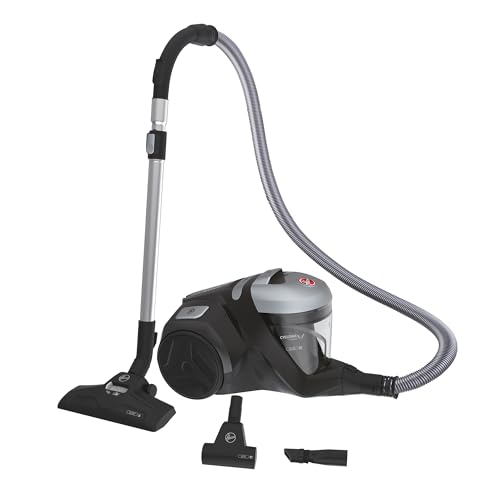
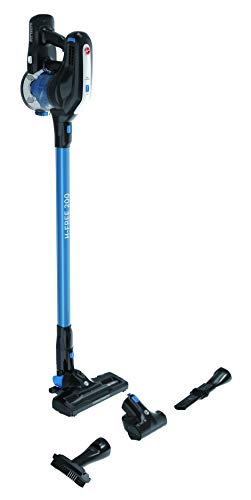
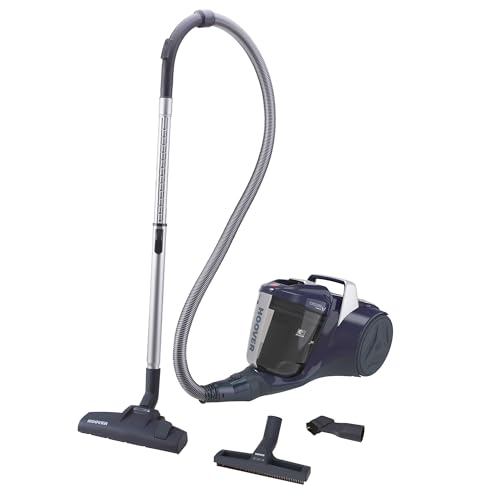
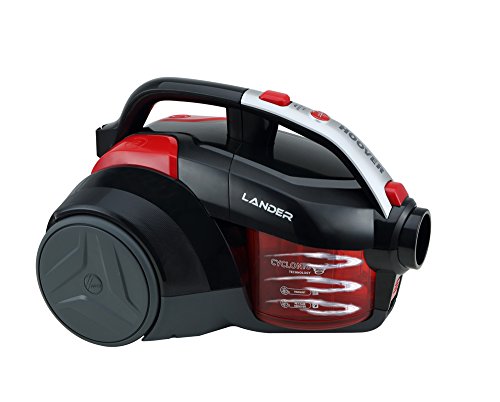
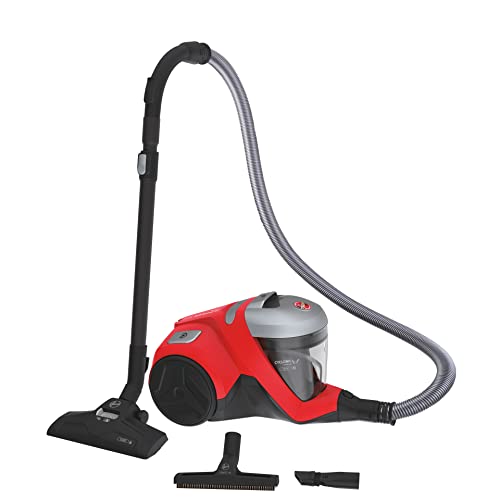
Are Hoover vacuum cleaners good?
Hoover vacuum cleaners have an average overall score of 7.3, ranking #17 among comparable vacuum-cleaner brands, and a user rating of 8.7, placing them at #17 based on user reviews.
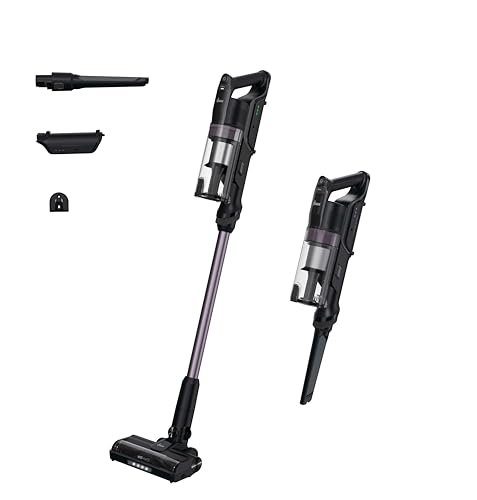
Hoover vacuum cleaners are a good choice when you want broad selection and competitive pricing across cordless sticks, cylinder vacuums and uprights. Its strongest European cordless lines add automatic floor sensing, anti-hair-wrap hardware and removable batteries, while simpler canisters keep running costs and controls straightforward.
Hoover vacuum cleaners vary more in quality and specification depth than products in a narrowly premium range. Check the exact commercial code because closely named HF or H-Power variants can differ in runtime, floorhead, pet tool, filter and battery package; buyers who prioritise the quietest operation or longest-lasting premium construction should compare those details against specialist competitors.
The chart below compares vacuum-cleaner brands by average overall score.
[horizontal-chart-05060405232908929908180547999782892589572867802681]
What are the main advantages of Hoover vacuum cleaners?
The main advantages of Hoover vacuum cleaners are as follows:
- Broad format choice: Hoover sells cordless sticks, corded sticks, canisters and uprights, so the brand can cover quick daily cleaning as well as longer whole-home sessions. This also gives buyers a clearer upgrade path without changing accessory habits completely.
- Competitive entry and midrange prices: Many Hoover vacuums sit between roughly £90 and £170, below the premium tier of several specialist brands. The range includes useful pet and allergy packages without requiring the most expensive motor platform.
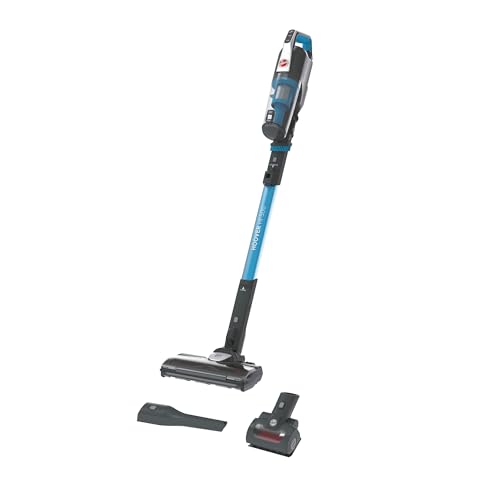
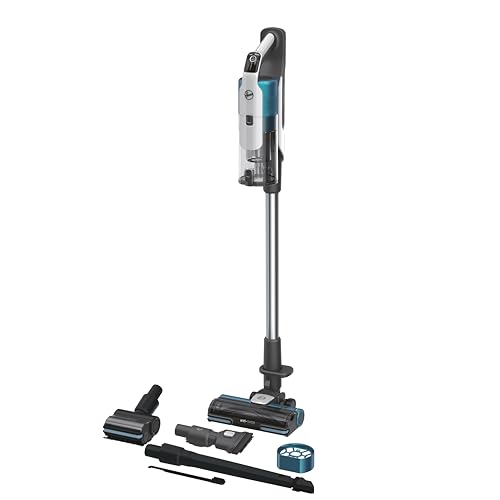
- Practical cordless features: Current HF families offer removable batteries, powered floorheads and, on selected versions, floor sensing or anti-hair-wrap systems. Higher lines reach around 250 AW under stated test conditions and can extend lower-mode runtime with larger or additional batteries.
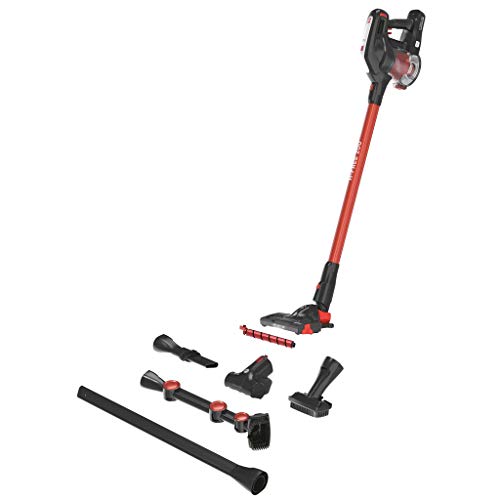
- Useful cleaning packages: Pet editions commonly add a mini turbo tool, while flexi wands, crevice tools and dusting brushes are available across several HF ranges. The exact package can be matched to stairs, upholstery or low furniture instead of paying for unused tools.
- Established parts and service presence: Hoover has a long floor-care history and regional service networks in major markets. Filters, brush bars and batteries are available for many current models, although compatibility must still be checked by full model code.
What are the main disadvantages of Hoover vacuum cleaners?
The main disadvantages of Hoover vacuum cleaners are as follows:
- Similar names can hide major differences: HF1, HF2, HF3, HF4, HF6 and HF9 are distinct platforms, and suffixes can change the battery, tools or filtration. Compare the complete commercial code rather than assuming that every Pet or Plus version has the same equipment.
- Runtime claims need context: Lower-mode figures are often measured without the most demanding powered tool, while turbo operation may fall to roughly 8–20 minutes. A claimed 60 or 100 minutes therefore does not describe continuous maximum-power carpet cleaning.
- Entry models can be noisy: Many Hoover vacuums are specified around 78–86 dB, which is clearly audible during longer sessions. Quieter canisters exist near 66–75 dB, but silence is not consistent across the whole brand.
- Small cordless bins need frequent emptying: Around 0.7 L is common, with compact designs closer to 0.45 L. Pet hair can reach the usable fill line quickly, and overfilling reduces cyclone and filter performance.
- Regional ownership and ranges differ: European Hoover appliances are operated within Haier Europe, while North American Hoover floor care belongs to TTI. Model names, batteries, warranties and spares are therefore market-specific and should not be ordered across regions without checking compatibility.
Who makes Hoover vacuum cleaners?
Hoover vacuum cleaners are made under different corporate ownership in different regions. In Europe, Hoover is one of Haier Europe's appliance brands; Candy Hoover Group S.r.l. appears as the manufacturer on European Hoover product documentation, and Haier acquired the Candy-Hoover business in 2019.
In North America, Hoover floor care is part of TTI Floor Care North America, a subsidiary of Hong Kong-based Techtronic Industries. TTI acquired the Hoover floor-care business in 2007, so American ONEPWR models and European HF models should not be treated as one interchangeable product ecosystem.
The brand itself began after James Murray Spangler developed an early portable electric suction sweeper and William H. Hoover bought the patent in 1908. That history explains why “Hoover” became a common synonym for vacuuming in some markets, but today the seller, warranty provider, battery platform and spare-parts channel must be checked for the country of purchase.
What are the main series of Hoover vacuum cleaners?
The main Hoover vacuum-cleaner series are as follows:
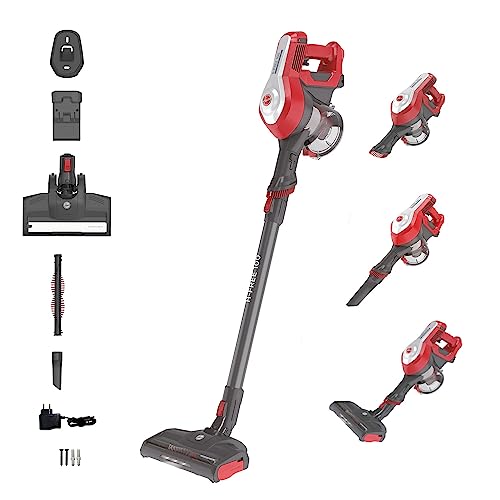
- HF1 and HF2: These are light entry-to-midrange cordless sticks, represented by models such as HF1 Plus and HF2 Ultra Light. They suit quick hard-floor and mixed-floor cleaning, but their roughly 25–40 AW published figures and 30–40-minute lower-mode runtimes make exact floorhead and battery configuration important.
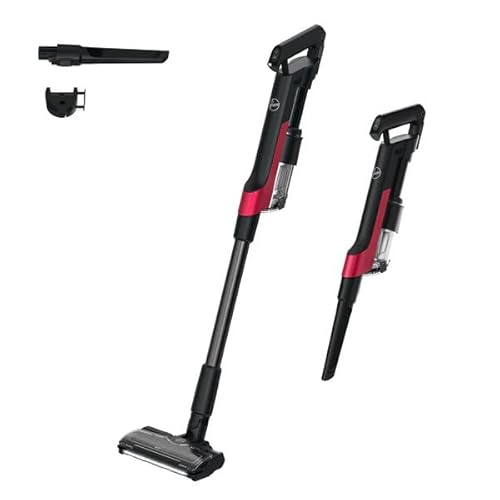
- HF3 and HF4: HF3 DynamicClean and HF4 PowerMove families move toward stronger everyday cordless cleaning with automatic or enhanced floor handling on selected versions. Typical packages use a 0.7 L bin and claim around 60–70 minutes in a lower mode, while Pet and Hydro variants change the included head or wet-cleaning capability.
- HF6 and HF9: HF6 TurboSense is Hoover's higher-output cordless platform, with selected models rated up to 250 AW and longer runtime options; HF9 is an earlier premium line focused on sustained high-power cleaning and anti-twist hair control. These are the better Hoover families for carpet and pet hair, but they are heavier and costlier than HF1–HF3.
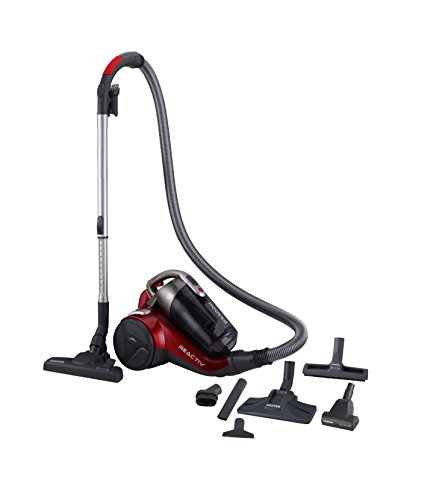
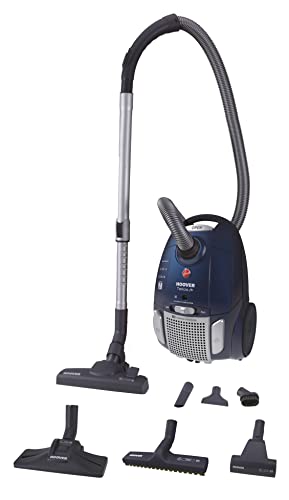
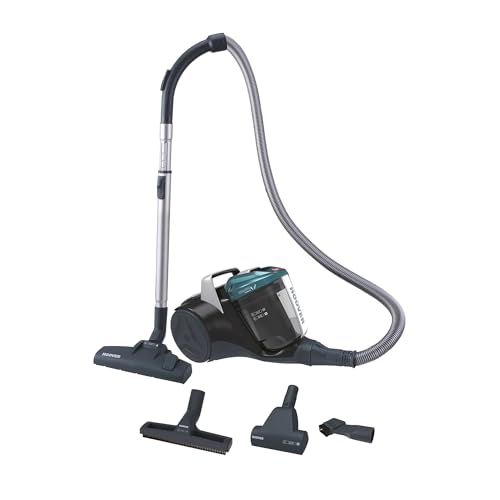
- H-Power, Telios and Breeze: These cylinder families provide uninterrupted corded cleaning. H-Power and Telios include larger-capacity or quieter variants, while Breeze is a simpler compact bagless choice; compare bag type, 5–7 m cable length and the exact pet or allergy tool package.
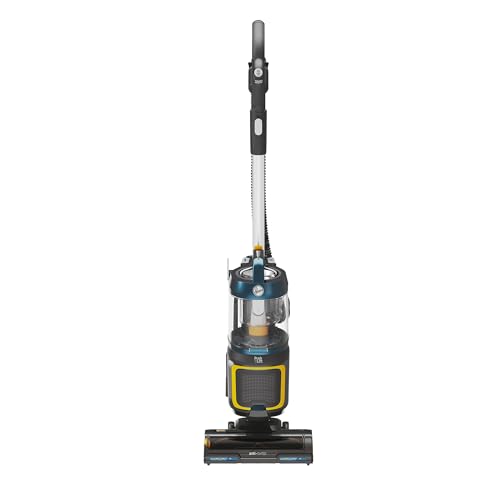
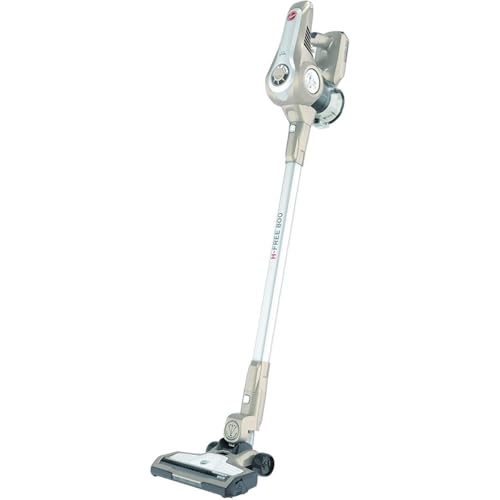
- HL and legacy H-FREE: HL2 and HL5 are upright vacuums designed around a wide powered carpet head, with HL5 offering the stronger and larger format. H-FREE 100–800 models form Hoover's earlier cordless-stick generations and remain widely sold, but batteries and accessories are generation-specific.
How much do Hoover vacuum cleaners cost?
New Hoover vacuum cleaners generally cost about £100-£400, with much of the range concentrated between £90 and £170. Basic canisters and corded sticks sit near £90-£130, while entry cordless HF models also commonly start in this price band.
More capable cordless sticks and better-equipped canisters usually fall around £200-£300, while models above £260 should provide premium suction, extended or dual-battery runtime, advanced floor sensing or a complete accessory system. Look for a removable battery, powered anti-hair-wrap head, useful pet tool, quieter body or longer cord rather than paying for a cosmetic suffix, and compare the exact included battery and charger because those components account for much of the price difference between similar-looking cordless variants.
The chart below shows the price distribution of Hoover vacuum cleaners.
[vertical-chart-09820698523725867077043038924351346301172434855934]
How do Hoover vacuum cleaners compare with Shark?
Hoover is generally the better choice than Shark when you want a wider selection of lower-priced canisters, corded sticks and cordless HF models. Shark concentrates more heavily on upright and stick formats, with signature features such as DuoClean twin rollers, Flexology folding wands and Anti Hair Wrap floorheads.
For cordless cleaning, compare the actual platform rather than the brand badge. Hoover HF6 reaches up to 250 AW under its stated handheld turbo test and offers long lower-mode runtime claims, while Shark models commonly advertise roughly 40–50 minutes per battery and may extend runtime with a twin-battery package; powered-head use and boost mode reduce both brands' headline figures.
Choose Hoover when price range, compact European HF models or a traditional canister matters most. Choose Shark when a proven dual-surface floorhead, folding wand or hair-management system is the priority, then compare ready-to-use weight, sealed filtration, battery warranty and locally available replacement parts for the exact two models.
What should you check before buying a Hoover vacuum cleaner?
You should check the following factors before buying a Hoover vacuum cleaner:
- Format and exact model code: Choose an HF stick for quick manoeuvrability, an H-Power or Telios canister for sustained corded cleaning, or an HL upright for open carpet. Record the complete suffix because Pet, Plus, Hydro and regional variants can change the battery, floorhead, filter and tools.
- Suction and floorhead: Aim for roughly 100–150 AW for routine hard floors and about 170–200 AW or more for carpet or pet hair when measurements are comparable. Hoover publishes values from roughly 25 AW to 250 AW across its cordless range, so confirm the power mode and whether the figure was measured in handheld or floorhead configuration.
- Runtime and charging: For a cordless Hoover, target at least 40–60 minutes in a lower mode, 10–15 minutes in turbo and charging in four hours or less. Treat longer 70–100-minute claims as mode- and battery-dependent, and check whether a second battery or powered head was included in the test.
- Capacity and disposal: Around 0.7 L is a practical cordless target, while a 2–3.5 L canister reduces interruptions during whole-home cleaning. Check the usable fill line, one-touch release and whether allergy-sensitive users would be better served by a sealed bag than an exposed dry bin.
- Weight, cord and reach: Aim for about 3 kg or less for a cordless stick and roughly 6 kg or less for a canister that will be carried on stairs. For corded Hoover models, prefer at least a 6–7 m cable for fewer socket changes; the hose and tube add to the total operating radius.
- Noise and filtration: Prefer 75 dB or below in normal mode when quiet operation matters, because several Hoover models reach 80–86 dB. Look for a sealed path and a clearly specified final filter, then verify whether it is washable and what a replacement costs.
- Battery, tools and regional support: Match powered pet, parquet, upholstery and crevice tools to the actual surfaces in your home rather than buying by suffix alone. Confirm that batteries, brush bars and filters fit the precise commercial code and are supported in your market, especially because European and North American Hoover systems differ.