Which brands make the best bagless stick vacuums in 2026?
The best bagless stick-vacuum brands in 2026 are ranked below:
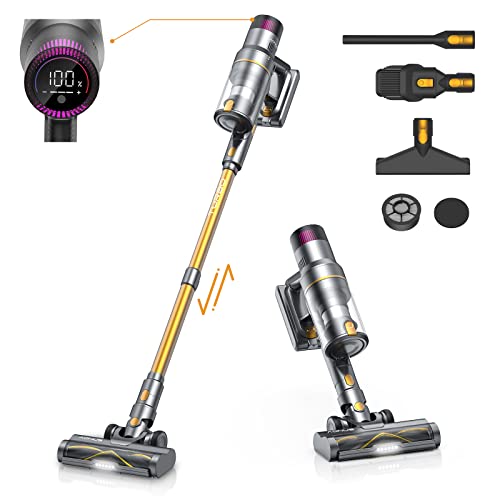
- BuTure (Average overall score: 8.5)
- Dreame (Average overall score: 8.4)
- LG (Average overall score: 8.3)
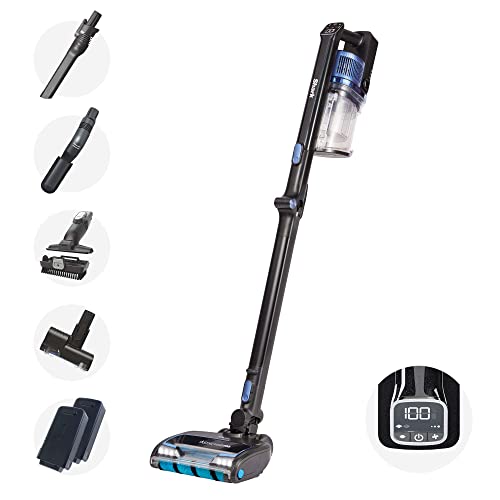
- Shark (Average overall score: 8.2)
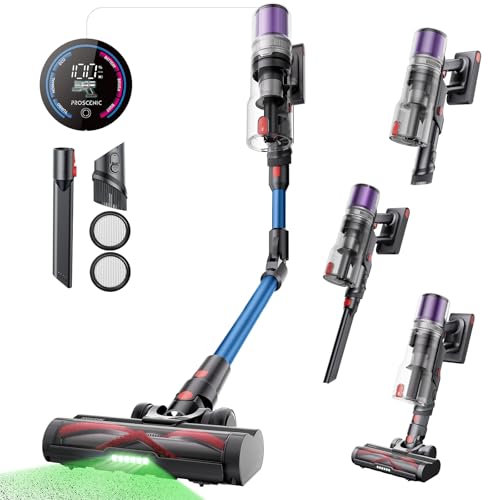
- Proscenic (Average overall score: 8.2)
The chart below ranks bagless stick-vacuum brands by average overall score.
[horizontal-chart-03338036383596896491037192228936352607732422969919]
When should you consider buying a bagless stick vacuum?
You should consider a bagless stick vacuum if you prefer emptying a reusable bin instead of buying replacement bags and you are willing to maintain the filters. The clear container also makes it easy to see when the vacuum is full or when a small object has been collected accidentally.
This format suits frequent quick cleaning because there is no bag to fit before use, and compact bins keep the body slim enough for stairs and furniture.
A bagged vacuum may be better if you are sensitive to dust released during emptying or want longer intervals between maintenance. Bagless performance depends on clean filters, unobstructed cyclones, and emptying before debris blocks the airflow path.
How much do bagless stick vacuums cost?
Bagless stick vacuums generally cost about £40-£600, with many practical models between £90 and £300. Premium docking systems and multi-battery packages can reach approximately £800-£900.
Entry-level models usually have simpler cyclone layouts, smaller bins, fewer tools, or fixed batteries. Higher prices should bring a better floorhead, stronger sealing, easier bin emptying, removable batteries, and filters that remain accessible without dismantling the cyclone assembly.
The chart below shows the price distribution of bagless stick vacuums.
[vertical-chart-05845273945723861002164804520152801396611388179530]
What should you check before buying a bagless stick vacuum?
You should check the following factors before buying a bagless stick vacuum:
- Bin capacity and emptying: Around 0.5–0.8 L is practical for regular cleaning, while bins below 0.4 L fill quickly in homes with pets. Check whether the mechanism pushes compacted debris out cleanly and whether the bin can be removed and washed.
- Cyclone separation and airflow: A well-designed cyclone or multi-cyclone system keeps larger debris and fine dust away from the pre-filter; the number of cyclones alone does not prove better separation. Inspect how easily hair can be removed from the shroud, because a clogged separator reduces airflow before the 0.5–0.8 L bin appears full.
- Filtration and sealing: A HEPA-labelled filter does not guarantee clean exhaust if air can bypass it through the casing. Look for documented whole-machine sealing and confirm the filter-washing and drying schedule.
- Suction power and cleaning head: Around 100–150 AW is a useful everyday range, while more than 150 AW provides additional headroom for carpet and pet hair when measured in a comparable mode. A powered head around 230–270 mm wide balances coverage and manoeuvrability; also compare brush agitation, edge pickup, and anti-tangle performance.
- Runtime or cable length: For cordless models, 40–60 minutes in eco mode is practical, but maximum power often falls to roughly 8–15 minutes and charging usually takes 3–5 hours. For corded models, a 6 m cable is adequate for smaller rooms, while 7–10 m reduces socket changes.
- Weight, noise, and parts: About 2–3 kg is manageable for frequent use, whereas more than 3.5 kg is harder on stairs and in handheld mode. Noise near 70–75 dB is comparatively restrained and 80 dB or more is noticeably louder; also verify local availability of filters, batteries, brush rolls, and replacement bins.
The chart below shows the dust-capacity distribution of bagless stick vacuums.
[vertical-chart-13548741761709711101092237398652140275053947551314]