
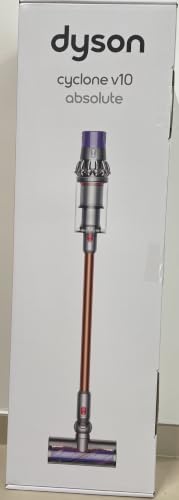
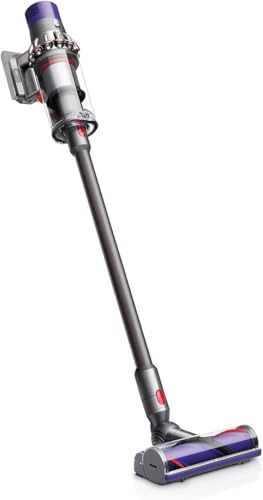
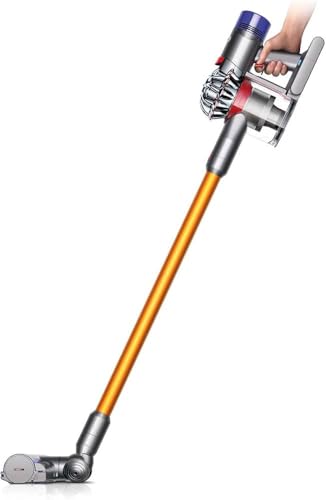
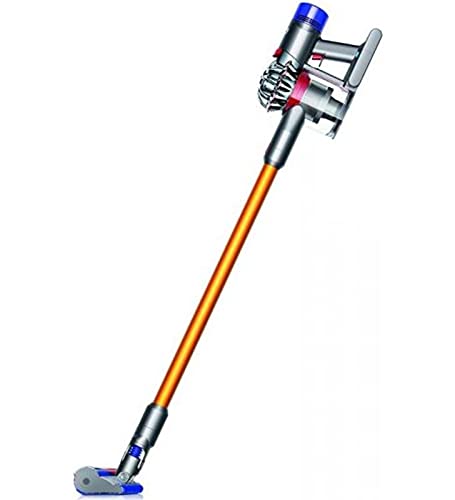
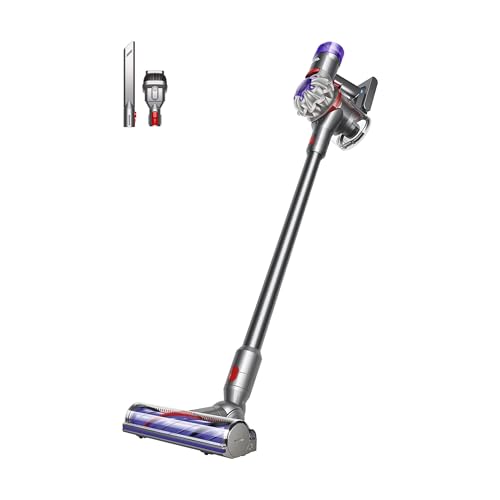
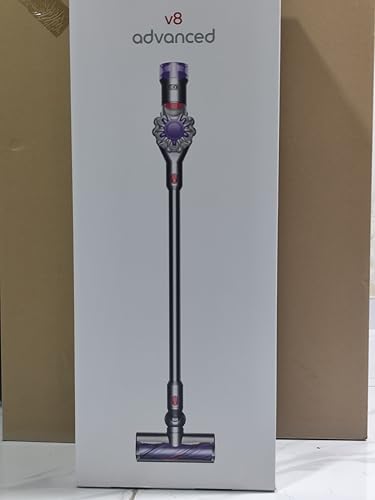
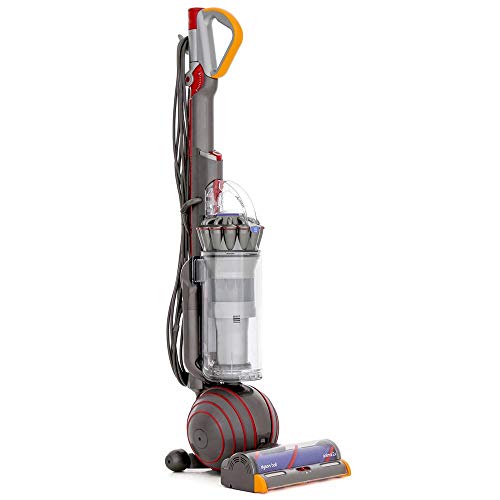
Are Dyson vacuum cleaners good?
Dyson vacuum cleaners have an average overall score of 7.8, ranking #7 among comparable vacuum-cleaner brands, and a user rating of 9.1, placing them at #8 based on user reviews.
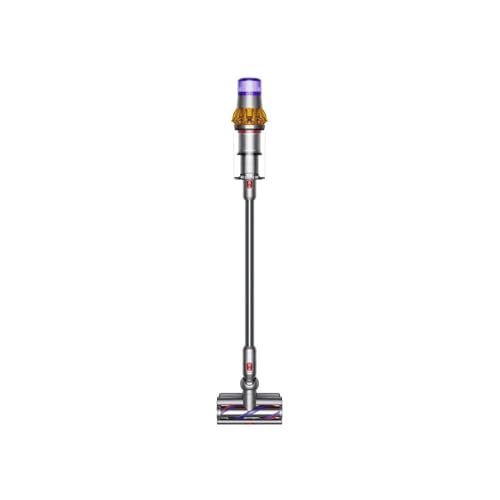
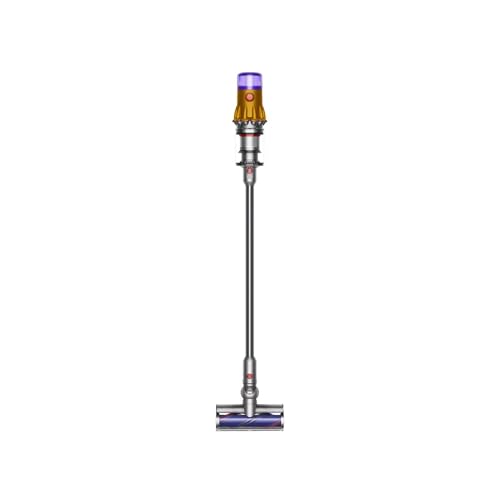
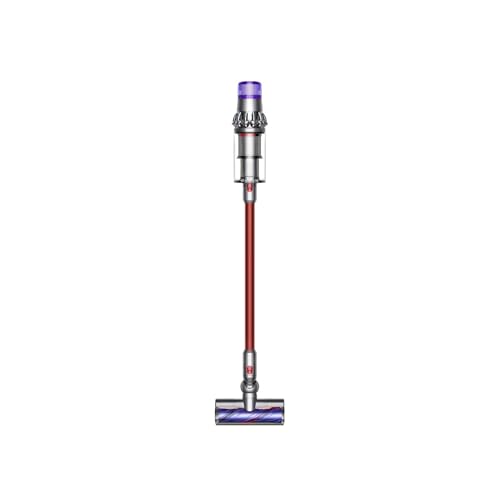
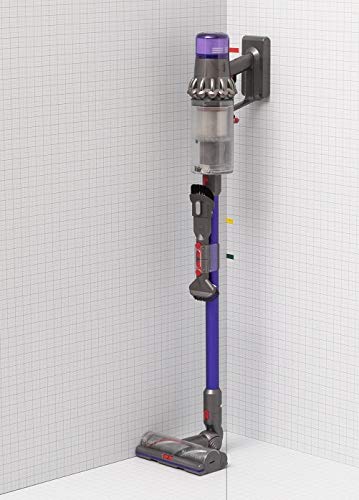
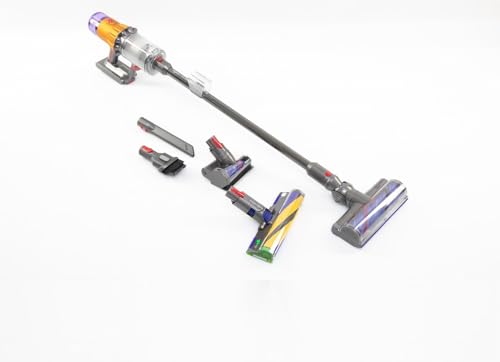
Dyson vacuum cleaners are a strong choice when floorhead engineering, cordless performance and a mature range of replacement tools matter more than obtaining the lowest price. V12 Detect Slim prioritizes lower weight, V15 and Gen5detect add stronger suction and particle feedback, and Ball or Big Ball models serve buyers who prefer corded operation.
Dyson vacuum cleaners are less convincing when a small bin, short boost runtime or premium accessory package conflicts with the home. Compare the exact cleaner head, battery, charger and bin size because two models with similar suction can differ substantially in handling and useful equipment.
The chart below compares vacuum-cleaner brands by average overall score.
[horizontal-chart-05060405232908929908180547999782892589572867802681]
What are the main advantages of Dyson vacuum cleaners?
The main advantages of Dyson vacuum cleaners are as follows:
- Broad cordless performance range: Dyson covers light V8 and V12 models through V15 and Gen5detect machines around 240–280 AW. Buyers can choose lower weight or stronger carpet headroom instead of accepting one shared chassis.
- Effective floorhead options: Fluffy rollers target fine dust and larger particles on hard floors, while Motorbar and Digital Motorbar heads add carpet agitation and hair-removal combs. The correct head often changes pickup more than a small difference in motor output.
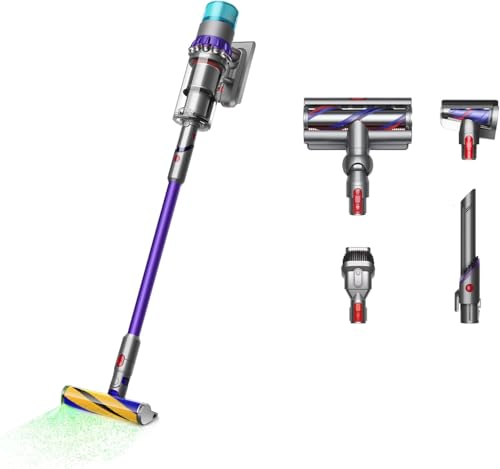
- Useful feedback on premium models: Detect models can illuminate hard-floor dust, report particle counts or adjust suction according to debris and resistance. These features help users see where cleaning effort is needed, although they do not replace filtration maintenance.
- Strong bagless separation: Multi-cyclone systems keep much of the debris away from the filter, and selected Cinetic corded models reduce filter maintenance further. A sealed housing and correctly fitted filter remain essential for fine-particle control.
- Several capacity choices: Compact cordless bins sit around 0.35–0.8 L, Outsize reaches roughly 1.9 L and corded Ball or Big Ball models provide about 1.5–2 L. This gives large homes an alternative to emptying a standard stick repeatedly.
What are the main disadvantages of Dyson vacuum cleaners?
The main disadvantages of Dyson vacuum cleaners are as follows:
- Premium pricing: New Dyson vacuums commonly cost about £300-£600, and high-end models can approach £770. The price is difficult to justify when a home needs only brief hard-floor pickup.
- Short boost runtime: Many cordless models provide only about 5–12 minutes at maximum power even when the lower-mode claim is 60–70 minutes. Large carpeted areas may require a second battery or a corded machine.
- Small bins on compact models: V12 holds roughly 0.35–0.4 L, and PencilVac is closer to 0.08 L. These designs reduce size and weight but can require frequent emptying in a pet home.
- Weight rises with performance: V12 is near 2.2 kg, whereas V15, Gen5detect and Outsize approach 3–3.6 kg. The motor-and-battery position can make overhead cleaning tiring even when floor steering feels light.
- Model and tool names can confuse: Absolute, Animal, Origin, Advanced and Plus packages change by market and year. A laser or illuminated head, mini motorized tool, spare battery or charger should never be assumed from the family name alone.

Who makes Dyson vacuum cleaners?
Dyson vacuum cleaners are developed and sold by Dyson Ltd and its regional subsidiaries. James Dyson founded the technology company in the United Kingdom after developing the bagless cyclonic vacuum concept; Dyson is now a global company headquartered at St James Power Station in Singapore.
The company maintains a substantial engineering presence in the United Kingdom and operates engineering or manufacturing activities in several Asian markets. The country printed on a particular machine can therefore differ from the location where its motor, electronics or cleaner head was developed.
For buyers, the full serial number and market matter more than the corporate address. Batteries, chargers, floorheads and warranties can be region-specific, so parts should be checked through the local Dyson channel for the exact model.
What are the main series of Dyson vacuum cleaners?
The main Dyson vacuum-cleaner series are as follows:
- V7 and V8: These are Dyson’s older, lighter entry cordless families. V8 remains the more practical budget option, with a roughly 0.54 L bin and about 40 minutes in its lower mode.
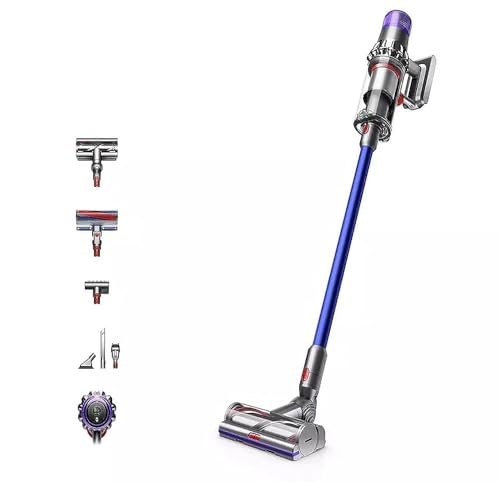
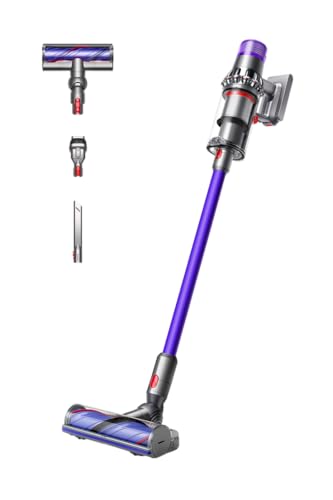
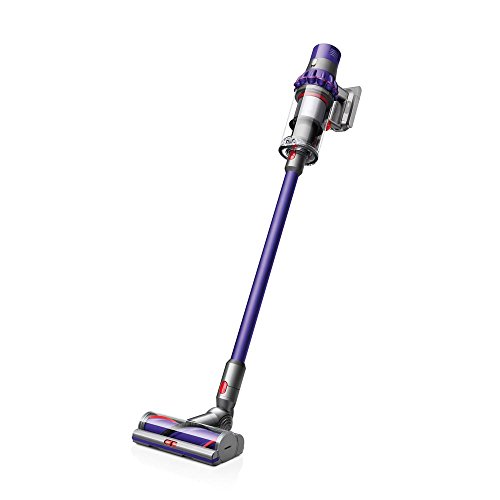
- Cyclone V10 and V11: These generations increase runtime and bin capacity, while V11 adds a display with remaining-runtime information on many versions. They suit mixed-floor homes that want stronger pickup without moving to the newest flagship tier.
- V12 Detect Slim, V15 Detect and Gen5detect: V12 prioritizes a body around 2.2 kg, V15 raises output to roughly 240 AW, and Gen5detect reaches about 280 AW. These families add progressively stronger heads, sensing and filtration.
- Outsize and PencilVac: Outsize uses a much wider head and roughly 1.9 L bin for large floor areas, while PencilVac is an ultra-slim hard-floor specialist with a very small bin. They solve opposite size and handling needs.
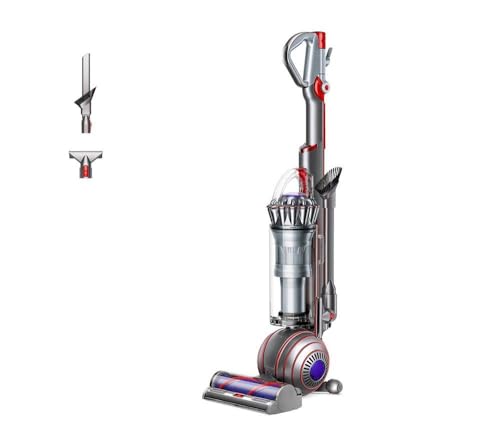
- Ball: Ball models are corded uprights with powered full-width carpet heads and roughly 1–2 L bins. Animal and Multi Floor suffixes mainly identify different tool and floorhead packages.
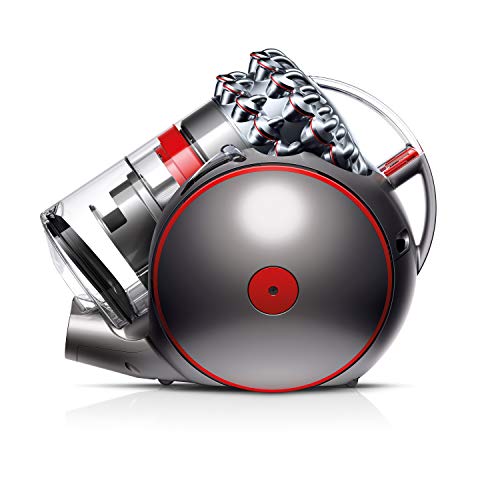
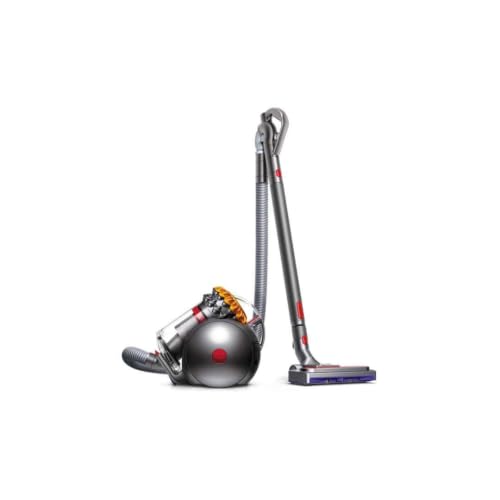
- Big Ball and Cinetic Big Ball: These are corded canister families with self-righting bodies and bins around 1.5–1.6 L. Cinetic versions use finer cyclone tips to reduce filter maintenance, while Animal, Allergy and Absolute packages change the tools.
How much do Dyson vacuum cleaners cost?
New Dyson vacuums generally cost about £300-£800, with much of the range between roughly £300 and £520. Older V7 or V8 models and basic corded Ball vacuums form the lower tier around £300-£300.
Around £300-£500 covers many V10, V11, V12, V15 and Big Ball packages. At this level, compare suction, cleaner heads, battery design, bin capacity and included pet tools rather than assuming the newest number is automatically best.
Gen5detect, Outsize and premium bundles can cost roughly £600-£800. A larger bin, 240–280 AW platform, longer battery or a genuinely useful second head should explain that premium.
The chart below shows the price distribution of Dyson vacuum cleaners.
[vertical-chart-09575528490904292834115862326016284790021801191833]
How do Dyson vacuum cleaners compare with Shark?
Dyson is generally the better choice than Shark when lower cordless weight, higher-output premium models and hard-floor particle detection matter most. Shark emphasizes flexible wands, dual-roller floorheads and anti-hair-wrap systems across a wider selection of mid-priced sticks and uprights.
Based on our research, Dyson cordless vacuums average roughly 160 AW and £430, compared with about 140 AW and £330 for Shark. Both brands average around 55 minutes in a lower mode, although battery count, powered-head use and boost mode can alter the headline substantially.
Choose Dyson for V12-level light handling, V15 or Gen5detect output and Fluffy hard-floor heads. Choose Shark when Flexology-style reach, a twin-roller head or lower purchase price matters more, then compare ready-to-use weight, bin capacity, battery package and local parts for the exact models.
What should you check before buying a Dyson vacuum cleaner?
You should check the following factors before buying a Dyson vacuum cleaner:
- Format and series: Choose V8 or V12 for lighter cordless use, V10 or V11 for balanced capacity, V15 or Gen5detect for stronger output, Outsize for a large bin, or Ball and Big Ball for continuous corded cleaning. Match the format to stairs, storage and floor area before comparing accessories.
- Suction and cleaner head: Around 100–150 AW suits hard floors and routine rugs, 180–220 AW gives stronger mixed-floor performance, and roughly 240–280 AW provides more carpet headroom when measured comparably. Select Fluffy for hard floors and Motorbar-style agitation for carpet and hair.
- Runtime or cord reach: For cordless use, aim for 50–60 minutes in a lower mode and at least 10 minutes at high power; Gen5detect can extend the lower-mode figure to about 70 minutes. For corded models, prefer a cable near 9–10 m when fewer socket changes matter.
- Weight and handling: V12 is near 2.2 kg, V10 around 2.7 kg and V15, Gen5detect or Outsize roughly 3–3.6 kg. Corded models approach 7–8 kg, so test stair carrying, wrist load and steering in the intended configuration.
- Capacity and emptying: Compact cordless bins range from about 0.35 L to 0.8 L, Outsize reaches roughly 1.9 L and corded models provide about 1.5–2 L. Inspect the usable fill line and whether hair ejects without reaching into the bin.
- Filtration and maintenance: Require a sealed path and correctly fitted filter, then follow the stated wash-and-dry interval. Cinetic corded models reduce filter maintenance, but the shroud, bin and floorhead still need cleaning.
- Battery, package and support: Check whether the battery is removable, how long charging takes and whether the exact package includes the desired Fluffy, Motorbar or mini motorized head. Confirm local availability of batteries, filters and brush bars by serial-compatible model.