
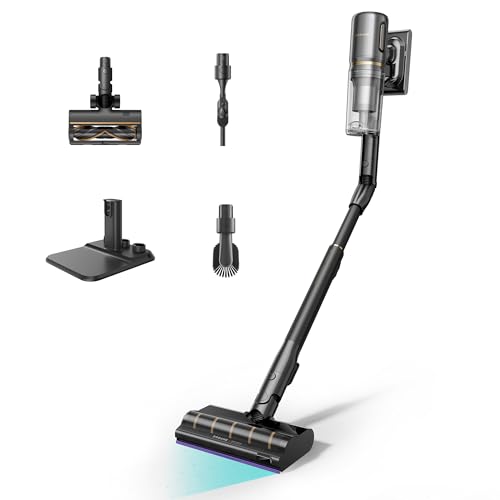
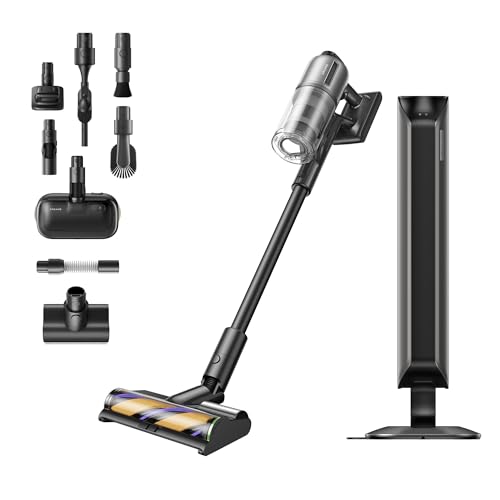
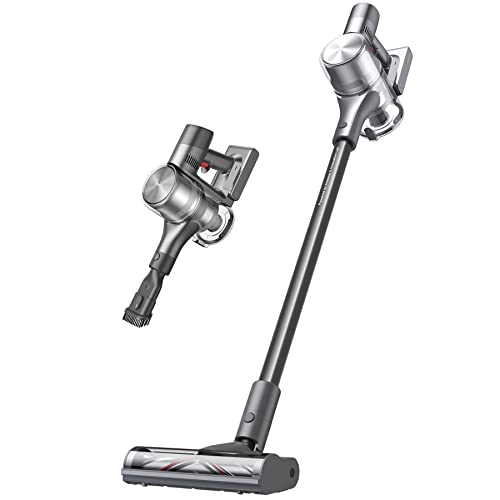
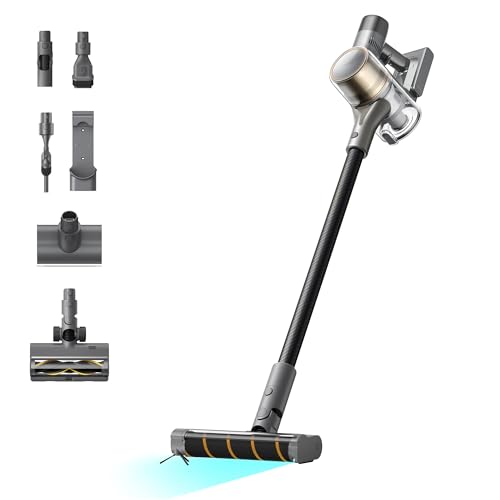
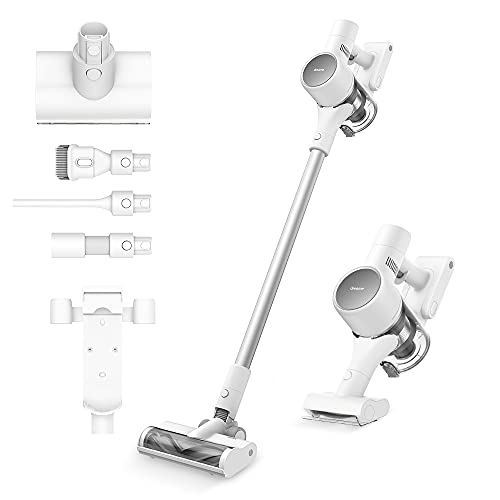
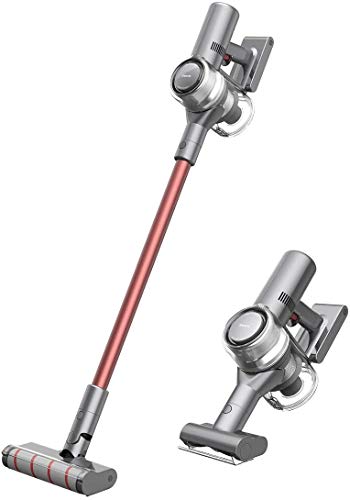
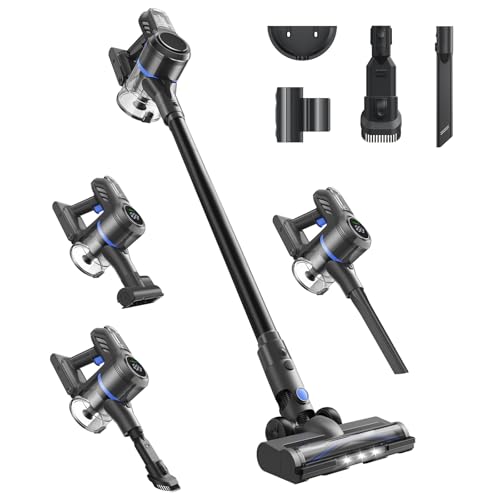
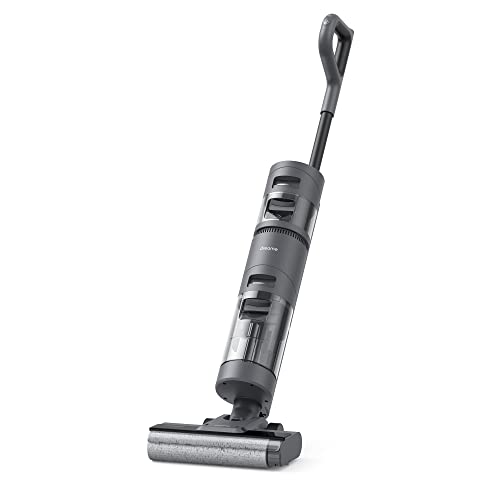
Are Dreame vacuum cleaners good?
Dreame vacuum cleaners have an average overall score of 8.4, ranking #2 among comparable vacuum-cleaner brands, and a user rating of 8.7, placing them at #19 based on user reviews.
Dreame vacuum cleaners are a strong option for buyers seeking high published cordless output without starting at the most expensive Western brands. R10 and T10 cover routine cleaning, R20 and T30 increase power and feedback, and Z20/Z30 target mixed floors and pet hair with stronger heads.
Dreame vacuum cleaners need careful model-by-model checking because air watts, kilopascals and motor rpm are promoted across different generations. These units are not interchangeable, and long Eco runtimes do not represent continuous maximum suction.
The chart below compares vacuum-cleaner brands by average overall score.
[horizontal-chart-05060405232908929908180547999782892589572867802681]
What are the main advantages of Dreame vacuum cleaners?
The main advantages of Dreame vacuum cleaners are as follows:
- High output for the price: Mid- and upper-range models commonly publish about 150–250 AW or 20–30 kPa, giving useful carpet and pet-hair headroom when measured in the stated mode.
- Long lower-mode runtime: Many models claim 60–90 minutes, and selected premium versions extend beyond that with larger packs.
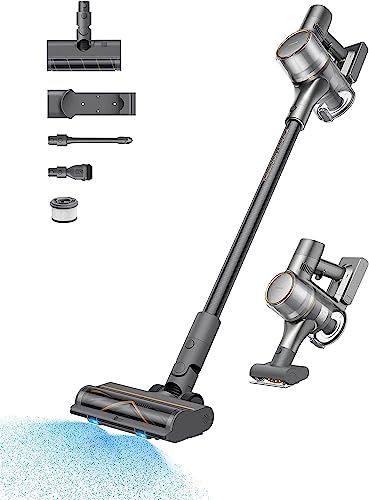
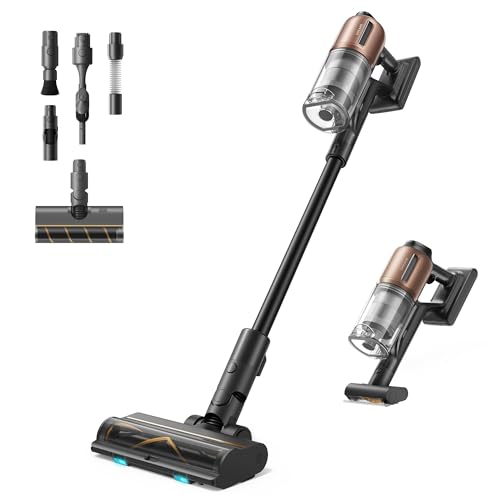
- Strong accessory packages: Soft rollers, multi-surface brushes, illuminated heads and mini motorised tools appear across R, T, V and Z bundles.
- Informative controls: Displays show battery and mode, while higher models add dirt sensing, automatic adjustment or particle feedback.
- Several cleaning formats: Conventional dry sticks cover most floors, H12 washes sealed hard floors, and Z40 Station adds automatic dust disposal for buyers who want a docked system.
What are the main disadvantages of Dreame vacuum cleaners?
The main disadvantages of Dreame vacuum cleaners are as follows:
- Many overlapping generations: R10, R20, R30, T10, T30, V11, V20 and Z20/Z30 can overlap in price and accessories. A higher number in another letter family is not necessarily better.
- Small bins: Most sticks hold roughly 0.5–0.8 L, which can fill quickly with pet hair despite a long battery claim.
- Maximum mode is much shorter: An 80- or 90-minute Eco figure can fall to around 10–15 minutes at the highest setting, depending on head and model.
- Parts and regional support vary: Batteries, filters and powered heads are generation-specific, and availability can be less predictable than for a long-established canister platform.
- Premium docks are expensive: Z40 Station reaches around £770 and introduces proprietary dust bags and permanent floor space.
Who makes Dreame vacuum cleaners?
Dreame Technology is a Chinese smart-home and floor-care company founded in 2017. It developed high-speed motor technology and has participated in the Xiaomi ecosystem, while operating Dreame as its own consumer brand.
The company sells cordless vacuums, wet-and-dry cleaners and robot vacuums across multiple regions. Model packages, chargers and support terms therefore differ by market.
Buy filters, batteries, heads and station bags against the complete R, T, V, Z or H model code. Similar-looking attachments from another generation may use different electrical contacts or airflow seals.
What are the main series of Dreame vacuum cleaners?
The main Dreame vacuum-cleaner series are as follows:
- R10, R20 and R30: R10 and R10s are the value cordless families, while R20 and R30 add stronger motors, illuminated heads and more automatic control. They cover Dreame’s current mainstream dry-stick range.
- T10 and T30: T10 is an older accessible platform, while T30 adds more output and a display. They remain conventional cordless sticks for mixed-floor cleaning.
- V11 and V20: These families focus on higher-speed motors and long runtime in a traditional stick layout. Exact suction, battery and head packages vary by region.
- Z20, Z30 and Z40 Station: Z20 and Z30 are premium dry sticks with stronger floorheads, sensing and extensive tools. Z40 Station adds automatic bin emptying and docked storage.
- H12: H12 is a separate wet-and-dry upright for washing sealed hard floors. It uses water tanks and roller maintenance rather than a dry-stick bin.
How much do Dreame vacuum cleaners cost?
Dreame vacuum cleaners generally cost about £100-£800, although most dry sticks fall between roughly £130 and £340. R10s Lite and T10 occupy the £90-£130 tier, while R10 Pro, R20 and Z20 commonly sit around £160-£260.
T30, R30, V20 and Z30 packages cluster near £300-£300. Z40 Station rises to about £770 because it adds the auto-empty dock. Treat the dock as a separate convenience purchase, not evidence that the vacuum body is three times better.
The chart below shows the price distribution of Dreame vacuum cleaners.
[vertical-chart-10619027598971253355017279164618226905460517817597]
How do Dreame vacuum cleaners compare with Tineco?
Dreame and Tineco both offer sensor-led cordless floor care, but Dreame places more emphasis on high-output dry sticks, while Tineco is especially strong in wet-and-dry Floor One machines. Dreame's R, T, V and Z families span more performance tiers; Tineco's Pure One range is simpler to position.
Based on our research, Dreame dry models average about 200 AW and roughly £260, compared with around 100 AW and £280 across Tineco's mixed dry and wet range. Those averages are not a direct wet-versus-dry performance test.
Choose Dreame for carpet-oriented dry suction, long Eco runtime or a broad tool package. Choose Tineco for iLoop-guided automatic cleaning or a mature hard-floor washing system. For wet machines, compare tank maintenance; for dry sticks, compare air watts, head and boost runtime.
What should you check before buying a Dreame vacuum cleaner?
Consider the following factors before buying a Dreame vacuum cleaner:
- Product family: R, T, V and Z are dry cordless sticks; H12 is a wet-and-dry hard-floor washer. Their tanks, heads and cleaning routines are not interchangeable.
- Suction measurement: Useful dry-vacuum targets are roughly 150 AW for mixed floors and 200 AW or more for greater carpet reserve. Do not add or equate AW, kPa and motor rpm.
- Runtime by mode: Claims commonly reach 60–90 minutes in Eco, while maximum power may last about 10–15 minutes. Confirm the powered-head figure and battery count.
- Head and tools: Match a soft roller to hard floors, a strongly agitating multi-surface head to carpet and a mini motorised tool to upholstery hair. Illumination should reveal dust without replacing edge pickup.
- Bin, weight and handling: Expect about 0.5–0.8 L and roughly 2.5–3.5 kg ready to clean. Check emptying, wrist load and whether the wand reaches low furniture.
- Battery and support: Verify removability, charging time, replacement price and regional stock. Similar model generations can use different packs and contacts.
- Dock or wet maintenance: Price Z40 bags and measure its station, or plan to rinse and dry H12 tanks and roller after every wet session.