
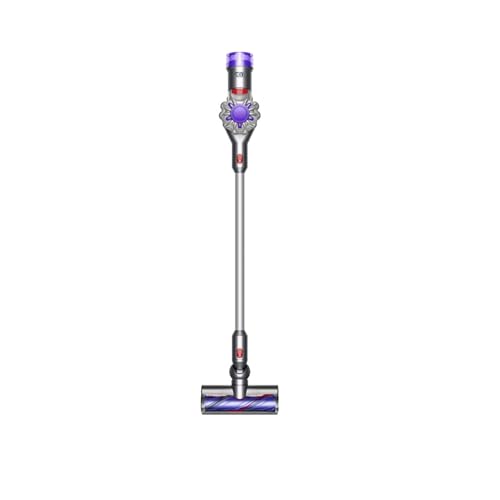
When should you consider buying a Dyson stick vacuum?
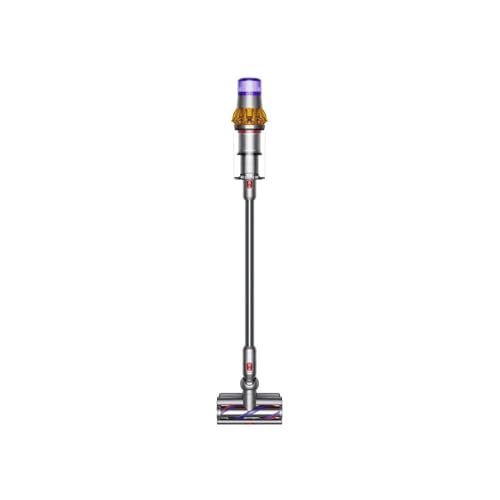
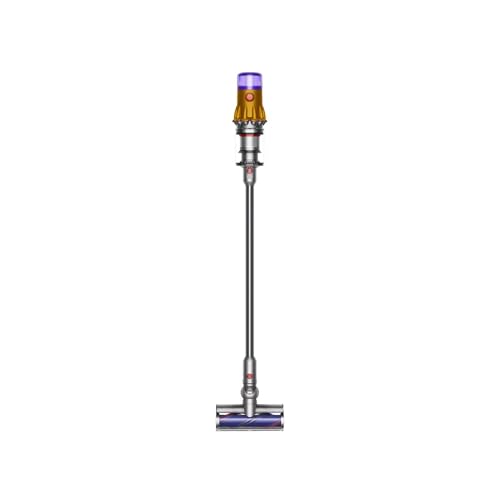
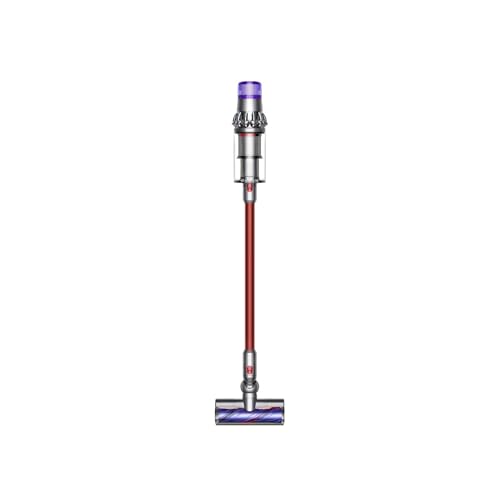
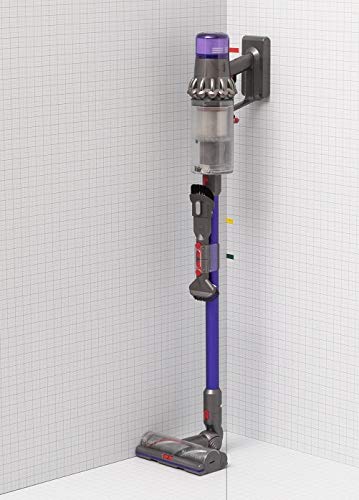
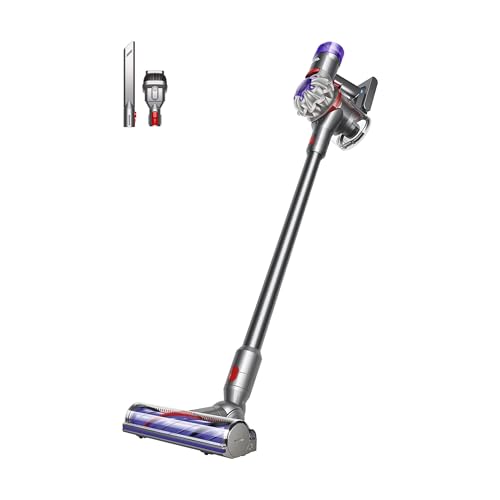
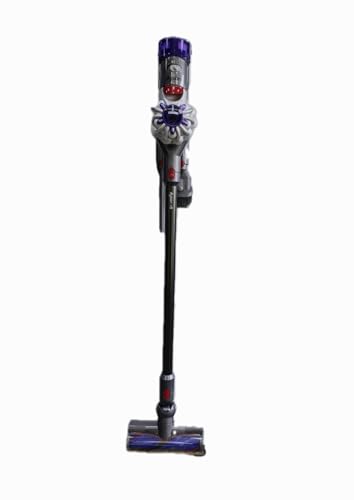
You should consider buying a Dyson stick vacuum when quick floor cleaning, stairs and handheld conversion matter more than a large canister. V8 or V12 is easier to carry, V10 or V11 offers a useful balance of runtime and capacity, and V15 or Gen5detect targets more demanding carpet and pet hair.
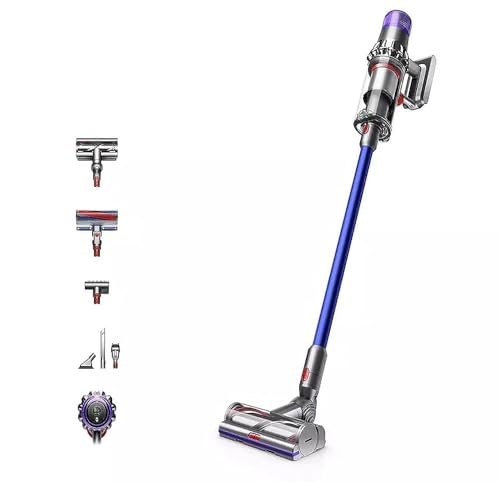
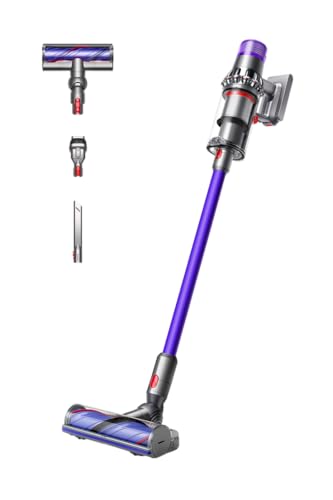
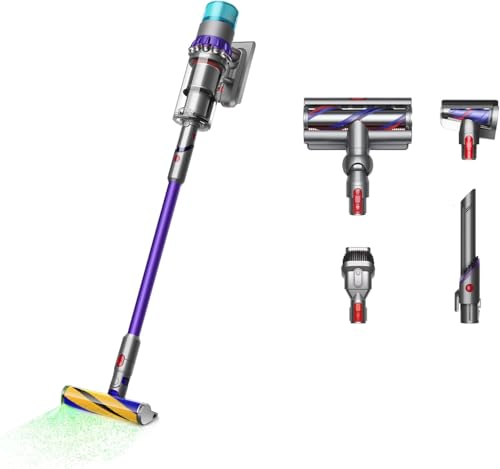
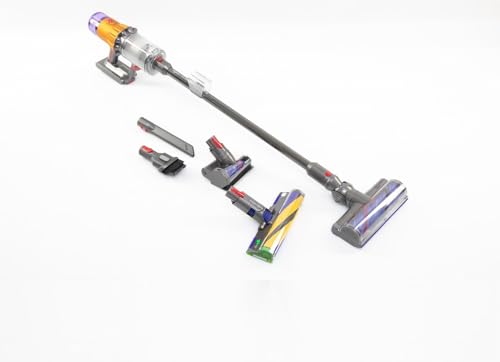
The format is particularly useful in mixed-floor homes when the package includes both a Fluffy-style hard-floor head and a Motorbar-style carpet head. An illuminated head can reveal fine hard-floor dust, while a mini motorized tool is more important for pet hair on upholstery.
A stick is less suitable when one battery must cover extensive deep carpet or a small bin would interrupt cleaning repeatedly. Maximum mode commonly lasts only 5–12 minutes, so large homes should prioritize a removable spare battery or the larger Outsize bin.

Which Dyson vacuum series include stick models?
The Dyson vacuum series that include stick models are as follows:
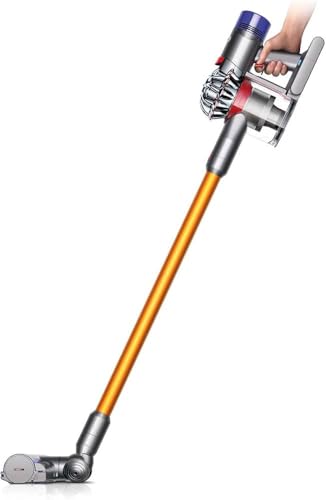
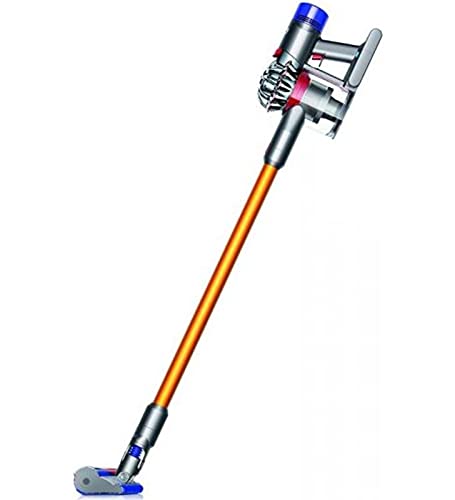
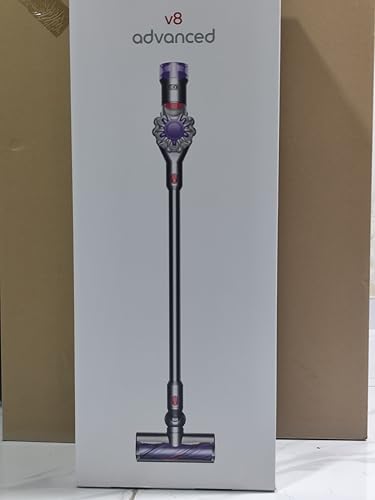
- V7 and V8: These older light sticks form the entry point to Dyson’s cordless range. V8 usually offers about 40 minutes in a lower mode and a roughly 0.54 L bin.
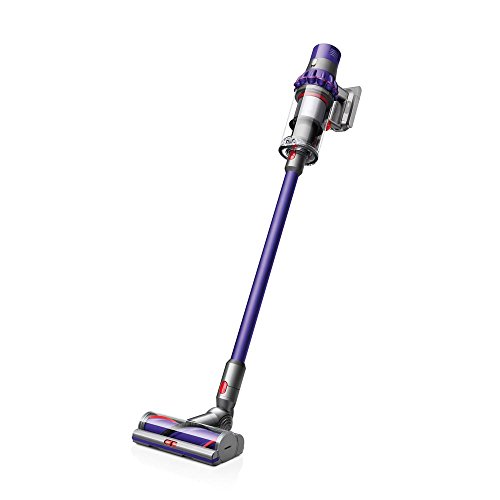
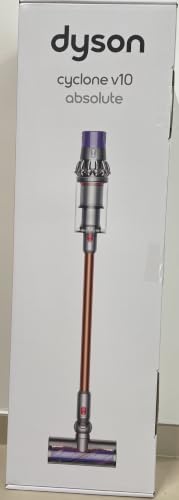
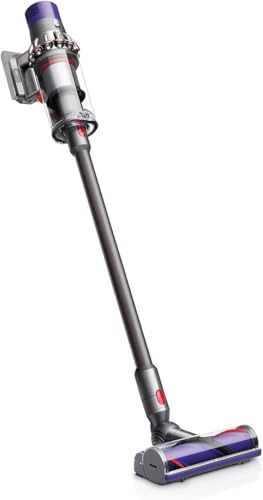
- Cyclone V10 and V11: These families increase runtime and bin capacity, while V11 adds a display and stronger automatic control on selected versions. They are well suited to regular mixed-floor cleaning.
- V12 Detect Slim, V15 Detect and Gen5detect: V12 reduces weight to roughly 2.2 kg, V15 raises output to about 240 AW, and Gen5detect reaches roughly 280 AW. Higher tiers add stronger heads and more sensing features.
- Outsize: Outsize uses a wider head and approximately 1.9 L bin for large floor areas. Its roughly 3.6 kg body is less pleasant on stairs and for long above-floor work.
- PencilVac: PencilVac takes the opposite approach with an ultra-slim body around 1.8 kg and a roughly 0.08 L bin. It is intended mainly for frequent hard-floor maintenance rather than high-capacity whole-home cleaning.
How much do Dyson stick vacuums cost?
New Dyson stick vacuums generally cost about £300-£800, with many models between roughly £340 and £520. V7 and V8 form the lower tier around £260-£390, where they trade maximum suction and runtime for a lighter, simpler body.
Around £390-£520 covers many V10, V11, V12 and V15 packages. Compare the actual Fluffy, Motorbar and mini motorized heads, because a useful two-head package can be worth more than a small difference in motor generation.
Gen5detect, Outsize and premium bundles can reach roughly £600-£800. A 240–280 AW platform, 70-minute lower-mode claim, larger bin or additional battery should explain that price.
The chart below shows the price distribution of Dyson stick vacuums.
[vertical-chart-14019990813609582564028114070863107076272926551475]
What should you check before buying a Dyson stick vacuum?
You should check the following factors before buying a Dyson stick vacuum:
- Suction tier: About 100–150 AW suits hard floors and routine rugs, 180–220 AW is a stronger mixed-floor target, and roughly 240–280 AW provides more carpet headroom when measured comparably. Confirm the cleaner head and mode used for the figure.
- Runtime by mode: Aim for at least 50–60 minutes in a lower mode and around 10 minutes at high power; V7 or PencilVac may provide only about 30 minutes, while Gen5detect can reach roughly 70. Powered heads and boost reduce every headline.
- Weight and balance: V12 is close to 2.2 kg, V10 about 2.7 kg and V15, Gen5detect or Outsize roughly 3–3.6 kg. Test wrist load in handheld use and whether the floorhead supports the machine comfortably.
- Bin capacity: V12 holds about 0.35–0.4 L, V10, V11 and V15 roughly 0.75 L, and Outsize around 1.9 L. PencilVac is only about 0.08 L, so it suits quick hard-floor maintenance rather than pet-heavy whole-home cleaning.
- Cleaner heads: Choose Fluffy or an illuminated soft roller for hard floors, Motorbar-style agitation for carpet and a mini motorized head for upholstery and pet hair. Check the exact suffix because head packages differ by market.
- Battery and charging: Charging commonly takes about 3.5–5 hours. Prefer a click-in removable battery for larger homes, verify whether an additional charger is required and price a replacement pack before purchase.
- Filtration, noise and parts: Require a sealed path and follow the filter wash-and-dry interval. Prefer roughly 75 dB or below in the everyday mode where possible, and confirm local filters, rollers and batteries for the exact serial-compatible model.
The chart below shows the weight distribution of Dyson stick vacuums.
[vertical-chart-06613942524260612923176347756358758734470731242854]