
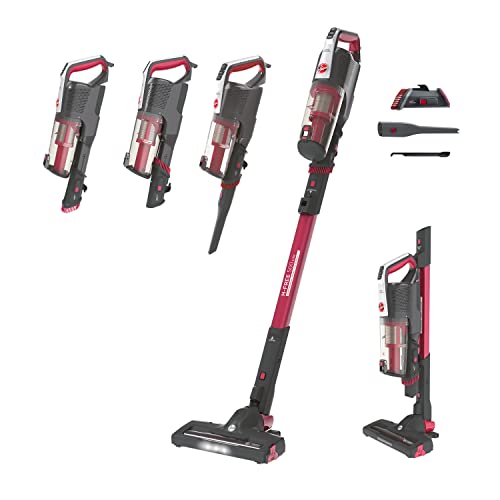
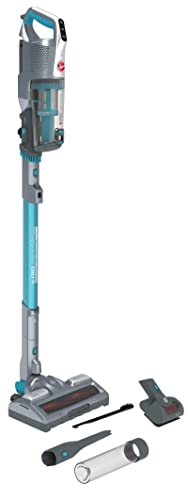
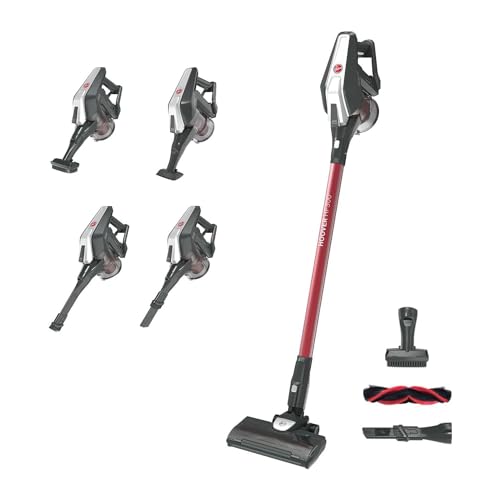
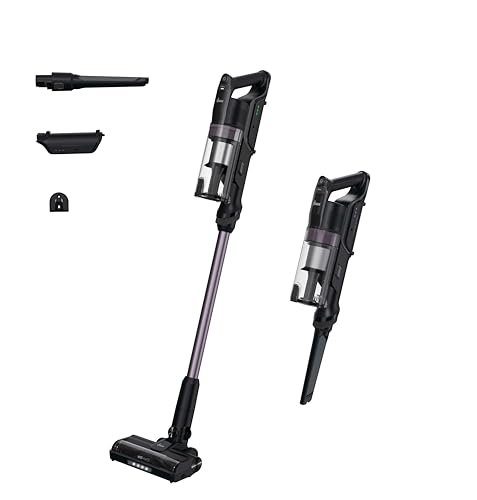
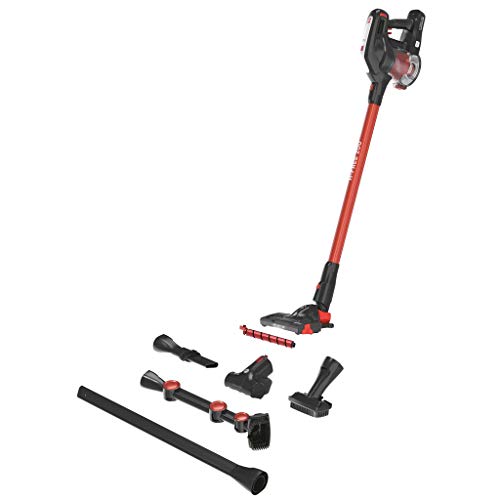
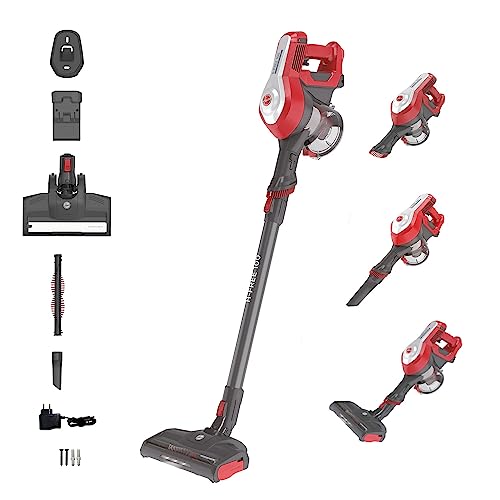
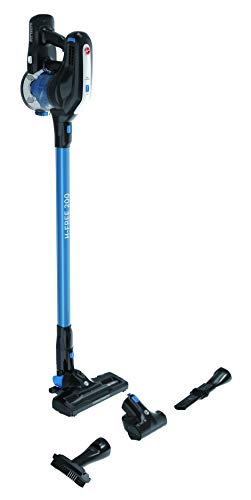
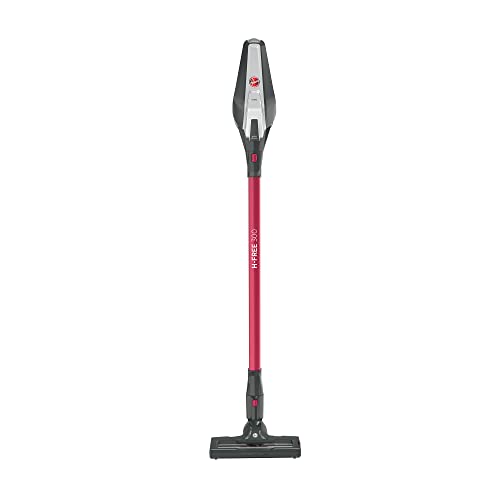
When should you consider buying a Hoover stick vacuum?
You should consider buying a Hoover stick vacuum if you often clean in short sessions, move between hard floors and rugs or need a machine that converts quickly for stairs, furniture and the car. A complete weight around 2.5–3 kg, a swivelling head and a removable handheld make this format easier to deploy than a full canister.
Choose carefully if deep carpet, several shedding pets or long uninterrupted cleaning is the main job. Aim for at least 170–200 AW plus a powered brush for demanding carpet when output is measured comparably, or choose a corded Hoover stick if continuous runtime matters more than cable-free movement; lower-output cordless models are better suited to routine hard-floor debris.
A stick is also less convenient when a 0.45–0.9 L bin would need emptying several times per session. For a large home, prioritise a removable battery, 50–60 minutes in a lower mode and 10–15 useful minutes in turbo rather than selecting by low weight alone.

Which Hoover vacuum series include stick models?
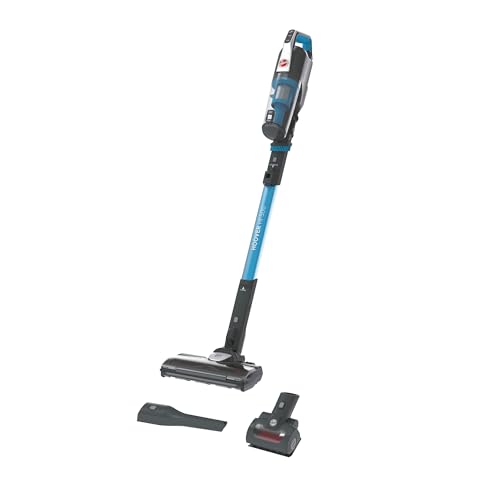
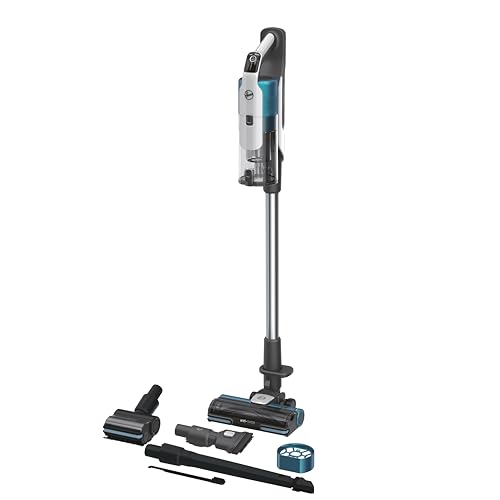
The Hoover stick-vacuum series are as follows:
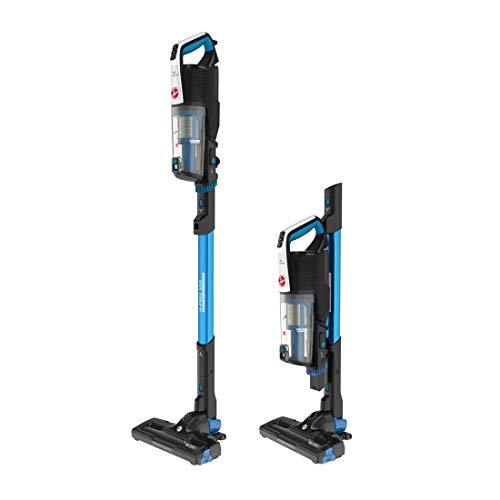
- HF1 and HF2: These are Hoover’s lighter entry-to-midrange cordless sticks. They suit quick hard-floor and mixed-floor cleaning, with roughly 0.7–1 L bins and about 30–40 minutes of lower-mode runtime depending on the package.
- HF3 and HF4: These families add longer-runtime and mixed-floor options, including DynamicClean and PowerMove versions. Pet and Hydro suffixes change the supplied head or wet-cleaning attachment rather than defining a separate motor platform.
- HF6 TurboSense: This is Hoover’s higher-output cordless family, with up to 250 AW under the stated handheld turbo test. It is the stronger choice for carpet and heavier debris, although maximum-power runtime is much shorter than the headline lower-mode figure.
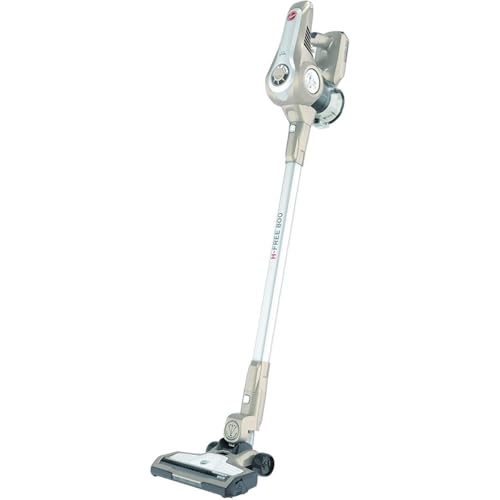
- HF9 and H-FREE: HF9 is an earlier premium line with anti-twist hair control, while H-FREE covers several older cordless generations. Battery availability and the exact floorhead matter more than the shared family name.
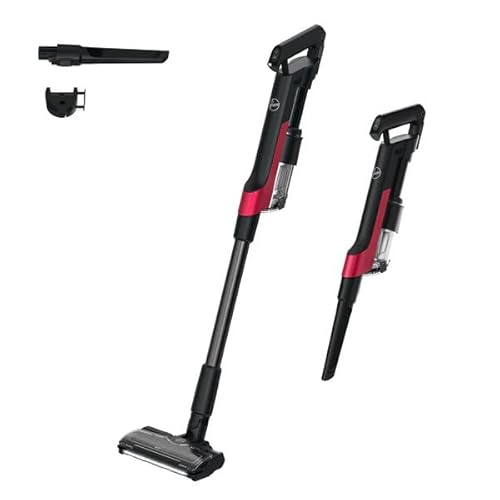
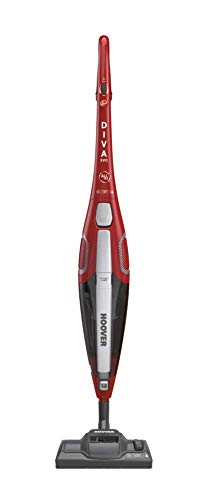
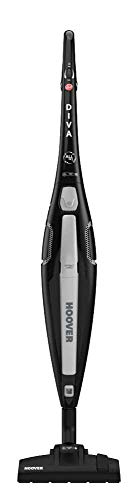
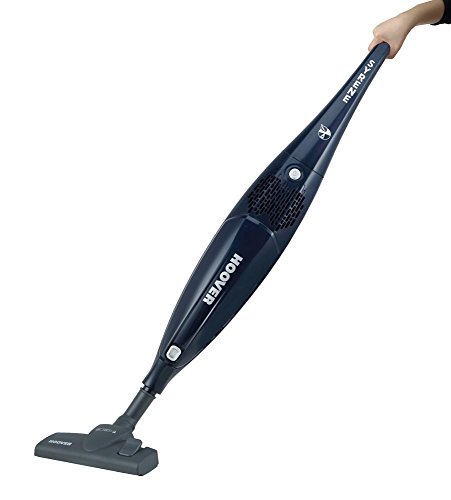
- Diva, SB and Syrene: These are corded stick families with approximately 700–750 W input motors and 5–8 m cables. They trade cordless freedom for continuous operation and suit buyers who do not want to manage charging.
How much do Hoover stick vacuums cost?
New Hoover stick vacuums generally cost about £100-£400, with the centre of the range near £170. Entry corded sticks and basic HF1 or older H-FREE models commonly cost around £90-£130, while £130-£170 covers many better-equipped everyday cordless options.
From roughly £170 to £260, expect a stronger powered head, better hair handling, automatic floor response or a larger removable battery. A Hoover stick above £260 should provide a genuinely higher-output platform, dual-battery capability or a comprehensive dock and tool set; verify the package because a model suffix can account for a large price difference.
The chart below shows the price distribution of Hoover stick vacuums.
[vertical-chart-00660187412557702247145992950536064901563621124280]
What should you check before buying a Hoover stick vacuum?
You should check the following factors before buying a Hoover stick vacuum:
- Cordless or corded design: Choose cordless for rapid room changes and above-floor work, or a corded Diva, SB or Syrene-type stick for continuous operation. For corded cleaning, aim for at least a 6–7 m cable in a larger home; a 5 m cable is better suited to smaller rooms.
- Suction and carpet head: Aim for 100–150 AW for normal hard floors and at least 170–200 AW for regular carpet or pet hair when figures are measured comparably. Some Hoover sticks publish only 25–75 AW while HF6 reaches up to 250 AW under stated conditions, so the powered brush and test mode are essential context.
- Runtime and recharge: A practical cordless target is 45–60 minutes in a lower mode, 10–15 minutes in turbo and no more than about four hours to recharge. Check the figure with the powered floorhead attached, since headline runtime may use a non-motorised tool.
- Weight and balance: Prefer roughly 3 kg or less ready to clean, and closer to 2.5 kg if stairs or handheld use are frequent. A low number does not guarantee comfort; test whether the head supports the tube and whether the wrist carries too much motor-and-battery weight.
- Bin capacity and emptying: Around 0.7 L balances compactness with useful cleaning time, while 0.45 L may need frequent emptying in a pet home. Inspect the usable fill line, cyclone access and whether hair slides out without reaching into the bin.
- Floorhead and tools: Select a removable powered roller for carpet, effective soft or combination contact for hard floors and a mini motorised tool for pet hair on upholstery. Confirm that anti-tangle combs, LEDs or a flexible wand are present on the exact suffix rather than assumed from the family name.
- Battery and replacement parts: Prefer a removable battery if the vacuum will cover more than one floor, and confirm the price of a second pack, charger, filters and brush bar. Hoover generations use different battery platforms, so match every spare to the full commercial code and sales region.
The chart below shows the weight distribution of Hoover stick vacuums.
[vertical-chart-02343633970603625578151645734587394629313567783679]