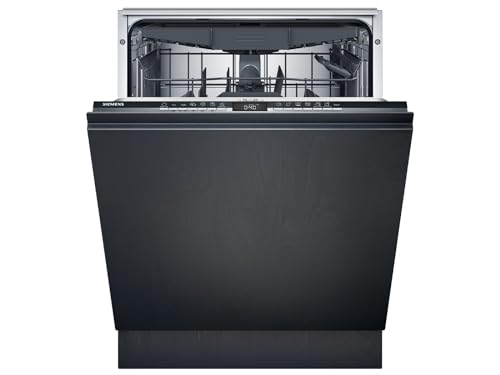
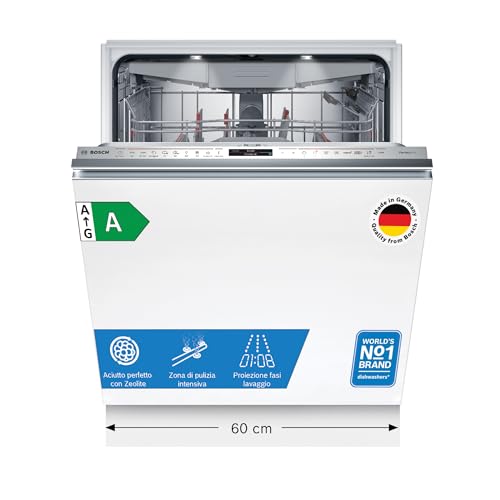
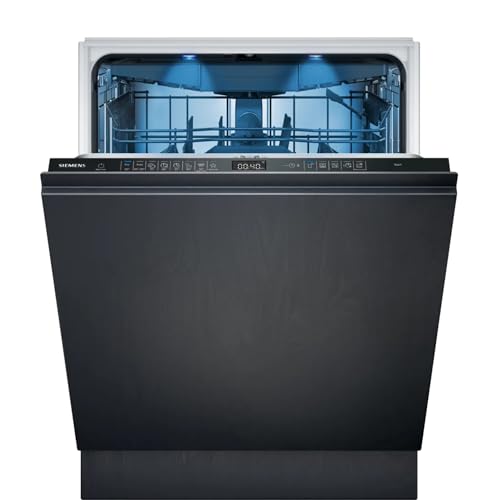
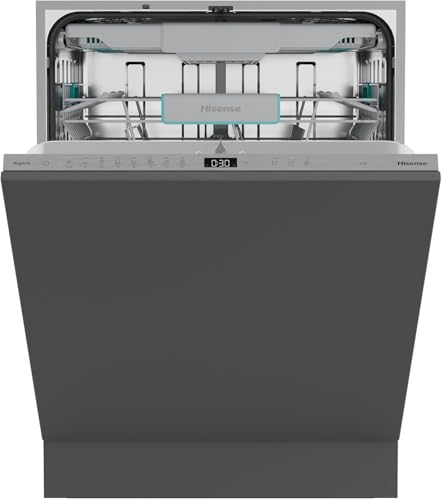
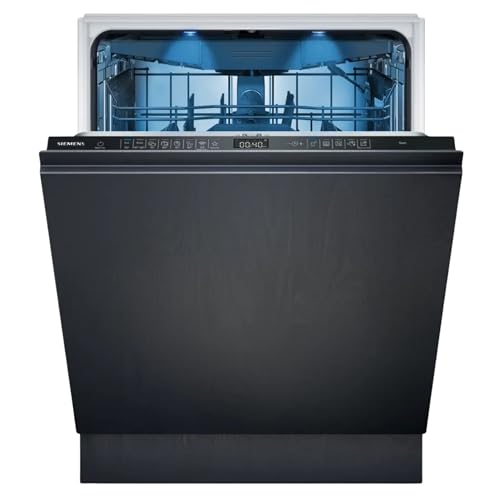
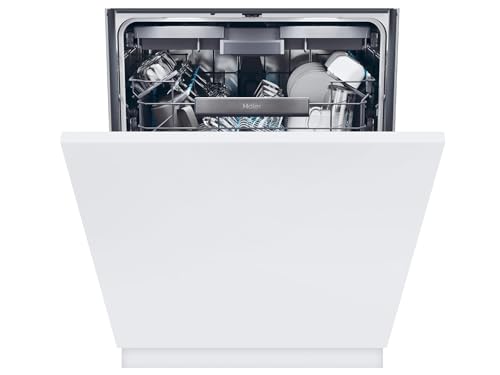
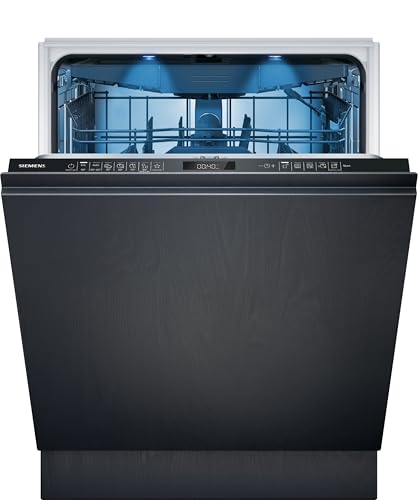
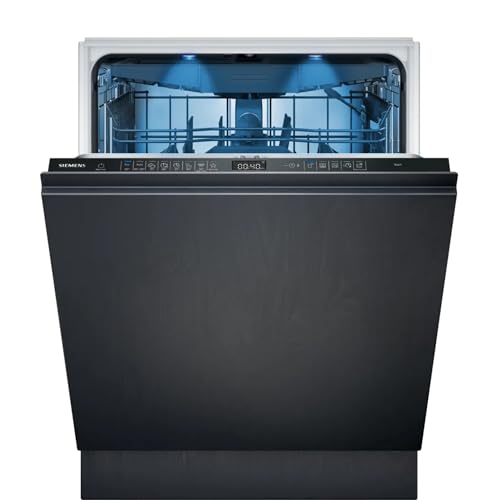
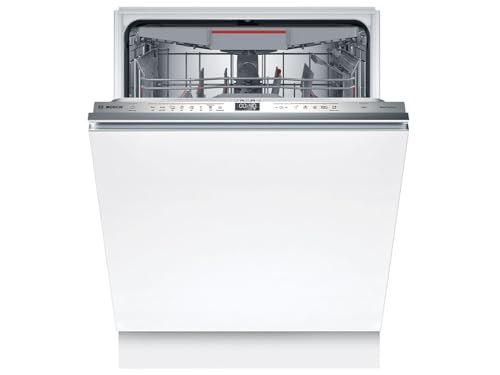
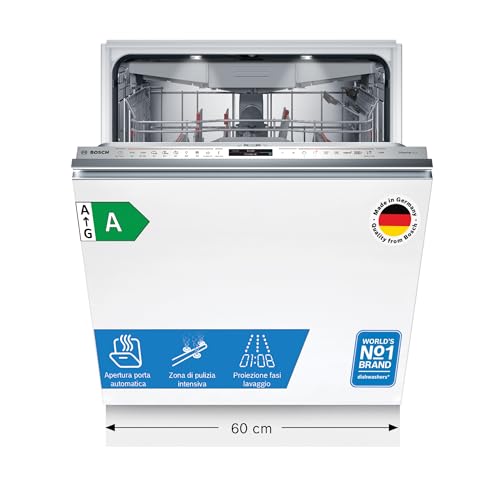
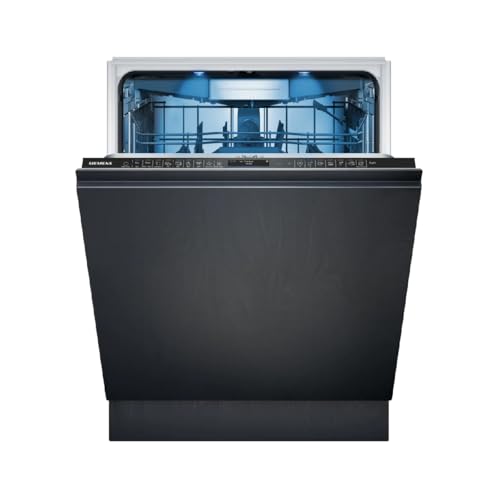
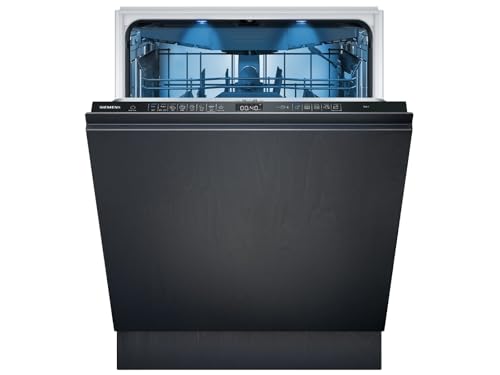
Which brands make the best integrated dishwashers?
The best integrated dishwasher brands are ranked below:
- Siemens (Average overall score: 8.9)
- Bosch (Average overall score: 8.9)
- Haier (Average overall score: 8.7)
The chart below ranks integrated dishwasher brands by average overall score.
[horizontal-chart-17485107887156563814041013483904806824184192333160]
Are integrated dishwashers better than freestanding models?
Integrated dishwashers are better when fitted appearance and hidden controls matter most; freestanding models are better when simpler installation and replacement flexibility matter more. Neither format is inherently better at cleaning, so the decision should start with cabinet geometry and service access.
A full-size integrated machine is commonly about 60 cm wide, 81.5–82 cm high, and 55–57 cm deep, while freestanding models are often 84.5–85 cm high and around 59–62 cm deep. Integrated products also need a correctly sized furniture panel, compatible fixed or sliding hinges, plinth clearance, ventilation, and space for a leak-stop housing and hoses.
Integrated cabinetry can soften some operational sound, but compare the declared figure directly: around 44 dB or below suits many open-plan kitchens. A fully integrated door should also provide a floor light, remaining-time projection, end signal, or app status, while a freestanding control panel remains visible throughout the cycle.
What is the difference between fully and semi-integrated dishwashers?
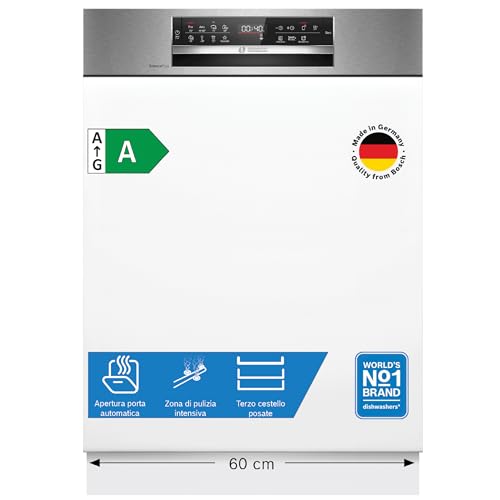
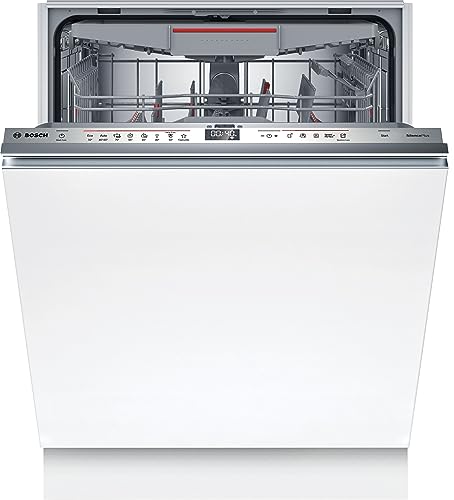
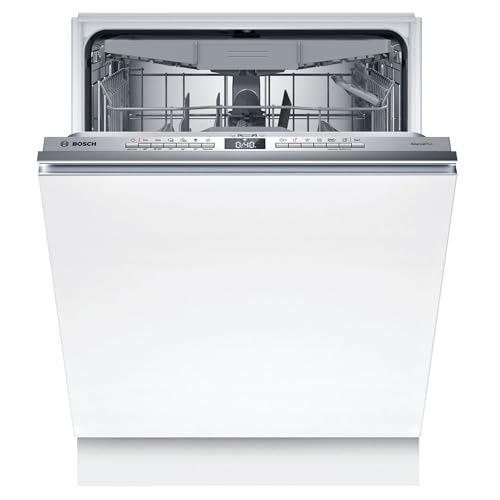
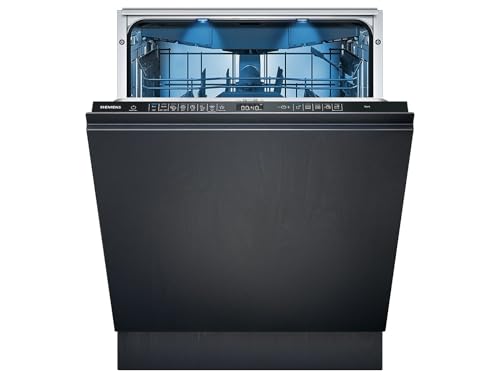
A fully integrated dishwasher hides the entire appliance door and places its controls on the top edge, while a semi-integrated model leaves a visible control panel above the furniture panel. Both sit within kitchen cabinetry, but they differ in appearance, control access, and how running status is displayed.
Fully integrated models create the cleanest visual result. Because the controls are hidden when the door is shut, look for a floor-projected light, remaining-time projection, audible end signal, or app notification; otherwise it can be difficult to tell whether a quiet machine is still running.
Semi-integrated models keep the display and buttons visible, making program selection and time checks easier without opening the door. They require a shorter furniture panel and leave more of the appliance visible, so the panel dimensions and finish must suit the kitchen design. Cleaning performance should not determine this choice unless one format offers a specific model or feature the other lacks.
How difficult is an integrated dishwasher to install?
Installing an integrated dishwasher is moderately difficult because the appliance must be level, connected safely, secured inside the niche, and balanced with a furniture door. A typical full-size opening must accommodate roughly a 60 cm-wide, 81.5–82 cm-high, and 55–57 cm-deep machine, plus hoses, ventilation, adjustable feet, and service clearance; slim models require the equivalent checks around a 45 cm width.
Professional installation is advisable when adding water or electrical connections, changing hinge systems, cutting cabinetry, or fitting a heavy custom panel. Supply hoses are commonly around 1.5–1.65 m, the door must clear the plinth through its full movement, and the appliance must remain removable for service; a poor fit can trap cables, strain hoses, cause vibration, or prevent the panel from opening correctly.
What dimensions and capacity should an integrated dishwasher have?
A standard integrated dishwasher is usually about 60 cm wide, 81.5–82 cm high, and 55–57 cm deep, with capacity for 13–15 place settings. A slim integrated model is about 45 cm wide and normally holds 9–10 settings, making it the better fit when cabinet width is limited.
Measure the actual niche rather than relying only on the nominal width. Check the minimum and maximum installation height, rear hose space, door-panel dimensions and weight, hinge movement, plinth clearance, and whether the machine needs an air gap around its sides or top. Depth is especially easy to underestimate once inlet, waste, and power connections are routed behind the cabinet.
Capacity should match normal loads rather than occasional entertaining. For a full-width machine, 14 settings is a strong general target; a flexible upper rack, folding tines, and a third cutlery tray can matter more than moving from 14 to 15 settings. For a 45 cm model, prioritize usable plate clearance and rack adjustment because the narrower basket makes awkward cookware harder to place.
The chart below shows the place-setting capacities of integrated dishwashers.
[vertical-chart-07764589797902071624173757278951834299553209657058]
How much do integrated dishwashers cost?
Integrated dishwashers generally cost about £300-£770, excluding the furniture door and any cabinet alterations. Width, efficiency, noise, rack flexibility, drying system, hinge design, and installation requirements all affect the final price.
Below £390, models usually provide essential programs, conventional baskets, and simpler drying or status indication. From £390-£600, adjustable racks, quieter motors, automatic programs, floor lights, improved leak protection, and automatic door opening become more common.
Above £600, expect greater rack flexibility, very low noise, advanced drying, time projection, interior lighting, premium hinge systems, and stronger connectivity or service support. Include the panel, fitting kit, labor, and possible plinth changes before comparing an integrated model with a freestanding alternative.
The chart below shows the price distribution of integrated dishwashers.
[vertical-chart-02492772079336969915180431884465594221984038549312]
What should you consider when choosing an integrated dishwasher?
Before buying an integrated dishwasher, consider the following factors:
- Niche, panel, and hinge compatibility: Measurements should cover the cabinet opening and verify adjustable height, body depth, furniture-panel dimensions and weight, hinge type, plinth clearance, ventilation, and hose routes. A fixed or sliding hinge mismatch can prevent full door movement and make the appliance impossible to service correctly.
- Required capacity: A 60 cm model with 13–15 place settings generally suits 3–5 people, while a 45 cm machine with 9–10 settings is usually better for 1–3 people. Choose for peak mixed loads rather than occupant count alone, especially when pans, lunch boxes, and serving dishes must fit together.
- Rack geometry: A practical test should cover maximum plate diameter, upper-basket adjustment, folding tines, stemware supports, third-rack depth, and cutlery storage. A flexible 14-setting interior can be more useful than a nominally larger layout that blocks cookware or spray-arm movement.
- Energy and water consumption: For a full-size integrated dishwasher, about 0.55–0.75 kWh and 8.5–10 L per Eco cycle is good, 0.76–0.90 kWh and 10–11 L is acceptable, and more than 0.90 kWh or 11 L is relatively high. Intensive, hygiene, quick, and extra-dry options can exceed those Eco figures.
- Noise level: Around 44 dB or below is preferable in an open-plan kitchen, while 45–48 dB may be acceptable in a separate room. Because fully integrated controls are hidden, verify that the machine provides a floor light, time projection, end signal, or dependable app notification.
- Wash performance and programs: Eco, automatic, intensive, quick, and glass cycles cover most households, but sensor quality and spray coverage matter more than program count. Check filter access, water-softener adjustment, detergent dispensing, and results on baked-on soil before prioritizing specialty modes.
- Drying performance: Compare condensation, heat-exchanger, fan-assisted, mineral, and automatic-door systems, particularly for plastics. If the door opens automatically, confirm that steam, panel movement, the worktop, plinth, and walkway remain compatible.