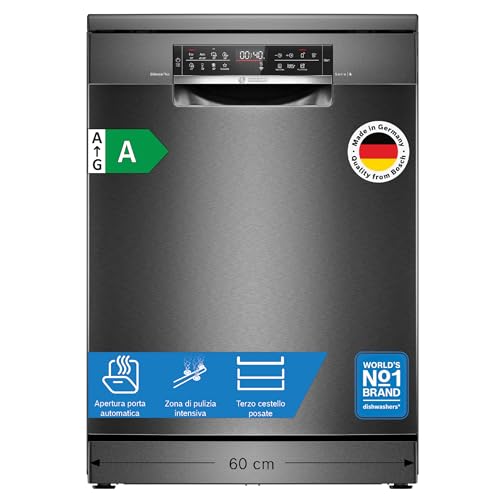

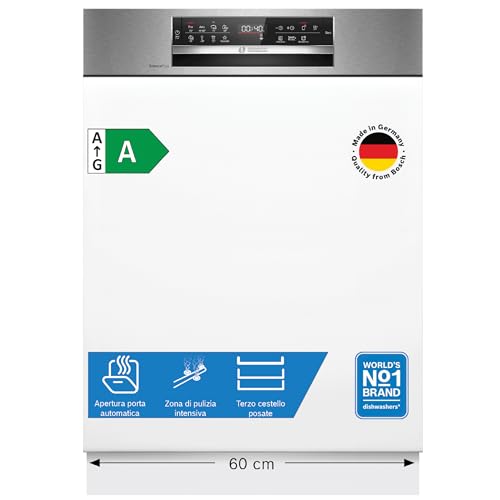
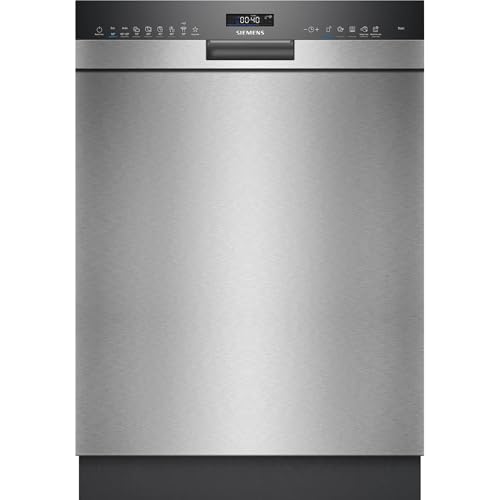
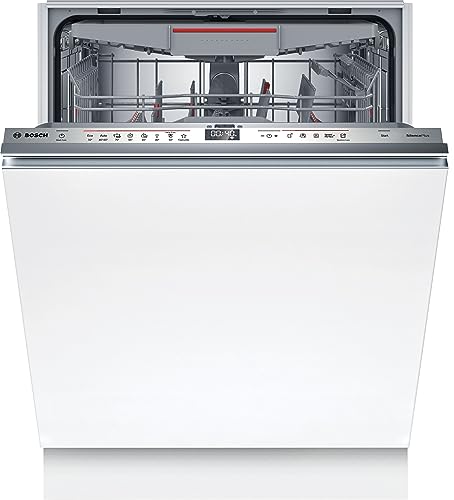
What noise level counts as a quiet dishwasher?
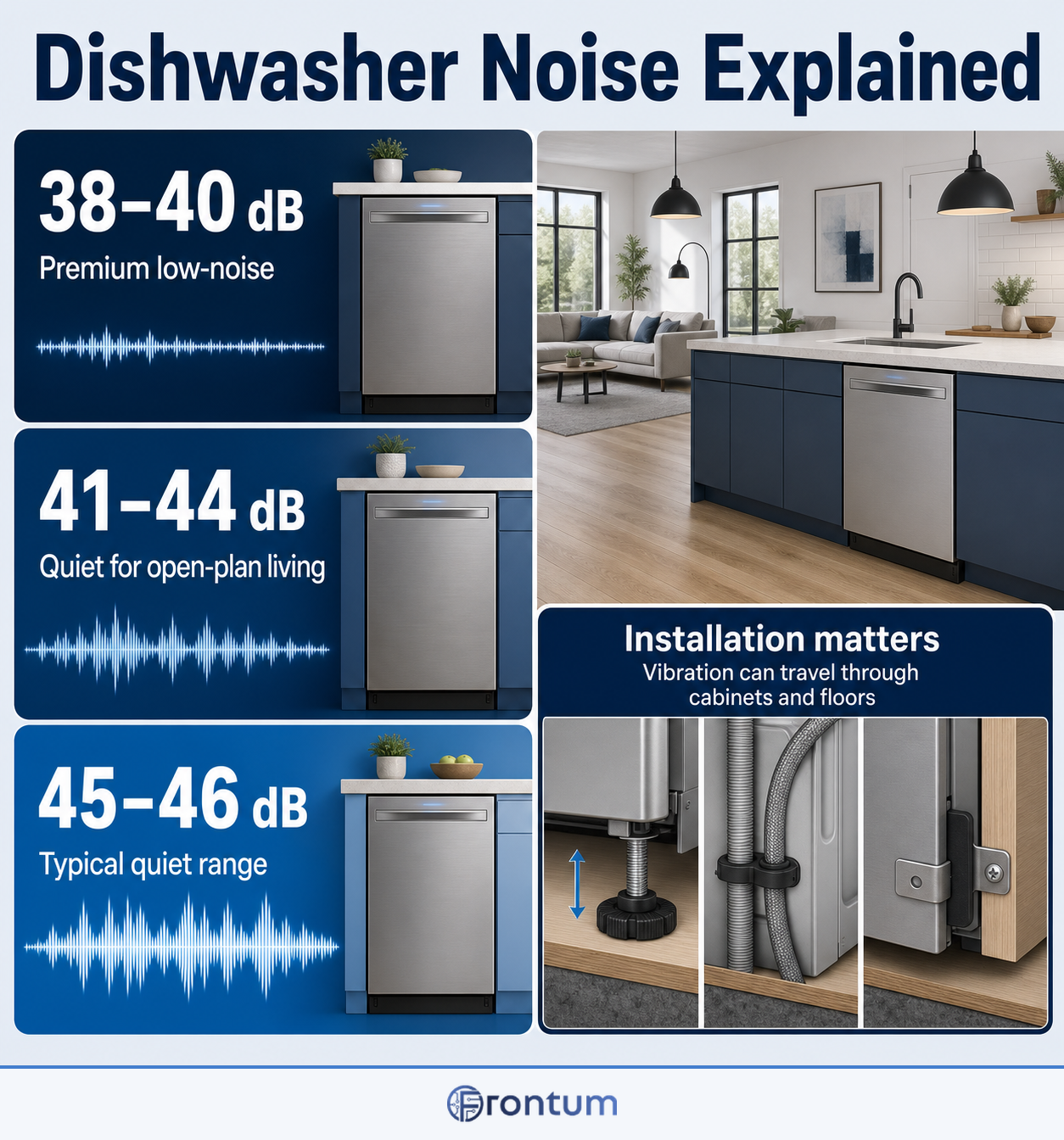
A dishwasher counts as quiet at 44 dB or less, while approximately 42 dB is a strong target for most open-plan kitchens and 40 dB or below is ultra-quiet. Models around 37–39 dB are useful near sleeping areas, but usually cost more.
The decibel scale is logarithmic: a reduction of 3 dB represents roughly half the acoustic power, although perceived loudness does not halve. Moving from 44 to 41 dB is therefore technically meaningful, while a 44-to-40 dB difference is usually noticeable in a quiet room.
Compare the normal Eco label rating rather than only a special Silence program. The dedicated mode may reduce pump or spray intensity and extend the cycle; drain noise, water fill, automatic-door opening, end signals, and cabinetry resonance also affect the real experience.
The chart below shows the noise-level distribution of quiet dishwashers.
[vertical-chart-07075163740943077758157194993605762292232763932172]

Do quiet dishwashers clean as well as louder models?
Quiet dishwashers can clean just as well as louder models because declared noise is mainly controlled by motor design, insulation, pump mounting, water-path engineering, and program speed—not by removing cleaning power. A 40–42 dB machine can still provide intensive jets, sensor washing, high-temperature hygiene, and strong filtration.
Trade-offs appear mainly when a special quiet program is selected. It may lower pump speed or change spray timing and compensate with a longer cycle, making it better for normal overnight loads than burnt cookware. Use Auto or Intensive when soil demands it and compare independent cleaning results, spray coverage, filters, rack geometry, and detergent dosing separately from dB.
Loading also matters: nested bowls, obstructed spray arms, rattling cutlery, loose glassware, and pans touching the tub can make any dishwasher louder and reduce cleaning. Proper arrangement often improves both outcomes without changing the program.
Which brands make the best quiet dishwashers?
The best quiet dishwasher brands are ranked below:
- Bosch (Average overall score: 9)
- Siemens (Average overall score: 8.9)
- Gorenje (Average overall score: 8.9)
- Midea (Average overall score: 8.7)
- Haier (Average overall score: 8.7)
The chart below ranks quiet dishwasher brands by average overall score.
[horizontal-chart-02215638842644955749148935897150521425631510137662]
Does a quiet dishwasher make a noticeable difference in an open-plan kitchen?
A quiet dishwasher makes a noticeable difference in an open-plan kitchen because there is no wall or closed door to mask pump, spray, fill, and drain sounds. Around 44 dB is normally acceptable, 42 dB is less intrusive during conversation or television, and 38–40 dB is preferable for nighttime cycles close to seating.
Room acoustics change the result. Hard floors, stone worktops, bare walls, open cabinetry, and a loose furniture panel reflect or amplify noise, while soft furnishings absorb it. A technically quieter model can therefore disappoint if it is unlevel, touches cabinetry, has vibrating hoses, or allows dishes to contact spray arms.
Pay for the lowest rating only when the room needs it. Moving from 44 to 40 dB can be valuable beside a sofa; in a separate kitchen, spending another £170 may deliver less benefit than better racks, drying, energy efficiency, or leak protection.
Which noise and energy labels matter for a quiet dishwasher?
The following noise and energy labels matter when choosing a quiet dishwasher:
- Declared noise level: The dB figure measured on the Eco program is the main comparison; use 44 dB as quiet, about 42 dB for open-plan use, and 40 dB or less for ultra-quiet operation.
- Noise-emission class: The A–D acoustic class groups the dB result, but the exact number is more precise when comparing two models in the same class.
- Energy-efficiency class: The current A–G letter summarizes Eco efficiency, not noise or cleaning quality. Compare it with capacity and consumption.
- Energy per 100 cycles: Divide by 100 for approximate kWh per cycle. A 20 kWh-per-100-cycle difference equals 56 kWh over 280 cycles.
- Water per Eco cycle: Around 9–10 L is common for efficient full-size machines, but capacity and loading determine resource use per item.
- Eco-program duration: Quiet and efficient cycles can take approximately four to five hours; verify that the schedule suits daily use.
How much do quiet dishwashers cost?
Quiet dishwashers generally cost about £300-£1,300, although highly specified premium products can approach £1,700. Noise, energy class, width, installation, racks, drying, capacity, and connectivity explain the range.
Around £300-£400, expect mainly 42–44 dB models with simpler racks, conventional or automatic-door drying, and classes C–E. This tier is often sufficient for a separate kitchen or moderate open-plan use.
From £400-£700, the choice broadens to 40–44 dB, classes A–C, stronger racks, sensor programs, automatic opening, better status displays, and app control.
Above about £690, look for approximately 37–41 dB, mineral or premium drying, class A efficiency, interior lighting, advanced projection, premium racks, or specialized hinges. A large premium solely for 1–2 dB is difficult to justify unless the machine sits beside living or sleeping space.
The chart below shows the price distribution of quiet dishwashers.
[vertical-chart-01750633536124465827010364327664062943461077421817]
What should you consider when choosing a quiet dishwasher?
Before buying a quiet dishwasher, consider the following factors:
- Measured noise: Around 44 dB is quiet for a separate kitchen, approximately 42 dB is a sensible target for open-plan living, and 40 dB or less is premium low-noise territory. A 3 dB reduction represents roughly half the sound energy, although perceived loudness also depends on frequency and room acoustics.
- Installation and vibration: Correct installation means the cabinet is level, all feet bear weight, hoses do not strike panels, and the decorative door or plinth is fitted to specification. A nominally quiet machine can transmit low-frequency vibration through loose cabinetry, hard flooring, or an incorrectly tensioned integrated door.
- Complete sound profile: The declared Eco-cycle figure does not capture every operating sound: filling, drain-pump operation, spray impact, regeneration, fan drying, and the end signal can all sound different. Check whether a Silence program lowers pump speed and whether it extends the cycle or restricts cleaning intensity.
- Wash performance: Effective quiet cleaning depends on load sensing, alternating spray zones, an intensive 65–70 °C program, filter-pressure monitoring, and adjustable water pressure. Quietness is poor value if reduced pump output leaves dried starch or soil on cookware and forces a second cycle.
- Racks and usable capacity: Thirteen to 14 settings generally suit 3–5 people and 15–16 suit 4–6 people or frequent entertaining, but usable capacity is best judged with the household’s largest dinner plates, pans, wine glasses, and utensils. Third racks, folding tines, rail quality, and upper-basket height adjustment determine whether items sit securely without amplifying spray noise.
- Drying and efficiency: A quiet full-size dishwasher should still target about 0.55–0.75 kWh and 8.5–10 L per Eco cycle; more than 0.90 kWh or 11 L is relatively high even when noise is below 44 dB. Automatic opening dries efficiently, while Zeolith or fan assistance can improve plastics but may add £100-£300 to the purchase price.
- Ownership value: Compare quiet models at the same width, energy class, drying system, and rack specification, then decide how much each 1–3 dB reduction is worth. Also verify full leak protection, motor-warranty exclusions, pump and rack-part availability, installation charges, and local service response.