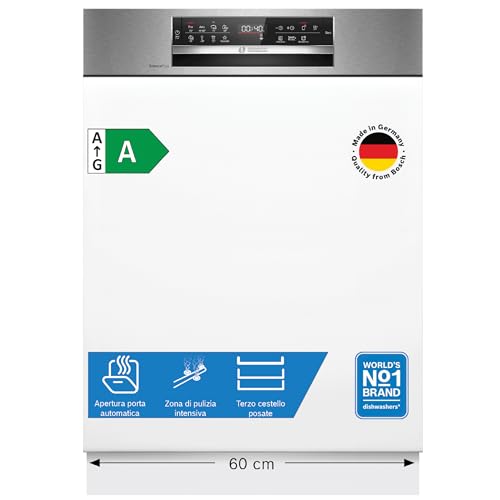
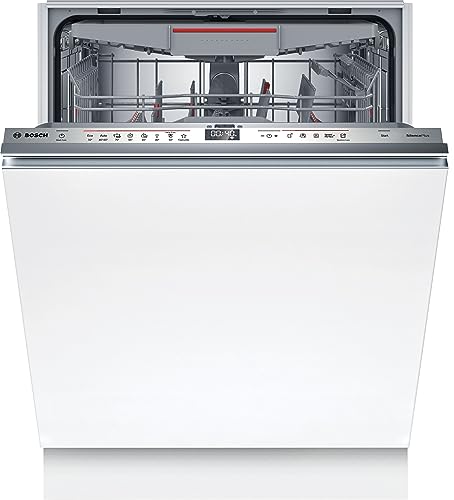
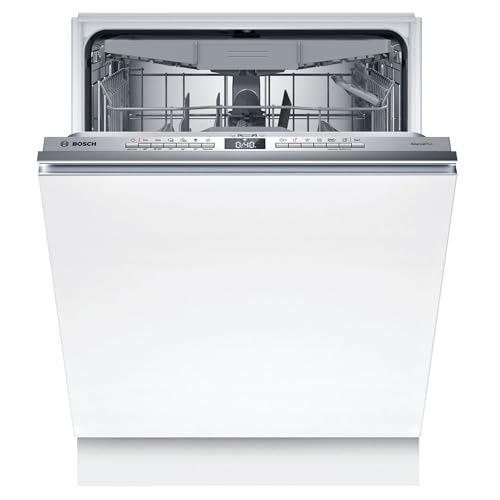
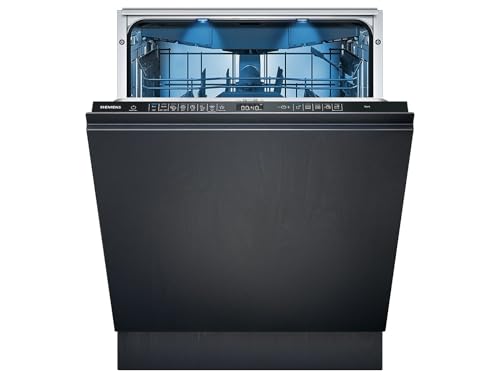
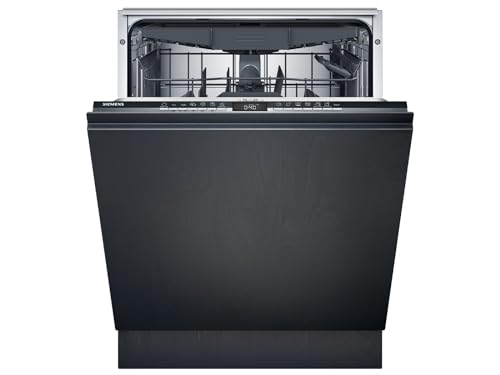
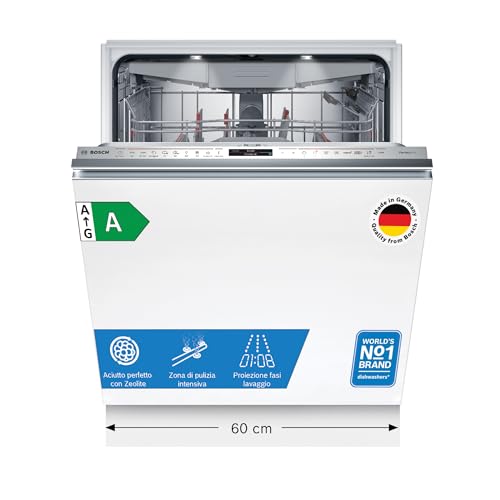
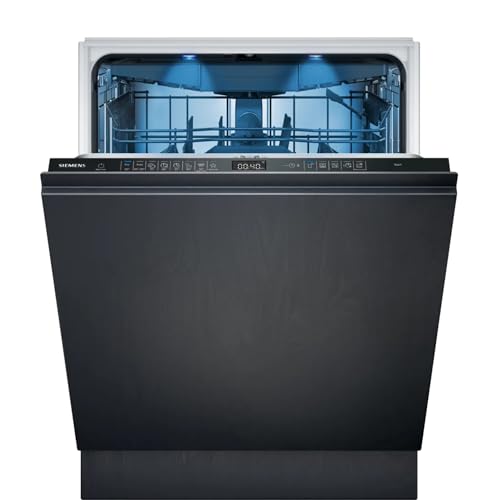
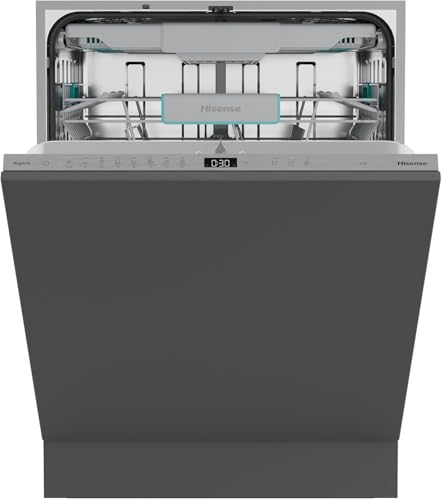
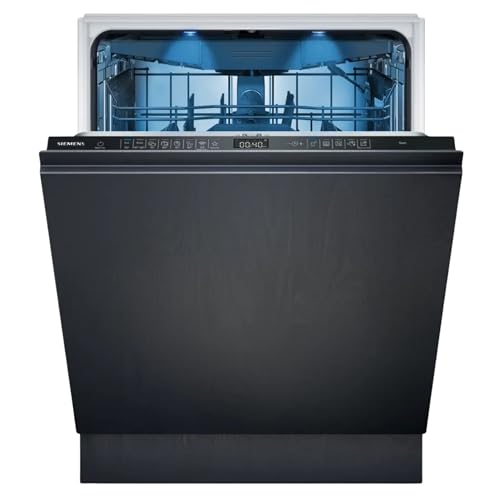
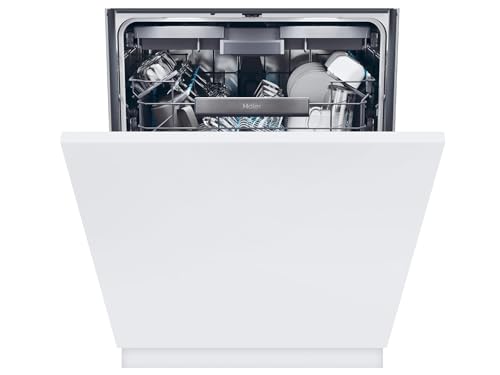
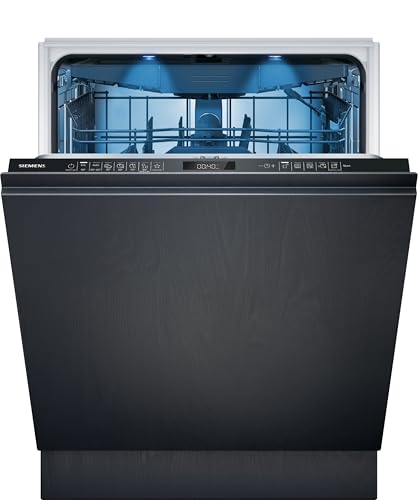
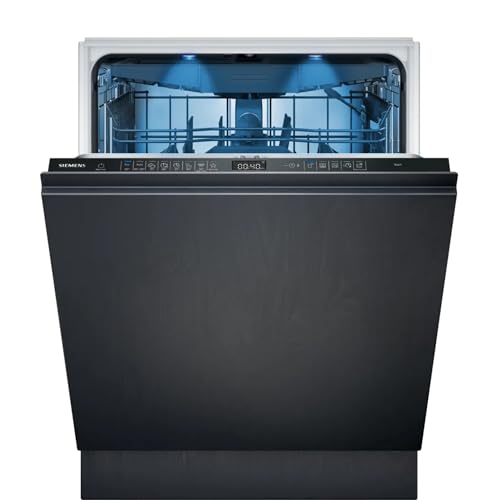
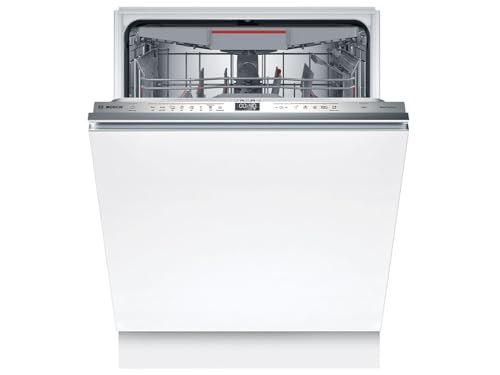
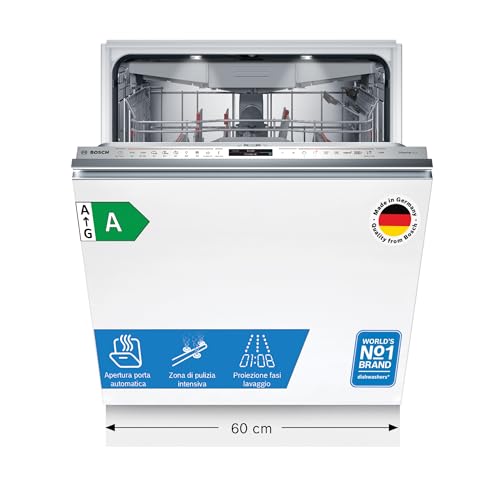
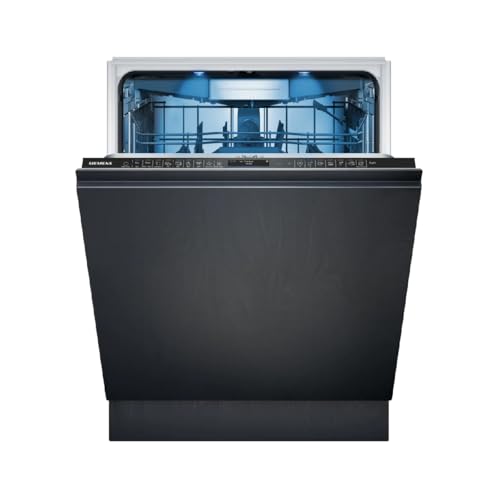
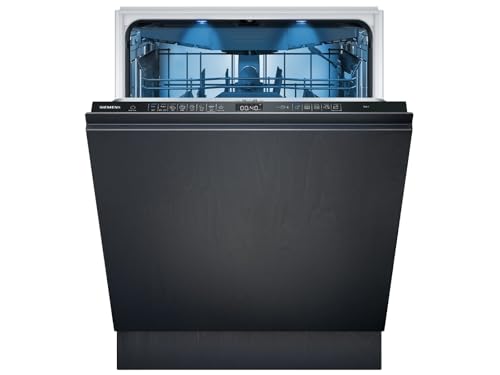
Which brands make the best integrated 60 cm dishwashers?
The best integrated 60 cm dishwasher brands are ranked below:
- Siemens (Average overall score: 8.9)
- Bosch (Average overall score: 8.9)
- Haier (Average overall score: 8.7)
The chart below ranks integrated 60 cm dishwasher brands by average overall score.
[horizontal-chart-12339528311846504256079910730842514787003509866332]
How many place settings fit in an integrated 60 cm dishwasher?
An integrated 60 cm dishwasher usually holds 13–14 place settings, which is suitable for many three- to five-person households. Larger 15- or 16-place-setting models can help with entertaining or bulky mixed loads, while 12-place-setting machines may still be sufficient when the dishwasher runs daily.
Capacity is standardized around place settings, but it does not show how easily cookware fits. Compare the third rack or cutlery basket, upper-rack adjustment, folding tines, stemware supports, and clearance for dinner plates and tall glasses. A flexible 14-place-setting layout can be more useful than a nominally larger interior with fixed racks.
Allow headroom rather than choosing only for an average weekday load. If pans, serving dishes, lunch boxes, or several meals must fit together, a larger and more adjustable basket reduces handwashing and avoids running a second cycle.
The chart below shows the place-setting capacities of integrated 60 cm dishwashers.
[vertical-chart-08585030530684248287163375009799093856190060005007]
How much do integrated 60 cm dishwashers cost?
Integrated 60 cm dishwashers generally cost about £300-£770, excluding the matching furniture door and fitting. Capacity, rack design, energy class, noise, drying technology, controls, and hinge compatibility explain most of the price difference.
Below £390, models typically offer 13–14 place settings, core wash programs, standard baskets, and basic condensation drying. From £390-£600, third racks, adjustable baskets, automatic cycles, improved leak protection, quieter operation, and automatic door opening become more common.
Above £600, expect very low noise, advanced drying, highly flexible interiors, time projection, interior lighting, premium hinges, and stronger app or service features. Budget separately for installation and cabinet modifications, which can materially change the total cost.
The chart below shows the price distribution of integrated 60 cm dishwashers.
[vertical-chart-12588486893519024576057130082203412756432205539810]
What should you consider when choosing an integrated 60 cm dishwasher?
Before buying an integrated 60 cm dishwasher, consider the following factors:
- Cabinet and panel compatibility: Measurements should cover niche width, height, and depth, then verify furniture-panel size and weight, hinge movement, plinth clearance, ventilation, and hose routing. Sliding hinges may solve some low-plinth installations, but compatibility must be confirmed for the specific kitchen.
- Required capacity: Thirteen to 14 place settings generally suit 3–5 people, while 15–16 are better for 4–6 people, frequent entertaining, or cookware-heavy loads. Choose enough reserve capacity to avoid second cycles without buying a large basket that will routinely run half empty.
- Rack design: Check third-rack depth, upper-basket adjustment, folding tines, plate diameter, stemware supports, cutlery storage, and clearance for pans. Usable geometry matters more than one additional nominal place setting.
- Energy and water consumption: For a full-size model, about 0.55–0.75 kWh and 8.5–10 L per Eco cycle is good, 0.76–0.90 kWh and 10–11 L is acceptable, and more than 0.90 kWh or 11 L is relatively high. Faster or hotter modes usually consume more than the label-reference Eco program.
- Noise level: Around 44 dB or below is a sensible target near living areas, with lower figures useful for overnight operation. Confirm that hidden controls provide a floor beam, projected time, end signal, or reliable app status.
- Wash performance and programs: Eco, automatic, intensive, quick, and glass cycles cover most loads when sensors and spray coverage work well. Review filter access, soil detection, water-softener adjustment, detergent dispensing, and cleaning of pans rather than judging by program count.
- Drying performance: Compare condensation, automatic-door, fan-assisted, heat-exchanger, or mineral drying, especially if the household washes many plastics. Check cycle time, extra energy use, steam release, and whether an opening door obstructs the plinth or walkway.