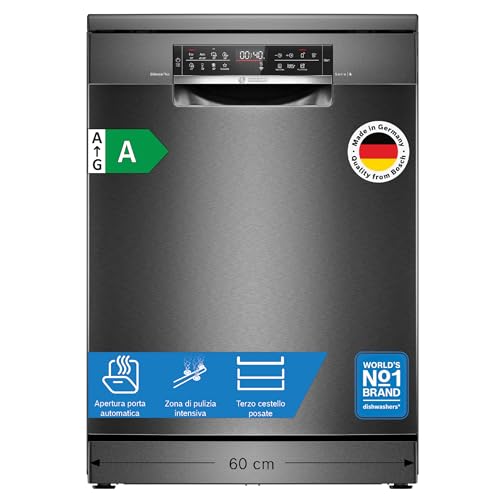

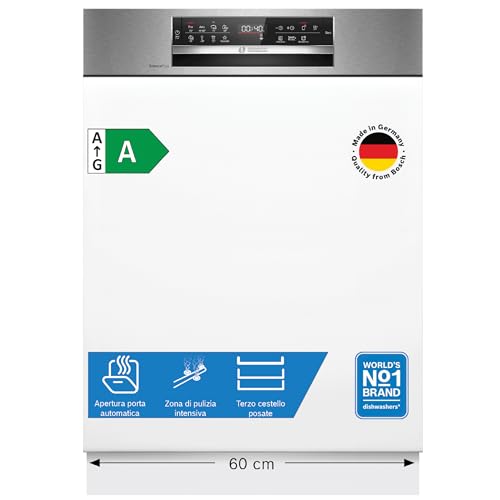
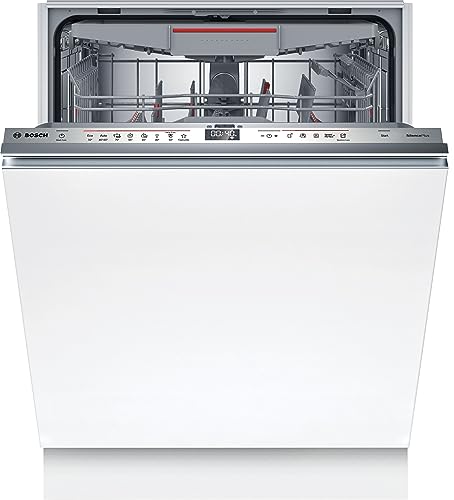
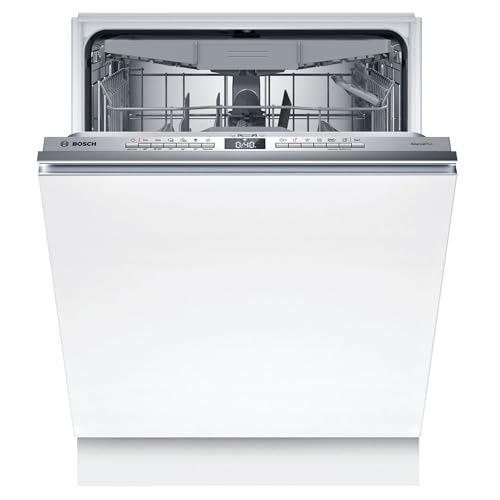
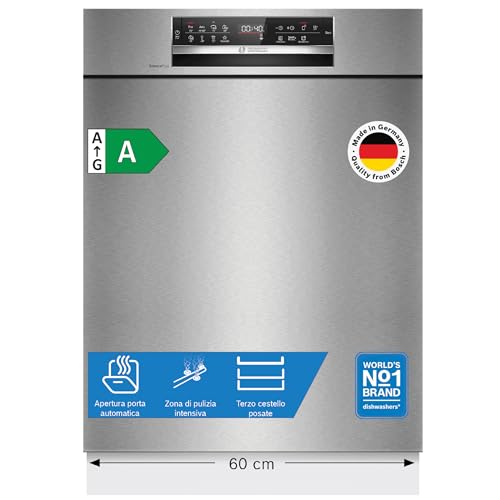
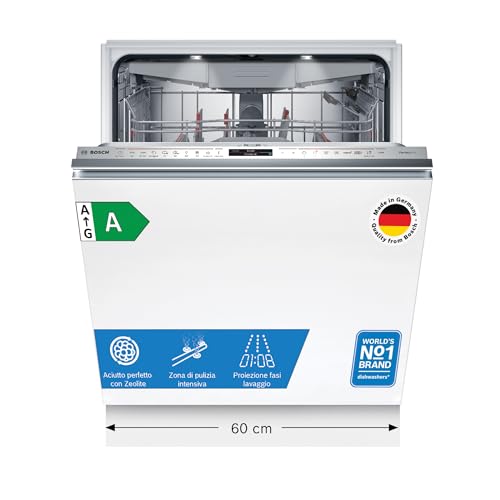
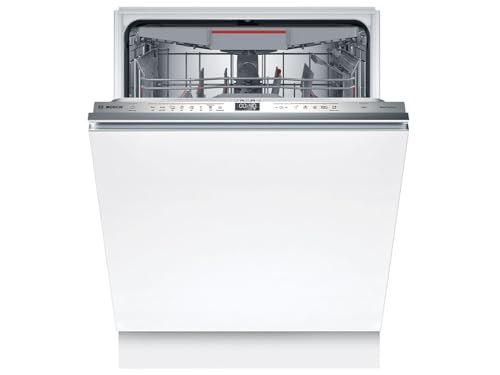
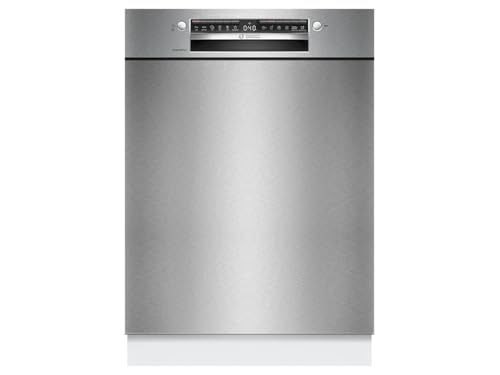
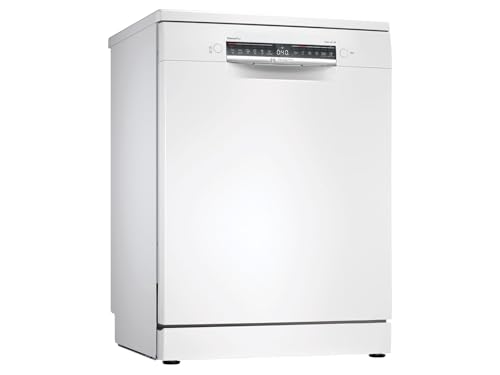
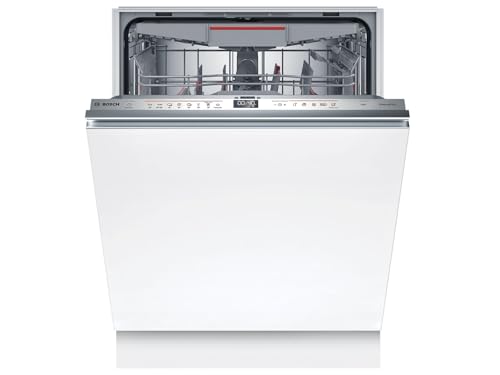
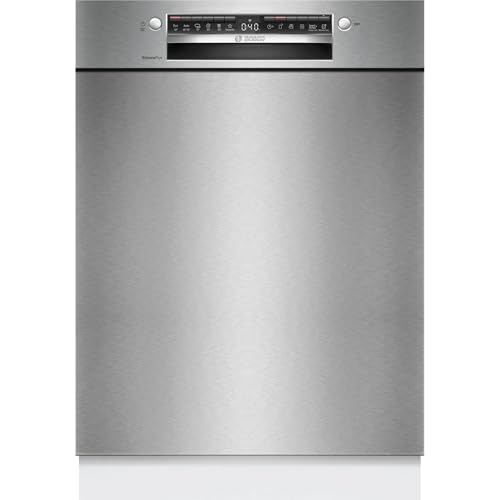
Are Bosch dishwashers good?
Bosch dishwashers have an average overall score of 9, ranking #1 among comparable dishwasher brands, and an average user rating of 9.2, placing them at #1 based on user reviews.
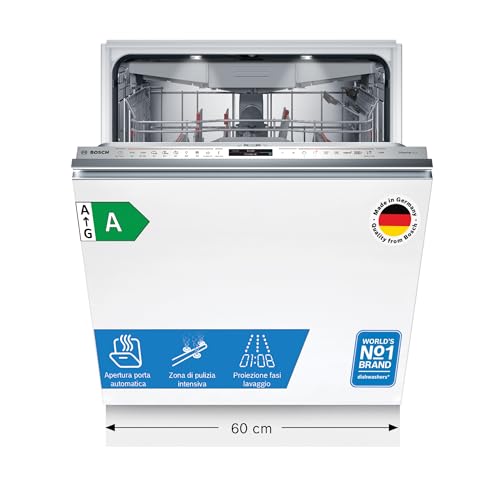
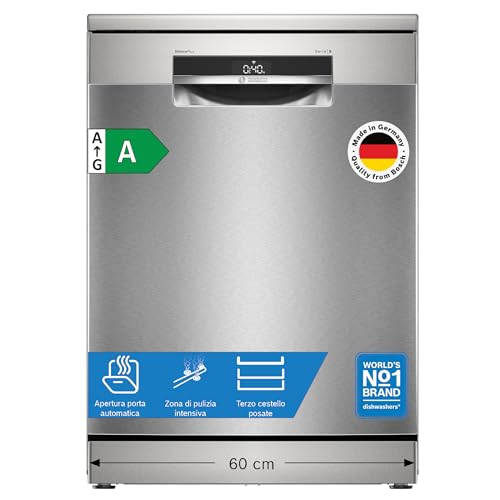
Bosch dishwashers offer broad installation choice, AquaStop protection, mature rack systems, and restrained controls. Series 4 is the practical middle tier, while selected Series 6 and 8 models add quieter operation, Max Flex baskets, Home Connect, and Zeolith-assisted PerfectDry.
Bosch dishwashers vary within each series by hinge design, rack generation, drying method, noise, and connectivity. Buyers should compare the complete product code because a well-equipped Series 4 can suit the household better than a more expensive model with unused premium features.
The chart below compares Bosch with other dishwasher brands by average overall score.
[horizontal-chart-05146734171668731297071529236993497072053739813640]
What are the main advantages of Bosch dishwashers?
The main advantages of Bosch dishwashers are as follows:
- Broad series structure: Series 2, 4, 6, and 8 create recognizable entry, middle, upper, and premium positions. Buyers can move up for quieter operation, more flexible racks, or stronger drying without changing the overall control philosophy.
- Rack flexibility: Bosch offers combinations of height-adjustable upper baskets, folding supports, VarioDrawer or third-rack designs, and Max Flex systems depending on series. These features help with tall plates, glasses, cutlery, and mixed cookware rather than merely increasing the nominal setting count.
- Drying options: Selected models use EfficientDry automatic door opening, while upper ranges can offer PerfectDry with Zeolith. This gives buyers meaningful choices between simpler condensation drying and stronger results on plastics.
- Noise control: EcoSilence Drive and insulated cabinets allow many Bosch models to operate quietly, with premium ranges reaching particularly low declared figures. Quiet operation is useful in open-plan kitchens, although the exact dB rating must still be checked.
- Protection and connectivity: AquaStop is widely available, and Home Connect appears across selected Series 2, 4, 6, and 8 models. Remote status, notifications, and program assistance can be useful, but core operation remains available without relying entirely on the app.
What are the main disadvantages of Bosch dishwashers?
The main disadvantages of Bosch dishwashers are as follows:
- Upper-range pricing: Bosch prices commonly span about £390-£770, with a midpoint near £530, while premium listings can reach approximately £1,000-£1,700. Series 6 and 8 features such as Zeolith drying, 38–42 dB operation, TimeLight, Home Connect, or Max Flex baskets therefore need to solve a regular need rather than merely improve the specification sheet.
- Long Eco cycles: Bosch Eco programs commonly take about 210–295 minutes, with 270 minutes or 4 h 30 min near the middle of the range and some cycles reaching 320 minutes or 5 h 20 min. SpeedPerfect Plus can shorten compatible programs, but faster operation may increase electricity or water use and is not identical to the label-reference Eco cycle.
- Large efficiency and noise spread: Bosch models range from roughly 0.51 to 1.05 kWh per Eco cycle and 37–52 dB, although many sit near 0.74 kWh and 44 dB. A familiar Bosch badge therefore does not guarantee class A efficiency or open-plan quietness; 47–52 dB products are materially more audible than 40–42 dB alternatives.
- Series and code complexity: Products carrying the same Series 4, 6, or 8 label can use different racks, hinges, drying systems, controls, and connectivity. The complete E-number and installation drawing matter because a fixed-hinge model, an XXL tub, or a deep third rack can be incompatible with a cabinet or reduce clearance for tall glasses.
- Premium features remain model-specific: PerfectDry, EfficientDry, Extra Clean Zone, Home Connect, and advanced floor projection are not standard across a whole series. Buyers should confirm the exact feature list and local app support, because paying £100-£300 more for connectivity or drying has little value when those functions are rarely used.

Who makes Bosch dishwashers?
Bosch-branded dishwashers are produced and marketed through BSH Hausgeräte GmbH, a major home-appliance company headquartered in Munich, Germany. BSH became wholly owned by the Bosch Group in 2015 and operates Bosch as one of its principal appliance brands.
BSH develops appliance platforms, controls, rack systems, wash technology, and connected services for multiple international markets. Production takes place across a global manufacturing network, so the country of manufacture can vary by model and destination rather than being determined by the Bosch name alone.
This scale gives Bosch a wide range of formats, shared engineering resources, established parts channels, and recognizable technologies such as Home Connect, AquaStop, and Zeolith-based drying. Buyers should still use the individual model code to confirm the factory, warranty terms, and exact local specification.
What are the main Bosch dishwasher series?
The main Bosch dishwasher series are as follows:
- Series 2: This is the entry range, covering straightforward full-size and slim products with core Eco, automatic, intensive, and quick functions depending on model. Selected versions still offer Home Connect, Extra Dry, or adjustable baskets, but rack and drying systems are generally simpler.
- Series 4: This is the broad mid-range and often the value sweet spot, with wider availability of VarioFlex or Max Flex baskets, third racks, Home Connect, Extra Clean Zone, and EfficientDry depending on model. It suits buyers who want meaningful convenience improvements without moving to the highest prices.
- Series 6: This upper range more often adds lower noise, Max Flex baskets, TimeLight, interior lighting, and PerfectDry with Zeolith on selected machines. It is aimed at frequent users who value stronger plastic drying and a more adaptable interior.
- Series 8: This is the premium line, typically combining the most advanced controls, quiet operation, high-grade baskets, lighting, projection, and drying offered in the local range. Availability can be narrower, and the premium is easiest to justify when those specific features are used regularly.
How much do Bosch dishwashers cost?
Bosch dishwashers generally cost about £390-£770, although premium models can exceed £860. Installation type, series, rack generation, noise, energy class, drying technology, and controls explain most price differences.
Below £470, expect mainly Series 2 and simpler Series 4 machines with core programs, conventional baskets, and condensation or Extra Dry options. From £470-£650, Series 4 and selected Series 6 models more commonly add Home Connect, adjustable third racks, quieter operation, Extra Clean Zone, or EfficientDry.
Above £650, upper Series 6 and Series 8 products may add PerfectDry with Zeolith, Max Flex Pro baskets, very low noise, lighting, projection, premium hinges, and stronger connectivity. Include furniture panels and installation when comparing integrated models.
The chart below shows the price distribution of Bosch dishwashers.
[vertical-chart-14690790954278406423097741182714989766523870443850]
What should you consider when choosing a Bosch dishwasher?
Before buying a Bosch dishwasher, consider the following factors:
- Series and exact model code: Series 2, 4, 6, and 8 indicate range position, then verify the complete model specification. Rack generation, drying, noise, Home Connect, controls, and hinge design can differ substantially within one series.
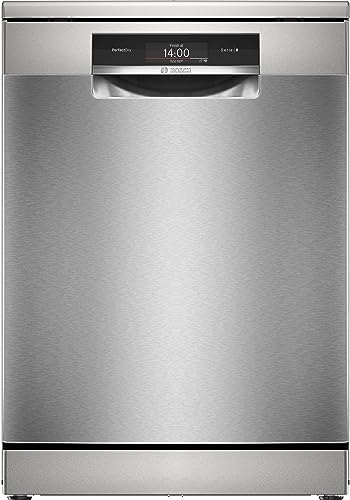
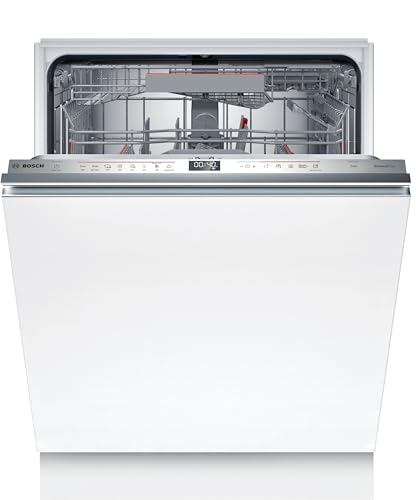
- Installation format: Installation choices include freestanding, built-under, semi-integrated, and fully integrated, then check niche dimensions, furniture-panel limits, fixed or sliding hinges, plinth clearance, hoses, and projection systems. Bosch model prefixes help identify format, but the installation drawing remains authoritative.
- Required capacity: Capacity options range from slim 9–10-setting models for about 1–3 people to full-size 13–14-setting machines for roughly 3–5 people; 15–16 settings suit larger households or frequent entertaining. Avoid choosing a premium series if the width or capacity does not suit the household.
- Rack system: Rack equipment may include VarioFlex, Max Flex, Max Flex Pro, VarioDrawer, Rackmatic adjustment, folding supports, and different third-rack or plate clearances. Similar names can mask meaningful differences in basket generation and usable space.
- Wash performance and programs: Relevant programs include Auto, Intensive, SpeedPerfect Plus, Extra Clean Zone, Machine Care, and any favorite-program function. Sensor control, spray coverage, filter access, detergent release, and water-softener adjustment matter more than the total number of named options.
- Noise and cycle status: For a Bosch dishwasher, 40–44 dB, about 0.55–0.75 kWh, and 8.5–10 L per Eco cycle is a strong target; more than 46 dB, 0.90 kWh, or 11 L is relatively weak. Fully integrated models should also provide InfoLight, TimeLight, side light, an end signal, or Home Connect notifications appropriate to the installation.
- Drying system: Distinguish condensation or Extra Dry from EfficientDry automatic opening and PerfectDry with Zeolith. Compare plastics, cycle time, energy use, steam management, and price before paying for the more advanced system.