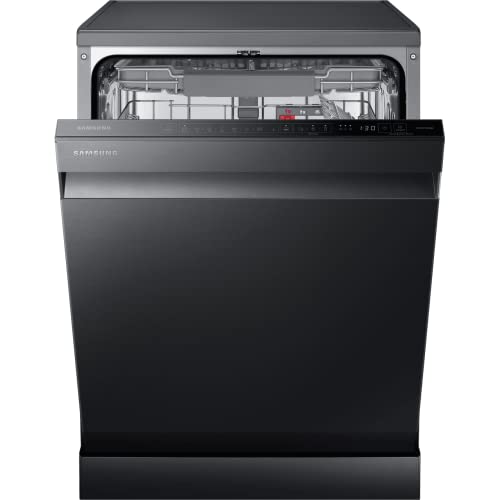

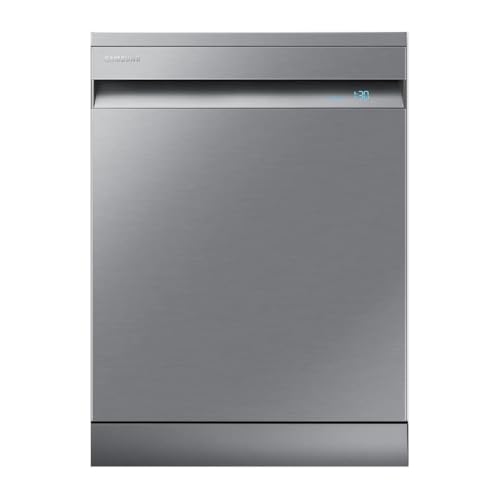
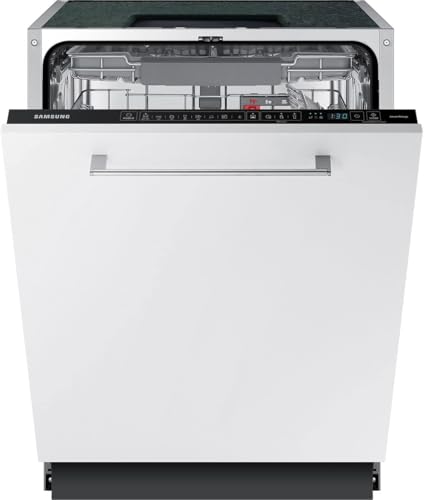
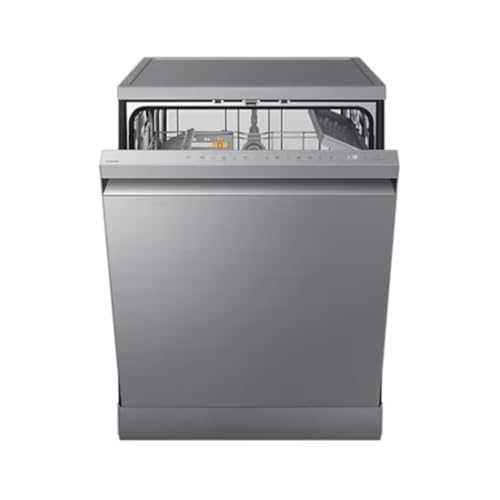
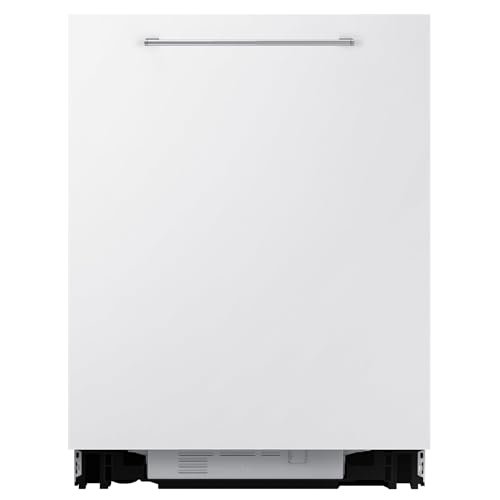
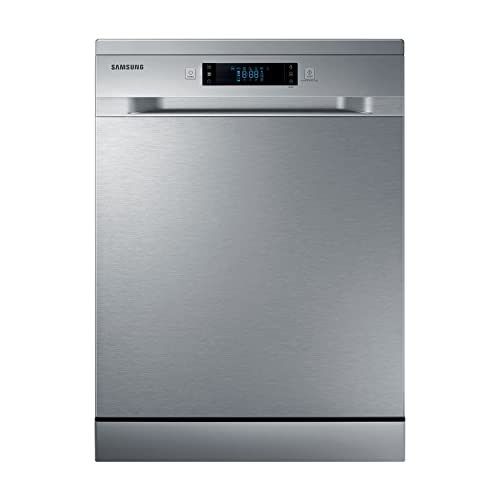
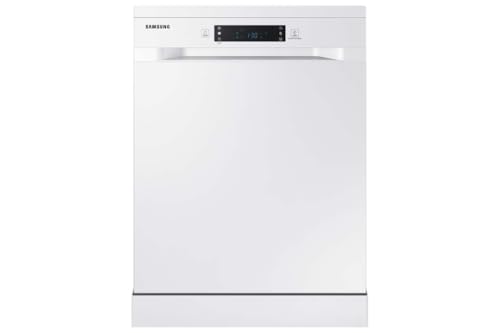
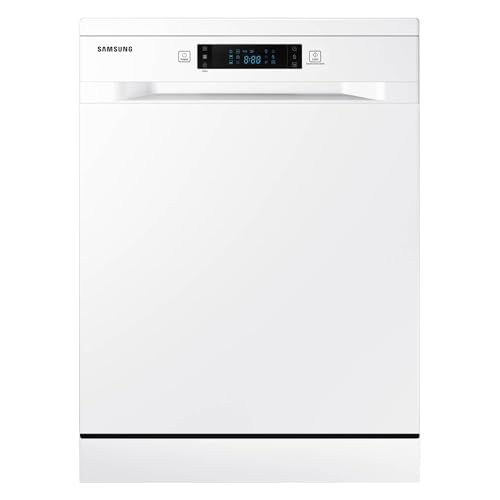
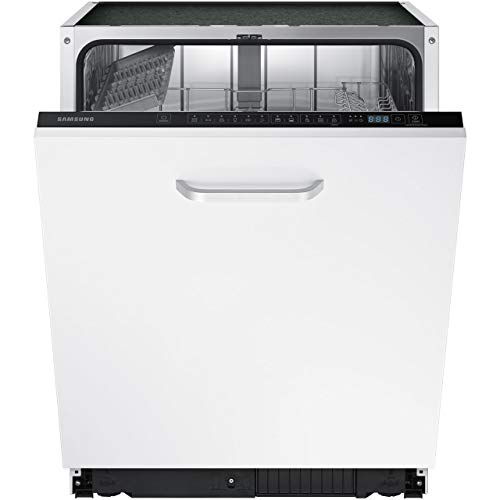
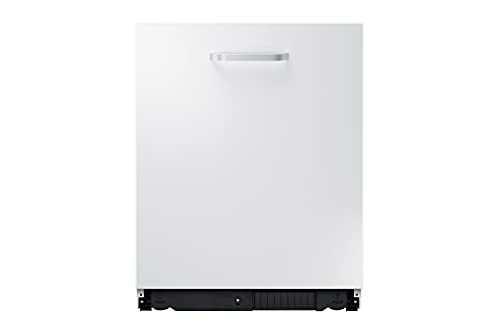
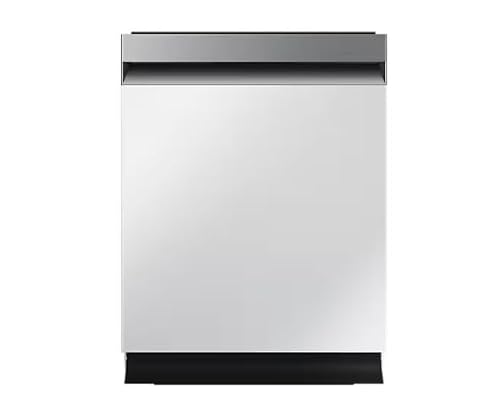
Are Samsung dishwashers good?
Samsung dishwashers have an average overall score of 8.4, ranking #6 among comparable dishwasher brands, and an average user rating of 8.6, placing them at #21 based on user reviews.
Samsung dishwashers suit buyers wanting quiet inverter operation, automatic door opening, and optional SmartThings monitoring. Selected full-size models add WaterJet Clean, flexible rack adjustment, third-level storage, and approximately 14-place capacity.
Samsung dishwashers have a narrower European range in some markets, while connectivity cannot compensate for weak loading or lower efficiency. Buyers should compare drying, service support, installation format, and energy use because 0.25–0.35 kWh per cycle is consequential.
The chart below compares Samsung with other dishwasher brands by average overall score.
[horizontal-chart-05146734171668731297071529236993497072053739813640]
What are the main advantages of Samsung dishwashers?
The main advantages of Samsung dishwashers are as follows:
- Consistently low noise: Matching models operate at 42–44 dB, suitable for most open-plan kitchens.
- Automatic drying: The door opens near cycle end on most models, releasing moisture efficiently.
- Connected control: SmartThings can provide remote status, recommendations, notifications, and energy monitoring on compatible machines.
- Flexible loading: Adjustable upper baskets, third racks, folding supports, and 14-place layouts appear on selected products.
- Efficiency options: The range includes class A–B models with materially lower Eco consumption than class D–E alternatives.
What are the main disadvantages of Samsung dishwashers?
The main disadvantages of Samsung dishwashers are as follows:
- Prices overlap with established premium ranges: Samsung models commonly cost about £340-£660, with a midpoint near £490 and upper listings around £970. SmartThings, Auto Door Open, or modern styling should not justify the premium unless rack flexibility, efficiency, and local service are also competitive.
- Eco cycles still require several hours: Typical durations run around 210–255 minutes, or 3 h 30 min to 4 h 15 min, and some reach approximately 314 minutes or 5 h 14 min. Speed Booster reduces compatible cycle time by using more intensive phases, so its energy and drying result should be assessed separately from Eco.
- Energy use varies despite consistent noise: Most models operate around 42–44 dB, but Eco consumption spans roughly 0.49–0.95 kWh per cycle. A quiet class E product can therefore use almost twice the electricity of an efficient version while sounding similar.
- European format choice can be narrow: The range is dominated by 13–14-place full-size machines, with fewer 45 cm, countertop, or specialized integrated alternatives. Third-rack depth and Flex Load components also vary, so households needing compact dimensions or unusual cookware may have limited options.
- Connectivity and service add dependencies: SmartThings requires Wi-Fi, an account, compatible software, and continued support, while some remote actions remain restricted for safety. Parts and dishwasher-specific technician coverage should be checked locally because app diagnostics do not shorten a repair or replace unavailable rack hardware.

Who makes Samsung dishwashers?
Samsung dishwashers are made for Samsung Electronics, the South Korean electronics and appliance company within Samsung Group. Product design, manufacturing country, and component sourcing vary by model and destination market.
Check the model code, rating plate, SmartThings compatibility, warranty issuer, and local product sheet. Similar exterior designs can hide different spray systems, energy classes, racks, and automatic-door functions.
Which Samsung dishwasher technologies improve washing and drying?
The following Samsung dishwasher technologies can improve washing and drying:
- WaterJet Clean: Multiple moving water paths distribute spray across different rack areas instead of relying on one fixed jet direction. The broader coverage helps mixed family loads, but dishes still need spacing, concave surfaces should face downward, and tall utensils must not restrict arm movement.
- Auto Door Open: The latch releases during the final phase so moist air leaves the tub and residual heat continues evaporating water. This improves efficient drying, especially on mixed loads, although plastics can retain droplets and the door needs safe clearance from worktops, handles, and walkways.
- Hygiene Care: The cycle maintains a higher final-rinse temperature or longer hot phase to improve thermal hygiene for bottles, cutting boards, or illness-related loads. It usually extends runtime and raises energy use, and heat-sensitive plastics should be checked before the option is selected.
- Speed Booster: Compatible cycles shorten their duration by increasing temperature, spray intensity, or resource use during selected phases. The option is useful when clean dishes are needed quickly, but it does not preserve Eco consumption and may reduce the time available for passive drying.
- Flexible racks: Height adjustment, folding supports, and third-level cutlery storage let the water paths remain open around tall plates, pans, and utensils. The practical benefit depends on the exact rack generation; a nominal 14-place capacity can still be awkward if the third rack removes glass clearance or fixed tines restrict cookware.
- SmartThings: Compatible models provide cycle status, energy information, maintenance alerts, recommendations, and limited remote control. These functions can help users select or maintain a program correctly, but they do not strengthen spray pressure or drying directly and essential operation should remain available without the app.
How much do Samsung dishwashers cost?
Samsung dishwashers generally cost about £300-£990. Installation, energy class, racks, automatic opening, spray system, controls, and SmartThings explain most differences; noise is consistently around 42–44 dB.
Around £300-£430, expect 13–14 settings, class D–E efficiency, simpler racks, and core programs. From £430-£650, automatic opening, classes B–D, better racks, inverter motors, Hygiene Care, and connectivity become more common.
Above about £650, look for class A–B efficiency, premium third racks, WaterJet-style washing, stronger controls, or specialized integrated hardware. Paying £170 more solely for Wi-Fi is difficult to justify when noise and cleaning equipment are unchanged.
The chart below shows the price distribution of Samsung dishwashers.
[vertical-chart-08625131718536885013154990608893634450750252696343]
What should you consider when choosing a Samsung dishwasher?
Before buying a Samsung dishwasher, consider the following factors:
- Market-specific model code: Confirm the complete code and local manual because Samsung’s European range, installation options, racks, and connected functions vary by country. Distinguish freestanding from fully integrated products and verify whether the selected machine actually supports SmartThings, Auto Door Open, and the advertised spray system.
- Installation and clearances: Measurements should cover niche width, height, depth, panel requirements, plinth, hose route, ventilation, socket position, and full door projection. Check that automatic opening will not strike handles or expose a moisture-sensitive worktop edge, and level the cabinet to reduce vibration.
- Rack flexibility: A practical test should cover upper-rack height adjustment, third-rack depth, Flex Load tines, glass supports, rail stability, and clearance for large plates and pans. A 14-place Samsung generally suits 3–5 people, while 15 settings better suit 4–6 people or frequent entertaining; the claim still does not guarantee convenient loading if cutlery storage reduces upper-rack height or fixed supports waste space.
- Cleaning system: Verify WaterJet Clean, zone boosting, or the exact rotating spray arrangement rather than relying on older WaterWall branding. Prioritize an Auto program, a 65–70 °C intensive cycle, hygiene options, easy filter maintenance, and pressure distribution across a fully loaded tub.
- Drying behavior: Auto Door Open can improve evaporation and reduce energy use, but plastic containers may still retain droplets. Compare Eco duration, rinse-aid adjustment, disable controls, fan assistance, and steam clearance beneath the worktop before treating automatic opening as complete drying.
- Noise and energy: Samsung models around 42–44 dB suit open-plan kitchens. About 0.49–0.75 kWh and 8.5–10.5 L per Eco cycle is typical, while a target near 0.50–0.65 kWh and 8.5–9.5 L is better for frequent use; a 0.30 kWh difference equals about 84 kWh over 280 cycles.
- Connectivity and support: Check remote-start restrictions, Wi-Fi requirements, notification value, offline controls, diagnostic functions, local parts, and service response. SmartThings should be a secondary benefit after rack fit, drying, leak protection, warranty terms, and the installed price have been compared.