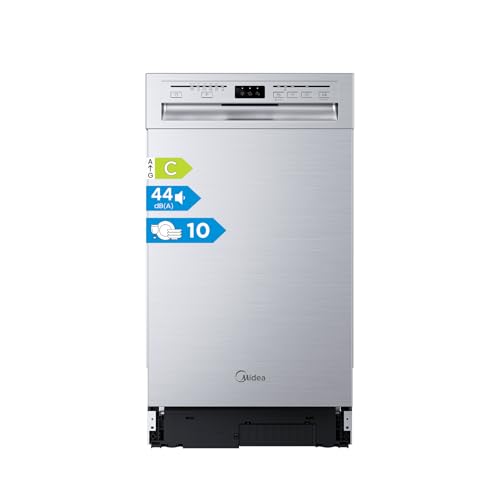
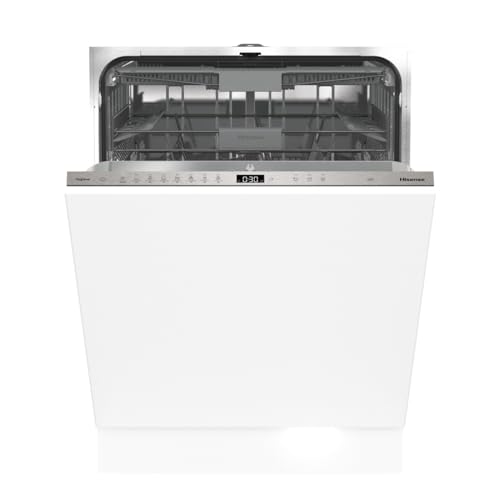
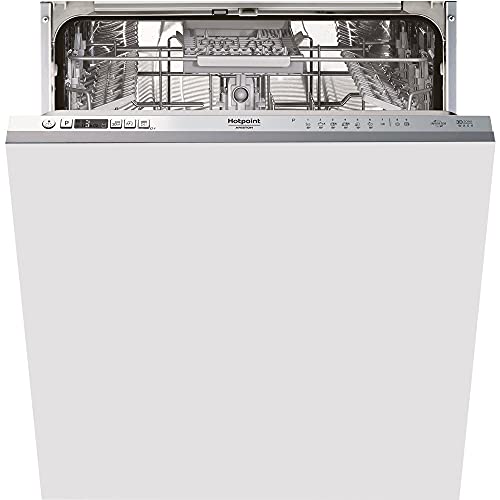
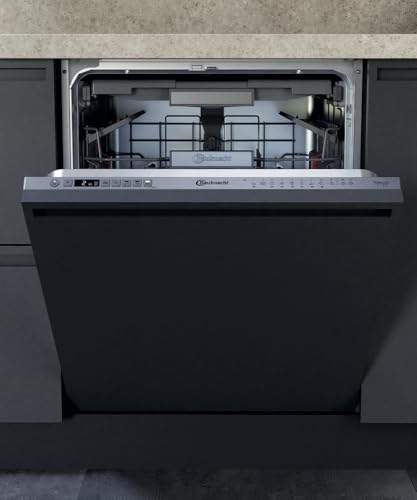
Which brands make the best cheap dishwashers?
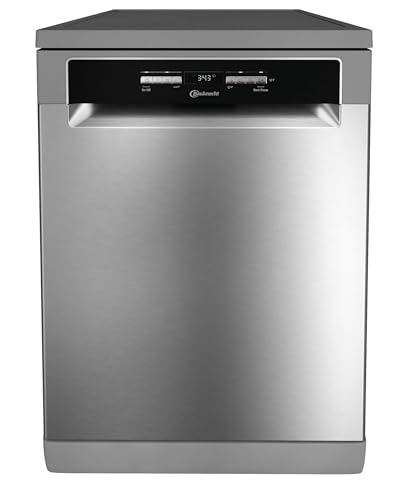
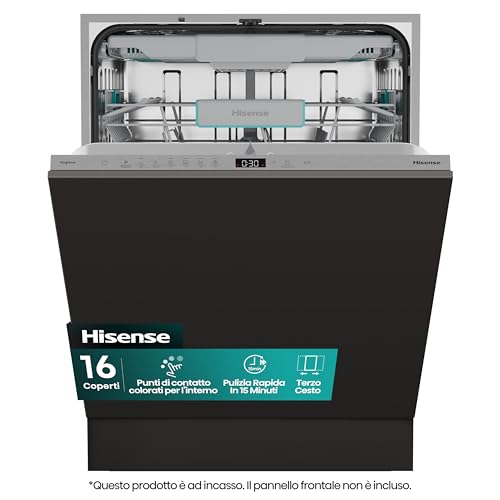
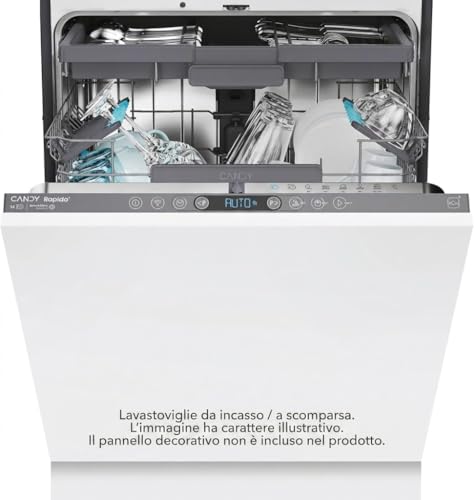
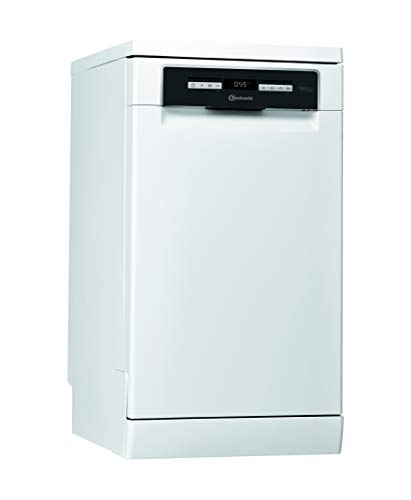
The best cheap dishwasher brands are ranked below:
- Bauknecht (Average overall score: 8.2)
- Hotpoint (Average overall score: 7.9)
- Candy (Average overall score: 7.8)
The chart below ranks cheap dishwasher brands by average overall score.
[horizontal-chart-04586591604121028961130510457601373690671750294655]
What can you expect from a dishwasher priced at £300 or less?
A dishwasher priced at £300 or less can provide the core Eco, intensive, and quick cycles needed for routine loads. Full-size models commonly offer 12–14 place settings, slim machines around 9–10, and countertop designs two to six, so first compare like with like.
Expect simpler baskets, fewer folding supports, basic displays, conventional condensation drying, and noise that may be more noticeable in an open-plan room. Energy classes D to F are common in this price band, although efficient individual models exist.
Features such as a deep third rack, very low noise, automatic door opening, interior lighting, time projection, advanced hinges, and extensive app control are less common. A solid budget model should still provide secure hoses, overflow protection, an accessible filter, correct water-softener adjustment, and a warranty supported locally.
Are cheap dishwashers worth buying?
Cheap dishwashers are worth buying when the machine fits correctly and provides acceptable racks, cleaning, consumption, noise, and protection for no more than £300. A basic 13- or 14-setting model can clean ordinary loads well even without app control, projection, a premium third rack, or advanced drying.
The main risk is paying less initially but more during use. For example, an E-class machine using about 0.92 kWh instead of a C-class model at roughly 0.75 kWh consumes about 48 kWh more over 280 cycles; at £0 per kWh, that is around £10 per year before considering water, rewashing, or repairs. Noise also matters: 49 dB is noticeably more intrusive in an open-plan room than 44 dB. A budget model is strongest when its fixed racks suit the household, Eco use stays near one full cycle per load, and local parts support is available; paying another £90-£130 is rational when it brings materially lower consumption, quieter operation, automatic door drying, stronger leak protection, or rack flexibility used every day.
Which cleaning and drying features do cheap dishwashers omit?
Cheap dishwashers most often omit advanced flexibility rather than basic washing. Deep third racks, extensively adjustable baskets, intensive-zone controls, sophisticated soil sensing, premium filtration, and specialized bottle or hygiene jets are less common below £300.
Drying is usually the larger compromise. Many budget models rely on passive condensation and may leave plastics wet, while automatic door opening, fans, mineral drying, heat exchangers, and highly configurable extra-dry modes appear less often.
Omission is not automatically a fault: a simple machine can clean ordinary plates and cutlery well. The important question is whether the missing rack, spray, or drying feature addresses a load the household washes regularly.
Are cheap dishwashers expensive to run?
Cheap dishwashers can be more expensive to run when they use more electricity or water than similarly sized mid-range models. In this price band, full-size Eco consumption often falls around 0.75–1.0 kWh and 9–13 L, while compact machines use less per cycle but wash fewer items.
Compare energy per 100 Eco cycles, water per Eco cycle, rated capacity, and cycle duration rather than the purchase price alone. A machine that needs repeated cycles because its basket is too small or inflexible can erase an apparent saving.
Running cost also depends on detergent, salt, rinse aid, program choice, local tariffs, and maintenance. Clean filters, correct water-softener settings, full sensible loads, and regular Eco use usually matter more than connectivity or automatic dosing at this price.
The chart below compares energy consumption per cycle among dishwashers priced at £300 or less.
[vertical-chart-09226650037673696872070198518627473531444156847236]
What should you consider when choosing a cheap dishwasher?
Before buying a cheap dishwasher, consider the following factors:
- Product format and exact fit: Countertop models normally hold 2–6 place settings, slim 45 cm machines about 9–10, and full-size 60 cm machines around 13–14. Measure niche width, height, body depth, hose space, door projection, and hinge or panel requirements because an installation modification can erase a £40-£90 saving.
- Required capacity: As a practical guide, 6–8 place settings suit 1–2 people, 9–10 suit 1–3, 12–14 suit 3–5, and 15–16 suit 4–6 people or frequent entertaining. Move up one tier when the household cooks with several pans daily; move down only when the machine can run nearly full without requiring a second cycle.
- Rack geometry: The largest 27–30 cm dinner plates, tall wine glasses, frying pans, and chopping boards should fit without stopping the spray arms. Prefer an upper rack with at least 3–5 cm of height adjustment, several folding tines, and usable cutlery storage; a rigid 14-place basket can be less useful than a flexible 13-place layout.
- Energy and water consumption: For a full-size budget machine, about 0.55–0.75 kWh and 8.5–10 L per Eco cycle is good; 0.76–0.90 kWh and 10–11 L is acceptable, while more than 0.90 kWh or 11 L is relatively high. At 280 cycles, a 0.25 kWh difference equals 70 kWh, or about £20 yearly at £0 per kWh.
- Noise level: Aim for 42–44 dB in an open-plan kitchen, accept approximately 45–46 dB in a separate room, and treat 47–50 dB as clearly audible during evening use. A quiet program can extend runtime, but it cannot make a dishwasher rated at 49 dB behave like a 42 dB model throughout filling, spraying, and draining.
- Wash performance and programs: A useful minimum is Eco, Auto or normal, an intensive program around 65–70 °C, and a 30–60-minute quick cycle for lightly soiled dishes. Hygiene and glass programs are worthwhile only when they match regular loads; filter access, spray coverage, detergent release, and water-softener adjustment matter more than having 10 similar programs.
- Drying performance: Automatic door opening is usually the best low-cost upgrade because it improves evaporation without a long heated phase. Check plastics and deep containers, whether opening can be disabled, Eco duration, and steam clearance; paying £40-£90 more can be worthwhile when it prevents towel drying after most cycles.