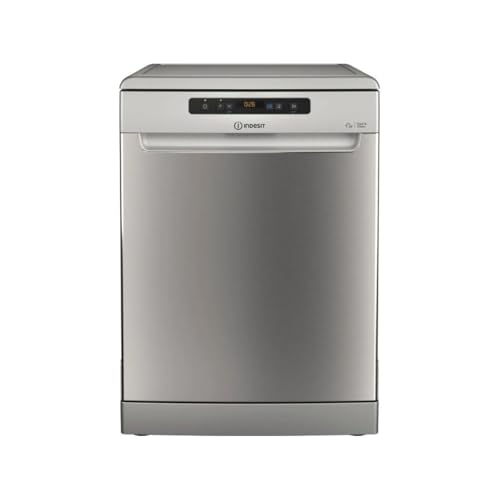

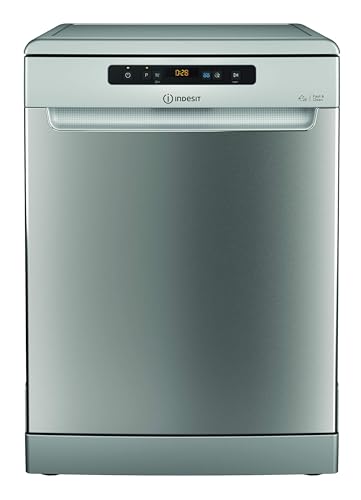
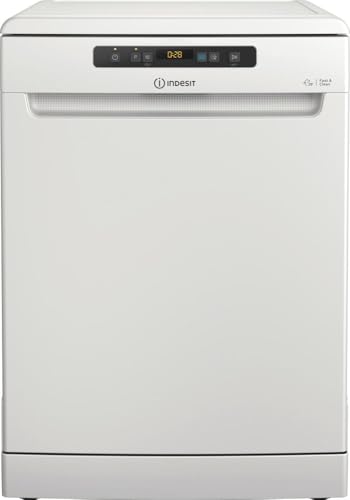
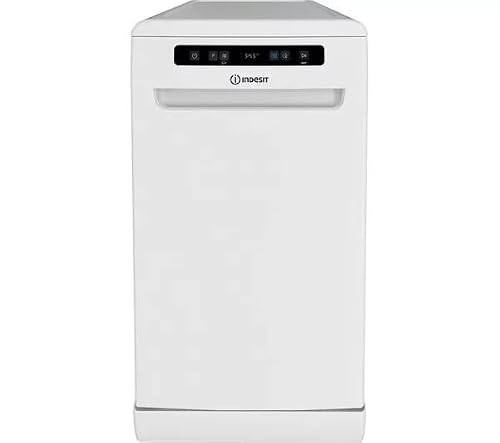
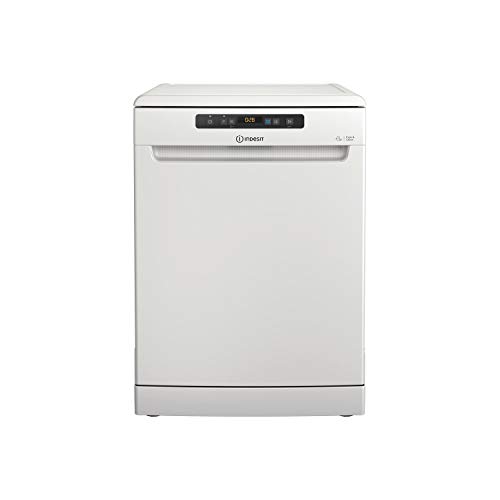
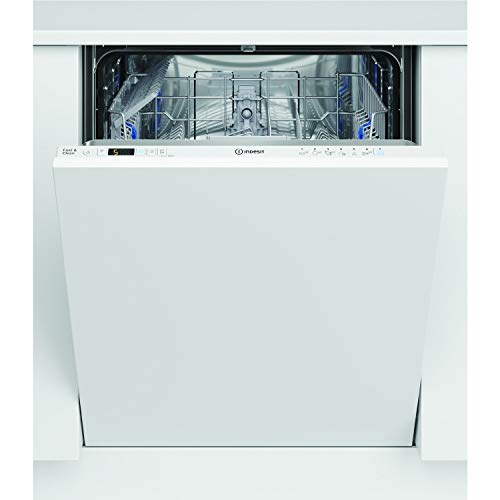
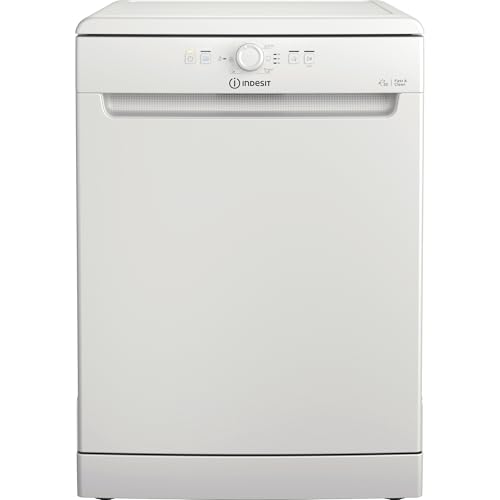
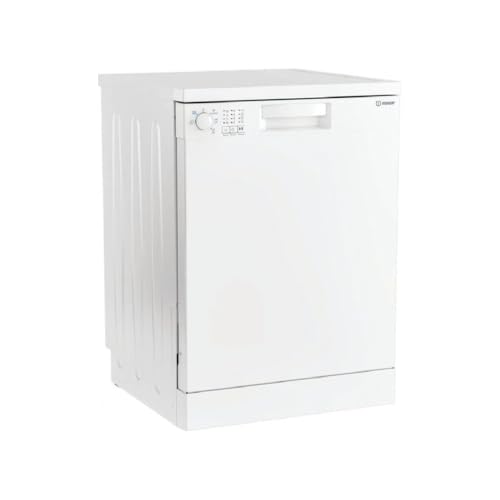
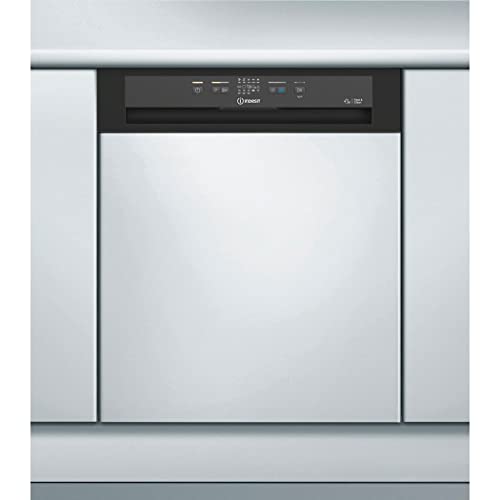
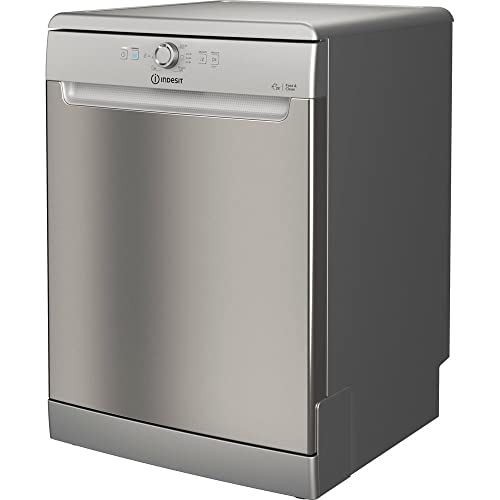
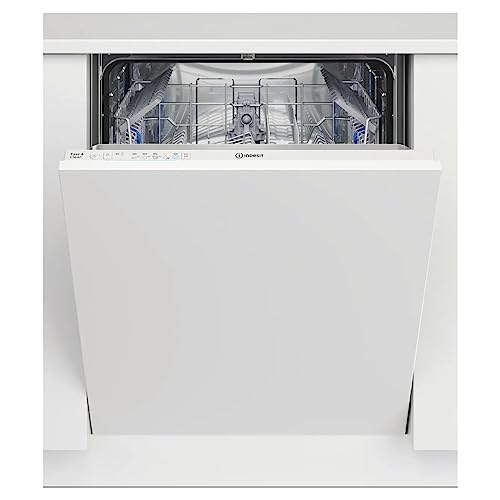
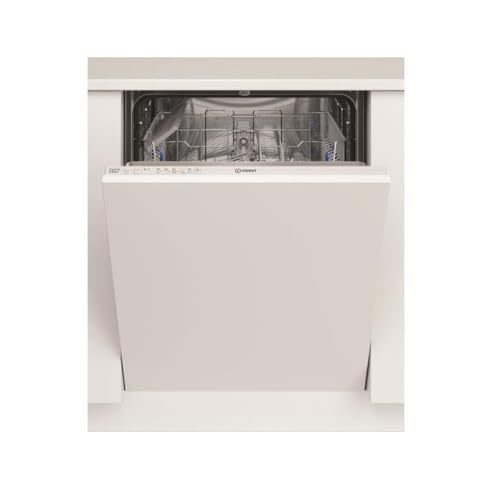
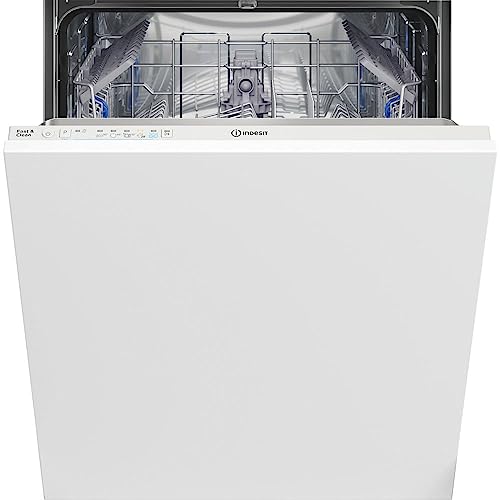
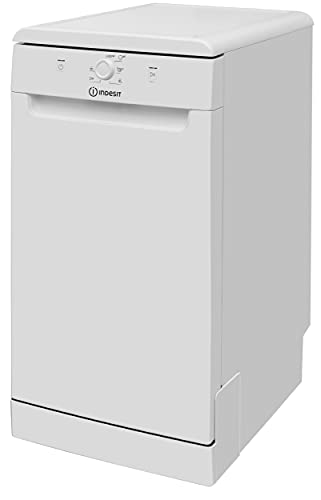
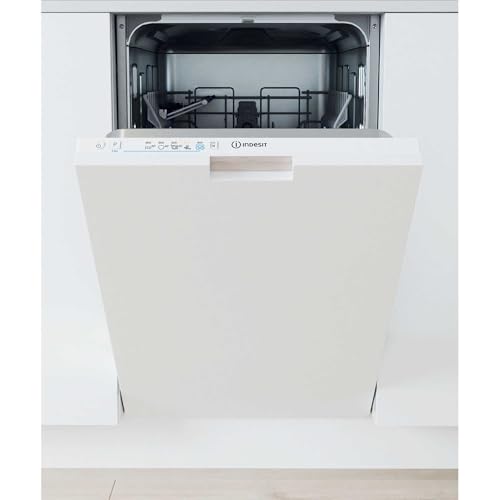
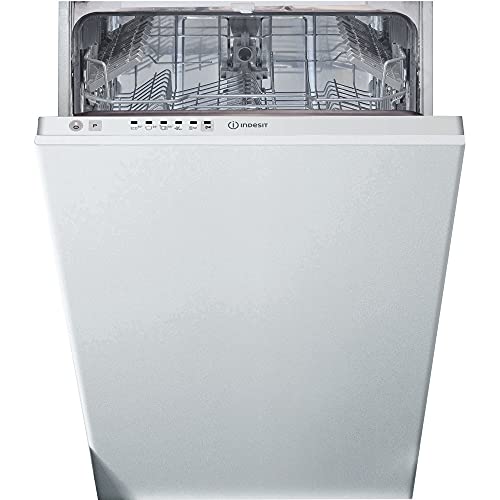
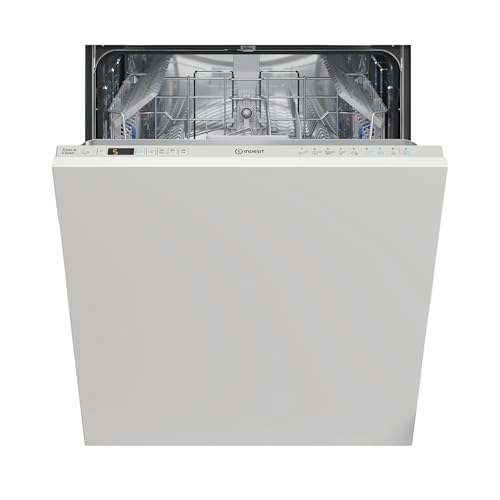
Are Indesit dishwashers good?
Indesit dishwashers have an average overall score of 6.9, ranking #27 among comparable dishwasher brands, and an average user rating of 9, placing them at #5 based on user reviews.
Indesit dishwashers focus on straightforward lower-cost operation with Eco, intensive, and rapid programs. Full-size models commonly hold 13–14 settings, while selected products add Push&Go for mixed daily loads and Fast&Clean for shorter washing.
Indesit dishwashers often compromise on noise, efficiency, drying, and rack adjustment, with many models near 46–49 dB and lower energy classes. Buyers should compare long-term running cost and loading flexibility with a slightly dearer class C or 43–44 dB alternative.
The chart below compares Indesit with other dishwasher brands by average overall score.
[horizontal-chart-05146734171668731297071529236993497072053739813640]
What are the main advantages of Indesit dishwashers?
The main advantages of Indesit dishwashers are as follows:
- Low purchase price: Many models cost £220-£340, making full-size capacity accessible on a limited budget.
- Simple controls: Push&Go-style operation and clearly separated Eco, intensive, and rapid programs reduce setup complexity.
- Useful capacity: Full-size models commonly hold 14 settings, while 45 cm products provide about 10.
- Format choice: Freestanding and integrated machines are both widely available, simplifying replacement in different kitchens.
- Practical features: Selected models add automatic door opening, adjustable upper baskets, half load, hygiene, and rapid cleaning.
What are the main disadvantages of Indesit dishwashers?
The main disadvantages of Indesit dishwashers are as follows:
- Low price often means higher running cost: Indesit prices commonly sit around £240-£390, with a midpoint near £300, but Eco consumption is typically about 0.75–1.05 kWh and can reach 12 L of water. Over 280 cycles, a 0.30 kWh disadvantage adds 84 kWh, partly offsetting a £40-£90 purchase saving.
- Eco programs can still take hours: Typical durations run about 190–270 minutes, or 3 h 10 min to 4 h 30 min, with a midpoint near 200 minutes. Push&Go or rapid cycles shorten daily washing, but load limits, higher temperatures, incomplete drying, or greater consumption can apply.
- Noise is frequently noticeable: Many Indesit models operate around 43–49 dB, with 46 dB near the middle and some reaching 51 dB. That is reasonable for a closed kitchen but less suitable beside a living room than alternatives around 40–42 dB.
- Rack and drying systems are basic: Entry products may use fixed tines, a cutlery basket, limited upper-rack adjustment, and conventional condensation drying. A 14-place label can therefore be difficult to use with pans or tall glasses, while plastics may remain wet without automatic door opening.
- Premium choices are limited: Buyers seeking class A–B efficiency, 38–40 dB operation, mineral drying, advanced floor projection, or extensive app control generally need another range. The low price is most defensible when simple programs and serviceable loading matter more than those features.

Who makes Indesit dishwashers?
Indesit was founded in Italy and became part of Whirlpool Corporation in 2014. In Europe, the brand now operates within Beko Europe, the appliance company formed in 2024 from Arçelik’s European operations and Whirlpool’s European major-appliance business.
Manufacturing country and responsible supplier vary by model and market. Check the rating plate and local warranty documents for the exact product code, legal supplier, service contact, and spare-parts route.
How do Indesit built-in and freestanding dishwashers compare?
Indesit built-in dishwashers are better for a continuous fitted-kitchen appearance, while freestanding models are easier to install, inspect, replace, and move. Cleaning performance depends on the exact machine, not whether the cabinet door is visible.
A standard integrated model is commonly about 60 cm wide, 82 cm high, and 55–57 cm deep, while a full-size freestanding machine is usually about 85 cm high and 60 cm deep. Slim versions are around 45 cm wide. Integrated installation also requires correct panel weight, hinge movement, plinth clearance, ventilation, and status indication.
Freestanding Indesit models offer visible controls and finished sides but still require supply, drainage, leveling, and open-door clearance. Compare like-for-like capacity, noise, class, racks, and drying before paying extra for either format.
How much do Indesit dishwashers cost?
Indesit dishwashers generally cost about £220-£470. Width, installation, capacity, energy class, noise, racks, and automatic opening explain most differences.
Around £220-£300, expect basic 10-place slim or 13–14-place full-size models, commonly class E–F and approximately 46–51 dB. From £300-£390, quieter 43–46 dB options, better baskets, automatic opening, and classes C–E become more available.
Above about £390, require a concrete improvement such as class B–C efficiency, approximately 41–44 dB, stronger racks, or specialized integrated hardware. A 0.20 kWh-per-cycle reduction saves about 56 kWh over 280 cycles.
The chart below shows the price distribution of Indesit dishwashers.
[vertical-chart-11753051868787574882147794954954873007841371279406]
What should you consider when choosing an Indesit dishwasher?
Before buying an Indesit dishwasher, consider the following factors:
- Budget versus running cost: For an Indesit full-size dishwasher, about 0.75–0.90 kWh and 9–10.5 L per Eco cycle is acceptable at the budget end; more than 1.00 kWh or 11 L is relatively high. At 280 annual cycles, a 0.20 kWh difference changes electricity use by about 56 kWh, so a modestly dearer efficient model can recover part of its premium.
- Installation format: Confirm 45 or 60 cm width, freestanding or integrated construction, niche height, panel and hinge requirements, door projection, hoses, and socket access. Entry-level products still need correct leveling and secure plumbing; installation errors can increase noise and compromise leak protection.
- Usable loading: A practical test should cover the upper-basket adjustment, folding supports, cutlery basket, plate clearance, and whether large pans block the spray arms. A 13–14-place label generally suits 3–5 people, but it is less useful if fixed tines or limited height adjustment force the household to hand-wash cookware.
- Essential programs: The essential program set includes Eco, a normal or Push&Go-style daily cycle, an intensive 65–70 °C option, and a clearly specified rapid program. Check load and soil restrictions because short cycles may omit drying or suit only lightly soiled dishes.
- Drying and noise: The specification should state whether the model uses basic condensation or automatic door opening, then compare plastic results and Eco duration. Values around 46–49 dB are noticeable in open rooms, so consider a quieter 43–44 dB alternative if evening operation is common.
- Cleaning mechanics: A physical inspection should cover spray-arm clearance, filter design, detergent-door position, and whether any zone or half-load function changes water distribution. Simple controls can be an advantage, but the machine still needs enough pressure and temperature for starch, grease, and dried-on food.
- Protection and repairability: Verify whether leak protection covers both the inlet hose and internal base, not merely overflow detection. Compare warranty exclusions, local Whirlpool-group service, pump and rack-part availability, and the total installed cost before deciding that the lowest shelf price is best value.