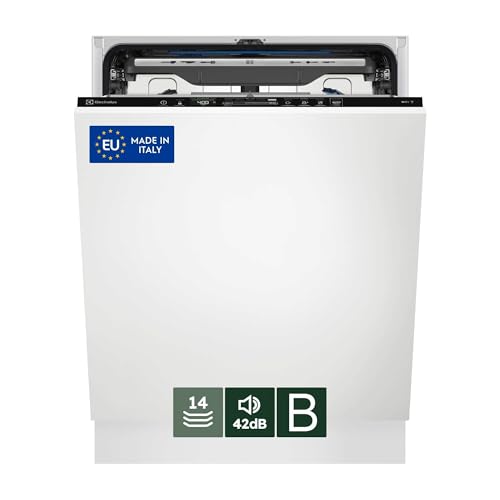

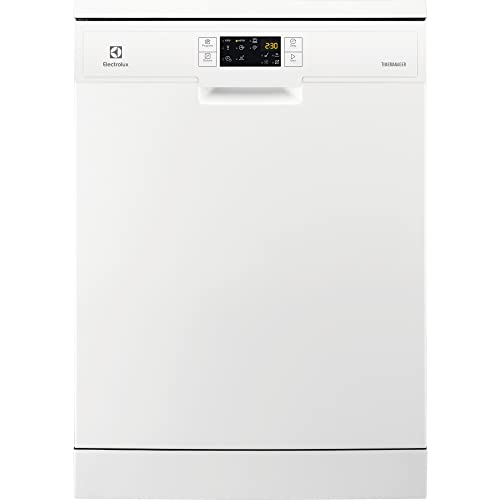
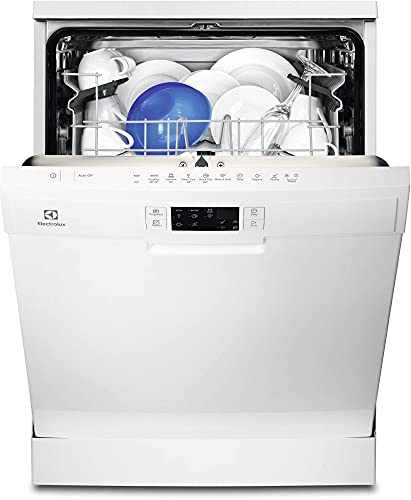
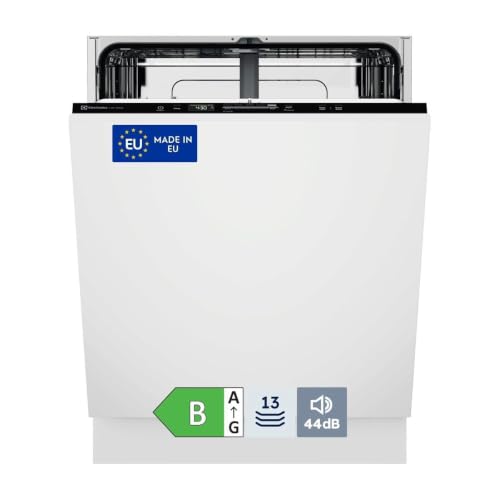
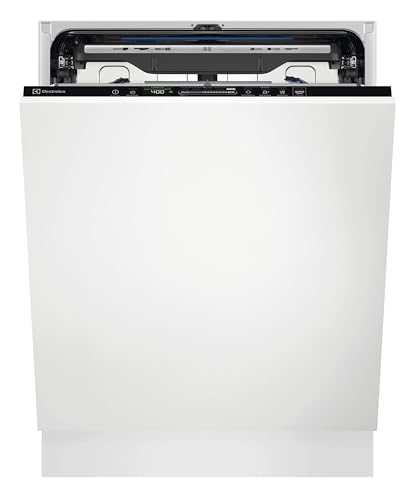
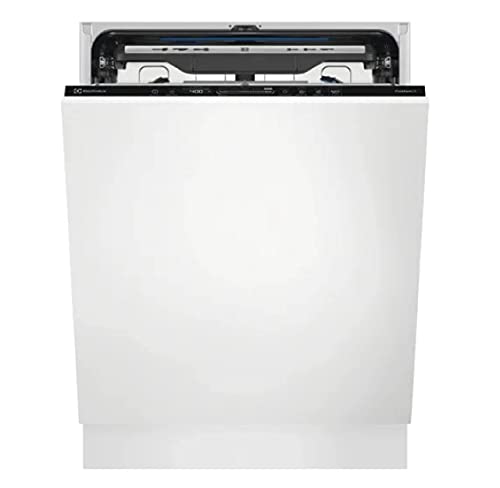
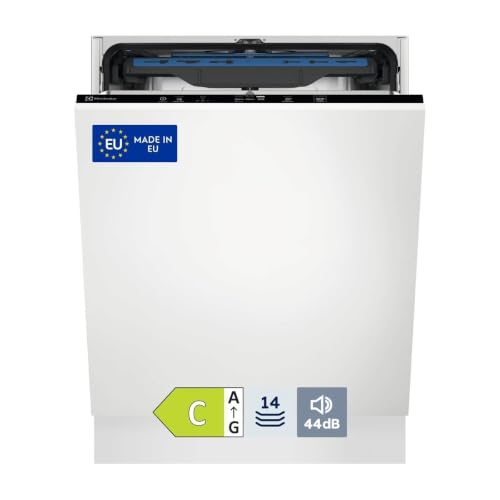
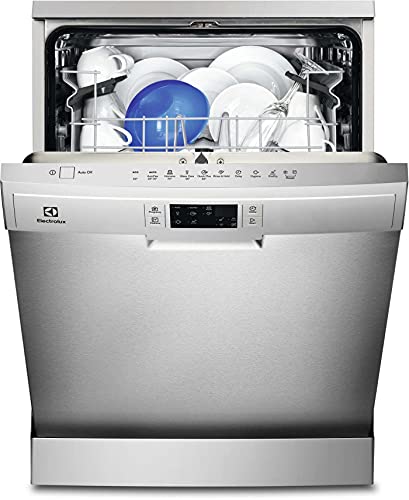
Are Electrolux dishwashers good?
Electrolux dishwashers have an average overall score of 7.7, ranking #18 among comparable dishwasher brands, and an average user rating of 8.9, placing them at #8 based on user reviews.
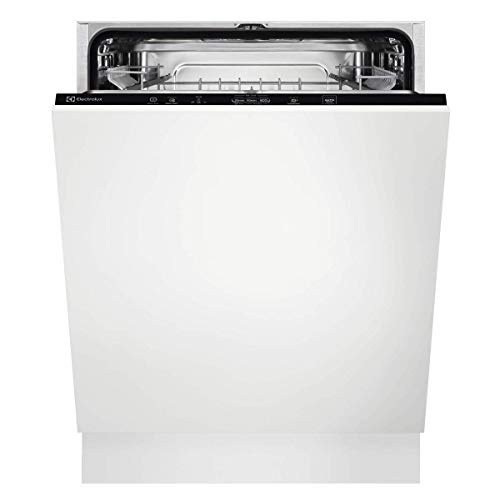
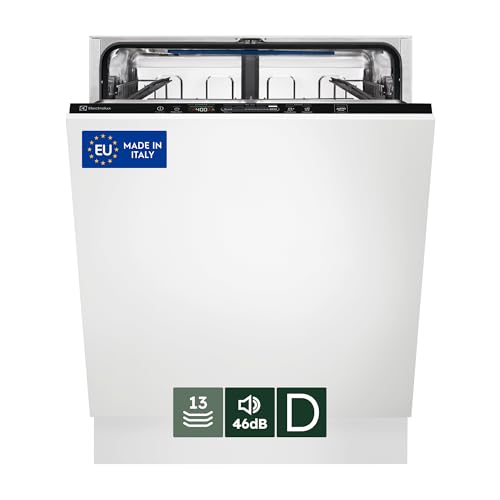
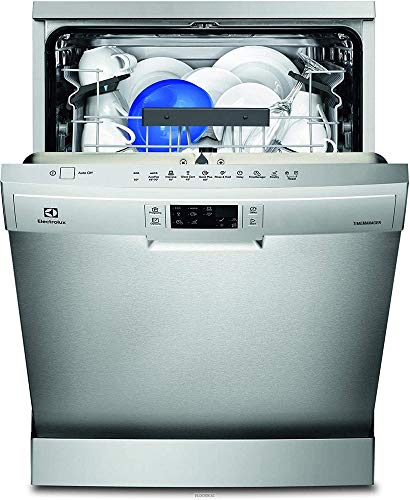
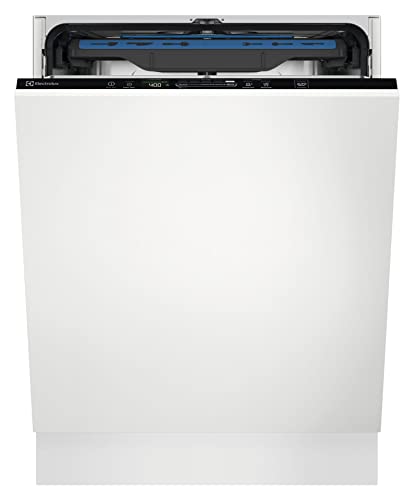
Electrolux dishwashers suit buyers prioritizing drying, glass care, and flexible integrated loading. Depending on the model, AirDry opens the door, SatelliteClean widens spray coverage, MaxiFlex organizes utensils, and ComfortLift raises the lower basket.
Electrolux dishwashers do not combine those technologies uniformly, and the range spans ordinary 44–46 dB class C–E products as well as quieter efficient models. Buyers should compare rack generation, spray system, hinge arrangement, and whether ComfortLift justifies its cost.
The chart below compares Electrolux with other dishwasher brands by average overall score.
[horizontal-chart-05146734171668731297071529236993497072053739813640]
What are the main advantages of Electrolux dishwashers?
The main advantages of Electrolux dishwashers are as follows:
- AirDry: Automatic door opening releases humid air near cycle end and is fitted to most models. It improves drying efficiency, especially on plastics, without continuous extra heating.
- Spray coverage: SatelliteClean uses a multi-directional satellite spray arm to reach complex loads. It is useful for mixed cookware when correctly loaded and unobstructed.
- Loading options: Adjustable upper baskets, flexible supports, cutlery trays, glass grips, and ComfortLift on selected models can improve ergonomics and usable capacity.
- Broad choice: Electrolux offers compact, slim, full-size, freestanding, semi-integrated, and fully integrated options across several prices.
- Efficient premium models: Selected class A–B products combine lower consumption with approximately 38–42 dB operation and 14–15 settings.
What are the main disadvantages of Electrolux dishwashers?
The main disadvantages of Electrolux dishwashers are as follows:
- Premium-feature pricing: Electrolux prices commonly sit around £340-£580, with a midpoint near £440, while ComfortLift or highly efficient models can approach £800-£900. ComfortLift, MaxiFlex, SatelliteClean, and 38–41 dB operation should justify the additional £200-£300 through daily use rather than occasional convenience.
- Eco cycles are rarely quick: Most Electrolux Eco programs cluster around 237–240 minutes, approximately 3 h 57 min to 4 h, and some reach about 310 minutes or 5 h 10 min. QuickSelect can request a shorter cycle, but the machine may use more temperature or pump intensity and the selected result is not the label-reference Eco program.
- Noise and consumption vary widely: Electrolux products range from roughly 38 to 52 dB and 0.49 to 1.04 kWh per Eco cycle, with common values near 44 dB and 0.82 kWh. A low purchase price can therefore conceal open-plan noise or class E–F consumption, while the quietest class A products cost considerably more.
- AirDry needs physical clearance: The opening door projects into the room and releases warm humid air beneath the worktop near cycle end. Buyers with low plinths, projecting handles, narrow walkways, or moisture-sensitive laminate should verify the installation drawing and whether AirDry can be disabled.
- Feature names do not describe every model: SatelliteClean, MaxiFlex, GlassCare, SoftGrips, ComfortLift, and connectivity are not universal. Closely related AEG products may also use similar wash platforms at different prices, so basket hardware and drying equipment should be compared directly rather than inferred from brand position.

Who makes Electrolux dishwashers?
Electrolux dishwashers are made for the Electrolux brand by the Swedish Electrolux Group, whose headquarters are in Stockholm. The group also owns other appliance brands, while product positioning and factory location vary by market and model.
Use the rating plate and warranty documentation to identify the manufacturing country, legal supplier, service contact, and exact product number. Similar-looking models can have different racks, controls, hinges, and programs across countries.
Which Electrolux dishwasher technologies improve washing and drying?
The following Electrolux technologies can improve washing and drying:
- SatelliteClean: A secondary rotating element changes the direction of the lower spray repeatedly, extending water coverage beyond the fixed circular path of a conventional arm. Its benefit is greatest in mixed or densely loaded racks, but bowls must not nest and tall items must leave the spray path unobstructed.
- AirDry: The door opens automatically during the final phase so humid air escapes and residual heat can continue evaporating water without prolonged electrical heating. It generally improves glass and ceramic drying efficiently, although plastics and concave containers still need angled loading and the released steam must be safe for the worktop.
- QuickSelect: The slider interface changes the requested cycle duration and can combine options such as ExtraPower or GlassCare where supported. A shorter setting may raise temperature, pump intensity, or consumption, so the resulting time and energy figures matter more than the position of the slider itself.
- ComfortLift: A linkage raises the loaded lower basket toward waist height, reducing bending when plates and cookware are added or removed. The mechanism improves ergonomics rather than cleaning, and buyers should test its loaded movement, locking point, pan clearance, and price premium.
- GlassCare and SoftGrips: Rubberized supports and controlled basket positions reduce stem movement and glass-to-glass contact during high-pressure spraying. Protection still depends on a suitable glass program, correct water-softener and rinse-aid settings, and detergent that is not excessively aggressive.
- Sensor and hygiene functions: Auto programs use soil or turbidity feedback to alter time, temperature, and water instead of applying one fixed cycle to every load. Hygiene options maintain higher temperatures or longer exposure for a specific need, but they normally consume more energy and should not replace Eco for routine dishes.
How much do Electrolux dishwashers cost?
Electrolux dishwashers generally cost about £300-£900. Width, installation type, energy class, noise, SatelliteClean, AirDry, ComfortLift, and rack equipment explain most differences.
Around £260-£390, expect compact, slim, or simpler full-size machines, often near 44–49 dB with basic racks. From £390-£560, 13–14 settings, AirDry, SatelliteClean, better glass care, and approximately 42–46 dB become more common.
Above about £560, look for classes A–C, 38–44 dB operation, ComfortLift, premium third racks, 15-place capacity, or specialized integrated hardware. A 0.20 kWh-per-cycle reduction saves about 56 kWh over 280 cycles, so calculate whether efficiency and ergonomics justify the premium.
The chart below shows the price distribution of Electrolux dishwashers.
[vertical-chart-16770229547504376126051752404206700212831887827351]
What should you consider when choosing an Electrolux dishwasher?
Before buying an Electrolux dishwasher, consider the following factors:
- Series and installation type: Identify the exact model code, width, standard or XXL height, and whether the machine is freestanding, fully integrated, or semi-integrated. Check niche dimensions, panel weight, plinth movement, sliding-hinge compatibility, hose routing, and AirDry door-opening clearance before ordering.
- Basket architecture: Compare ordinary cutlery storage with MaxiFlex, then test QuickLift upper-rack adjustment, folding tines, SoftGrips, SoftSpikes, and large-plate clearance. Nine to 10 settings generally suit 1–3 people, 13–14 suit 3–5 people, and 15 settings suit 4–6 people or cookware-heavy loads. ComfortLift can reduce bending by raising the lower rack, but it adds cost, weight, and a mechanism that should be tested with a realistic load.
- Spray and cleaning system: Verify whether SatelliteClean, a conventional spray arm, or an intensive zone is fitted to the exact product. Look for an Auto program with soil sensing, a 65–70 °C intensive cycle, glass protection, machine care, and filters that can be removed and rinsed easily.
- Drying technology: AirDry automatically opens the door and is useful for efficient moisture release, but results on plastics still depend on load arrangement and rinse aid. Check whether opening can be disabled, how long Eco takes, and whether steam could affect laminated worktops or adjacent cabinetry.
- Noise specification: Approximately 42–44 dB is appropriate for most open-plan kitchens, while 38–41 dB belongs to the quieter premium tier. Do not pay only for a lower figure; basket rattling, drain noise, leveling, and cabinet installation can change perceived sound.
- Energy and water: For Electrolux, roughly 0.61–0.82 kWh and 9.5–10 L per Eco cycle is a sensible target; more than 0.94 kWh or 11 L is relatively high. A 0.20 kWh difference saves about 56 kWh over 280 cycles, so compare the annual saving with the price premium for a higher class.
- Ownership and value: Confirm full leak protection, inverter-motor warranty conditions, local service, rack-part pricing, and availability of electronic modules. Compare closely related AEG models because a different badge or interface can cost more even when the underlying wash and drying platform is similar.