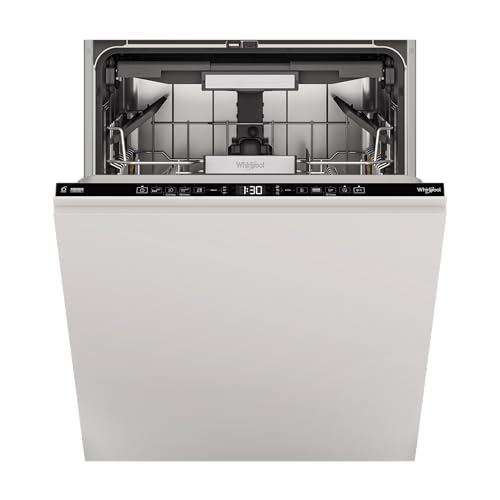

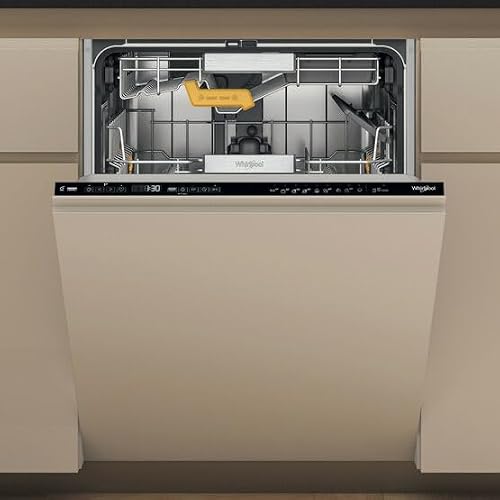
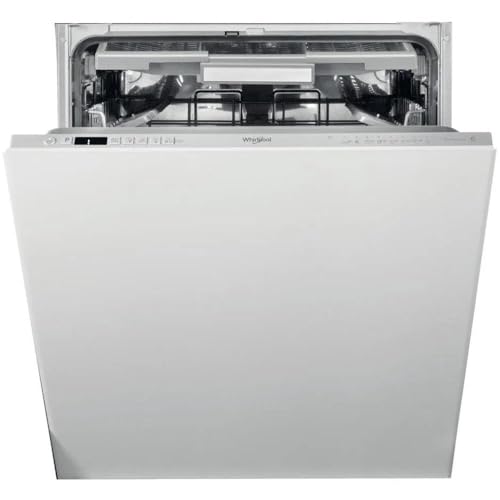
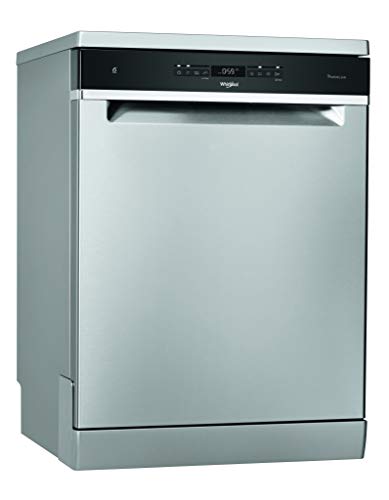
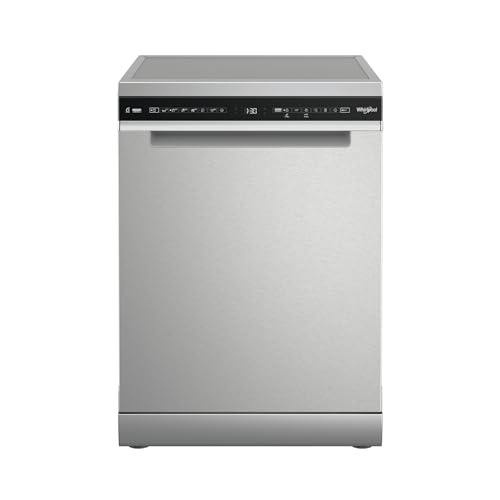
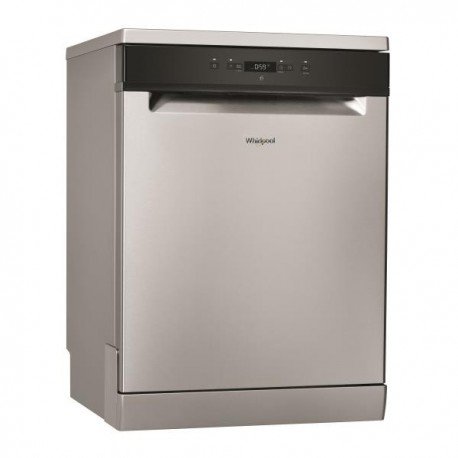
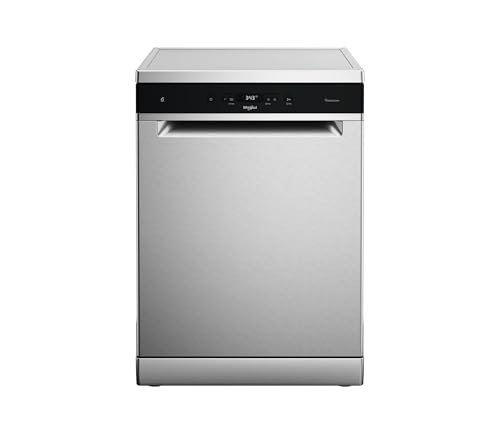
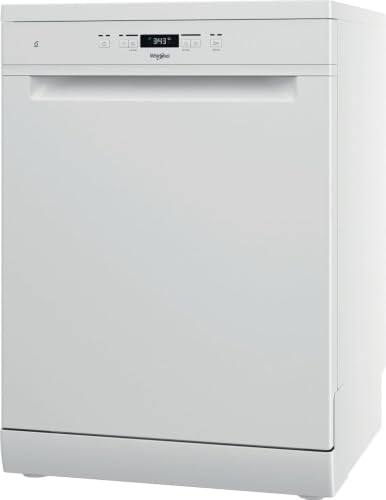
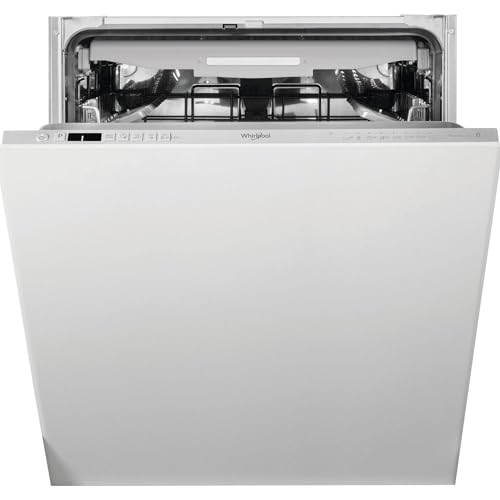
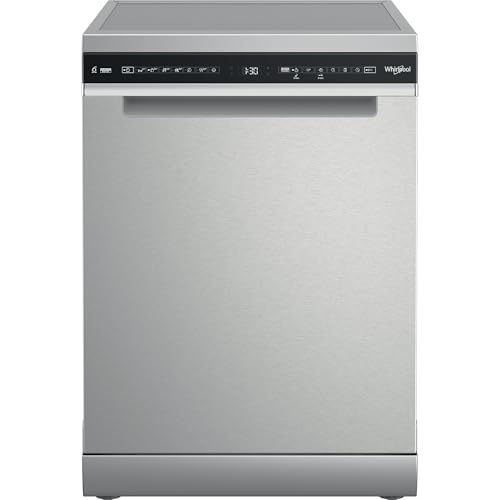
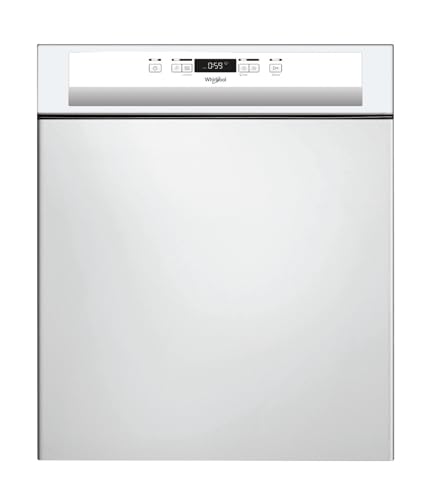
Are Whirlpool dishwashers good?
Whirlpool dishwashers have an average overall score of 8.2, ranking #12 among comparable dishwasher brands, and an average user rating of 8.9, placing them at #10 based on user reviews.
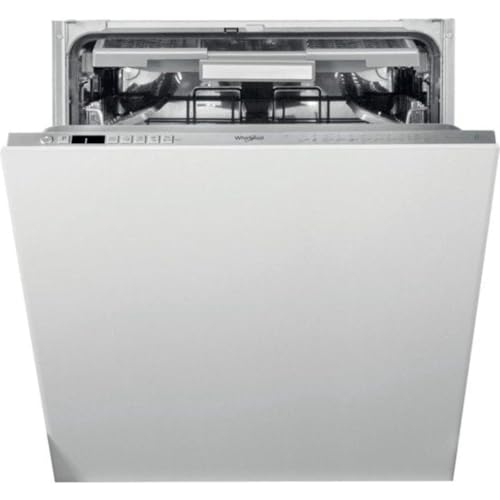
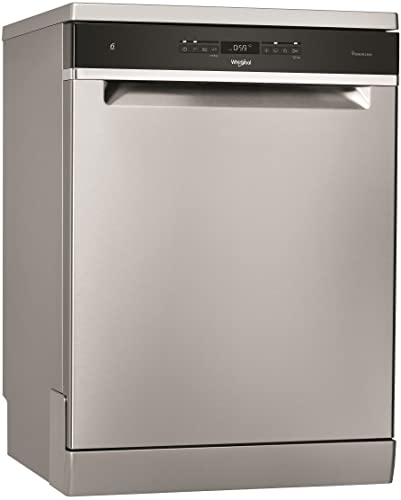
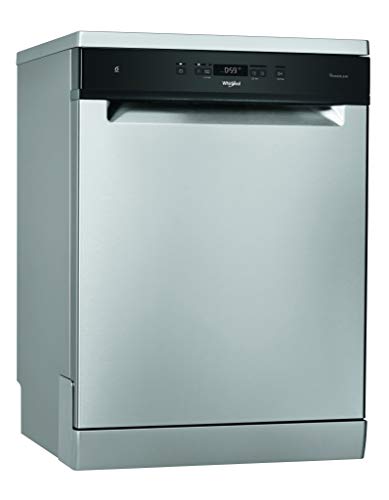
Whirlpool dishwashers are strong mid-range choices for large 14–15-place tubs and practical automation. Selected models combine 6th Sense load adjustment, PowerClean Pro pot jets, NaturalDry automatic opening, flexible baskets, and partial-load washing.
Whirlpool dishwashers differ substantially in noise, efficiency, rack equipment, leak protection, and integrated-hinge hardware. Buyers should verify the exact model rather than assume every Whirlpool includes a third rack, sliding hinges, or operation near 42 dB.
The chart below compares Whirlpool with other dishwasher brands by average overall score.
[horizontal-chart-05146734171668731297071529236993497072053739813640]
What are the main advantages of Whirlpool dishwashers?
The main advantages of Whirlpool dishwashers are as follows:
- Capacity: Many full-size models hold 14–15 place settings, which suits families and entertaining. Check rack geometry because nominal capacity does not guarantee space for large pans and tall glasses together.
- Sensor washing: 6th Sense or equivalent sensing can adjust time, water, and temperature to soil conditions. This is more useful for mixed daily loads than simply having many fixed programs.
- Targeted cleaning: PowerClean-style rear jets can focus pressure on pans and baked-on residues while preserving space elsewhere. Confirm whether the zone changes loading rules or energy use.
- Automatic drying: NaturalDry opens the door near cycle end to release moisture and improve plastics without continuous heating. Allow door clearance and consider steam exposure beneath sensitive worktops.
- Value and noise: Whirlpool offers many models around £340-£560, with quiet options near 38–43 dB. This can deliver useful core equipment without paying for premium lighting or connectivity.
What are the main disadvantages of Whirlpool dishwashers?
The main disadvantages of Whirlpool dishwashers are as follows:
- Uneven value across the range: Whirlpool prices commonly fall around £330-£600, with a midpoint close to £410, yet energy use spans approximately 0.50–1.03 kWh per Eco cycle. A £340 model can therefore be cheaper to buy but noticeably more expensive to run than a £470-£560 class A–C alternative.
- Eco duration varies by model: Typical Eco cycles run about 190–240 minutes, or 3 h 10 min to 4 h, while outliers can reach roughly 345 minutes or 5 h 45 min. Rapid and 6th Sense programs may finish sooner, but their temperature, water, and electricity use should not be assumed to match Eco.
- Noise differences are audible: The range extends from about 38 to 47 dB, with many models near 43 dB. Products at 46–47 dB are acceptable in a closed kitchen but more noticeable beside living space than 40–42 dB machines, especially during draining and automatic door opening.
- Rack and drying equipment is inconsistent: PowerClean Pro, NaturalDry, a third rack, sliding hinges, and extensive folding supports appear only on selected products. Entry versions may use a fixed cutlery basket or simpler tines, so a 14–15-place claim does not guarantee space for large pans, stemware, and utensils together.
- Regional model and service complexity: Model codes, warranty responsibility, parts channels, and Beko Europe or Whirlpool-group service arrangements vary by market. Buyers should confirm the local service provider and hinge specification before purchase, because an imported or retailer-specific variant can complicate installation and repairs.

Who makes Whirlpool dishwashers?
Whirlpool-branded dishwashers originate from Whirlpool Corporation, the U.S. appliance company headquartered in Benton Harbor, Michigan. Manufacturing location varies by model and market, so the brand name does not identify one factory.
In Europe, Whirlpool Corporation combined its major-domestic-appliance business with Arçelik’s operations in 2024 to form Beko Europe; Arçelik owns 75% and Whirlpool Corporation 25%, with Whirlpool-brand licensing continuing. Buyers should therefore use the model plate and local warranty documentation to identify the responsible supplier and service network.
What are the main Whirlpool dishwasher ranges?
The main Whirlpool dishwasher ranges are as follows, although feature and format names are more stable than one numbered series:
- Value models: Simpler freestanding or integrated machines emphasize basic Eco, intensive, and rapid washing, typically around 14 settings and 44–47 dB.
- 6th Sense models: Sensor-controlled cycles adapt washing to soil and load conditions, reducing the need to select time and temperature manually.
- PowerClean models: Rear high-pressure jets target pots and pans and can free lower-rack space when cookware is loaded vertically.
- NaturalDry models: Automatic door opening improves drying efficiency, especially for plastics, but requires suitable furniture and door clearance.
- Premium quiet and efficient models: Higher specifications can reach approximately 38–42 dB, classes A–C, 14–15 settings, stronger racks, and more complete status displays.
How much do Whirlpool dishwashers cost?
Whirlpool dishwashers generally cost about £300-£770. Installation type, width, energy class, noise, racks, PowerClean, and NaturalDry account for most price differences.
Around £300-£390, expect basic 14-place models, simpler racks, and approximately 44–47 dB operation. From £390-£560, sensor washing, automatic door opening, better baskets, 42–44 dB noise, and classes C–E become more common.
Above about £560, look for class A–C efficiency, approximately 38–42 dB, 15-place capacity, premium racks, stronger displays, or specialized integrated hardware. Compare exact gains: saving 0.20 kWh per cycle equals about 56 kWh over 280 cycles.
The chart below shows the price distribution of Whirlpool dishwashers.
[vertical-chart-06060903416411373772141937552923798359524170214372]
What should you consider when choosing a Whirlpool dishwasher?
Before buying a Whirlpool dishwasher, consider the following factors:
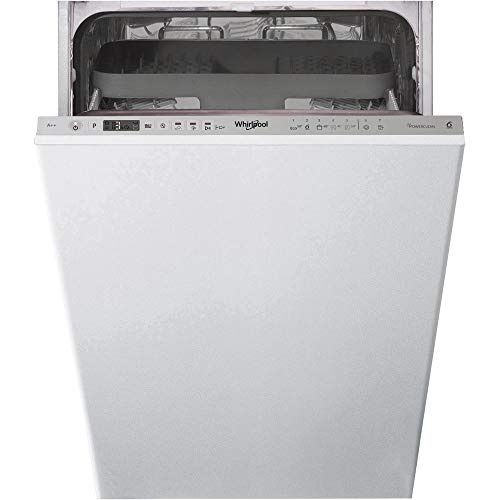
- Platform and exact code: Use the full commercial code rather than only a series or retailer name because basket equipment, noise, drying, and energy class can change between close variants. Confirm whether the machine is freestanding, fully integrated, semi-integrated, 45 cm slim, or 60 cm full size.
- Installation hardware: Measurements should cover niche height and depth, panel weight, plinth clearance, hose route, socket position, and the fully open door projection. For integrated models, verify fixed versus sliding hinges and whether NaturalDry door opening clears the worktop, handle, and adjacent cabinet fronts.
- Rack system and capacity: A practical test should cover upper-rack height adjustment, third-rack depth, folding tines, wine-glass supports, pan clearance, and the stability of loaded rails. A 14–15-place claim normally suits about 3–5 people, but it is useful only if PowerClean rear jets and basket components do not reduce space for the household’s usual cookware.
- Wash technologies: Check whether 6th Sense actually provides soil sensing, whether PowerClean Pro is included, and which programs permit MultiZone or half-load operation. Require an intensive 65–70 °C option, a dependable Auto cycle, and filter access that does not require awkward rack removal.
- Drying performance: Distinguish ordinary condensation drying from NaturalDry automatic opening and any fan-assisted option. Automatic opening can reduce energy and improve plastics, but buyers should check disable controls, Eco-cycle duration, residual moisture in deep containers, and steam exposure beneath sensitive worktops.
- Noise and efficiency: Approximately 42–44 dB suits open-plan use better than 46–49 dB. For Whirlpool, about 0.55–0.76 kWh and 9–9.5 L per Eco cycle is a good target; more than 0.90 kWh or 10.5 L is relatively high, and a 0.20 kWh difference equals about 56 kWh over 280 cycles.
- Protection and service: Verify full-time leak protection rather than a simple inlet-hose device, plus warranty coverage for the pump, motor, racks, and electronics. Compare local service availability, spare-basket prices, installation cost, and equivalent Bauknecht or other Whirlpool-group products before paying for a feature name.