Are LG dishwashers good?
LG dishwashers have an average overall score of 8.2, ranking #9 among comparable dishwasher brands, and an average user rating of 8.9, placing them at #12 based on user reviews.
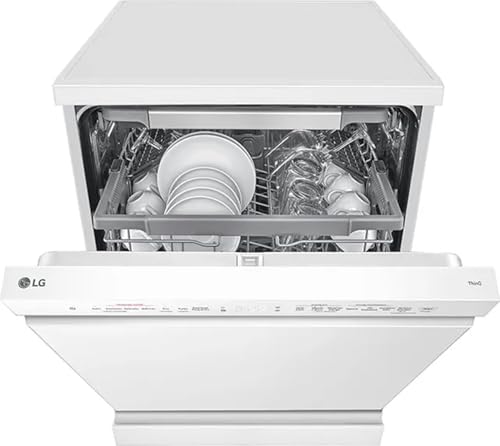
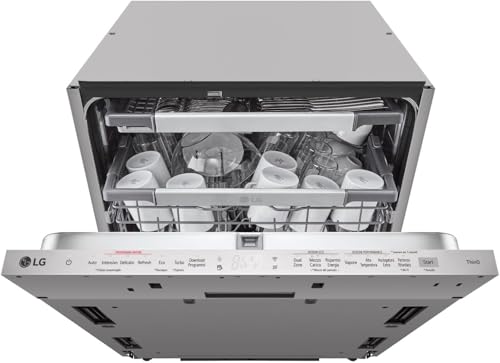
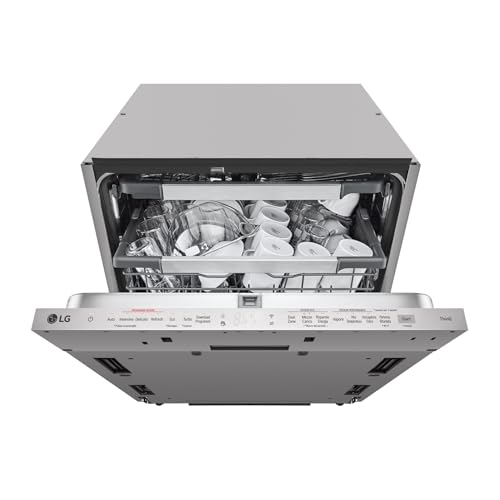
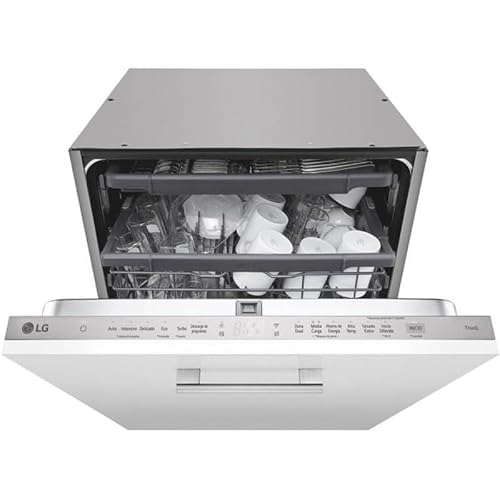
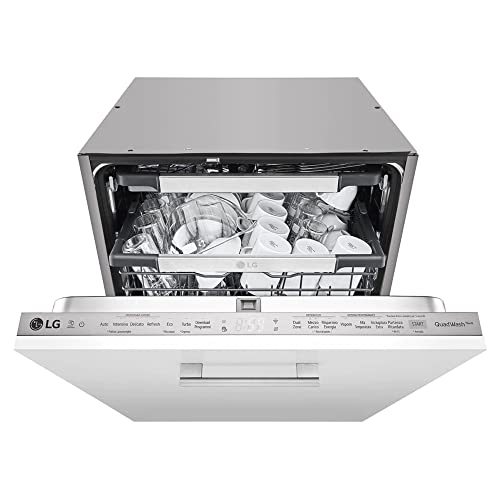
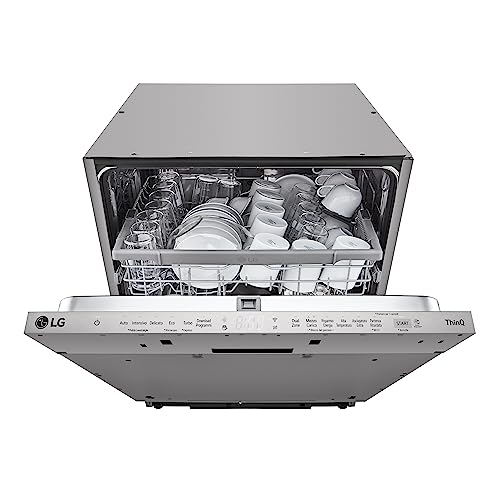
LG dishwashers suit buyers wanting flexible loading and connected diagnostics in a quiet full-size machine. Selected models combine QuadWash multi-motion spray arms, EasyRack Plus adjustment, TrueSteam for dried soil and spotting, and ThinQ monitoring.
LG dishwashers vary in feature availability and European service coverage, while steam and connectivity add limited value for routine loads. Buyers should compare 41–44 dB noise, plastic drying, third-rack usability, energy use, installation clearance, and local parts support.
The chart below compares LG with other dishwasher brands by average overall score.
[horizontal-chart-05146734171668731297071529236993497072053739813640]
What are the main advantages of LG dishwashers?
The main advantages of LG dishwashers are as follows:
- Efficiency: Many models are class A, and typical Eco consumption is around 0.66 kWh and 9.6 L.
- Quiet operation: The range sits mainly around 41–44 dB, appropriate for open kitchens.
- QuadWash: Multi-motion spray arms change water direction to improve coverage around mixed loads.
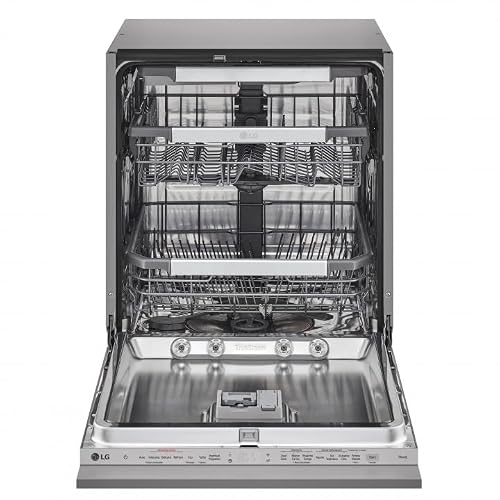
- Loading: EasyRack Plus, folding elements, adjustable baskets, and third racks improve 14-place flexibility.
- Connectivity and drying: ThinQ and Auto Open Dry are common, while selected products add TrueSteam.
What are the main disadvantages of LG dishwashers?
The main disadvantages of LG dishwashers are as follows:
- Advanced versions are costly: LG prices commonly fall around £410-£770, with a midpoint near £580 and top listings around £1,010. TrueSteam, class A efficiency, Auto Open Dry, and premium EasyRack equipment can therefore cost £220-£340 more than a simpler full-size competitor.
- Eco cycles can be exceptionally long: Typical LG durations range about 229–405 minutes, or 3 h 49 min to 6 h 45 min, with a midpoint close to 297 minutes or 4 h 57 min. Turbo or downloaded cycles reduce waiting for compatible loads, but they may change consumption, temperature, soil limits, or drying.
- Size choice is limited: Nearly all products are 13–14-place full-size machines, leaving little selection for 45 cm niches, countertops, or households wanting a genuinely compact tub. A flexible rack cannot solve an external width or depth mismatch.
- Feature packages vary by market: QuadWash is central to the range, but TrueSteam, Auto Open Dry, a third rack, and the most flexible EasyRack layout are not universal. Buyers should verify the complete code because similarly styled models can differ in drying and energy use from roughly 0.44 to 0.93 kWh.
- ThinQ and service create ownership dependencies: App functions require setup, Wi-Fi, an account, and continuing software support, while core cleaning does not improve merely because a cycle is downloadable. Dishwasher parts and technician coverage can also vary locally, so pump, rack, and electronic support should be confirmed before paying a premium.

Who makes LG dishwashers?
LG dishwashers are made for LG Electronics, the South Korean electronics and home-appliance company within LG Corporation. Manufacturing country and component sourcing vary by model and market.
Check the full model code, rating plate, ThinQ region compatibility, warranty issuer, and local service documentation. Similar LG names can hide differences in TrueSteam, Auto Open Dry, racks, energy class, and control language.
Which LG dishwasher technologies improve washing and drying?
The following LG dishwasher technologies can improve washing and drying:
- QuadWash: Four multi-motion spray arms rotate while sweeping their jets through changing angles, increasing coverage compared with a simple two-arm circular pattern. The system helps mixed or crowded loads, but correct spacing, downward-facing bowls, clean nozzles, and unobstructed arm movement remain necessary.
- TrueSteam: A steam phase applies heat and moisture to soften dried residue, support hygiene, and reduce mineral spotting on glass. Its value is greatest for dried-on or hygiene-sensitive loads; it can extend runtime or consumption, and it cannot compensate for blocked spray paths or unsuitable detergent.
- Auto Open Dry: The door opens during the final stage so humid air escapes and residual heat can finish evaporation with less active heating. Plastics generally benefit, but pooled water still requires angled loading and the released steam and open door must suit the worktop and kitchen walkway.
- EasyRack Plus: Adjustable rack height, folding tines, and reconfigurable zones help pans, stemware, and tall plates sit without blocking water movement. Buyers should test the exact arrangement because a third rack or raised upper basket can trade utensil space for reduced glass or plate clearance.
- Inverter Direct Drive: Direct motor control can vary pump speed and wash intensity while reducing mechanical losses and vibration. It supports quieter adaptive operation but does not guarantee better cleaning by itself, so the declared dB figure, spray coverage, program logic, and complete warranty terms still matter.
- ThinQ: Compatible models provide status, downloadable cycles, diagnostics, maintenance alerts, and energy information while retaining physical controls. The app can help identify misuse or maintenance needs, but it does not directly improve hydraulic washing and its long-term value depends on network, account, and software support.
How much do LG dishwashers cost?
LG dishwashers generally cost about £390-£1,000. Energy class, installation, TrueSteam, racks, automatic opening, controls, and ThinQ explain most differences; capacity and noise are comparatively consistent.
Around £390-£520, expect 14 settings, approximately 43–46 dB, classes C–E, core QuadWash, and simpler racks.
From £500-£700, classes A–C, 41–44 dB, EasyRack Plus, automatic opening, third racks, and ThinQ become more common. This tier often provides the strongest balance when TrueSteam is not essential.
Above about £690, look for TrueSteam, class A efficiency, premium racks, stronger displays, or specialized integrated hardware. A class A model using 0.54 instead of 0.84 kWh saves about 84 kWh over 280 cycles—roughly £20 at £0 per kWh.
The chart below shows the price distribution of LG dishwashers.
[vertical-chart-15028940783354270667005907039617576434991067021090]
What should you consider when choosing an LG dishwasher?
Before buying an LG dishwasher, consider the following factors:
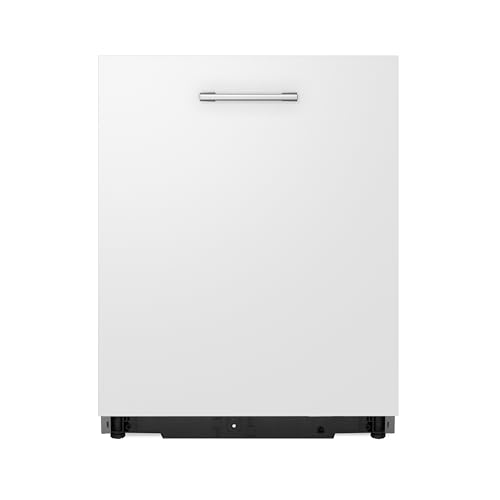
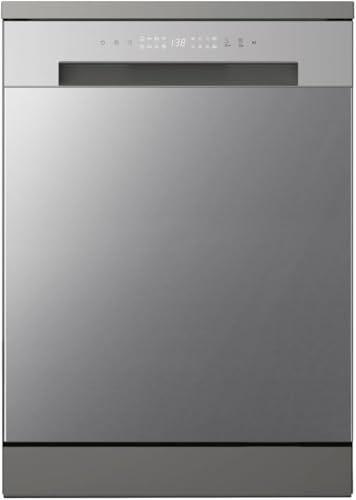
- Full-size fit and installation: Confirm that a 60 cm, 14-place machine suits the opening because LG offers little compact or slim choice. Check niche height and depth, freestanding versus integrated construction, furniture hinge, panel limits, plinth, hoses, ventilation, status visibility, and clearance for Auto Open Dry.
- EasyRack Plus geometry: A practical test should cover upper-rack height adjustment, folding tines, third-rack depth, stemware supports, pan handles, tray height, and detergent-door clearance with the household’s real dishes. Fourteen settings generally suit 3–5 people, while 15 settings better suit 4–6 people or frequent entertaining; either capacity is useful only when large cookware does not block QuadWash arms or force a second cycle.
- QuadWash and TrueSteam: Verify whether the exact model includes multi-motion QuadWash, TrueSteam, Dual Zone, Auto, Intensive, Express, hygiene, and Machine Clean functions. TrueSteam is most valuable for dried soil, hygiene-sensitive loads, and reduced spotting; it can add time or energy and should not be treated as essential for ordinary plates.
- Drying configuration: Confirm Auto Open Dry, heated or extra-dry options, plastic results, Eco duration, steam path, and whether automatic opening can be disabled. Check rinse-aid adjustment and angle concave items because pooled water remains a loading issue rather than a drying-system failure.
- Noise and motor warranty: Around 41–44 dB is suitable for open-plan kitchens, while 45–46 dB is more noticeable during quiet periods. Read the Inverter Direct Drive warranty carefully because long motor coverage may exclude labor, pumps, electronics, racks, and other components.
- Efficiency and ThinQ: For LG, class A examples near 0.54 kWh and about 9.5 L per Eco cycle are strong; models around 0.85–0.93 kWh use materially more electricity despite the same 14-place capacity. ThinQ should remain secondary to those figures, with remote start, Wi-Fi, diagnostics, privacy, and offline controls checked separately.
- Service and ownership cost: Check leak protection, filter and spray-arm access, local dishwasher technicians, rack and pump parts, installation, warranty issuer, and software support. TrueSteam and connectivity justify a premium only when they solve regular load or maintenance needs.