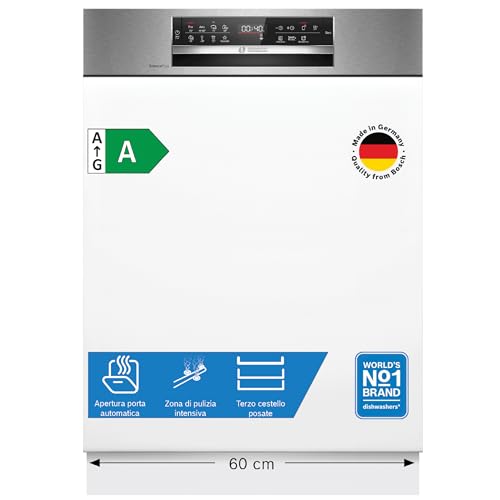
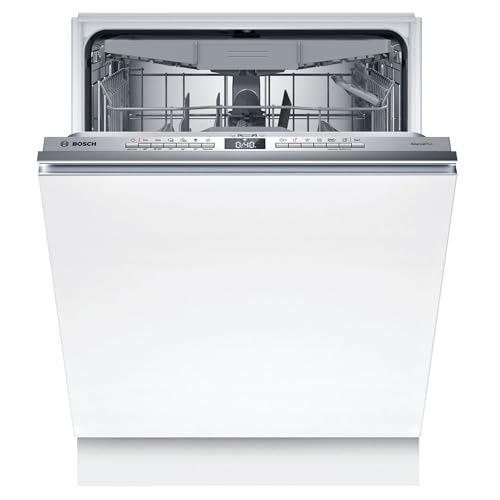
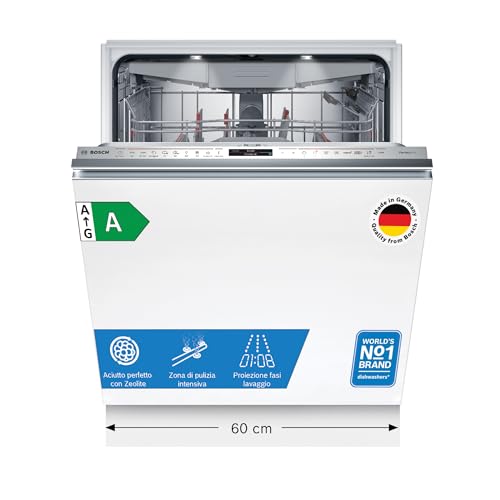
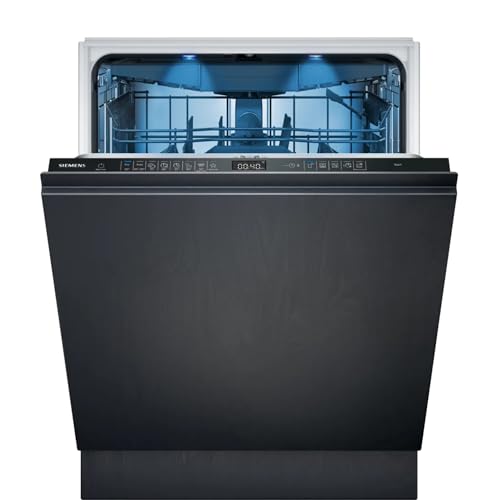
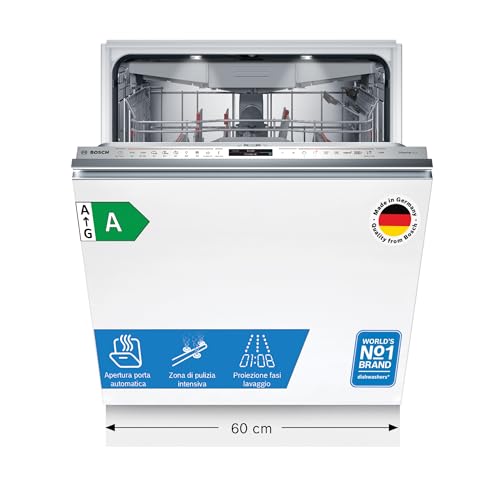
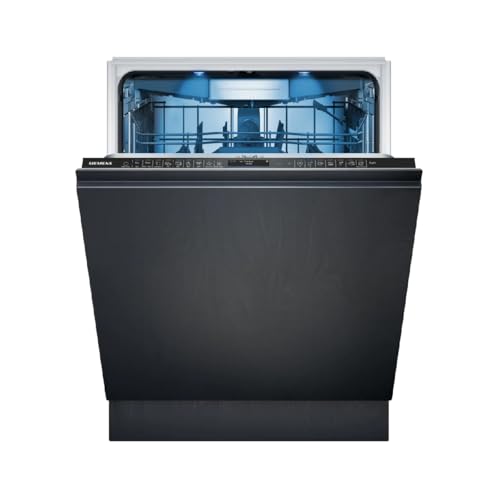
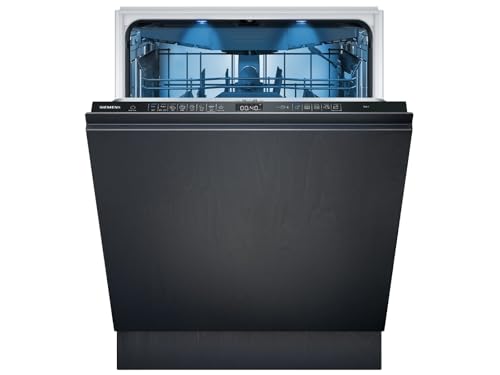
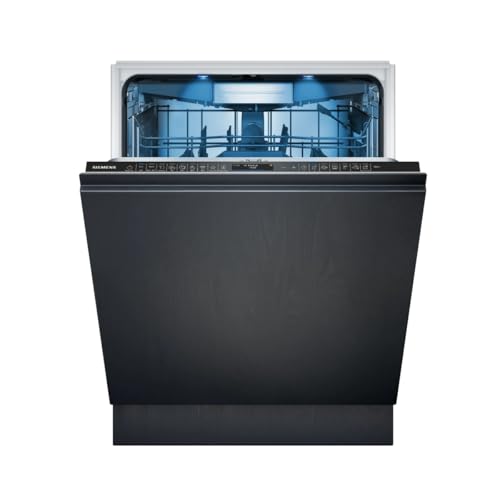
Which brands make the best A-rated integrated dishwashers?
The best A-rated integrated dishwasher brands are ranked below:
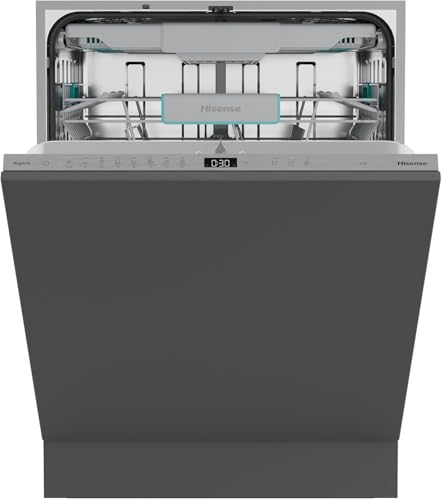
- Hisense (Average overall score: 8.9)
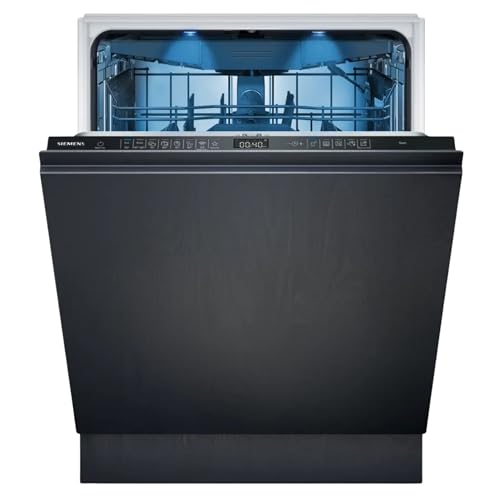
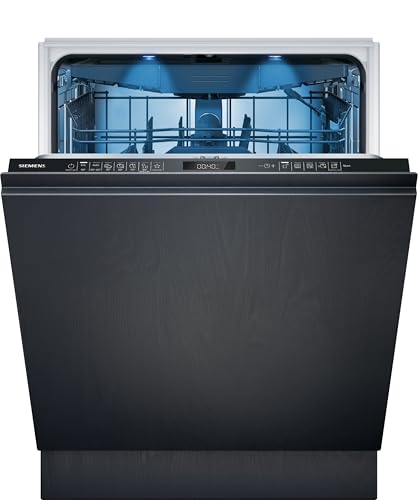
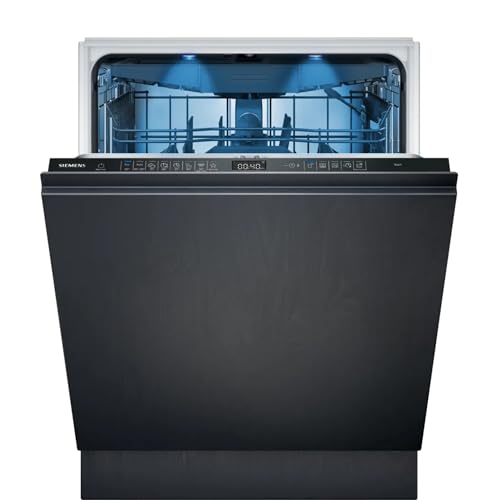
- Siemens (Average overall score: 8.9)
- NEFF (Average overall score: 8.8)
The chart below ranks A-rated integrated dishwasher brands by average overall score.
[horizontal-chart-07795195543068971370156261147011548656592760458736]
How much energy and water does an A-rated integrated dishwasher use?
An A-rated integrated dishwasher commonly uses about 0.49–0.55 kWh and 9–10 L of water on its Eco cycle. At one cycle per day, that is roughly 180–200 kWh and 3,300–3,700 L per year, although actual use changes with program choice, load size, inlet conditions, and cleaning frequency.
The energy label figure is measured on Eco, which is deliberately long because it reduces heating demand. Automatic, intensive, hygiene, quick, and extra-dry options may consume more, so compare the programs you expect to use rather than assuming every cycle operates at the label value.
Water consumption also needs context. A slightly higher figure can be acceptable if the machine reliably cleans a full 14-place-setting load, whereas frequent partial loads or rewashing can erase the nominal saving. Half-load functions and soil sensors help only when their operation matches your habits.
For meaningful comparisons, check energy per 100 Eco cycles, water per Eco cycle, rated capacity, Eco duration, and noise together. The most efficient purchase is one that remains practical enough to be loaded fully and used on Eco most of the time.
The chart below compares energy consumption per cycle among A-rated integrated dishwashers.
[vertical-chart-08833960900511608906067121375937312694463381714503]
How much do A-rated integrated dishwashers cost?
A-rated integrated dishwashers generally cost about £470-£820, although premium examples can exceed £860. All models in this group meet the same top energy class, so the remaining price differences mainly reflect noise, racks, drying, controls, hinges, and brand support.
Below £560, expect efficient full-size cleaning with more conventional baskets, controls, and drying. From £560-£730, adjustable third racks, automatic programs, quieter operation, automatic door opening, clearer floor displays, and stronger leak protection become more common.
Above £730, models may add exceptionally low noise, mineral or advanced fan drying, premium interior fittings, sophisticated time projection, flexible hinges, connectivity, and longer service packages. Compare expected energy savings with the purchase premium and include the furniture panel and fitting cost.
The chart below shows the price distribution of A-rated integrated dishwashers.
[vertical-chart-17746557303736665838023643360450470810071576502939]
What should you consider when choosing an A-rated integrated dishwasher?
Before buying an A-rated integrated dishwasher, consider the following factors:
- Label figures and test basis: For an A-rated full-size dishwasher, about 0.50–0.60 kWh and 8.5–10 L per Eco cycle is a strong target; more than 0.65 kWh or 10.5 L is relatively high for this efficiency class. The A rating applies to the standardized Eco program, so quick, intensive, hygiene, and extra-dry consumption must be checked separately.
- Installation compatibility: Verify niche dimensions, panel size and weight, hinge type, plinth clearance, ventilation, hoses, and service access. An efficient model is unsuitable if its furniture door cannot move freely or fitting requires major cabinet changes.
- Required capacity: Most A-rated integrated models are full-width machines with about 14 place settings, a practical size for roughly 3–5 people. Estimate peak dish volume and avoid a capacity that encourages repeated partial loads or leaves the dishwasher routinely underfilled.
- Rack geometry: A practical test should cover third-rack depth, upper-basket adjustment, folding supports, plate clearance, stemware holders, and room for cookware. Practical loading determines whether the rated efficiency can be achieved with full, correctly spaced loads.
- Wash performance and programs: Confirm that Eco cleans normal soil reliably and that automatic or intensive cycles handle the household’s difficult loads. Sensor accuracy, spray coverage, filter design, detergent release, and water-softener adjustment matter more than the energy letter alone.
- Noise level: Around 44 dB or below is useful in open-plan kitchens, while very low figures can justify a premium for overnight use. Check that hidden controls provide clear cycle status without requiring the door to be opened.
- Drying performance: Low energy consumption can make drying challenging, particularly for plastics, so compare automatic door opening, heat exchange, fans, minerals, and extra-dry settings. Review cycle time, steam management, and any additional energy used by enhanced drying.