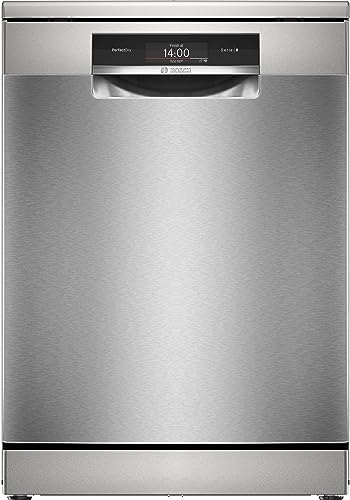
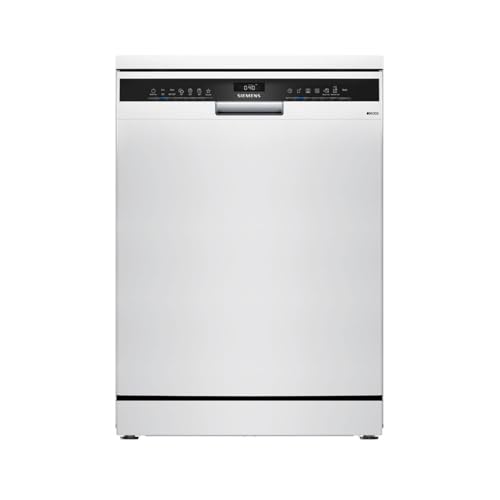
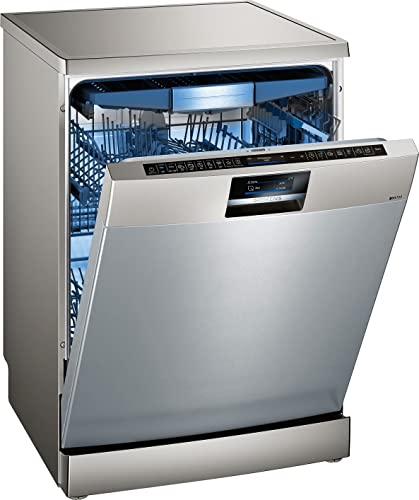
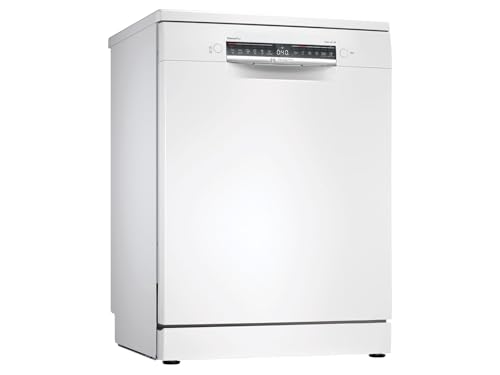
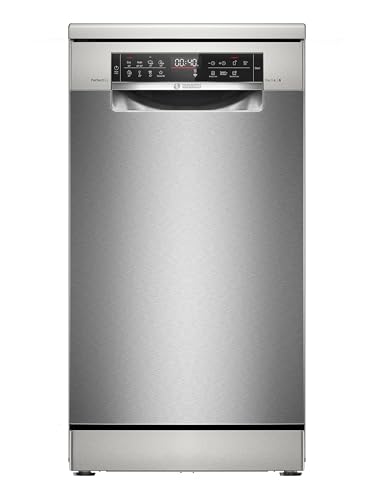
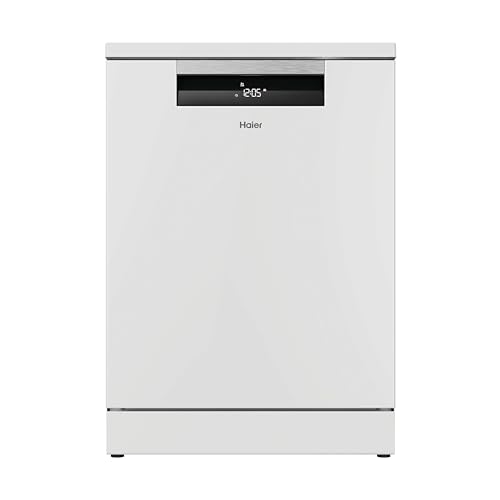
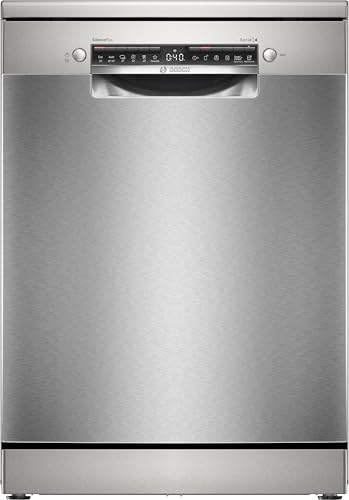
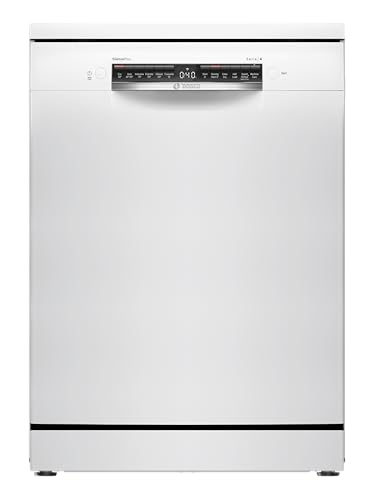
Which brands make the best freestanding dishwashers?
The best freestanding dishwasher brands are ranked below:
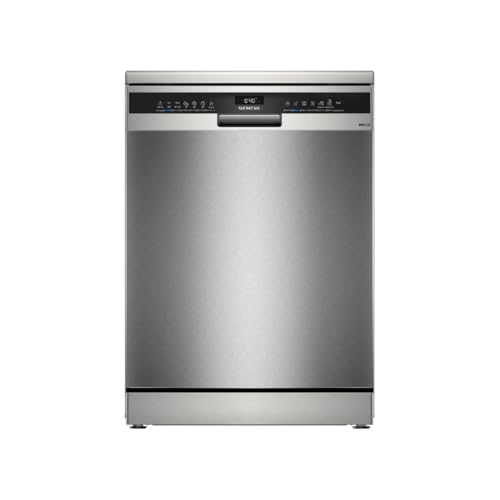
- Siemens (Average overall score: 8.7)
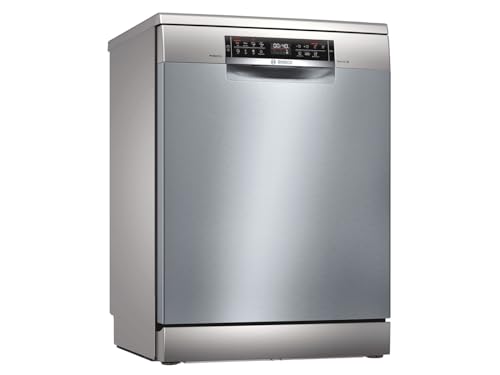
- Bosch (Average overall score: 8.6)
- Haier (Average overall score: 8.6)
The chart below ranks freestanding dishwasher brands by average overall score.
[horizontal-chart-12989437731731484237008646418877316495251458154105]
How do freestanding dishwashers compare with integrated models?
Freestanding dishwashers are easier to install, remove, and replace than integrated models, while integrated machines produce a continuous furniture-front appearance. Cleaning performance is independent of the outer format, so compare the same capacity, energy class, noise, racks, and drying system.
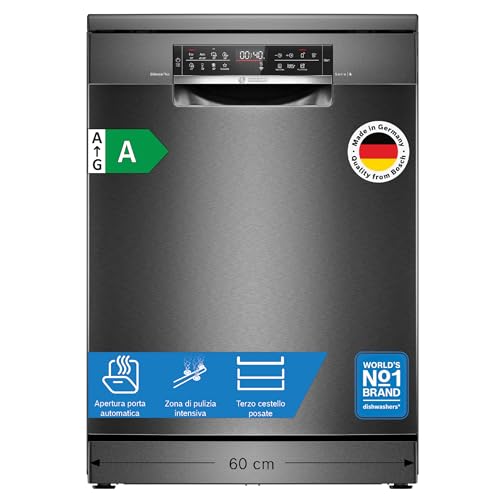
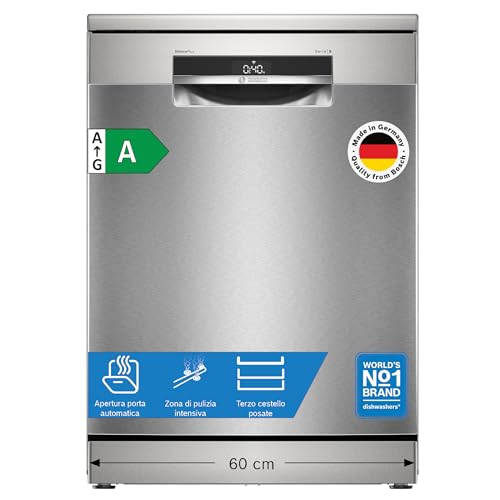
A full-size freestanding machine is normally about 60 cm wide, 84.5–85 cm high, and 59–62 cm deep; a slim version is about 45 cm wide. Integrated machines are commonly lower at 81.5–82 cm because they sit beneath the worktop and carry a furniture panel, but they add hinge, plinth, panel-weight, and status-light requirements.
Freestanding replacement is simplest when the new model matches the existing width, hose route, top height, and door projection. Integrated replacement can require transferring or remaking the panel and changing fixed versus sliding hinges, so even a similarly sized appliance may involve additional cabinet work.
What width and capacity should a freestanding dishwasher have?
A 60 cm freestanding dishwasher with 13–14 place settings suits many three- to five-person households, while a 45 cm model with 9–10 settings is better when floor width is limited or loads are smaller. Larger 15- or 16-setting interiors help with entertaining, but usable rack space matters more than one extra nominal setting.
Measure the actual opening rather than relying on the width label. Full-size models are commonly about 59.5–60 cm wide and slim models about 44.5–45 cm, with most freestanding machines roughly 84.5–85 cm high and around 59–62 cm deep. Include hoses, ventilation, handle projection, and the open door.
Check upper-rack adjustment, folding tines, cutlery storage, maximum plate diameter, and space for pans and glasses. If a slim machine would run twice for normal loads, the wider model may be the more efficient use of time and resources.
The chart below shows the place-setting capacities of freestanding dishwashers.
[vertical-chart-15605947186881047805048001629190373074083157383916]
How do you position and connect a freestanding dishwasher?
Position a freestanding dishwasher on a level, stable floor close to a cold-water inlet, drain, and earthed outlet. Full-size models are commonly 84.5–85 cm high and 59–62 cm deep, while supplied inlet hoses are often around 1.5–1.65 m; measure the complete route without stretching hoses, crushing the leak-stop housing, or relying on an extension lead.
Adjust the feet until the cabinet and door remain stable, keep inlet and drain hoses free of kinks, and follow the permitted drain height in the manual. Before first use, check every connection for leaks, set the water softener to local hardness, add salt and rinse aid where required, and verify that both spray arms rotate freely.
How much do freestanding dishwashers cost?
Freestanding dishwashers generally cost about £260-£650, with premium models extending beyond this range. Width, capacity, efficiency, noise, rack flexibility, drying performance, finish, and service support all influence the price.
Below £340, expect core wash programs, standard baskets, basic drying, and often higher noise or consumption. From £300-£500, adjustable racks, automatic programs, improved leak protection, quieter motors, better displays, and more effective drying become more common.
Above £520, models may provide very low noise, advanced drying, flexible third racks, premium finishes, interior lighting, connectivity, and stronger warranties. Include delivery, old-appliance removal, adapters, hose extensions, and connection work when comparing the total cost.
The chart below shows the price distribution of freestanding dishwashers.
[vertical-chart-11710612135044123192011080402058841534450239654768]
What should you consider when choosing a freestanding dishwasher?
Before buying a freestanding dishwasher, consider the following factors:
- Dimensions and installation: Measurements should cover width, height, body depth, hose space, ventilation, and open-door clearance, then confirm inlet, drain, and earthed-power access. If the machine will sit beneath a worktop, verify whether the top is removable and what clearance the manufacturer requires.
- Required capacity: Slim 45 cm models with 9–10 settings generally suit 1–3 people, while 60 cm machines with 13–14 settings suit about 3–5 people. Base the choice on peak dish and cookware volume, not only household size, to avoid repeated cycles.
- Rack design: Check upper-basket adjustment, folding tines, third-rack usefulness, cutlery storage, maximum plate diameter, stemware support, and pan clearance. Flexible baskets have more daily value than one extra nominal setting.
- Energy and water consumption: For a slim 45 cm machine, about 0.60–0.80 kWh and 8.5–10 L per Eco cycle is good; for a full-size model, aim for roughly 0.55–0.75 kWh and 8.5–10 L. More than 0.90 kWh or 11 L is relatively high, and quick, intensive, hygiene, or extra-dry modes can exceed the Eco figures.
- Noise level: A practical target is around 44 dB or below near living areas, while a separate utility room may tolerate more. Leveling, flooring, wall contact, and correct hose placement can also affect vibration and perceived sound.
- Wash performance and programs: Eco, automatic, intensive, quick, and glass cycles cover most households if sensors and spray coverage are effective. Check filtration, water-softener adjustment, detergent dispensing, and cleaning of crowded or heavily soiled loads.
- Drying performance: Compare results on plastics and systems such as condensation, automatic door opening, fans, or extra heat. Review cycle time, energy use, steam release, and whether an open door will obstruct the kitchen.