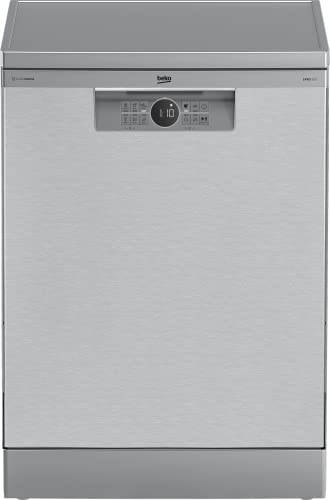
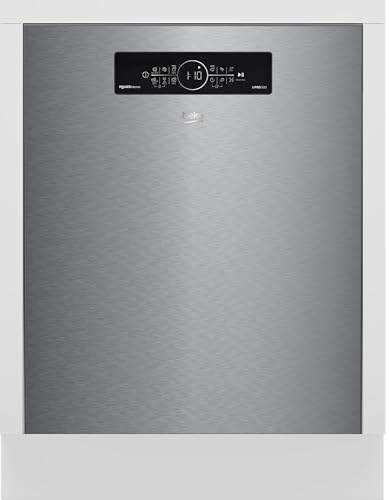
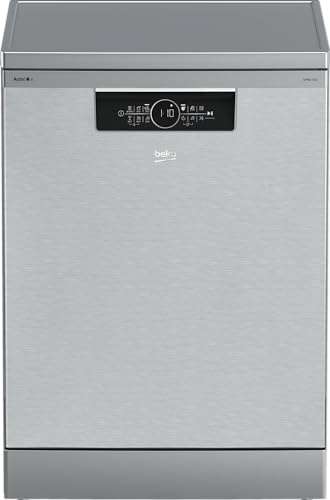
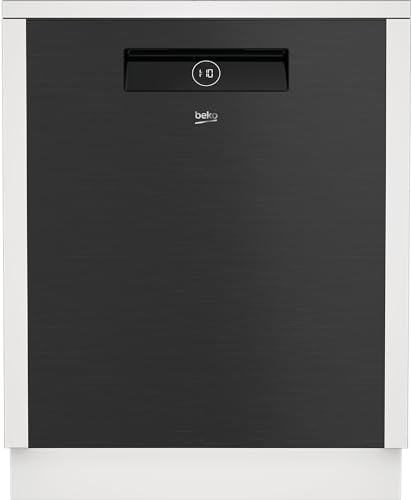
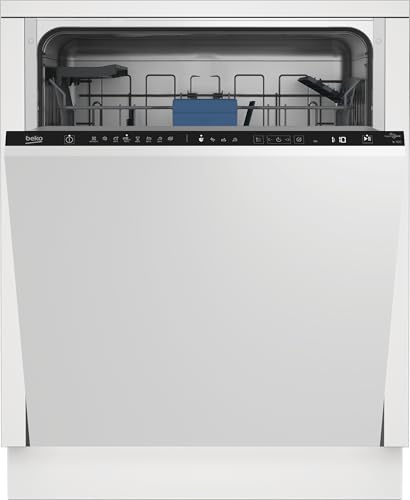
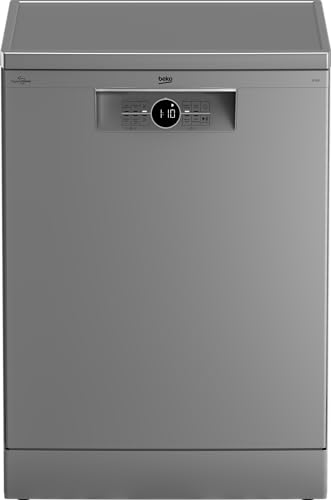
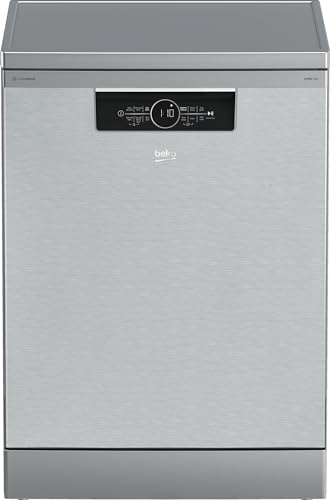
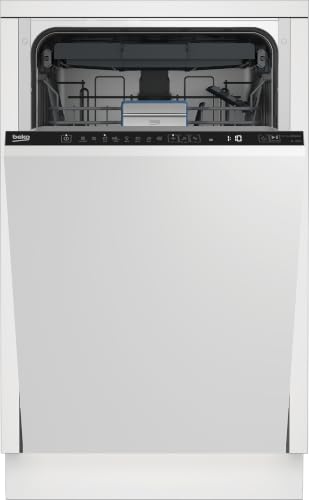
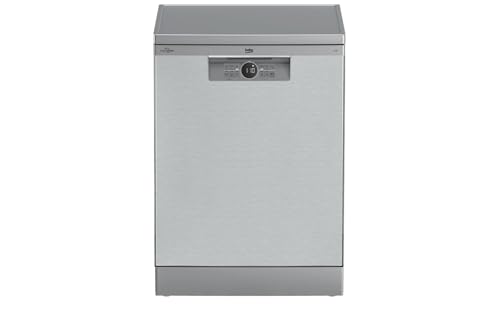
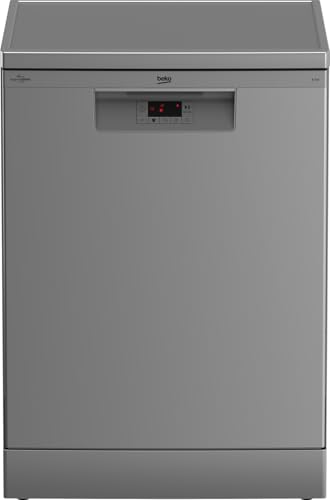
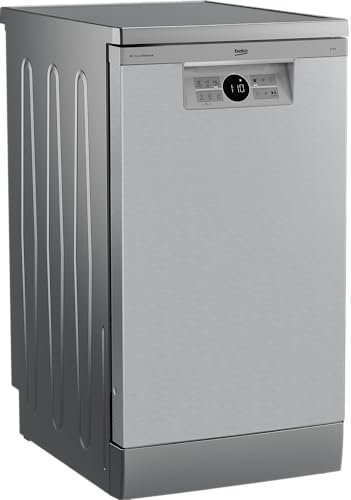
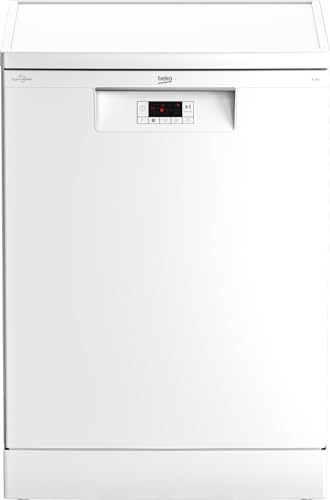
Are Beko dishwashers good?
Beko dishwashers have an average overall score of 8.2, ranking #11 among comparable dishwasher brands, and an average user rating of 9, placing them at #4 based on user reviews.
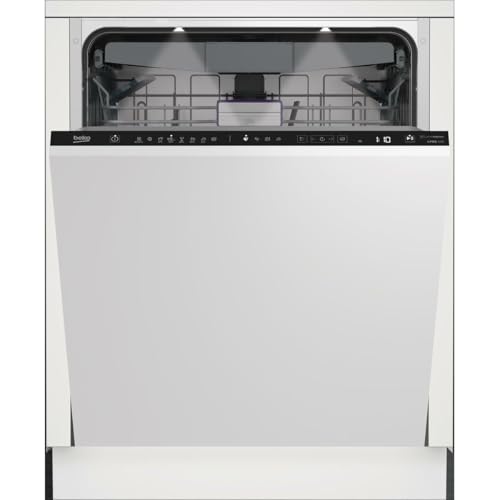
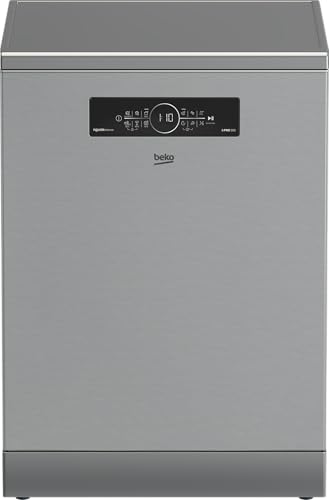
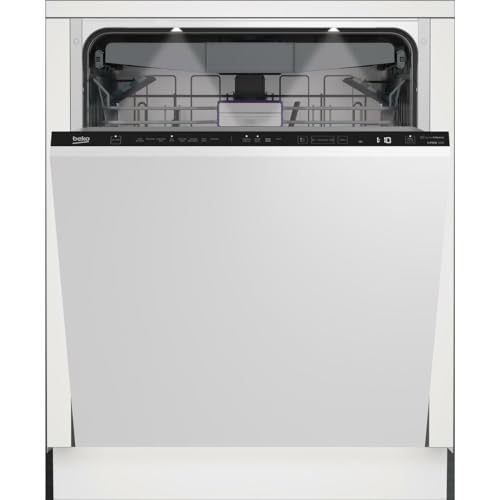
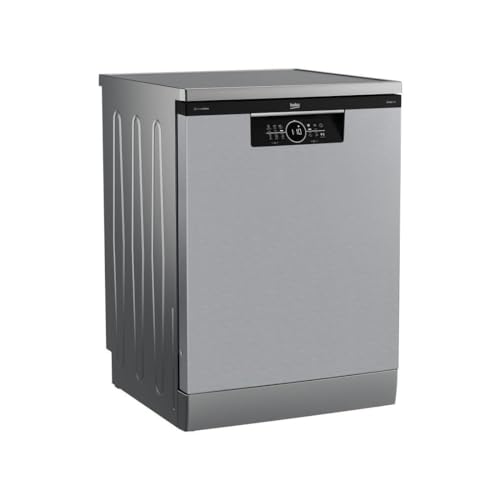
Beko dishwashers offer strong specification per euro, with selected 14–16-place machines adding SelfDry, flexible third-level loading, and CornerIntense or AquaIntense targeted washing. The range extends from basic class E products to quieter class A–C models.
Beko dishwashers vary widely in rack geometry, noise, drying, consumption, and leak protection. Buyers should compare kWh per 100 cycles, litres, cutlery layout, folding tines, and plate clearance because a large inexpensive tub can still be awkward to load.
The chart below compares Beko with other dishwasher brands by average overall score.
[horizontal-chart-05146734171668731297071529236993497072053739813640]
What are the main advantages of Beko dishwashers?
The main advantages of Beko dishwashers are as follows:
- Value: Many full-size products cost £260-£390 while providing 14–16 settings and practical programs.
- Capacity: High-capacity layouts suit families and entertaining, provided the rack geometry fits real cookware.
- Targeted washing: CornerIntense and DeepWash can improve coverage around corners, bottles, and heavily soiled items.
- Drying: SelfDry automatic opening improves moisture release without relying only on extra heat.
- Choice: The range includes 45 and 60 cm, freestanding and integrated designs, plus selected 40–42 dB and class A–B models.
What are the main disadvantages of Beko dishwashers?
The main disadvantages of Beko dishwashers are as follows:
- Specifications vary more than the prices suggest: Beko models commonly cost about £260-£410, with a midpoint near £340, yet energy use spans roughly 0.41–1.05 kWh and noise 40–49 dB. Two products separated by only £40 can therefore differ materially in annual running cost and open-plan comfort.
- Eco cycles are not especially short: Typical durations run about 204–260 minutes, or 3 h 24 min to 4 h 20 min, with a midpoint near 224 minutes. Fast+ shortens compatible programs by increasing intensity or resources, so it should not be treated as the same efficiency result delivered more quickly.
- Water use can be relatively high: Beko products range from about 8.7 to 12.9 L per Eco cycle, with many near 9.9 L. A 12.9 L machine uses roughly 840 L more than a 9.9 L model over 280 cycles, so capacity and full-load use should justify the difference.
- Headline capacity can hide rack compromises: The range extends from 10 to 16 place settings, but third-rack depth, fixed tines, plate clearance, and CornerIntense or DeepWash zones vary. A dense 15–16-place layout may hold standardized pieces while remaining awkward for large pans and tall stemware.
- Feature and warranty wording needs checking: SelfDry, CornerIntense, DeepWash, Wi-Fi, and extended motor coverage are model-specific. Motor warranties can exclude labour, electronics, pumps, or transport, while app functions do not compensate for a noisy cabinet or unsuitable baskets.

Who makes Beko dishwashers?
Beko dishwashers are produced for Beko, a brand of the Turkish appliance group Arçelik. In Europe, Beko Europe combines Arçelik’s regional appliance operations with the former Whirlpool European major-appliance business.
Factory and legal supplier vary by model and market. Check the rating plate, product code, warranty issuer, and local service documentation rather than inferring origin from the brand alone.
Which Beko dishwasher features improve washing and drying?
The following Beko dishwasher features can improve washing and drying:
- CornerIntense: The lower spray arm follows a changing rectangular or sweeping path so jets spend more time reaching the corners than a conventional arm rotating around one centre. It can improve coverage in a full lower rack, but oversized pans and hanging utensils must not obstruct the arm or shield nearby dishes.
- DeepWash: Dedicated high-pressure jets concentrate water on bottles, jars, travel mugs, or heavily soiled cookware positioned in the assigned area. The feature is useful for narrow or dried-on loads, although items outside that zone receive normal washing and delicate pieces should be kept away from the strongest jets.
- SelfDry: The door releases near the end of the cycle, allowing humid air to escape while residual heat continues drying the load. This can improve plastics with limited additional energy, but bowls still need to be angled and buyers should confirm steam clearance and whether automatic opening can be disabled.
- Fast+: Compatible programs run more quickly by increasing water temperature, pump activity, or other resource use rather than making the Eco cycle intrinsically faster. It is valuable when turnaround time matters, but the shorter duration can raise consumption and may have load or drying restrictions.
- HygieneIntense: A higher-temperature phase and longer thermal exposure reduce microorganisms more effectively than a normal low-temperature cycle. The option is appropriate for baby items or hygiene-sensitive loads, but heat-sensitive plastics need checking and energy use is normally higher than Eco.
- Flexible racks and connectivity: Adjustable baskets, folding tines, third-level storage, and status projection improve loading and reduce the chance that items block spray paths. Wi-Fi can add alerts, cycle guidance, or diagnostics on selected models, but it does not improve hydraulic cleaning directly and should remain secondary to rack fit and wash-system design.
How much do Beko dishwashers cost?
Beko dishwashers generally cost about £220-£600. Width, installation, capacity, noise, energy class, rack system, spray technology, and drying explain most differences.
Around £220-£300, expect simpler 10-place slim or 13–14-place full-size machines, commonly classes D–E and 46–49 dB. From £300-£430, 14–16 settings, SelfDry, better racks, CornerIntense-style washing, and approximately 42–46 dB become more common.
Above about £430, look for classes A–C, approximately 40–43 dB, premium third racks, DeepWash, stronger displays, or specialized integrated hardware. A 0.20 kWh-per-cycle saving equals about 56 kWh over 280 cycles.
The chart below shows the price distribution of Beko dishwashers.
[vertical-chart-06723561692241161990135556567090115793210258598860]
What should you consider when choosing a Beko dishwasher?
Before buying a Beko dishwasher, consider the following factors:
- Range position and code: Compare the full model number because Beko spans basic class E products through quieter class A–C machines with different racks, motors, and drying systems. Retailer suffixes can indicate real specification changes, so verify the official energy label and manual.
- Capacity and rack geometry: Fourteen place settings generally suit 3–5 people, while 15–16 suit 4–6 people or frequent entertaining; test those layouts with the household’s plates, pans, glasses, lunch boxes, and utensils. Check the third rack, Acrobat-style upper adjustment, folding tines, rail stability, and tall-item clearance because headline capacity can depend on tightly packed standardized pieces.
- Wash technology: Confirm whether CornerIntense, AquaIntense, DeepWash, or a conventional spray system is fitted and which basket zone receives the extra pressure. Look for soil sensing, a 65–70 °C intensive program, machine care, and easy filter access rather than choosing by the number of named cycles.
- Drying method: SelfDry automatic opening can improve moisture release at low energy, but plastic results and cycle length still vary. Check whether the function can be disabled, how the door interacts with the worktop, and whether the machine uses additional fan or heat-assisted drying.
- Noise and efficiency: Approximately 42–44 dB is a useful open-plan target, while 47–49 dB is more audible. For Beko, about 0.65–0.81 kWh and 8.9–9.9 L per Eco cycle is good; more than 0.94 kWh or 12 L is relatively high and can outweigh a small purchase saving.
- Installation and safety: Verify body dimensions, hose depth, niche and panel requirements, plinth clearance, door swing, and socket location. Confirm full leak protection and correct inlet-pressure limits; do not assume every product includes the same overflow, base-tray, or hose-valve system.
- Warranty and value: Read motor-warranty exclusions separately from whole-appliance coverage and check local service and parts pricing. Compare the machine with rivals at the same noise, efficiency, rack, and drying specification, because Beko’s value advantage is strongest when those practical features are genuinely equivalent.