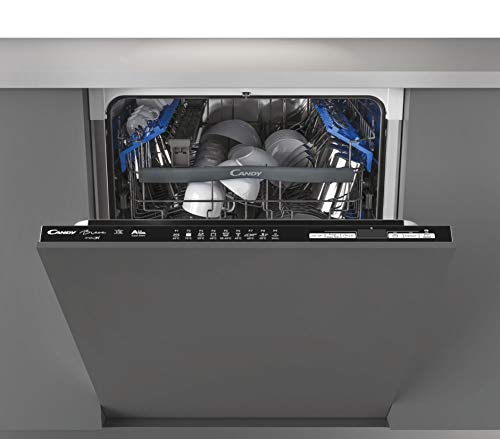
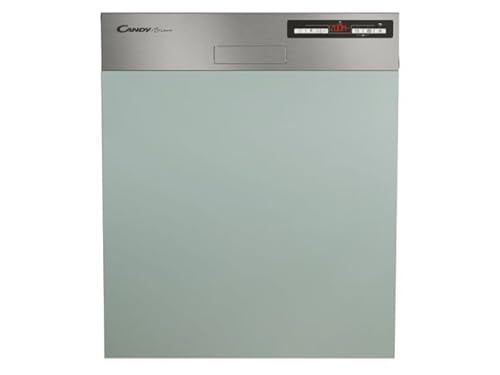
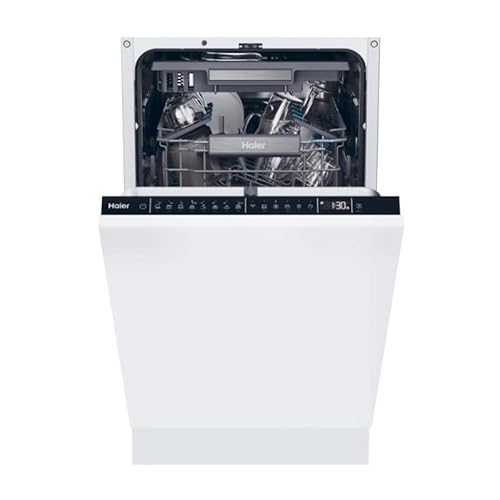
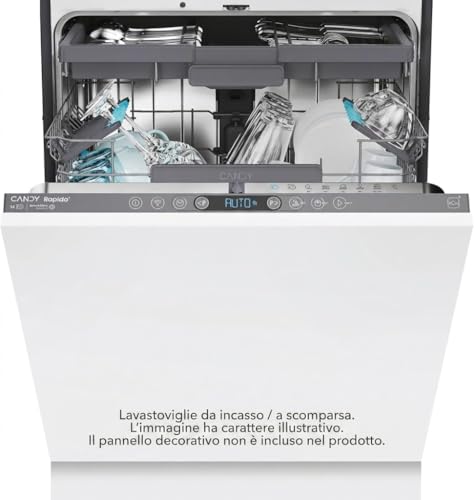
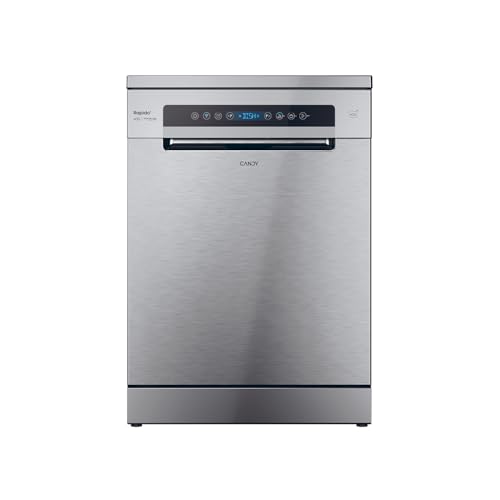
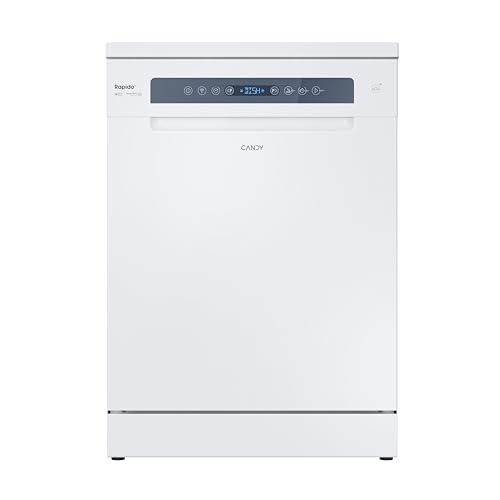
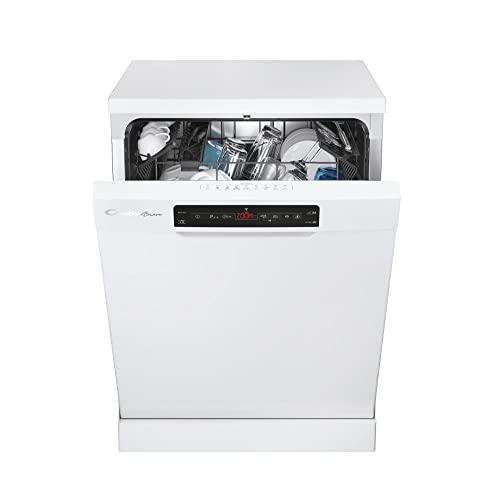
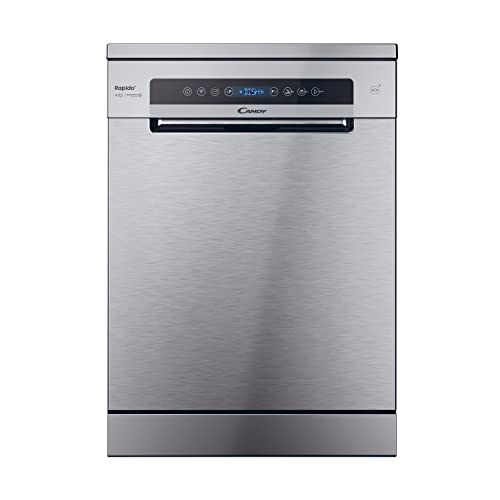
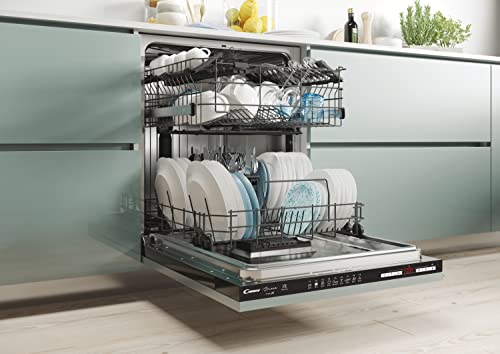
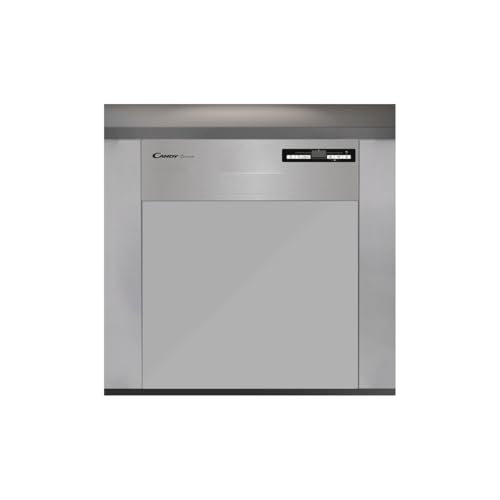
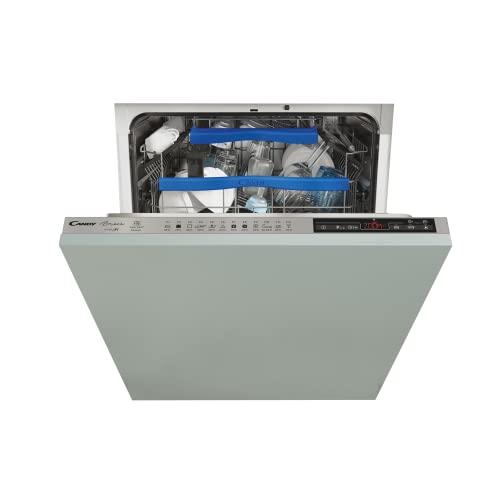
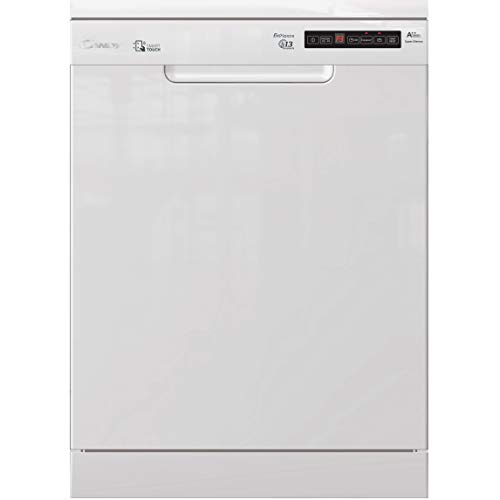
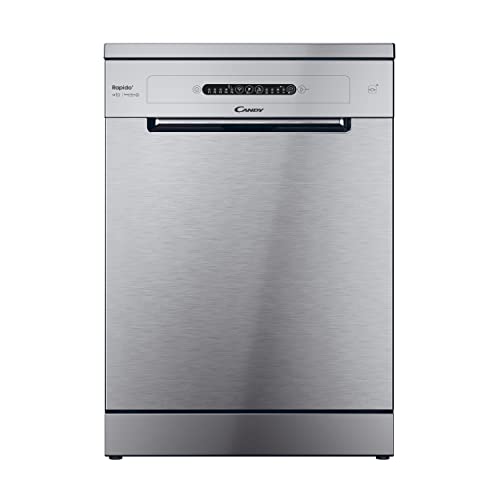
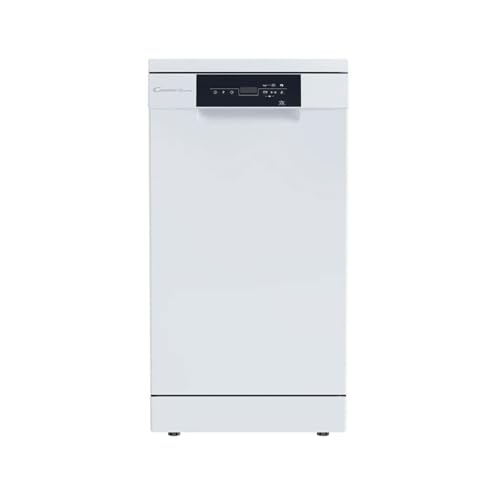
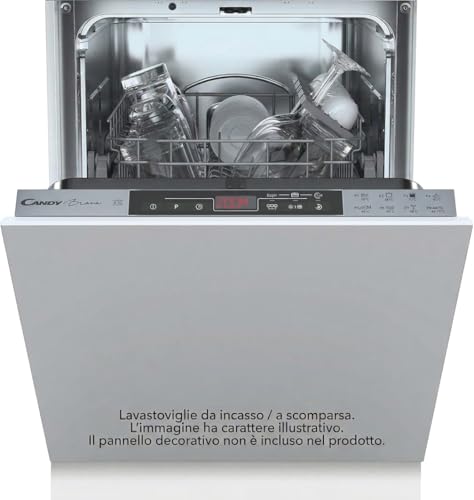
Are Candy dishwashers good?
Candy dishwashers have an average overall score of 8.3, ranking #7 among comparable dishwasher brands, and an average user rating of 8.7, placing them at #19 based on user reviews.
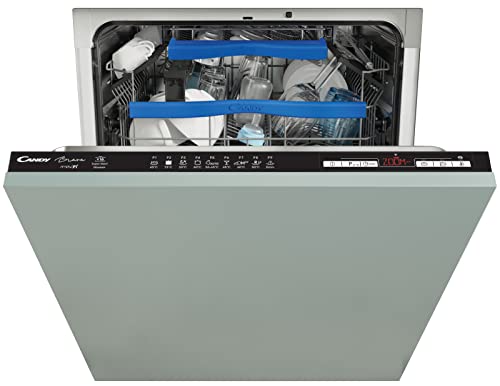
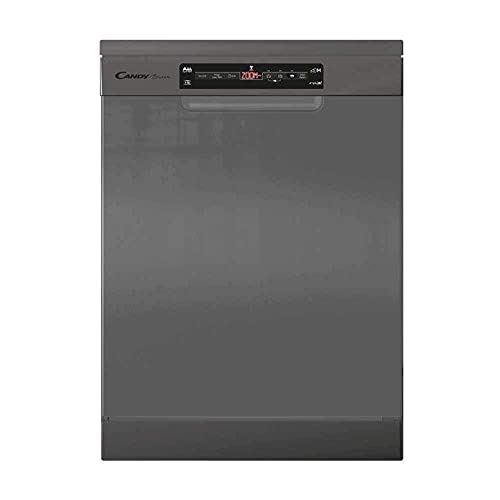
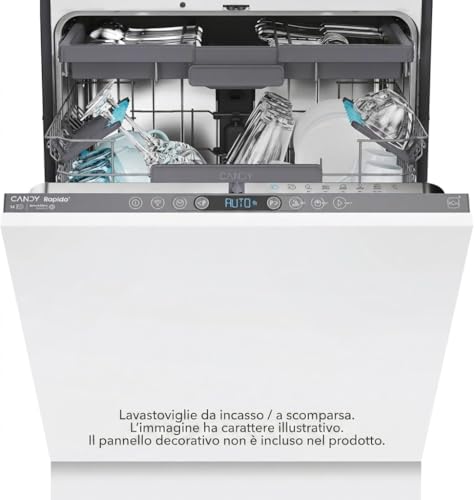
Candy dishwashers emphasize affordable capacity, rapid programs, and connected control. Selected Rapido and Maxi TUB models combine 13–16-place interiors, inverter motors, automatic door opening, short-cycle options, and hOn monitoring or diagnostics.
Candy dishwashers can be noisier and less refined in racks or drying than stronger mid-range alternatives. Buyers should verify rapid-cycle load limits, 42–49 dB noise differences, energy use, third-rack clearance, leak protection, and whether hOn remains useful after setup.
The chart below compares Candy with other dishwasher brands by average overall score.
[horizontal-chart-05146734171668731297071529236993497072053739813640]
What are the main advantages of Candy dishwashers?
The main advantages of Candy dishwashers are as follows:
- Low prices: Many models cost £220-£340, including high-capacity full-size options.
- Wide capacity choice: The range spans roughly 6–16 place settings and several installation formats.
- Connectivity: hOn app support is common and can provide remote status, program assistance, and maintenance reminders.
- Rapid washing: Brava models may include short Wash&Dry or Zoom-style cycles for lightly to normally soiled loads.
- Large interiors: Maxi Tub designs increase usable cavity space and can accommodate large cookware more easily.
What are the main disadvantages of Candy dishwashers?
The main disadvantages of Candy dishwashers are as follows:
- Low prices accompany a wide quality spread: Candy models commonly cost about £260-£390, with a midpoint near £310, but listings extend from approximately 240 to £640. The higher end should provide quieter operation, stronger racks, automatic drying, or better efficiency; capacity and hOn connectivity alone do not justify a £200-£300 premium.
- Eco cycles can approach five hours: Typical durations run about 205–298 minutes, or 3 h 25 min to 4 h 58 min, with a midpoint near 234 minutes. Rapido programs are much shorter for suitable soil, but their load, temperature, energy, and drying conditions differ from the label-reference Eco cycle.
- Noise is a common weakness: Candy products usually range around 44–51 dB, with 47 dB near the middle and some reaching 54 dB. A 47–51 dB machine is noticeably less suitable for evening open-plan use than alternatives around 40–43 dB.
- Efficiency and rack density vary: Eco consumption spans roughly 0.54–1.10 kWh, while capacity ranges from compact 6-place products to 16-place Maxi TUB models. High stated capacity can depend on dense rack placement, so buyers should test plate diameter, pan clearance, and third-level storage rather than count settings alone.
- hOn adds dependence without improving hydraulics: App functions require an account, Wi-Fi coverage, compatible software, and continuing support. Remote status and diagnostics can be useful, but they do not correct weak drying, 49 dB noise, limited folding tines, or poor local parts availability.

Who makes Candy dishwashers?
Candy dishwashers are made for Candy, the Italian-founded appliance brand owned by Haier Smart Home since 2019. European operations are managed through Haier Europe, while production location and legal supplier vary by model and market.
Check the rating plate, serial number, hOn compatibility, warranty issuer, and local service documentation. Similar Brava names can cover different capacities, motors, drying systems, and connectivity revisions.
How does the Candy Brava range differ from other Candy dishwashers?
Candy Brava dishwashers differ from simpler Candy models by combining faster programs, larger interiors, inverter drive, and connected controls on selected versions. Brava is a family name rather than one fixed specification, so every feature must be confirmed.
Higher Brava variants can provide 13–16 settings, Maxi Tub, Speed-Drive inverter motors, automatic door opening, hOn connectivity, and short Wash&Dry programs. Entry Candy models may instead use simpler racks, conventional motors, basic condensation drying, and fewer app functions.
Choose Brava when the exact model improves capacity, noise, drying, or rack flexibility—not merely because it adds Wi-Fi. A 44 dB Brava with class C efficiency is materially stronger than a 49 dB class E model; the app does not compensate for those differences.
How much do Candy dishwashers cost?
Candy dishwashers generally cost about £220-£650. Capacity, width, installation, noise, energy class, Maxi Tub, inverter motor, drying, and connectivity explain most differences.
Around £220-£300, expect compact, slim, or simpler 13-place machines, commonly around 47–51 dB and classes E–F. From £300-£430, 14–16 settings, hOn, inverter motors, better racks, automatic opening, and approximately 44–48 dB become more common.
Above about £430, look for classes A–C, approximately 43–45 dB, Maxi Tub, premium racks, stronger drying, or specialized integrated hardware. Do not pay £90 more solely for app control if noise and consumption remain unchanged.
The chart below shows the price distribution of Candy dishwashers.
[vertical-chart-00344959482220745634138651854205894857983395433364]
What should you consider when choosing a Candy dishwasher?
Before buying a Candy dishwasher, consider the following factors:
- Model family and capacity: Check whether the product belongs to a Rapido, Brava, or other current family and verify the complete model code. Candy often advertises 13–16 place settings: 13–14 generally suit 3–5 people and 15–16 suit 4–6 people, but usable capacity still depends on third-rack depth, tine spacing, and plate clearance.
- Rapid-cycle claims: Identify the exact load size, temperature, soil level, and drying included in each short program. A 35- or 49-minute cycle can be useful for lightly soiled dishes, but it should not replace an intensive 65–70 °C option for pans or a sensor-controlled daily cycle.
- Rack and spray layout: A practical test should cover upper-basket adjustment, folding supports, cutlery storage, stemware positions, rail stability, and whether oversized cookware blocks the arms. Large tubs require effective corner coverage, so check spray-arm design and any dedicated intensive zone rather than relying on volume alone.
- Drying system: The specification should state whether the model provides automatic door opening, basic condensation, or additional fan assistance. Compare plastic drying, Eco duration, disable controls, and steam clearance; rapid cycles frequently finish wetter than full programs.
- Noise and energy: Prefer approximately 42–44 dB for open-plan use. For Candy, about 0.61–0.76 kWh and 9–10.8 L per Eco cycle is reasonable; more than 0.95 kWh, 11 L, or 47–49 dB is a weaker choice for frequent evening use even when the purchase price is low.
- hOn connectivity: Confirm Wi-Fi band, account requirements, remote-start safety rules, notifications, downloadable cycles, and whether core settings remain available without the app. Connectivity is useful for diagnostics and monitoring but should not outweigh racks, drying, or service support.
- Installation and ownership: Verify freestanding or integrated dimensions, hinge and panel requirements, hose depth, leak protection, warranty exclusions, and local Haier-group service. Compare parts availability and the installed price with a technically similar Hoover or Haier model because related platforms can be sold under different badges.