
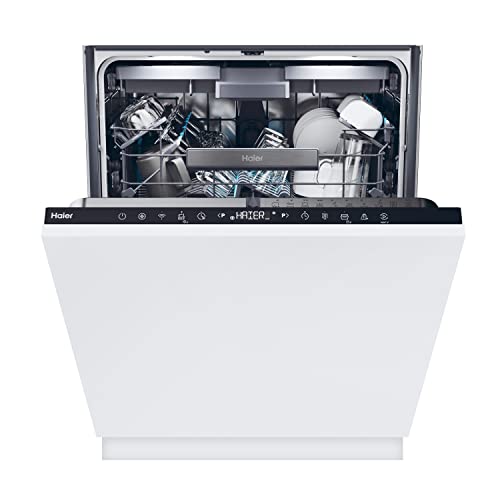
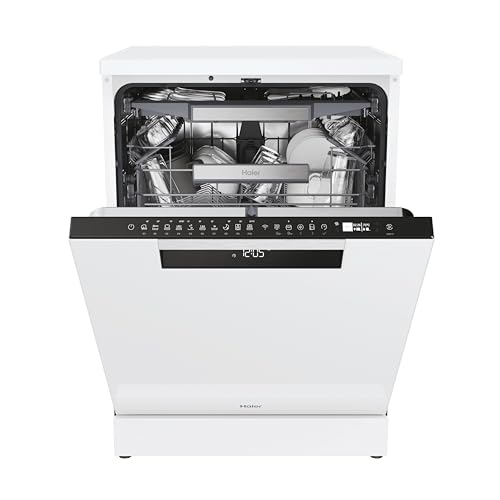
Are Haier dishwashers good?
Haier dishwashers have an average overall score of 8.6, ranking #4 among comparable dishwasher brands, and an average user rating of 8.2, placing them at #25 based on user reviews.
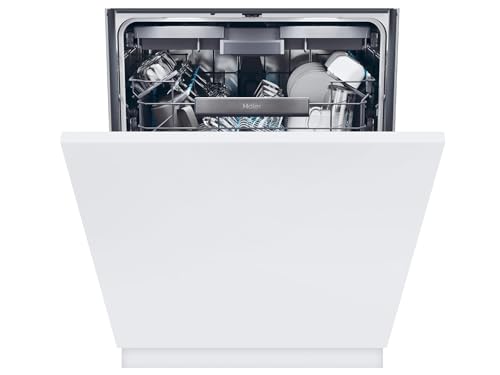
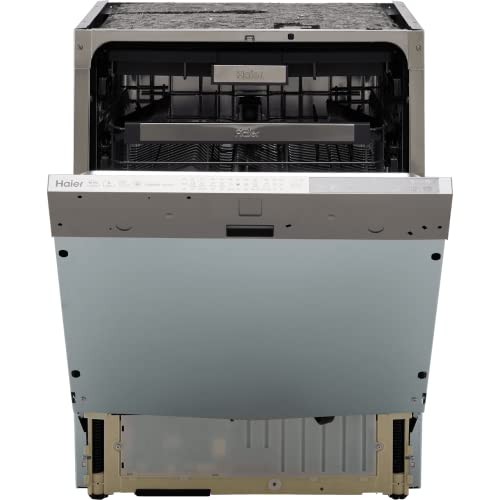
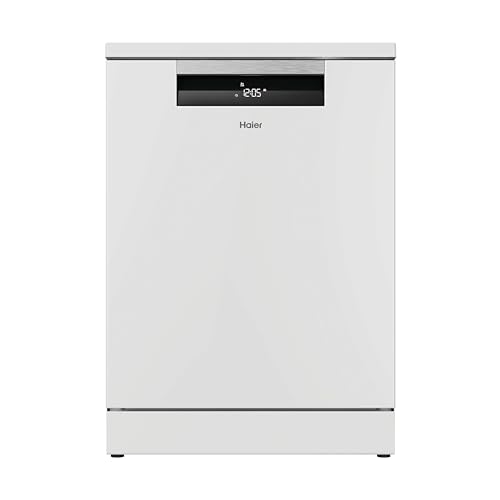
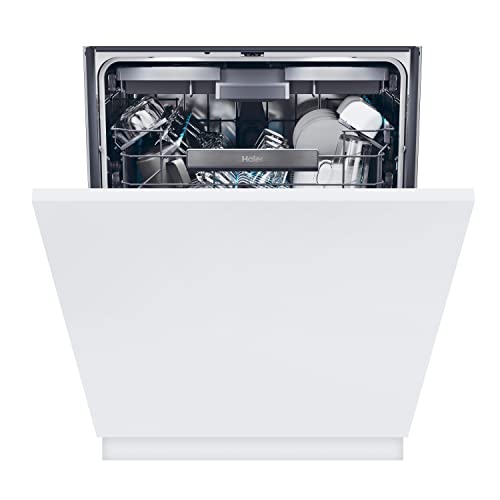
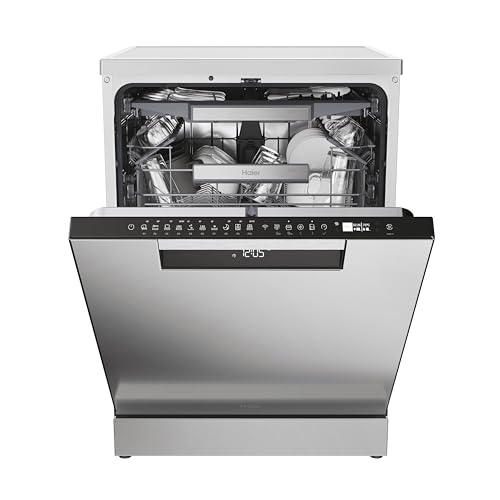
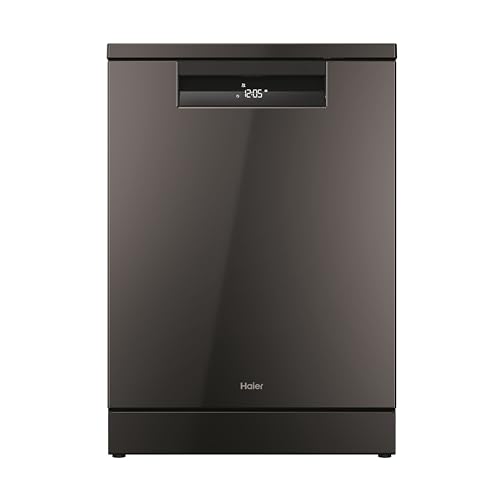
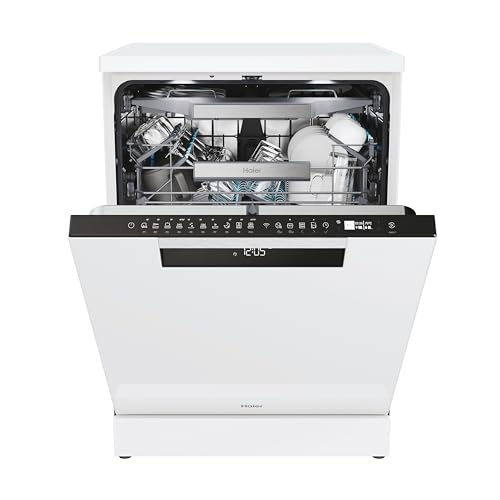
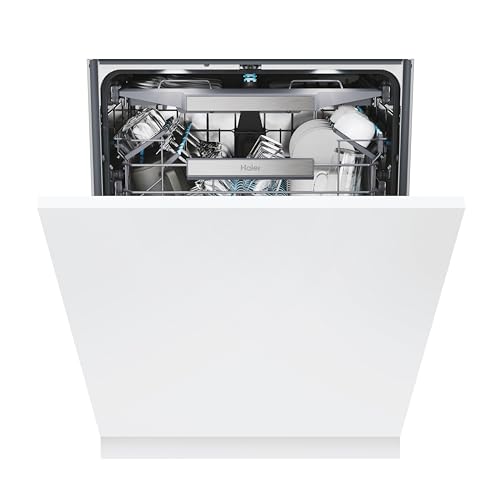
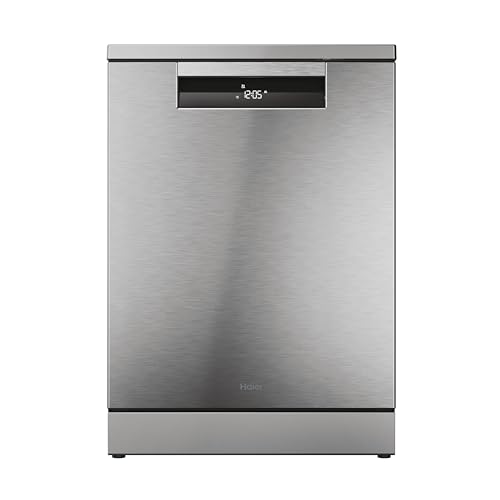
Haier dishwashers offer large 14–16-place tubs, efficient inverter operation, automatic opening, and hOn connectivity. Selected I-Pro Shine and X Series models add flexible third-level storage, intensive spray zones, and app-controlled programs.
Haier dishwashers have less uniform range and service coverage across countries than the largest European brands. Buyers should confirm local parts, basket geometry, 40–44 dB noise, hinge requirements, Eco consumption, and whether the high stated capacity fits real cookware.
The chart below compares Haier with other dishwasher brands by average overall score.
[horizontal-chart-05146734171668731297071529236993497072053739813640]
What are the main advantages of Haier dishwashers?
The main advantages of Haier dishwashers are as follows:
- Efficiency: Most models are classes A–C, with typical consumption around 0.65 kWh and 9.5 L.
- Capacity: Full-size layouts commonly hold 14–16 settings and may use Maxi Tub interiors.
- Quiet choices: Many products operate at 40–44 dB, suitable for open-plan kitchens.
- Automatic drying: Door opening appears on most models and helps release moisture from plastics.
- Connectivity: hOn is widely available for remote status, program assistance, maintenance, and energy information.
What are the main disadvantages of Haier dishwashers?
The main disadvantages of Haier dishwashers are as follows:
- Pricing contains extreme outliers: Haier models commonly sit around £340-£730, with a midpoint near £510, yet unusually specified or listed products can reach roughly £2,110. Buyers should compare the underlying rack, drying, noise, and energy specification because hOn or a large tub does not justify a four-figure premium by itself.
- Eco cycles are consistently long: Most durations cluster around 235–243 minutes, or 3 h 55 min to 4 h 03 min, while some reach about 298 minutes or 4 h 58 min. Rapid or app-selected cycles reduce turnaround for suitable loads but do not preserve the same standardized consumption and drying conditions.
- Noise and model equipment still vary: Most products fall around 40–45 dB, but outliers reach 49 dB, while spray zones, third racks, and automatic opening differ by series. A connected 49 dB machine is less suitable for open-plan evenings than a simpler 40–42 dB alternative.
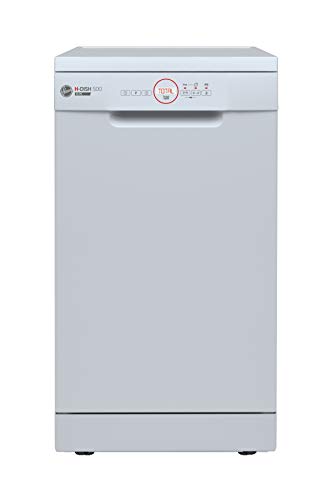
- Compact choice is weak: The range is dominated by 14–16-place full-size machines, with relatively few slim or countertop products. Maxi Tub increases internal space but cannot solve a 45 cm niche, and a dense 16-place arrangement may reduce practical clearance for pans or tall glasses.
- hOn and local service add uncertainty: The app requires an account, network coverage, compatible software, and continued support, while remote guidance does not increase spray pressure or drying directly. Dishwasher-specific parts and technician availability should be verified locally, especially for pumps, electronics, racks, and automatic-door mechanisms.

Who makes Haier dishwashers?
Haier dishwashers are made for Haier, a brand of Haier Smart Home, the Chinese home-appliance group. European sales, service, and connected platforms are managed through the group’s regional operations.
Manufacturing country and technical platform vary by model. Check the rating plate, full product code, hOn region compatibility, warranty issuer, and local service documents before purchase.
Which Haier dishwasher technologies improve washing and drying?
The following Haier dishwasher technologies can improve washing and drying:
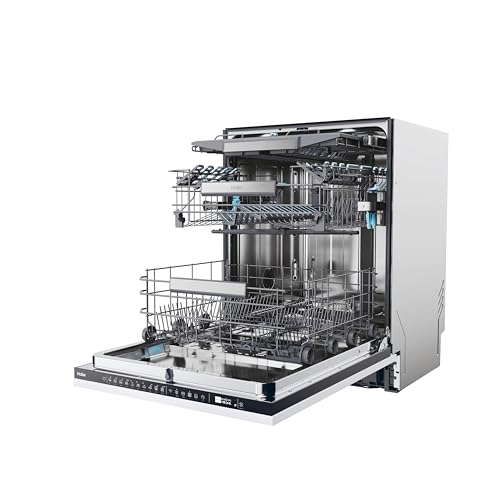
- Maxi Tub: A larger internal cavity increases usable loading volume while retaining the external footprint of many 60 cm machines. The extra space helps only when rack geometry keeps plates and cookware separated; overcrowding can still block spray, and buyers should check plate diameter, third-rack clearance, and arm movement.
- Automatic door opening: The latch releases near the end of the cycle so humid air escapes and residual heat continues drying without prolonged electrical heating. This can improve plastics efficiently, although bowls still need angled loading and the steam path, open-door projection, and disable control should suit the kitchen.
- Brushless inverter motor: Electronic speed control lets the circulation pump vary pressure through different cycle phases while reducing brush friction, vibration, and mechanical noise. It can support quieter adaptive washing, but cleaning still depends on spray geometry and program logic, and motor-warranty terms may exclude labour or other components.
- Flexible third rack: Adjustable sections hold cutlery, utensils, cups, or shallow items separately, freeing lower-rack space and reducing nesting that restricts water contact. The trade-off is reduced clearance below, so tall glasses, ladles, and pan handles should be tested with the rack in each position.
- AI-assisted programs: Soil, load, or turbidity inputs can alter time, temperature, and water, while hOn guidance may recommend a cycle based on the selected load. The available sensors and degree of automation vary by model, and Eco remains the standardized reference for label consumption rather than the fastest or strongest option.
- hOn connectivity: Compatible models add remote status, downloadable cycles, maintenance guidance, alerts, diagnostics, and energy monitoring. These tools can improve program selection and maintenance indirectly, but they do not increase spray pressure or drying performance, and core controls should remain usable if the app or network is unavailable.
How much do Haier dishwashers cost?
Haier dishwashers generally cost about £300-£860, excluding exceptional premium or anomalous listings. Series, class, capacity, racks, noise, drying, installation, and hOn equipment explain most differences.
Around £300-£430, expect core 14-place models, approximately 44–49 dB, simpler racks, and classes B–E. From £430-£650, classes A–C, 14–16 settings, 40–44 dB, automatic opening, Maxi Tub, third racks, and connectivity become more common.
Above about £650, look for I-Pro Shine equipment, class A efficiency, approximately 40–42 dB, premium racks, advanced controls, or specialized integration. A 0.20 kWh-per-cycle reduction saves about 56 kWh over 280 cycles.
The chart below shows the price distribution of Haier dishwashers.
[vertical-chart-15894411233370336811072597518061867426214056818985]
What should you consider when choosing a Haier dishwasher?
Before buying a Haier dishwasher, consider the following factors:
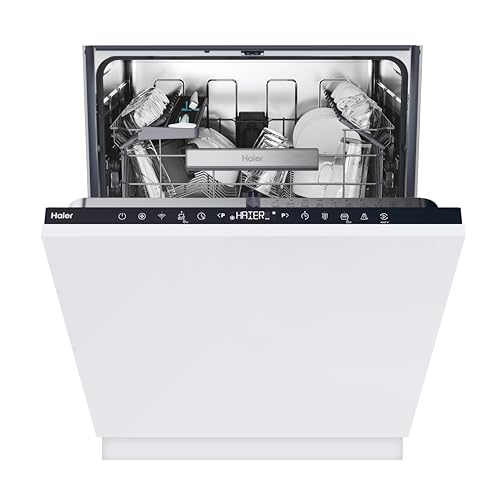
- Series and exact product: Compare the full code across I-Pro Shine, X Series, and other local ranges because capacity, hOn functions, noise, drying, and rack equipment vary. Confirm 45 or 60 cm width, freestanding or integrated construction, standard or tall tub, and the official energy label.
- Installation details: Measurements should cover niche height and depth, panel weight, hinge type, plinth clearance, hoses, ventilation, socket location, and open-door projection. Automatic door opening needs safe clearance from handles and moisture-sensitive worktops, while a large tub can require different internal or external dimensions.
- Usable 14–16-place capacity: A practical test should cover the third rack, upper-rack adjustment, folding tines, stemware supports, pan height, and rail stability with actual loads. Fourteen settings generally suit 3–5 people and 15–16 suit 4–6 people, but Maxi TUB or a high count is valuable only if spray arms rotate freely and the rack geometry suits bulky cookware.
- Wash system and programs: Check for soil sensing, intensive spray zones, a 65–70 °C program, rapid-cycle load limits, hygiene options, half-load behavior, and filter access. Confirm how water is distributed to corners and upper levels rather than judging performance by the number of program names.
- Drying performance: The specification should state whether the selected machine provides automatic door opening, fan assistance, or basic condensation. Compare plastic results, Eco duration, rinse-aid settings, disable controls, and residual water in deep containers; automatic opening is helpful but not equivalent to active premium drying.
- Noise and consumption: Approximately 40–44 dB is appropriate for open-plan use. For Haier, about 0.54–0.66 kWh and roughly 9.5 L per Eco cycle is a strong target; 0.76 kWh or 10.9 L is less efficient, even when the product remains within class A–C.
- hOn and ownership: Verify Wi-Fi requirements, account dependence, remote-start rules, diagnostics, offline controls, full leak protection, motor-warranty exclusions, and local parts support. Haier is strongest when efficient capacity and rack design stand on their own, with the app treated as an additional convenience.