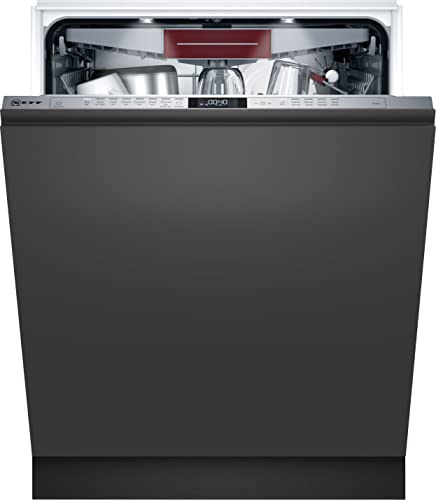

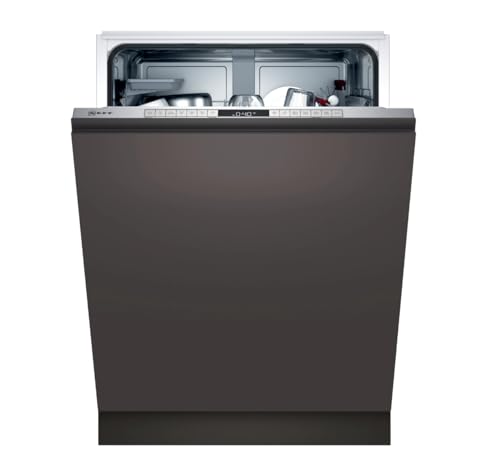
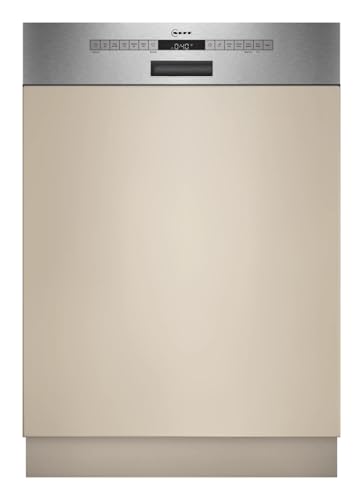
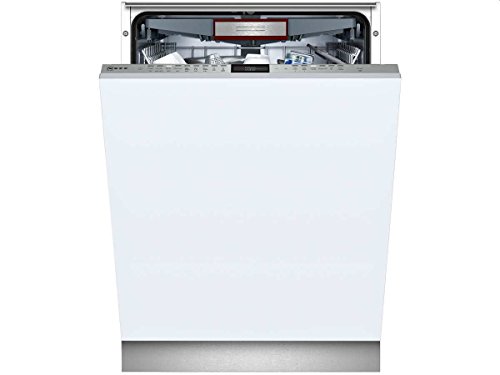
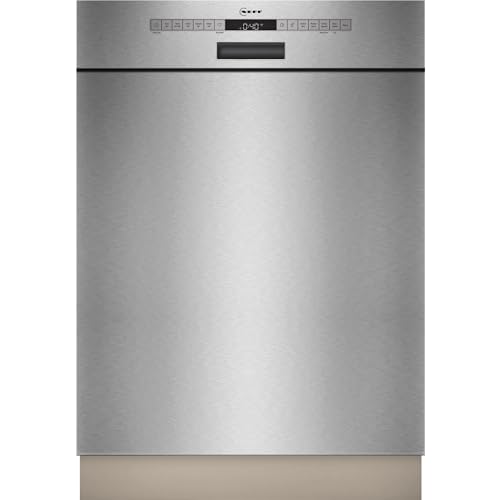
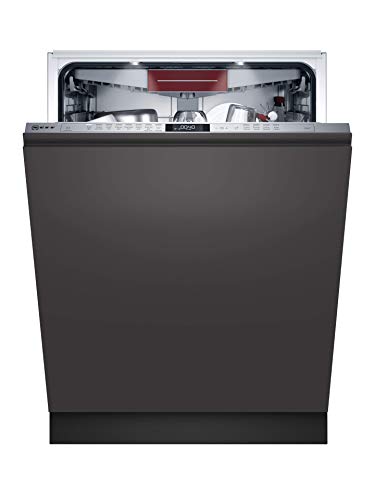
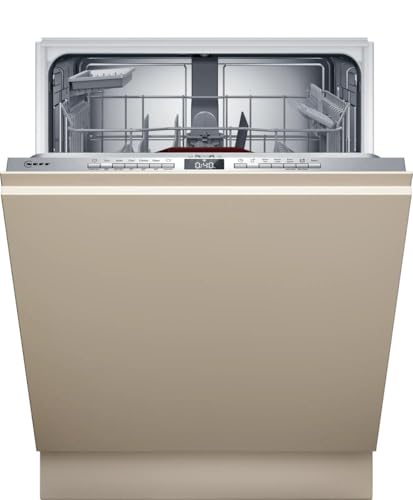
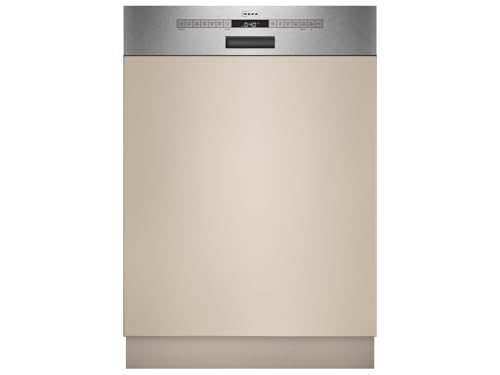
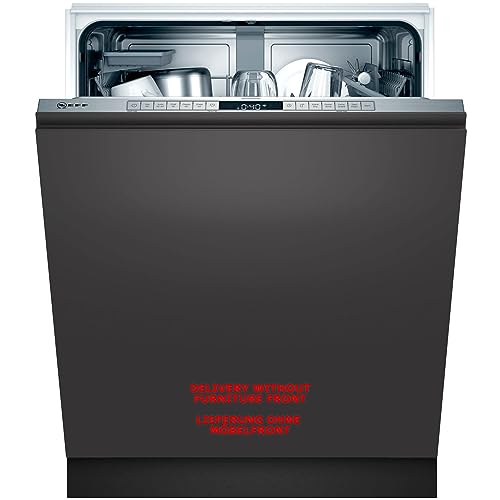
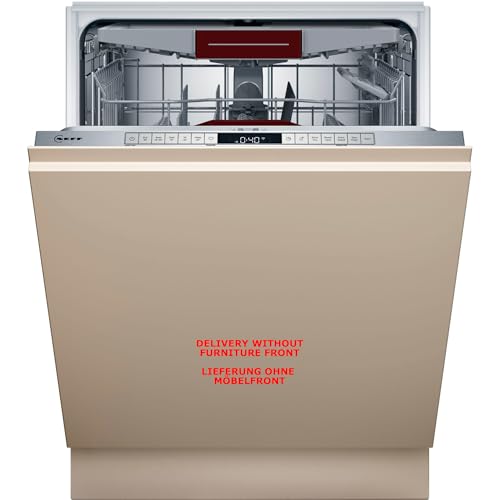
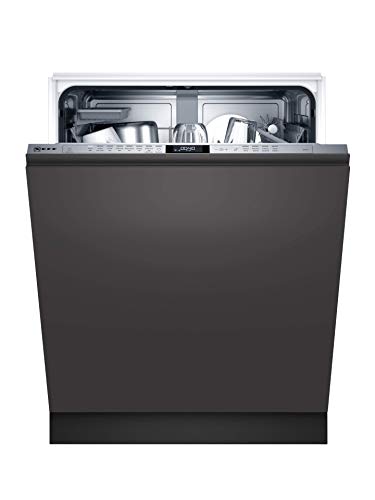
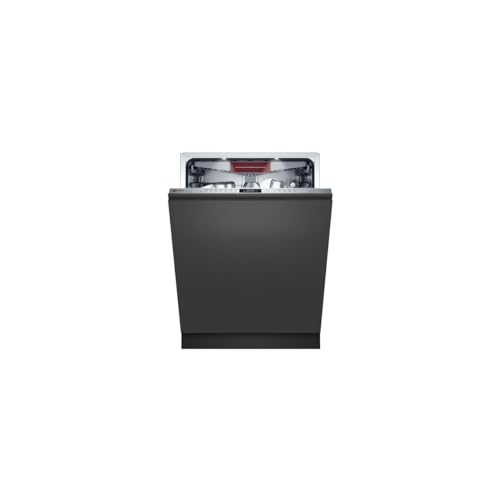
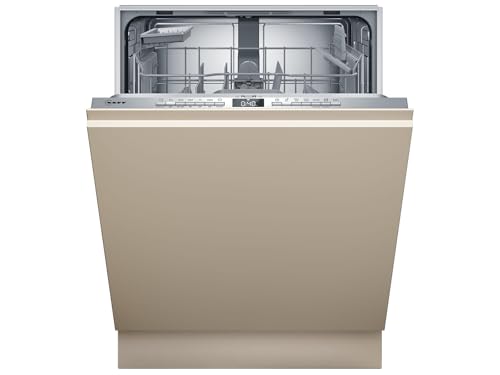
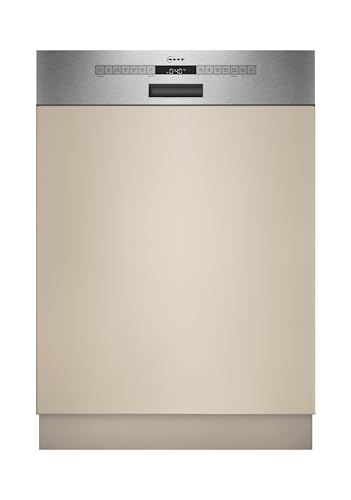
Are NEFF dishwashers good?
NEFF dishwashers have an average overall score of 8.5, ranking #5 among comparable dishwasher brands, and an average user rating of 9.1, placing them at #2 based on user reviews.
NEFF dishwashers suit fitted and handleless kitchens where installation details matter. Selected N 50 and N 70 models add Flex baskets, TimeLight, Home Connect, Door Open Assist, VarioHinge for restricted plinths, and Zeolith drying.
NEFF dishwashers share substantial BSH engineering with Bosch and Siemens and can cost more without cleaning better. Buyers should compare basket hardware, hinge geometry, drying, noise, energy, and controls across equivalent BSH models before choosing the NEFF design.
The chart below compares NEFF with other dishwasher brands by average overall score.
[horizontal-chart-05146734171668731297071529236993497072053739813640]
What are the main advantages of NEFF dishwashers?
The main advantages of NEFF dishwashers are as follows:
- Integrated-kitchen design: VarioHinge, Door Open Assist, concealed controls, and floor projection suit handleless or low-plinth furniture.
- Quiet operation: Most models sit around 42–44 dB, with many at 42 dB.
- Efficiency options: Classes A–C are common, and typical water use is about 9.2 L.
- Drying and racks: Selected models add Zeolith, automatic opening, Flex baskets, third drawers, and glass supports.
- Connectivity: Home Connect is present on nearly the entire range for status, program assistance, and diagnostics.
What are the main disadvantages of NEFF dishwashers?
The main disadvantages of NEFF dishwashers are as follows:
- The range is overwhelmingly integrated: NEFF focuses on fitted kitchens, with little meaningful freestanding choice and few compact alternatives. Buyers needing a movable 60 cm machine, a 45 cm freestanding model, or a countertop unit generally need another brand.
- Premium pricing is difficult to justify on cleaning alone: NEFF prices commonly sit around £430-£830, with a midpoint near £600 and upper listings reaching approximately £1,250. N 70 features such as VarioHinge, Door Open Assist, TimeLight, or Zeolith can cost several hundred euros more than a technically related Bosch or Siemens.
- Eco programs are long: Typical durations run about 235–295 minutes, or 3 h 55 min to 4 h 55 min, with 270 minutes or 4 h 30 min near the midpoint. Favourite or speed functions shorten compatible programs but can change energy, water, temperature, or drying results.
- Model codes hide important differences: Noise ranges around 42–46 dB and Eco consumption about 0.54–0.94 kWh, while baskets, hinges, Zeolith, projection, and Home Connect vary by E-number. Similar exterior controls therefore do not guarantee equal efficiency or equipment.
- Installation errors are expensive: Furniture-panel weight, plinth depth, VarioHinge travel, XXL height, ventilation, and floor-projection visibility must all match the cabinet. A premium NEFF can require panel or plinth modification when these details are checked only after delivery.

Who makes NEFF dishwashers?
NEFF dishwashers are made and marketed by BSH Hausgeräte GmbH, the Bosch Group appliance company that also produces Bosch and Siemens home appliances. NEFF remains a distinct brand focused heavily on built-in kitchen products.
Check the complete E-number, FD production code, rating plate, warranty, and market specification. These identify the exact platform, factory, hinge, rack, drying system, and service parts.
What are the main NEFF dishwasher series?
The main NEFF dishwasher series are as follows:
- N 30 models: Entry integrated products prioritize core programs, practical racks, and lower prices.
- N 50 models: Mid-range machines can add Home Connect, Flex baskets, better projection, quieter operation, and improved drying.
- N 70 models: Upper-range products more often include Zeolith, TimeLight, premium racks, stronger efficiency, and glass protection.
- N 90 models: Market-dependent flagships can combine class A performance, very low noise, Door Open Assist, emotionLight, and the most complete rack systems.
- XXL and VarioHinge variants: Taller tubs or sliding hinges solve specific furniture constraints and must match the niche exactly.
How much do NEFF dishwashers cost?
NEFF dishwashers generally cost about £390-£1,250. Series, hinge, installation height, energy class, noise, racks, drying, projection, and Home Connect explain most differences.
Around £390-£560, expect N 30/N 50 models with 13–14 settings, approximately 42–46 dB, core racks, and standard or automatic-door drying.
From £560-£770, classes B–D, quieter operation, better Flex baskets, TimeLight, and stronger drying become more common. This tier often provides the best balance when VarioHinge or Zeolith is not required.
Above about £770, look for N 70/N 90 equipment such as class A–B efficiency, Zeolith, Door Open Assist, emotionLight, premium racks, XXL tubs, or VarioHinge. Compare like-for-like Bosch and Siemens models before paying for styling alone.
The chart below shows the price distribution of NEFF dishwashers.
[vertical-chart-04107721474602138138096729009454632840331854467332]
What should you consider when choosing a NEFF dishwasher?
Before buying a NEFF dishwasher, consider the following factors:
- N-series and E-number: Use the full E-number to confirm N 30, N 50, N 70, or N 90 positioning, standard or XXL height, basket generation, drying, noise, and connectivity. Retail names can hide different hinges or racks, so verify the official specification and installation drawing.
- Fitted-kitchen geometry: Measurements should cover niche height and depth, panel dimensions and weight, plinth recess, hose route, ventilation, and full door swing. VarioHinge helps with low plinths, Door Open Assist supports handleless fronts, and TimeLight needs a visible floor area, but each feature is model-specific.
- Flex loading system: A practical test should cover Flex baskets, Flex Cutlery Drawer, RackMatic adjustment, folding tines, glassZone supports, rail movement, and pan clearance. A 13–14-place capacity generally suits 3–5 people, but it is meaningful only when the selected configuration holds the household’s stemware, plates, utensils, and cookware without spray obstruction.
- Programs and wash control: Priority should go to Auto 45–65 °C, Chef 70 °C or equivalent intensive washing, Eco, short-cycle options, Silence, Favourite, and Machine Care according to real use. Check whether intensive zones, extra drying, or speed functions can be combined with the chosen program.
- Drying technology: Distinguish normal heat-exchanger condensation, automatic door opening where offered, and Zeolith mineral drying. Zeolith can improve plastics and reduce energy use, but the purchase premium should be weighed against Eco duration, load mix, and expected annual cycles.
- Noise and efficiency: Target approximately 42–44 dB for open-plan rooms. For NEFF, about 0.54–0.74 kWh and 9–9.5 L per Eco cycle is a good range; more than 0.85 kWh is relatively high, and a higher N-series does not automatically improve efficiency.
- BSH ownership comparison: Confirm AquaStop terms, Home Connect support period, local service, rack and hinge spares, and installation cost. Compare technically equivalent Bosch and Siemens models because the same group can offer similar hydraulics with different baskets, controls, styling, and prices.