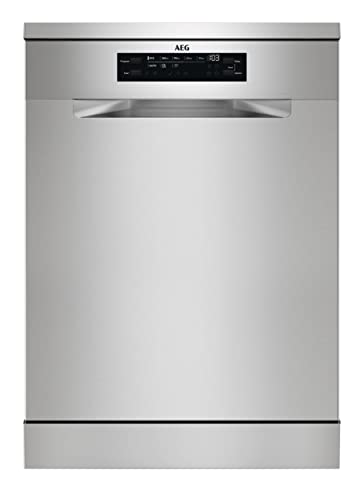
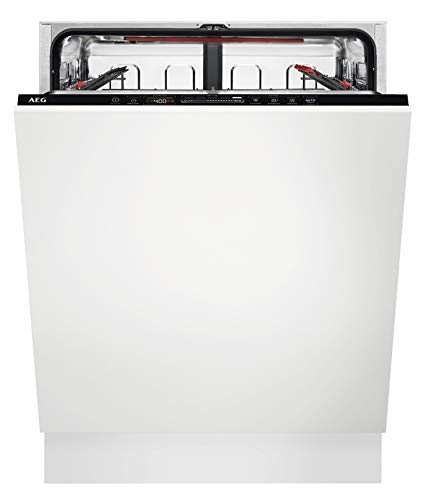
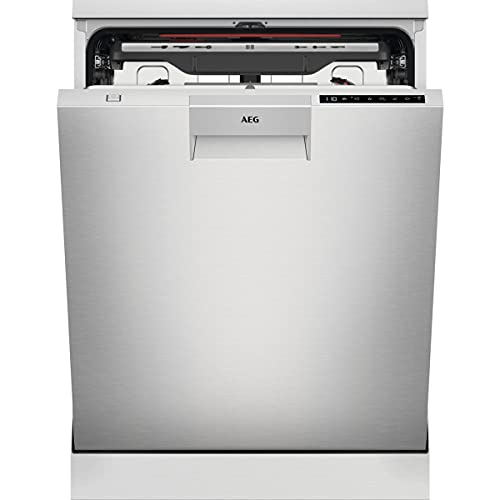
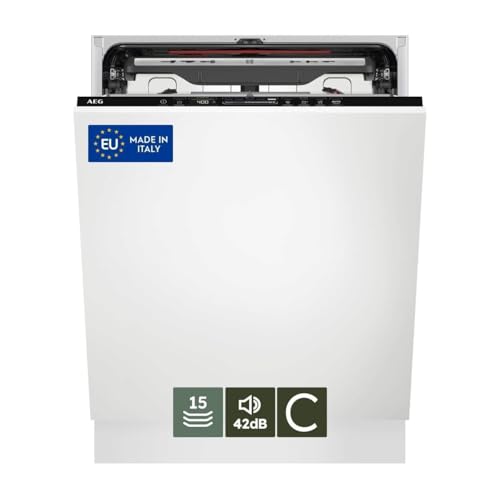
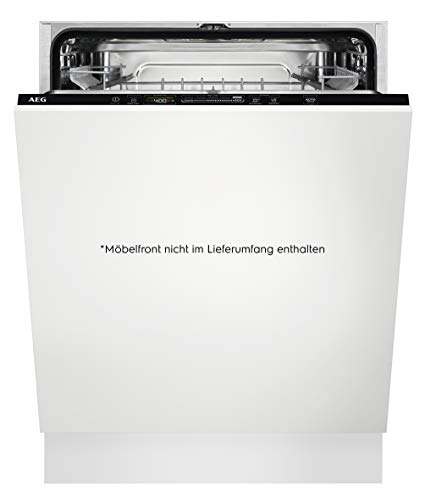
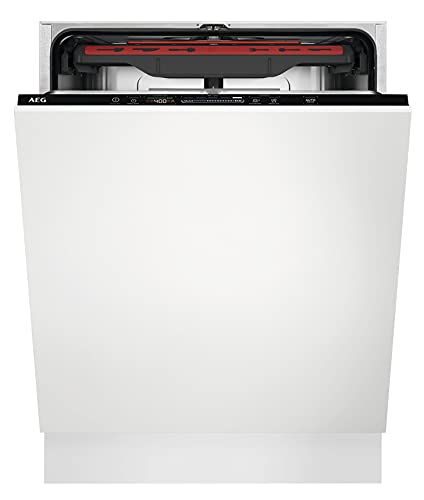
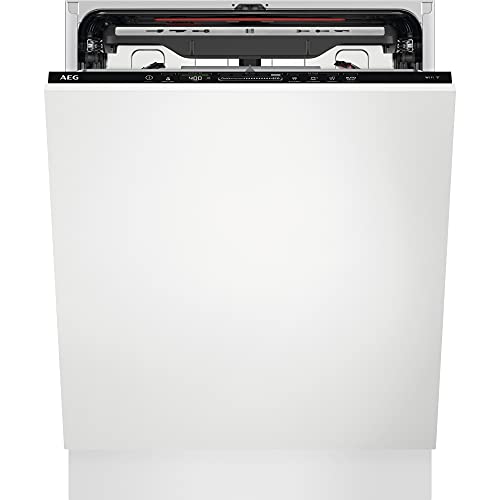
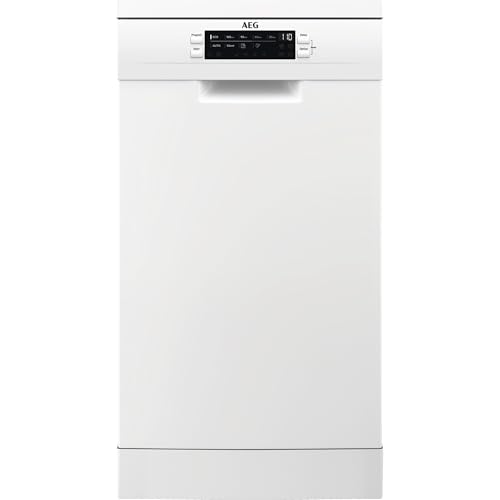
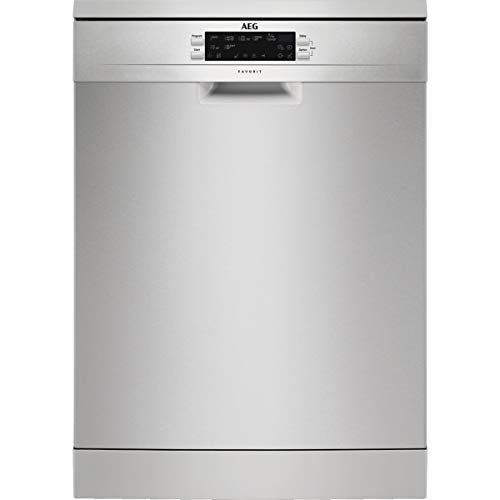
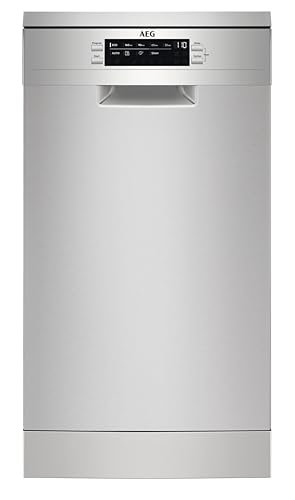
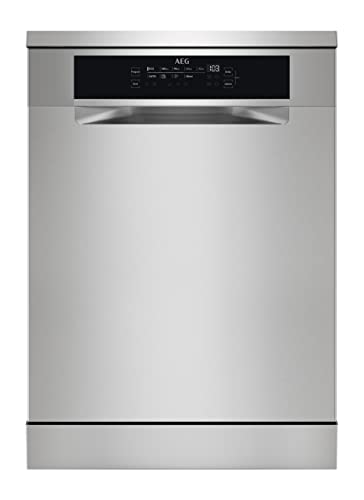
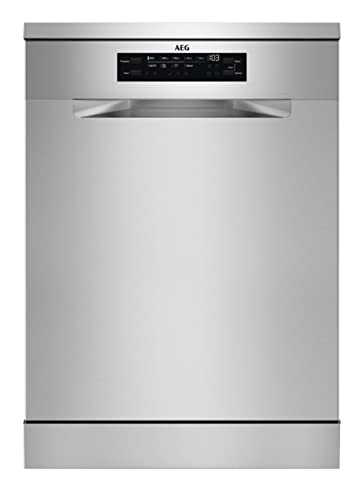
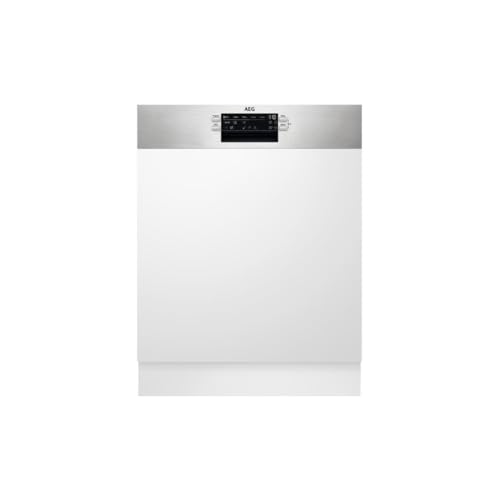
Are AEG dishwashers good?
AEG dishwashers have an average overall score of 7.7, ranking #19 among comparable dishwasher brands, and an average user rating of 8.8, placing them at #15 based on user reviews.
AEG dishwashers suit integrated kitchens where loading, glass care, and drying matter. Selected series combine SatelliteClean spray coverage, AirDry opening, MaxiFlex utensil storage, ComfortLift lower-rack raising, GlassCare supports, and sliding-hinge installation.
AEG dishwashers do not include those premium mechanisms uniformly, and ComfortLift adds cost and complexity. Buyers should compare basket hardware, hinge compatibility, 38–46 dB noise, energy use, and equivalent Electrolux models before paying for the higher positioning.
The chart below compares AEG with other dishwasher brands by average overall score.
[horizontal-chart-05146734171668731297071529236993497072053739813640]
What are the main advantages of AEG dishwashers?
The main advantages of AEG dishwashers are as follows:
- AirDry: Automatic door opening improves moisture release with limited additional energy and helps plastic drying.
- SatelliteClean: A multi-directional spray arm improves coverage around mixed and crowded loads.
- Glass care: SoftGrips, SoftSpikes, dedicated glass programs, and stable upper racks protect stems and delicate items.
- Loading: MaxiFlex drawers and ComfortLift on selected models improve cutlery organization or lower-rack ergonomics.
- Quiet efficient choices: The range includes class A–B models and products around 37–42 dB.
What are the main disadvantages of AEG dishwashers?
The main disadvantages of AEG dishwashers are as follows:
- Premium pricing rises quickly: AEG prices commonly fall around £380-£810, with a midpoint near £550 and upper listings around £1,040. ComfortLift, MaxiFlex, GlassCare, 38–41 dB operation, or class A efficiency can add £200-£300 over a simpler related Electrolux model, so the mechanism or rack benefit should be used regularly.
- Eco cycles take about four hours: Typical durations are approximately 237–270 minutes, or 3 h 57 min to 4 h 30 min, with some reaching 310 minutes or 5 h 10 min. Time-saving options can shorten compatible programs, but they may raise temperature or consumption and do not reproduce Eco figures in less time.
- Efficiency is not consistently premium: Eco use ranges roughly 0.49–1.03 kWh and water 7–11 L, while noise spans about 37–49 dB. An expensive AEG can therefore still be class D–E or 46–49 dB, so price and series position should not replace an energy-label comparison.
- ComfortLift adds mechanical complexity: The raising lower rack improves ergonomics but introduces a loaded linkage, locks, and additional replacement parts. Buyers should test the lift with plates and pans, check reduced clearance or weight limits, and decide whether the convenience outweighs the higher purchase and repair cost.
- Installation and features remain model-specific: AirDry, sliding hinges, floor projection, SatelliteClean, MaxiFlex, and connected controls vary by exact product number. Automatic opening needs steam and door clearance, while closely related Electrolux alternatives may offer similar washing at a lower price.

Who makes AEG dishwashers?
AEG home appliances are made and marketed by Electrolux Group, the Swedish appliance company headquartered in Stockholm. AEG originated as a German electrical brand, but current household appliances use the brand within Electrolux Group’s portfolio.
Factory location and technical platform vary by model and market. Check the product number, rating plate, warranty issuer, and local specification because similar AEG series names can contain different hinges, racks, noise levels, and controls.
What are the main AEG dishwasher series?
The main AEG dishwasher series are as follows:
- 5000-series models: Core mid-range machines emphasize AirDry, practical racks, and straightforward programs.
- 6000 SatelliteClean models: Multi-directional spray coverage is the defining upgrade for mixed loads.
- 7000 GlassCare models: These add stronger stemware support, SoftGrips or SoftSpikes, and more refined rack protection.
- 8000 ComfortLift models: The lower basket rises toward waist height for easier loading and unloading.
- 9000 premium models: Market-dependent flagships can combine ComfortLift, advanced spray coverage, connectivity, premium displays, and quieter operation.
How much do AEG dishwashers cost?
AEG dishwashers generally cost about £390-£1,000. Series, width, installation, noise, energy class, SatelliteClean, racks, ComfortLift, and connectivity explain most differences.
Around £390-£520, expect core 5000/6000 models with AirDry, 13–14 settings, and approximately 44–46 dB. These are strongest when the buyer wants dependable automatic drying without premium rack mechanisms.
From £500-£700, SatelliteClean, MaxiFlex, GlassCare, classes B–D, and roughly 42–44 dB become more common. Compare whether the upgrade improves the actual rack and spray system rather than only the series label.
Above about £690, look for ComfortLift, classes A–B, 37–42 dB operation, premium projection, Wi-Fi, or specialized integrated hinges. A £260 ComfortLift premium should be justified by frequent ergonomic benefit, not expected cleaning gains.
The chart below shows the price distribution of AEG dishwashers.
[vertical-chart-16950427394399631541174161179879345166510343984491]
What should you consider when choosing an AEG dishwasher?
Before buying an AEG dishwasher, consider the following factors:
- Series and exact specification: Compare the complete product number because SatelliteClean, ComfortLift, MaxiFlex, GlassCare, noise, and energy class are not standard across all AEG machines. Confirm width, standard or XXL height, and freestanding, fully integrated, or semi-integrated construction.
- Installation system: Measurements should cover the niche, panel weight, plinth depth, hose route, ventilation, socket position, and open-door projection. Verify fixed or sliding hinges and whether AirDry opening clears the worktop; handleless kitchens may also require a specific push-opening or projection solution.
- Basket engineering: A practical test should cover MaxiFlex utensil storage, QuickLift adjustment, folding tines, SoftGrips, SoftSpikes, rail stability, and tall-plate clearance. A 45 cm 9–10-setting AEG generally suits 1–3 people, a 13–14-setting model suits 3–5 people, and 15 settings suit 4–6 people or frequent entertaining. ComfortLift can raise the lower rack to waist height, but buyers should assess its loaded movement, reduced simplicity, and price premium.
- Wash hydraulics: Confirm whether SatelliteClean and an intensive zone are present and how water reaches the corners of a full 14-place load. Require soil sensing, an automatic cycle, a 65–70 °C intensive option, glass protection, and accessible filters rather than counting program names.
- Drying results: AirDry opens the door automatically and generally improves low-energy drying, but plastics and concave items can retain water. Check disable settings, Eco duration, rinse-aid adjustment, steam exposure, and whether the selected premium model uses any additional drying assistance.
- Noise and efficiency: Approximately 42–44 dB suits most open kitchens, while 38–41 dB may justify a premium near living or sleeping areas. For AEG, about 0.54–0.82 kWh and 9.9 L per Eco cycle is a good range; more than 0.92 kWh or 11 L is relatively high regardless of series name.
- Ownership and group alternatives: Confirm full leak protection, inverter warranty conditions, local service, rack-part cost, and electronic-module availability. Compare an equivalent Electrolux model at the component level because related platforms can differ mainly in racks, controls, styling, or included premium mechanisms.