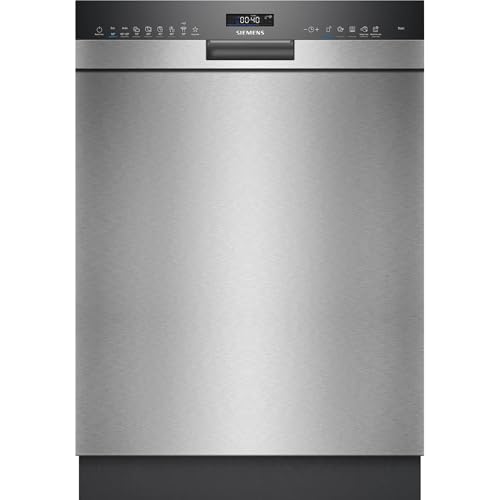

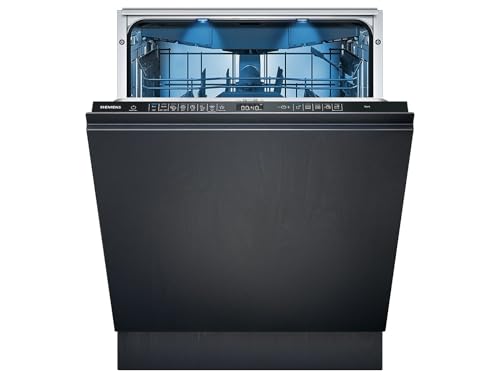
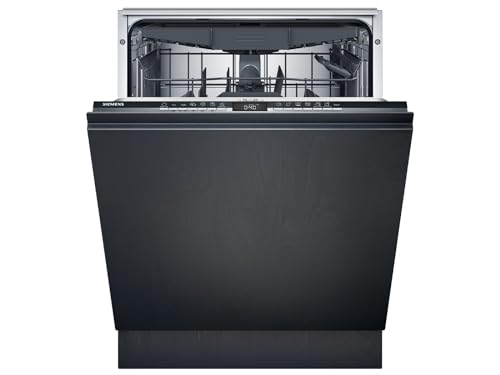
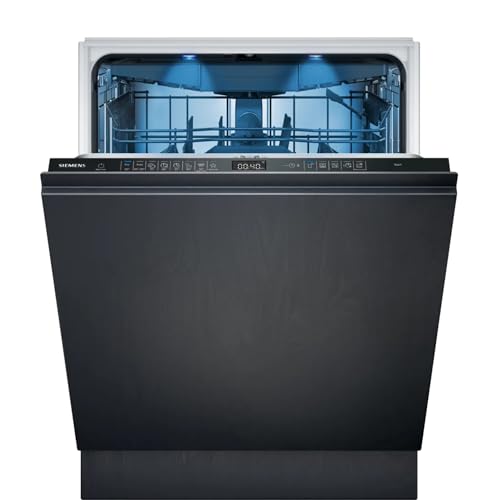
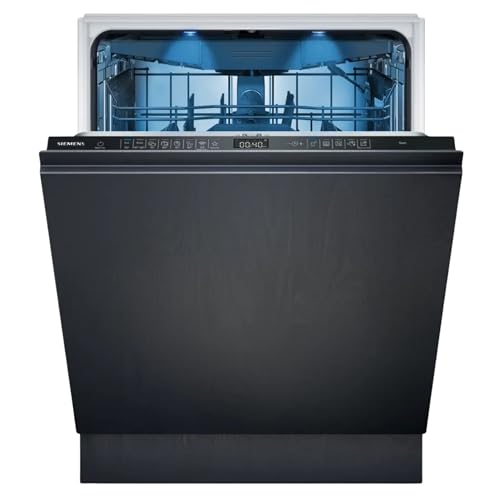
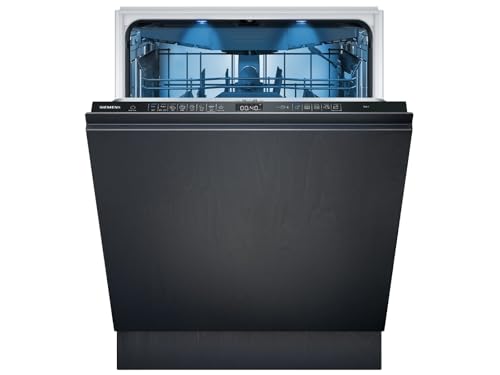
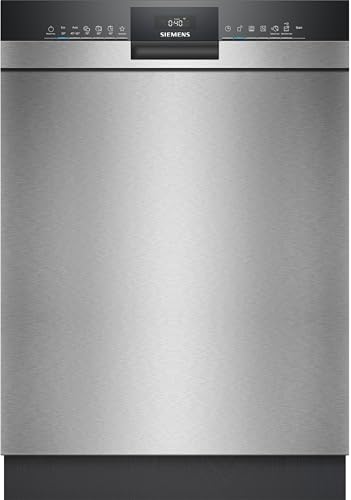
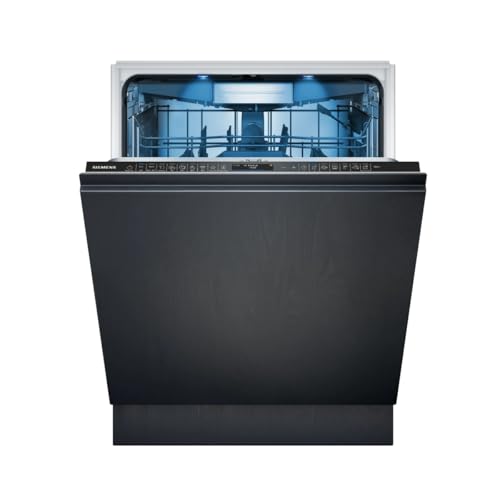
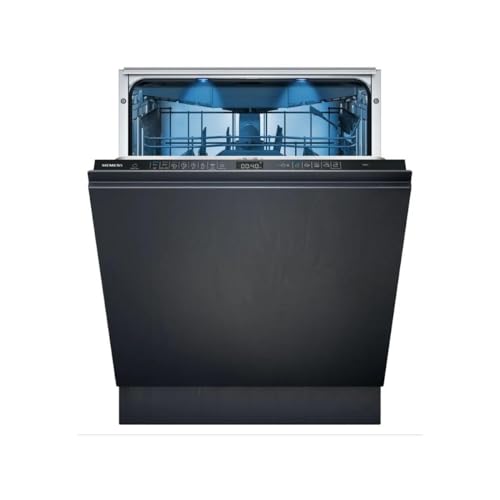
Are Siemens dishwashers good?
Siemens dishwashers have an average overall score of 8.9, ranking #2 among comparable dishwasher brands, and an average user rating of 9.1, placing them at #3 based on user reviews.
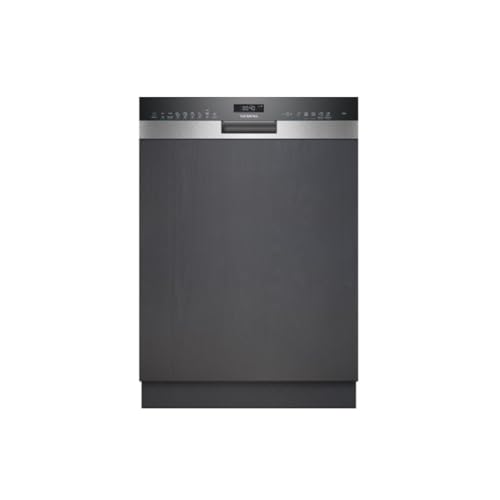
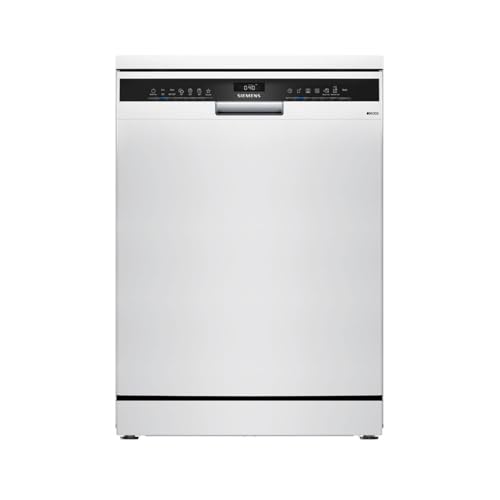
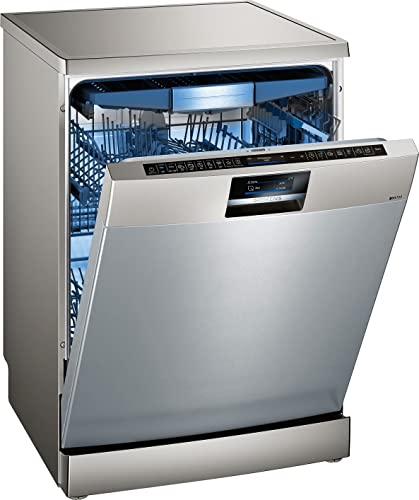
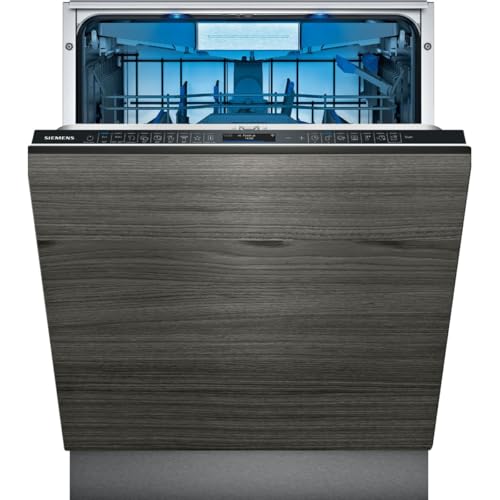
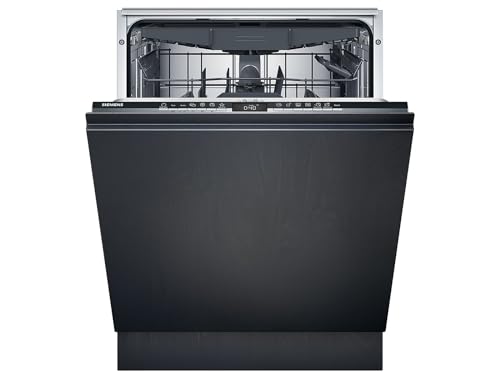
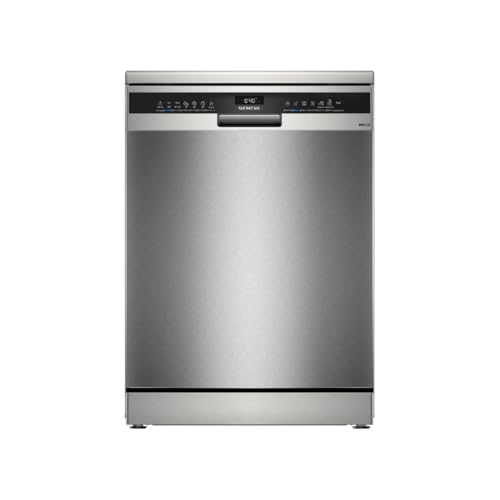
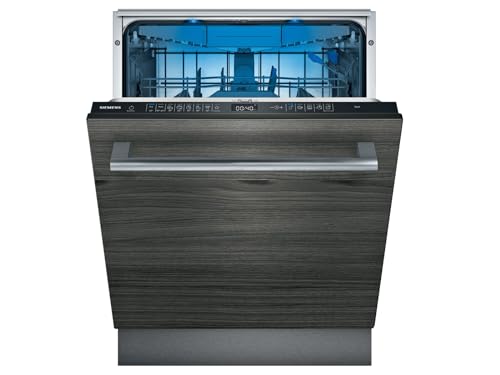
Siemens dishwashers combine quiet operation, integrated-kitchen features, and connected control. Selected iQ models add varioFlex or flexComfort baskets, varioDrawer, Home Connect, timeLight, glassZone, and Zeolith drying.
Siemens dishwashers share substantial BSH engineering with Bosch, so styling or series position does not guarantee better cleaning. Buyers should compare rack generation, drying, hinge type, noise, energy use, and price with the closest Bosch equivalent.
The chart below compares Siemens with other dishwasher brands by average overall score.
[horizontal-chart-05146734171668731297071529236993497072053739813640]
What are the main advantages of Siemens dishwashers?
The main advantages of Siemens dishwashers are as follows:
- Quiet operation: A large part of the range operates around 40–44 dB, with selected models near 38 dB.
- Efficiency: Classes A–C are widely represented, and typical water use is around 9.2 L per Eco cycle.
- Drying options: autoOpen dry and Zeolith mineral drying address moisture, particularly on plastics.
- Flexible loading: flexComfort, varioDrawer, rackMatic, glassZone, and folding supports appear on selected models.
- Connected integration: Home Connect, timeLight, emotionLight, and remote functions suit modern fitted kitchens.
What are the main disadvantages of Siemens dishwashers?
The main disadvantages of Siemens dishwashers are as follows:
- Premium models are expensive: Siemens prices commonly span about £400-£890, with a midpoint near £590 and top listings around £1,260. Zeolith drying, flexComfort baskets, glassZone, timeLight, and Home Connect can place an iQ500 or iQ700 several hundred euros above a functionally similar Bosch platform.
- Eco duration ranges from long to very long: Typical cycles take about 195–295 minutes, or 3 h 15 min to 4 h 55 min, with 235 minutes or 3 h 55 min near the midpoint. varioSpeed Plus shortens compatible programs, but faster operation can increase energy or water use and should not be compared directly with Eco label values.
- Efficiency varies across visually similar products: Eco consumption spans roughly 0.51–1.05 kWh and noise about 38–48 dB, although many models sit near 0.65 kWh and 42 dB. A connected or premium-looking Siemens can therefore be less efficient or louder than a cheaper product with a different code.
- BSH overlap complicates value: Bosch and NEFF alternatives can share motors, hydraulics, drying systems, and rack components while using different controls or styling. Buyers should compare the complete specification because paying £100-£300 more for interface design rarely changes core cleaning.
- Integrated features require exact planning: VarioHinge, fixed hinges, XXL tubs, Door Open Assist, timeLight, and furniture-panel limits vary by E-number. A floor projection can be hidden by a plinth or island, while an incorrect hinge can make an otherwise strong machine unsuitable for the kitchen.

Who makes Siemens dishwashers?
Siemens home-appliance dishwashers are made and marketed by BSH Hausgeräte GmbH under licence from Siemens AG. BSH is a Bosch Group company and also produces Bosch-branded appliances, which explains some shared technologies and platforms.
Factory, hinge, feature set, and service code vary by model and market. Check the complete E-number, FD production code, rating plate, warranty, and local specification rather than assuming two BSH models are identical.
What are the main Siemens dishwasher series?
The main Siemens dishwasher series are as follows:
- iQ100: Entry models prioritize core programs, practical racks, and lower prices, with fewer premium displays or drying systems.
- iQ300: Mid-range models can add Home Connect, varioSpeed Plus, better rack adjustment, and quieter operation.
- iQ500: Upper-mid-range products more often include flexComfort baskets, glassZone, timeLight, stronger efficiency, and advanced drying.
- iQ700: Premium models can combine Zeolith, emotionLight, highly flexible racks, class A efficiency, very low noise, and full connectivity.
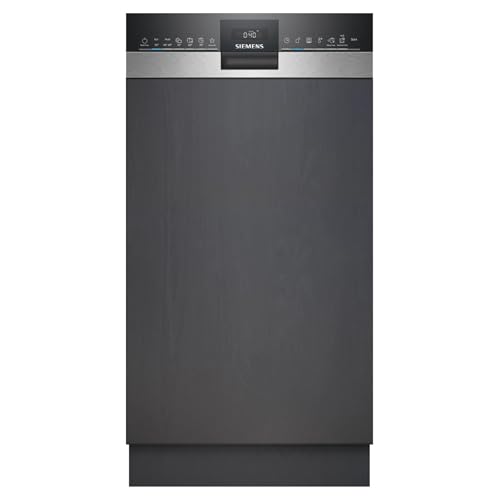
- Compact and slim variants: Countertop or 45 cm products trade capacity for space and do not necessarily mirror full-size iQ features.
How much do Siemens dishwashers cost?
Siemens dishwashers generally cost about £390-£1,300, excluding isolated clearance or erroneous offers. Series, width, installation, class, noise, racks, drying, display, and Home Connect explain most differences.
Around £390-£560, expect iQ100/iQ300 models with 9–14 settings, standard or automatic-door drying, and approximately 42–46 dB. From £560-£770, classes B–D, better racks, Home Connect, timeLight, glassZone, and roughly 40–44 dB become more common.
Above about £770, look for iQ500/iQ700 equipment such as class A–B efficiency, 38–42 dB, Zeolith, flexComfort, emotionLight, premium projection, or specialized hinges. Compare like-for-like Bosch alternatives before paying for design alone.
The chart below shows the price distribution of Siemens dishwashers.
[vertical-chart-01874661466952650351107385408895454188173573139975]
What should you consider when choosing a Siemens dishwasher?
Before buying a Siemens dishwasher, consider the following factors:
- Series, E-number, and installation: Verify the iQ family, complete E-number and market suffix, 45 or 60 cm width, standard or XXL height, freestanding, built-under, semi-integrated, or fully integrated format, and fixed or sliding hinge. Measure niche, furniture-panel weight, plinth, hoses, ventilation, door projection, timeLight visibility, and autoOpen clearance rather than relying on the series name.
- flexComfort and rack layout: A practical test should cover rackMatic upper adjustment, varioDrawer or third-level storage, folding tines, glassZone, stemware supports, pan handles, plate diameter, and tray height. A 14-place Siemens generally suits 3–5 people, while 15–16 settings better suit 4–6 people or regular entertaining; the label still does not show whether the exact flexComfort layout fits the household’s cookware or whether premium coated supports provide useful value.
- Washing and speed functions: Compare Auto, Eco, Intensive, varioSpeed Plus, hygiene, quiet, Machine Care, intensiveZone, and favorite settings on the exact model. varioSpeed Plus reduces time by increasing washing intensity or resource use, while a long Eco cycle remains the relevant energy-label reference.
- Drying technology: Distinguish heat-exchanger or condensation drying, autoOpen dry, extra-dry heat, and Zeolith mineral drying. Zeolith is most valuable for plastics and mixed loads, but buyers should compare cycle time, energy, maintenance guidance, and price with a similarly equipped Bosch or lower Siemens series.
- Noise, status, and open-plan use: Aim near 40–44 dB for living-adjacent kitchens and verify the normal Eco rating rather than only a Silence program. Fully integrated models should provide a suitable timeLight, infoLight, end signal, or Home Connect notification, and correct panel installation is essential to prevent resonance.
- Efficiency and Home Connect: For Siemens, about 0.54–0.65 kWh and around 9 L per Eco cycle is a strong target; more than 0.90 kWh or 9.5–11.7 L is relatively high. A 0.20 kWh difference equals about 56 kWh over 280 cycles; Home Connect should remain secondary to those figures and full offline controls.
- AquaStop, service, and cross-brand value: Verify the exact AquaStop coverage, warranty conditions, water-softener adjustment, filter access, rack and pump parts, local BSH service, and installation cost. Compare equivalent Bosch and NEFF E-number families because shared platforms can deliver similar cleaning and drying with different styling, hinges, or prices.