
Are Hotpoint dishwashers good?
Hotpoint dishwashers have an average overall score of 8.2, ranking #13 among comparable dishwasher brands, and an average user rating of 9, placing them at #6 based on user reviews.
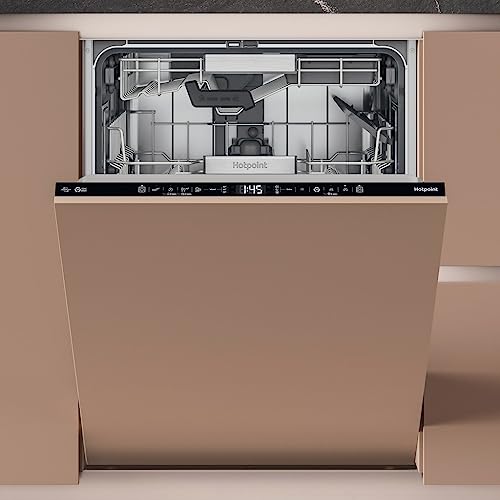
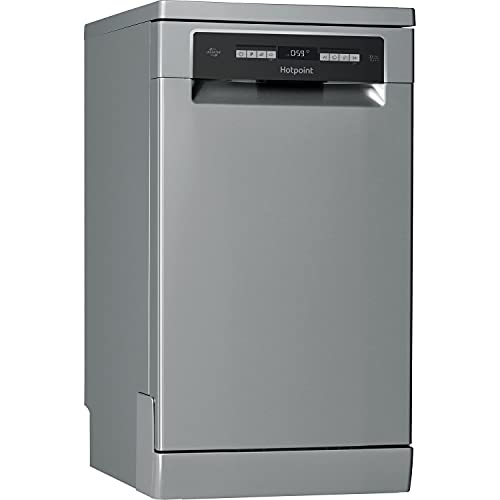
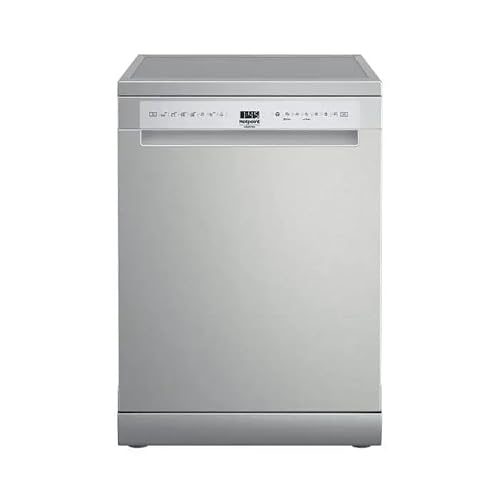
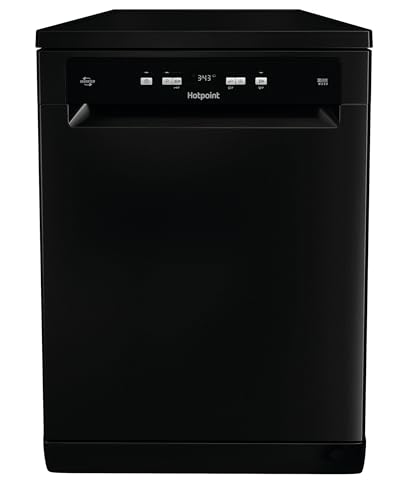
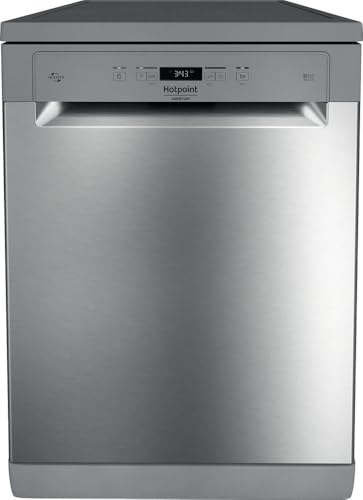
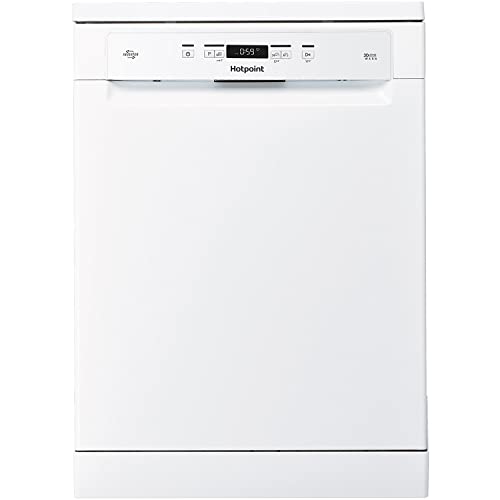
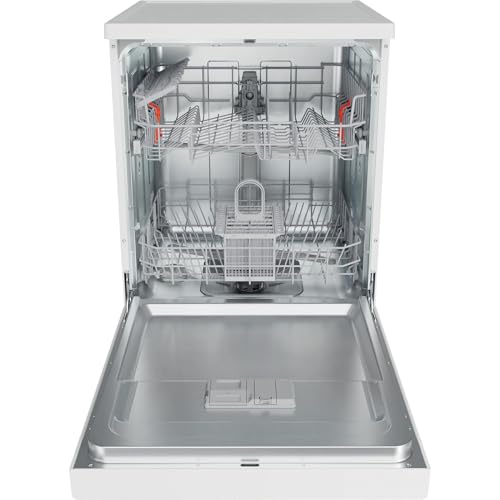
Hotpoint dishwashers are practical family machines, commonly combining 14-place capacity with adjustable racks and intensive washing. Selected models add 3D Zone Wash for pots, ActiveDry automatic opening, inverter motors, and short or partial-load programs.
Hotpoint dishwashers range from well-equipped quiet products to simpler models with higher consumption or limited rack flexibility. Buyers should compare the exact dB rating, Eco figures, third-level storage, hinge requirements, leak protection, and program temperatures.
The chart below compares Hotpoint with other dishwasher brands by average overall score.
[horizontal-chart-05146734171668731297071529236993497072053739813640]
What are the main advantages of Hotpoint dishwashers?
The main advantages of Hotpoint dishwashers are as follows:
- Value: Many full-size models cost £260-£390 while providing 14 settings and useful daily programs.
- Targeted cleaning: 3D Zone Wash directs stronger jets toward selected rack areas for pans or baked-on soil.
- Drying: ActiveDry opens the door near cycle end to release moisture with limited extra energy.
- Capacity: Full-size racks commonly hold 14 settings, with selected 15–16-setting layouts.
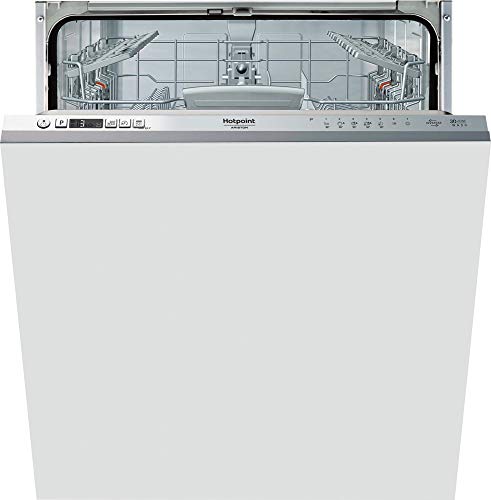
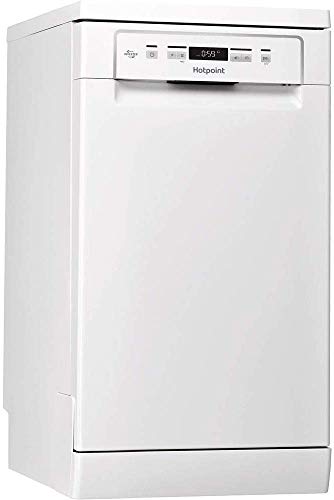
- Choice: Freestanding, built-in, fully integrated, and 45 cm models cover common replacement needs.
What are the main disadvantages of Hotpoint dishwashers?
The main disadvantages of Hotpoint dishwashers are as follows:
- Budget pricing can conceal higher consumption: Hotpoint prices commonly sit around £260-£460, with a midpoint near £340, while Eco use spans about 0.55–1.04 kWh and 8.7–12 L. A cheaper class E model used 280 times yearly can consume 80–110 kWh more than an efficient alternative, reducing the initial saving.
- Eco duration varies substantially: Typical programs run about 190–240 minutes, or 3 h 10 min to 4 h, but some reach roughly 310 minutes or 5 h 10 min. Rapid functions reduce waiting for lightly soiled loads, while ActiveDry improves moisture release but does not make the Eco wash itself short.
- Noise depends heavily on the exact model: Hotpoint ranges from about 38 to 49 dB, with 44 dB near the middle. Products at 47–49 dB are much more audible beside living space than 40–42 dB versions, so the inverter label alone is not enough.
- Loading and feature packages are inconsistent: 3D Zone Wash, ActiveDry, a third rack, folding tines, and 10–16-place capacities vary by code. The intensive zone can also reserve part of the lower basket, so large pans should be tested against plate and cutlery clearance.
- Group and service details require checking: Warranty issuer, regional supplier, parts channel, and installation support can differ across Whirlpool-group or Beko Europe arrangements. Buyers should confirm the exact local model and service provider, especially for integrated hinges, automatic-opening clearance, and imported variants.

Who makes Hotpoint dishwashers?
Hotpoint was historically part of Whirlpool Corporation in Europe and is now supplied through Beko Europe, formed in 2024 from Arçelik’s European operations and Whirlpool’s European major-appliance business. Brand arrangements differ outside Europe.
Manufacturing location and legal supplier depend on model and market. Use the rating plate, product code, warranty issuer, and local service documents to identify the responsible company and parts route.
How do Hotpoint built-in and freestanding dishwashers compare?
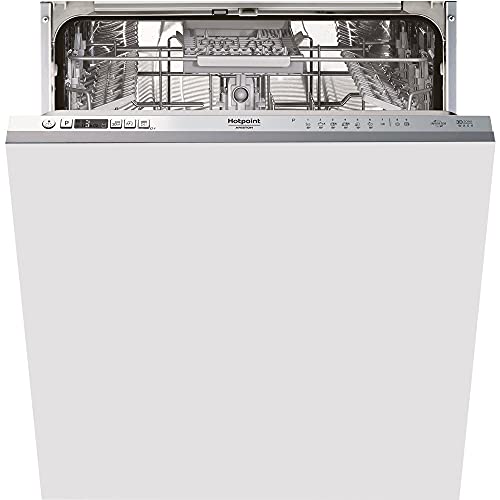
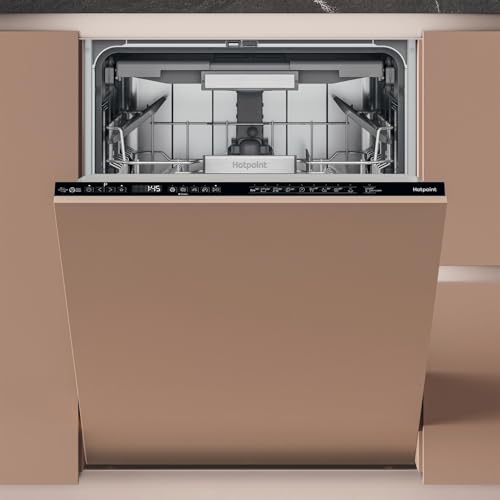
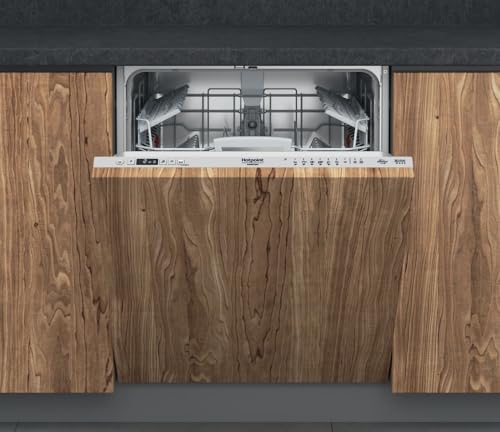
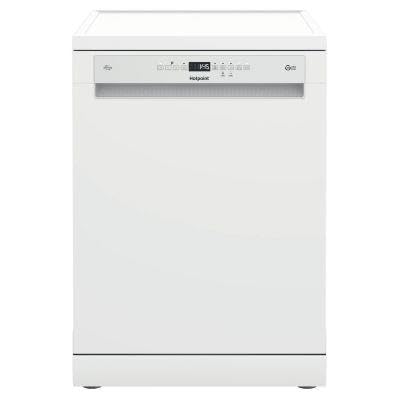
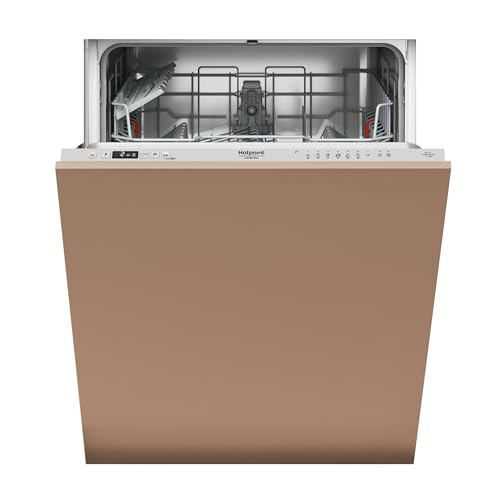
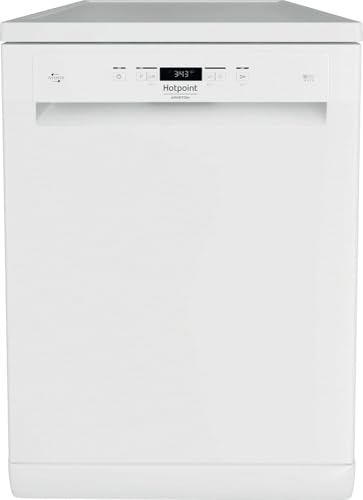
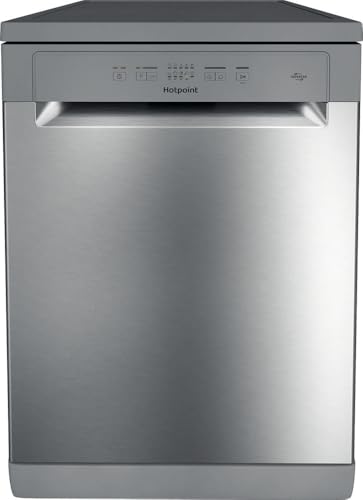
Hotpoint built-in dishwashers are better for a continuous fitted-kitchen appearance, while freestanding models are easier to install, inspect, replace, and move. Cleaning depends on the exact model rather than the visible door.
A standard integrated machine is commonly about 60 cm wide, 82 cm high, and 55–57 cm deep; freestanding models are usually about 85 cm high and 60 cm deep. Slim versions are around 45 cm wide. Integrated installation additionally requires the correct panel weight, hinge movement, plinth, ventilation, and status indication.
Freestanding models provide visible controls and finished sides but still need leveling, hose routing, and open-door clearance. Compare identical capacity, noise, class, racks, 3D Zone Wash, and ActiveDry before valuing the format.
How much do Hotpoint dishwashers cost?
Hotpoint dishwashers generally cost about £300-£600. Width, installation, capacity, energy class, noise, racks, targeted washing, and ActiveDry explain most differences.
Around £300-£300, expect simpler 10-place slim or 13–14-place full-size models, commonly classes D–E and 44–49 dB. From £340-£470, quieter 41–44 dB products, 14–15 settings, better racks, inverter motors, and automatic opening become more common.
Above about £470, look for classes A–C, approximately 38–42 dB, 15–16 settings, premium racks, or specialized integrated hardware. A 0.20 kWh-per-cycle reduction saves about 56 kWh over 280 cycles.
The chart below shows the price distribution of Hotpoint dishwashers.
[vertical-chart-06445750311476476612067098319148003081041448472122]
What should you consider when choosing a Hotpoint dishwasher?
Before buying a Hotpoint dishwasher, consider the following factors:
- Installation specification: Installation requirements include 45 or 60 cm width, niche height and depth, freestanding versus integrated construction, hinge type, furniture-panel limits, plinth clearance, hose routing, ventilation, and open-door projection. For ActiveDry models, also confirm that the opening door and released steam will not conflict with a worktop, handle, island, or walkway.
- Capacity and rack geometry: Capacity ranges from 10-place slim layouts for about 1–3 people to 13–14-place full-size layouts for 3–5 people and 15–16-place versions for 4–6 people; test with the household’s largest plates, pans, trays, glasses, and lunch containers. Check upper-basket height adjustment, folding tines, cutlery basket or third rack, plate diameter, detergent-door clearance, and whether 3D Zone Wash occupies a preferred loading area.
- Cleaning system: The exact wash package may include 3D Zone Wash, Auto or sensor washing, Intensive, rapid, hygiene, half-load, and Machine Care functions, so the program count alone is not enough. Targeted jets help pans only when cookware is positioned in the assigned zone and does not obstruct the spray arms.
- Drying performance: Drying options include conventional condensation, extra-dry heat, and ActiveDry automatic opening, then compare plastics, cycle duration, steam exposure, and the ability to disable door opening. Concave containers still need angled loading because no drying system removes pooled water reliably.
- Noise and kitchen location: Around 44 dB is a sensible target for general use, while approximately 40–42 dB is preferable beside living space; 46–49 dB will be more noticeable. Also check drain noise, end signals, installation leveling, loose furniture panels, and hose contact because the declared Eco figure does not describe every sound.
- Energy and water: For Hotpoint, about 0.65–0.85 kWh and 8.9–9.5 L per Eco cycle is reasonable; more than 0.95 kWh or 11.5 L is relatively high. A difference of 0.20 kWh per cycle equals about 56 kWh over 280 cycles, but quieter operation or better racks may justify an upgrade sooner than electricity savings alone.
- Protection and ownership: Ownership considerations include full-length inlet protection or base-tray detection, warranty issuer, pump and rack parts, local service coverage, filter access, water-softener adjustment, and installation cost. Compare the complete model code because similarly named Hotpoint products can differ in motor, hinge, drying, noise, and regional supplier.