Are Smeg dishwashers good?
Smeg dishwashers have an average overall score of 8.2, ranking #10 among comparable dishwasher brands, and an average user rating of 8.1, placing them at #26 based on user reviews.
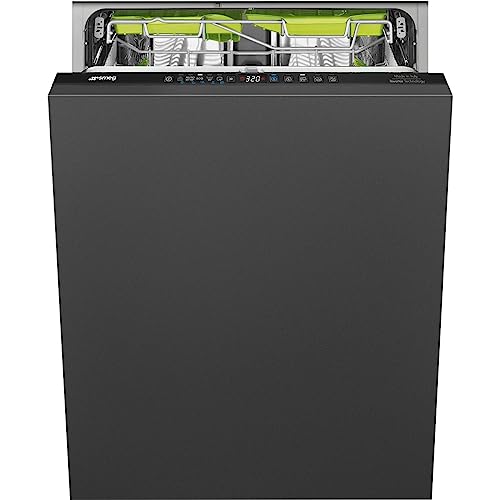
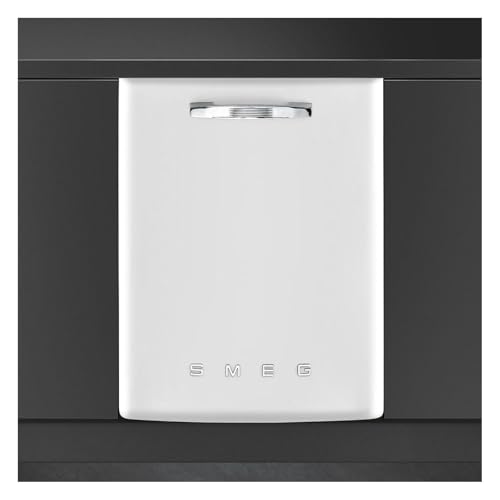
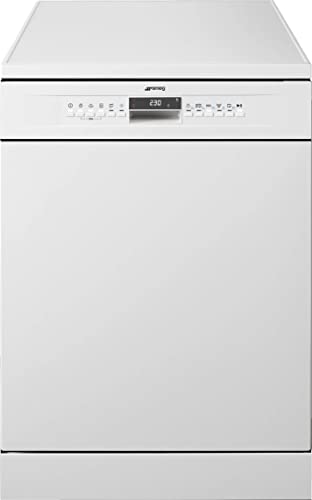
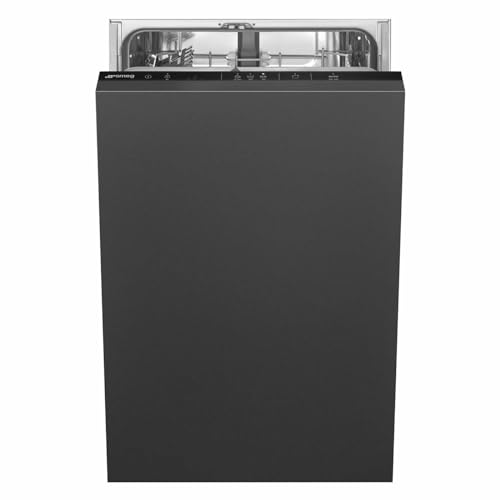
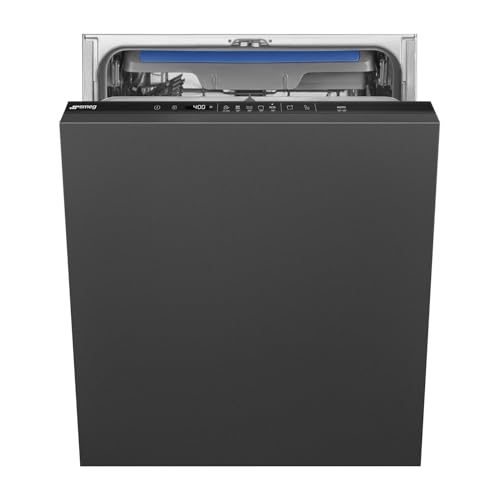
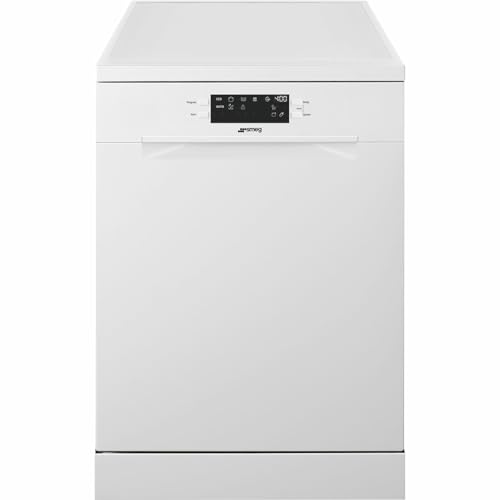
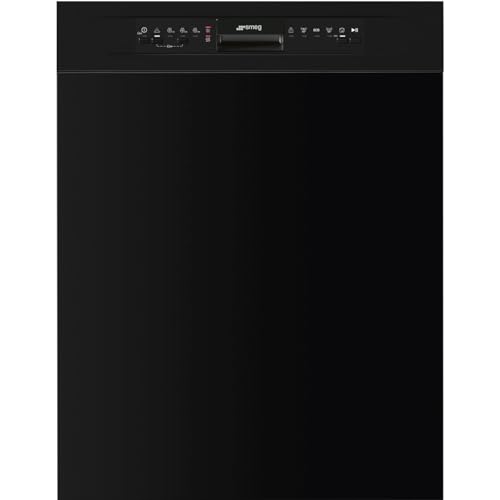
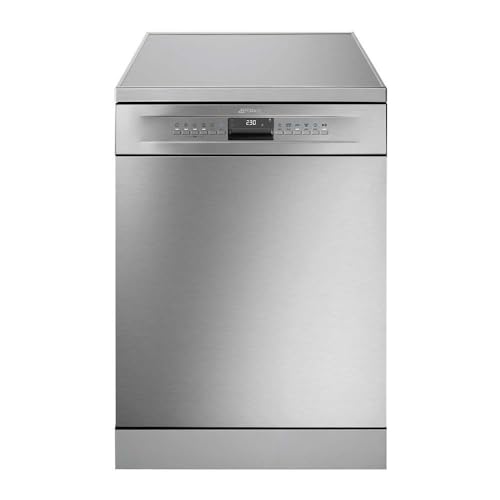
Smeg dishwashers suit coordinated kitchens, with integrated, freestanding, retro-styled, and professional-looking finishes. Selected models combine 13–14-place capacity, automatic door opening, adjustable baskets, intensive washing, and orbital or planetary spray systems.
Smeg dishwashers can carry a design premium without superior noise, efficiency, drying, or rack geometry. Buyers should compare the motor, wash system, Total Acquastop protection, energy label, and basket configuration with plainer rivals before paying extra for appearance.
The chart below compares Smeg with other dishwasher brands by average overall score.
[horizontal-chart-05146734171668731297071529236993497072053739813640]
What are the main advantages of Smeg dishwashers?
The main advantages of Smeg dishwashers are as follows:
- Design choice: Smeg offers conventional stainless, black, white, coloured, and design-led fronts that can coordinate with other appliances.
- Spray coverage: Planetarium or orbital wash systems vary water direction to reach complex loads; correct spacing remains essential.
- Drying: Dry Assist+ or equivalent automatic opening releases moisture efficiently and is especially useful for plastics.
- Capacity and racks: Full-size products commonly hold 13–14 settings and may add FlexiDuo, third-level storage, adjustable baskets, and folding supports.
- Efficiency options: Selected class A–B machines use roughly 0.5–0.7 kWh per Eco cycle while maintaining full-size capacity.
What are the main disadvantages of Smeg dishwashers?
The main disadvantages of Smeg dishwashers are as follows:
- A substantial design premium: Smeg prices commonly span about £410-£1,300, with a midpoint near £660 and top listings around £1,450. Retro styling, black glass, or coordinated finishes can therefore add several hundred euros without changing the 13–14-place tub, spray system, energy use, or drying hardware.
- Long standardized cycles: Smeg Eco programs usually take about 240–265 minutes, or 4 h to 4 h 25 min, and can reach roughly 280 minutes. Rapid modes reduce turnaround for light soil, but shorter programs may omit complete drying or consume more resources than the Eco figures on the label.
- Noise remains inconsistent: Models range from approximately 42 to 51 dB, with many near 45 dB. A 48–51 dB design-led machine is much more noticeable in an open-plan kitchen than a similarly priced 40–42 dB competitor, so finish should not be prioritized over the acoustic label.
- Premium washing is not universal: Planetarium or orbital washing, ActiveLight, automatic opening, flexible third racks, and the strongest glass supports vary by exact code. Buyers should verify spray-arm design and basket generation because two visually similar Smeg products can differ more internally than their exterior suggests.
- Efficiency and installation can undermine value: Energy use ranges roughly 0.53–0.94 kWh and water about 8.5–12 L per Eco cycle. Integrated and built-under versions also need exact hinge, panel, plinth, and steam clearances, so a high-priced finish can still combine average consumption with a demanding installation.

Who makes Smeg dishwashers?
Smeg dishwashers are made for Smeg S.p.A., the privately held Italian appliance manufacturer based in Guastalla. Smeg develops and sells appliances under its own brand, although the production location and components can vary by model.
The rating plate and warranty documents identify the exact legal supplier, factory origin, product code, and service route. This is more reliable than assuming every Smeg dishwasher is produced in the same plant or shares the same platform.
What are the main Smeg dishwasher ranges and design families?
The main Smeg dishwasher ranges and design families are as follows:
- Standard freestanding models: Conventional white, black, or stainless machines prioritize practical full-size capacity and visible controls.
- Built-under and integrated models: These fit beneath a worktop or behind furniture and may add ActiveLight, sliding hinges, or concealed controls.
- Planetarium and orbital-wash models: Their spray systems change water direction to improve coverage around mixed loads.
- Dry Assist+ models: Automatic door opening improves moisture release and can reduce energy-intensive drying.
- Design collections: Retro-style, coloured, or coordinated exterior families emphasize appearance; compare their internal specification with standard models before paying the premium.
How much do Smeg dishwashers cost?
Smeg dishwashers generally cost about £390-£1,500. Design, finish, installation, spray system, energy class, noise, baskets, and drying explain most of the difference.
Around £390-£600, expect simpler freestanding or integrated models, typically with 13 settings and approximately 44–49 dB operation. From £600-£900, class B–D efficiency, 13–14 settings, stronger racks, automatic opening, and Planetarium-style washing become more common.
Above about £950, look for class A–B performance, approximately 42–44 dB, premium finishes, advanced baskets, or special installation hardware. Pay separately for design and function: a £260 appearance premium does not lower running cost.
The chart below shows the price distribution of Smeg dishwashers.
[vertical-chart-02135566396255838777180606981101022959120273722653]
What should you consider when choosing a Smeg dishwasher?
Before buying a Smeg dishwasher, consider the following factors:
- Design and construction: The first decision is whether the priority is a coordinated built-in appliance, a standard freestanding finish, or a distinctive retro or black exterior. Inspect handle projection, control visibility, material thickness, fingerprint resistance, and whether the design premium buys any improvement in racks, noise, drying, or efficiency.
- Exact format and fitting: Confirm 45 or 60 cm width, standard or tall tub, body depth, door swing, niche ventilation, panel weight, plinth cut-out, and hinge system. Decorative fronts and unusual handles can change clearance requirements, so use the installation drawing rather than nominal dimensions alone.
- Wash hydraulics: Check whether the machine uses a standard orbital arm, Smeg’s planetary system, or dedicated intensive zones, and verify that large plates do not obstruct rotation. Prioritize an Auto cycle, 65–70 °C intensive washing, glass protection, and accessible filters over a long list of similar rapid programs.
- Racks and place settings: A practical test should cover upper-basket adjustment, third-rack depth, FlexiDuo sections, folding supports, stemware holders, and pan clearance with actual kitchen items. A 13–14-place rating normally suits 3–5 people, but it can conceal awkward geometry, particularly when a shallow cutlery tray reduces glass height below.
- Drying and cycle behavior: The specification should state whether automatic door opening is fitted and whether it can be disabled for sensitive worktops. Compare plastic drying, condensation around deep bowls, Eco duration, rinse-aid control, and any fan assistance rather than assuming the premium exterior includes premium drying.
- Noise and consumption: For open-plan use, seek approximately 42–44 dB. A good Smeg target is about 0.63–0.70 kWh and around 9 L per Eco cycle; values near 0.85–0.94 kWh or 12 L are relatively high, especially when a design-led model already carries a price premium.
- Protection and ownership: Confirm Total Acquastop or equivalent full leak protection, warranty scope, local service, and the cost of racks, pumps, hinges, and cosmetic panels. If styling is the main reason to buy, calculate the finish premium separately from the value of the internal dishwasher.