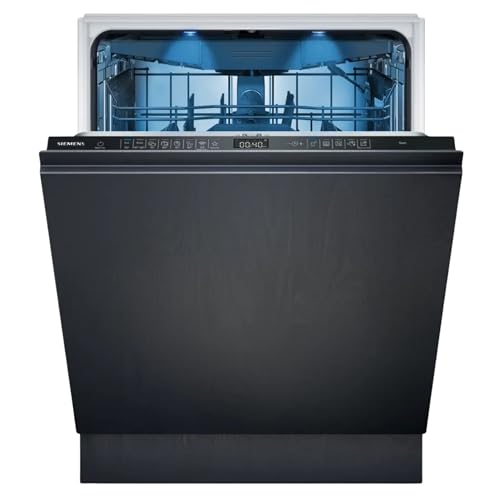
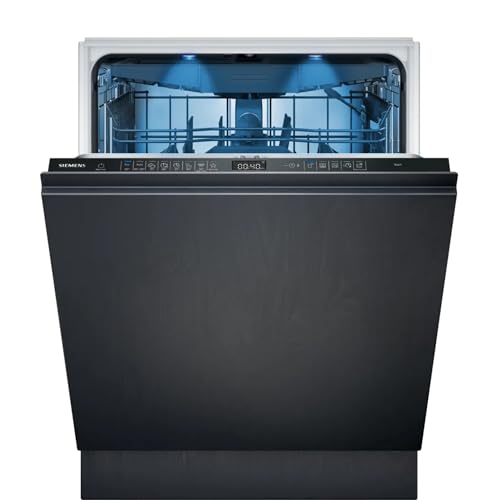
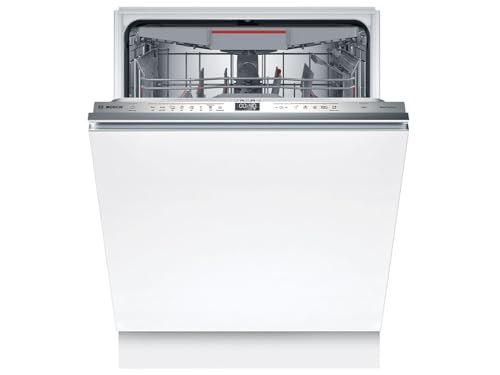
Which brands make the best 14-place-setting dishwashers?
The best 14-place-setting dishwasher brands are ranked below:
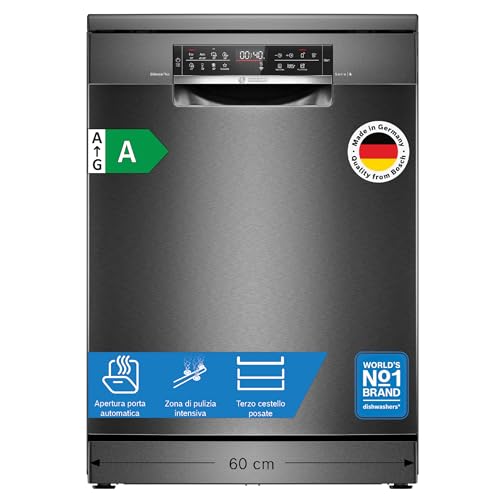
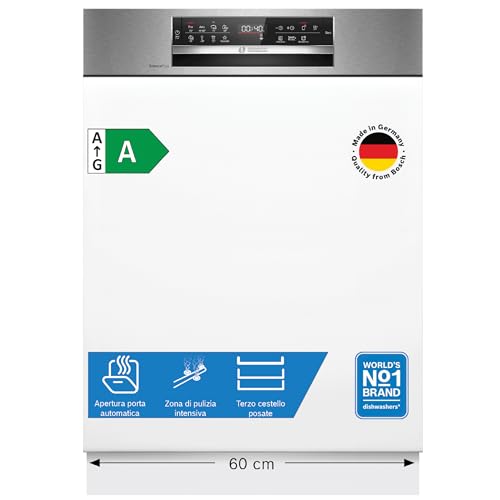
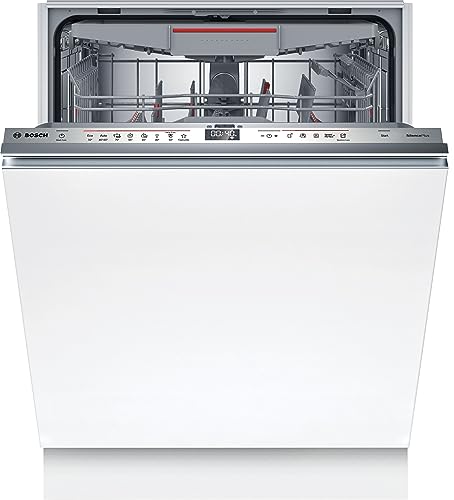
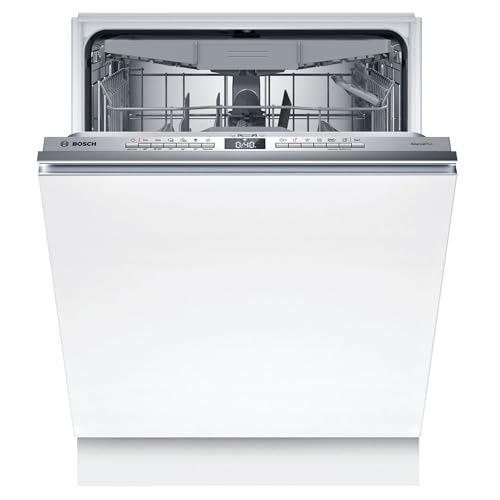
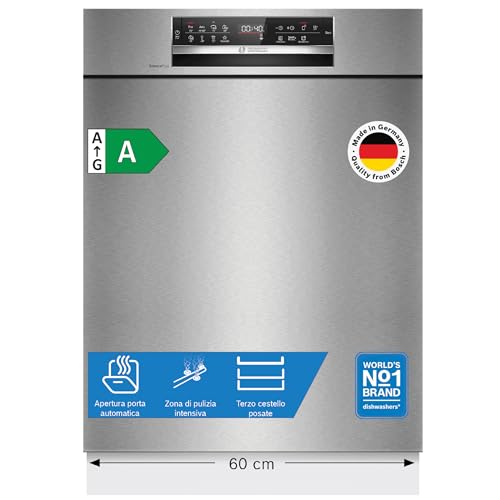
- Bosch (Average overall score: 9)
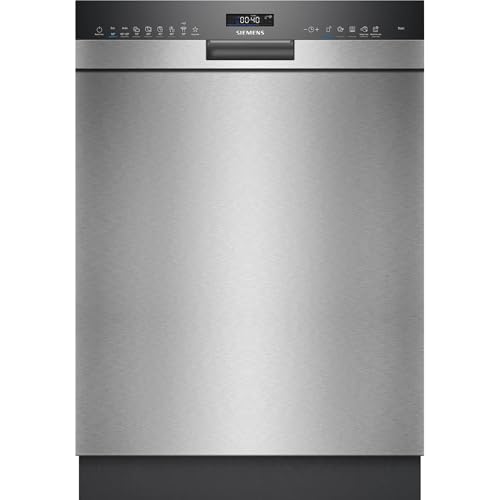
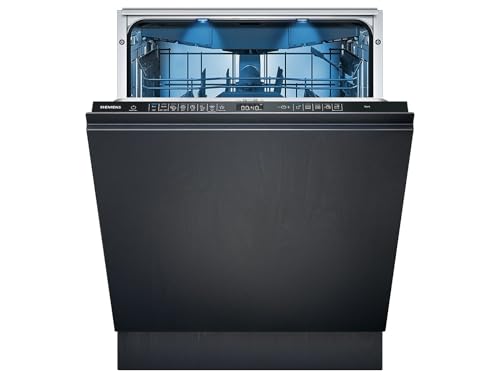
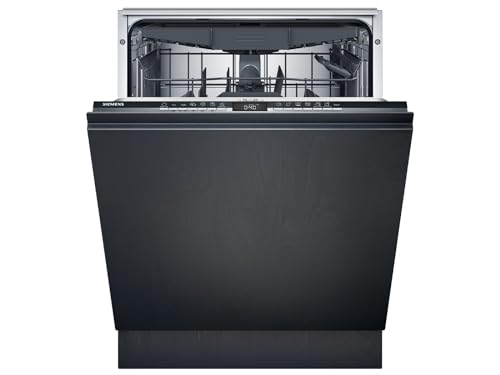
- Siemens (Average overall score: 8.9)
- NEFF (Average overall score: 8.6)
- Haier (Average overall score: 8.6)
- Samsung (Average overall score: 8.4)
The chart below ranks 14-place-setting dishwasher brands by average overall score.
[horizontal-chart-13704459778933023387170500485489356119130269307687]
What family size is a 14-place-setting dishwasher suitable for?
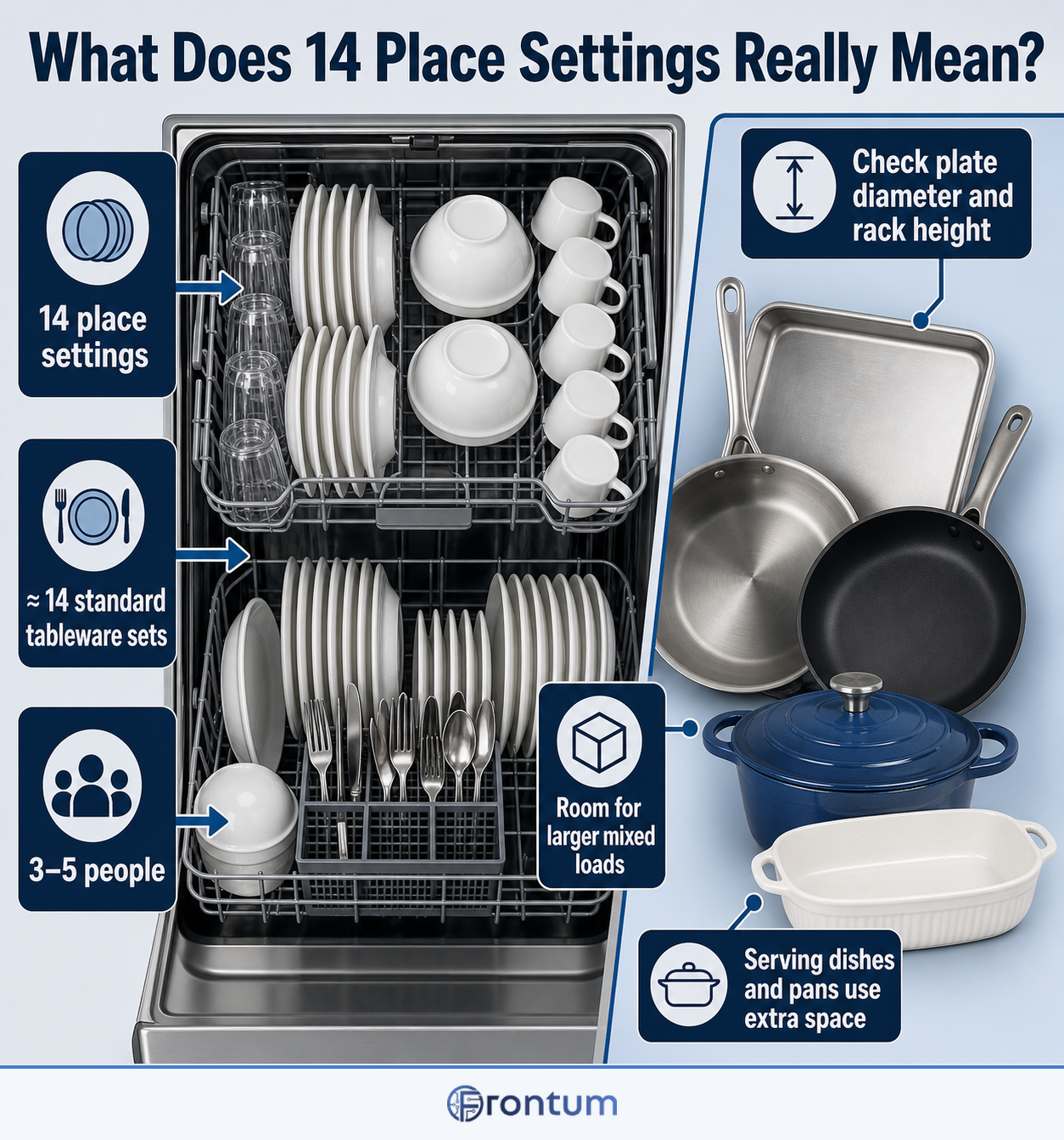
A 14-place-setting dishwasher is usually suitable for a family of three to five people, depending on cooking habits and how often the machine runs. It can also suit two people who cook extensively, use many preparation bowls, or prefer to run fewer full cycles.
For a family of four, 14 settings normally provide enough space for one day of tableware plus some cookware. Frequent entertaining, batch cooking, lunch containers, or multiple daily meals can still fill the machine sooner than the place-setting number suggests. One sensibly full 14-setting cycle can use fewer resources than two compact cycles, but a machine regularly run half empty loses that advantage, so small households should compare effective sensor or half-load programs.
How much cookware fits in a 14-place-setting dishwasher?
A 14-place-setting dishwasher can usually hold a normal family tableware load plus one or two medium pans, but the exact cookware capacity depends more on rack geometry than the nominal setting count. Formal test settings use standardized dishes rather than deep frying pans, baking trays, food-storage containers, or oversized dinnerware.
Flexible lower-rack tines provide the most useful pan space. Folding one section can accommodate a saucepan or casserole while preserving plate positions elsewhere.
A third cutlery drawer can free the lower basket, while height-adjusting the upper basket trades tall-glass clearance for larger plates below. Extra Clean or intensive zones may improve pan washing but can occupy a preferred loading position.
Before buying, check maximum plate diameter, pan-handle clearance, tray height, stemware supports, detergent-door clearance, and whether spray arms rotate freely when the household’s largest cookware is loaded.
How much kitchen space does a 14-place-setting dishwasher need?
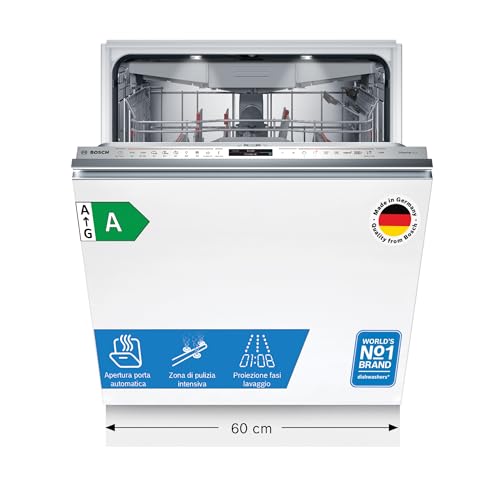
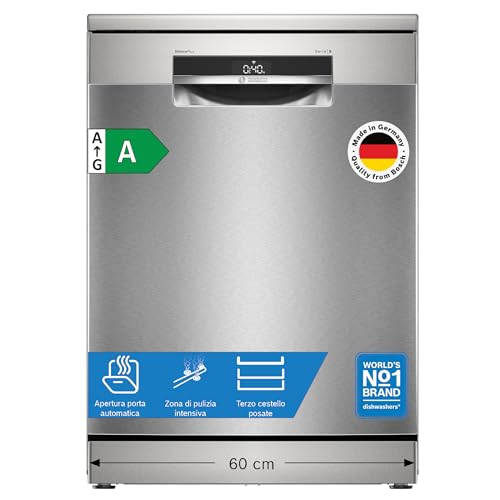
A 14-place-setting dishwasher normally needs a full-size 60 cm opening. Integrated models are commonly about 59.5–60 cm wide, 81.5–82 cm high, and 55–57 cm deep; freestanding versions are usually about 84.5–85 cm high and roughly 59–62 cm deep.
Allow additional space for water and drain hoses, cable routing, ventilation, furniture panels, handle projection, and the fully open door. Measure width and height at several points because floors and cabinets may not be level, and check whether the adjustable feet cover the actual niche height.
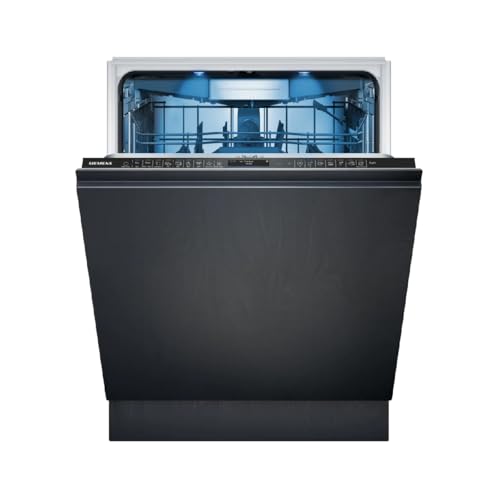
Integrated installation also requires the correct fixed or sliding hinge, furniture-panel dimensions and weight, plinth clearance, and visible status indication. A 60 cm external width does not guarantee identical internal rack volume or door movement.
How much energy and water does a 14-place-setting dishwasher use?
A 14-place-setting dishwasher typically uses about 0.7–0.8 kWh and 9–10 L per Eco cycle. Efficient class A models can approach roughly 0.45–0.55 kWh, while less efficient products may use around 0.9–1.0 kWh.
At 280 cycles per year, 0.74 kWh equals about 207 kWh or approximately £50 at £0 per kWh. A model using 0.54 instead of 0.84 kWh saves about 84 kWh or £20 annually. These figures apply to Eco; Intensive, hygiene, quick, extra-dry, and high-temperature cycles can consume more, while a full 14-setting cycle can use less per item than two smaller cycles.
The chart below shows the Eco energy-consumption distribution of 14-place-setting dishwashers.
[vertical-chart-15935528995277050842057483032110583234203895233150]
How much do 14-place-setting dishwashers cost?
Fourteen-place-setting dishwashers generally cost about £300-£1,300, although highly specified premium models can approach £1,700. Brand, installation, energy class, noise, racks, drying, controls, and hinge hardware explain most differences.
Around £300-£400, expect basic full-size models, commonly classes D–E, approximately 44–49 dB, simpler racks, and conventional or automatic-door drying. This tier contains substantial choice and can suit a separate kitchen.
From £400-£700, classes B–D, approximately 40–44 dB, third racks, stronger basket adjustment, sensor programs, automatic opening, improved leak protection, and connectivity become more common.
Above about £690, look for class A–B efficiency, 37–42 dB operation, mineral or premium drying, advanced racks, interior lighting, time projection, or specialized integrated hinges. A large premium should improve several daily-use factors rather than capacity alone.
The chart below shows the price distribution of 14-place-setting dishwashers.
[vertical-chart-03158229809730043898098619246510312497301118952448]
What should you consider when choosing a 14-place-setting dishwasher?
Before buying a 14-place-setting dishwasher, consider the following factors:
- Household fit: Fourteen place settings usually provide comfortable capacity for approximately three to five people, depending on cooking frequency and the number of pans used. For entertaining, check whether one load can hold the tableware plus serving dishes; standardized capacity excludes many bulky real-world items.
- Tub and rack design: Compare a conventional cutlery basket with a third rack, then test upper-basket height adjustment, folding tines, rail stability, plate diameter, and stemware clearance. Two machines rated for 14 settings can differ substantially in usable space because the standard counts small items efficiently.
- Installation dimensions: Most 14-place machines are approximately 60 cm wide, but height, body depth, door swing, hinge design, and hose clearances vary. Integrated buyers should verify niche height, panel weight, plinth geometry, sliding-hinge requirements, and whether an XXL tub fits beneath the worktop.
- Cleaning coverage: Look for load sensors, an automatic program, an intensive 65–70 °C cycle, targeted pot jets or zone washing, and unobstructed spray arms. A large tub needs effective water distribution; overloading weak racks can shield bowls and leave soil at the corners.
- Drying capability: Automatic door opening is efficient for ceramic and glass, while fan-assisted or mineral drying can improve plastics and deep containers. Check whether the door-opening function can be disabled and whether released steam is compatible with the worktop and adjacent fronts.
- Noise and running cost: For a 14-place dishwasher, about 0.55–0.75 kWh and 8.5–10 L per Eco cycle is good, 0.76–0.90 kWh and 10–11 L is acceptable, and more than 0.90 kWh or 11 L is relatively high; aim for 42–44 dB in an open-plan family kitchen. At 280 annual cycles, every 0.20 kWh difference changes yearly electricity use by about 56 kWh.
- Programs and ownership: Priority should go to the programs actually needed, such as Auto, Eco, intensive, glass, hygiene, quick, and machine care, rather than a high program count. Also compare full leak protection, filter access, rack replacement cost, motor-warranty exclusions, service coverage, and installation charges.