
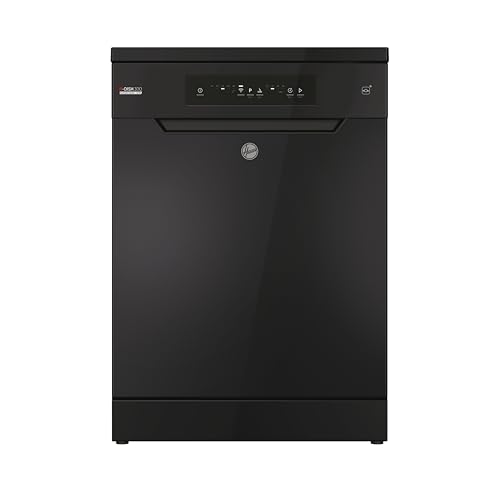
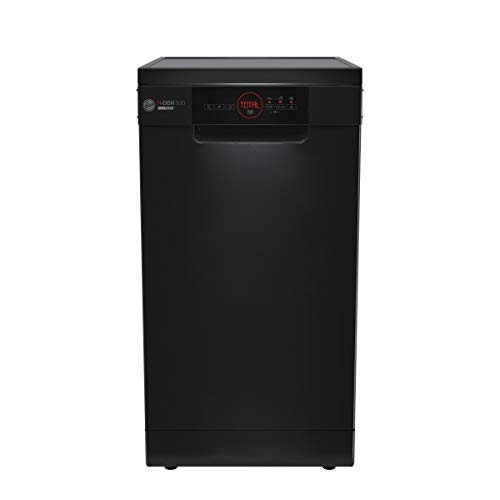
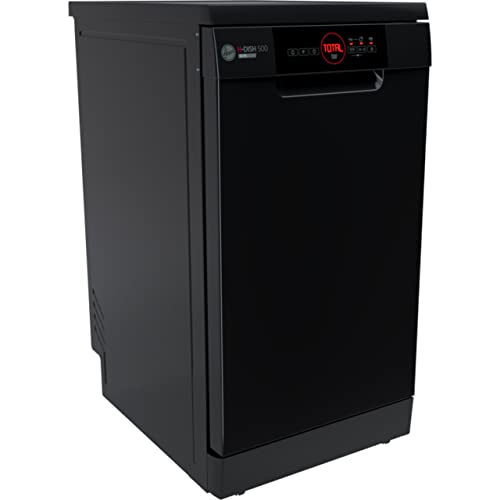
Are Hoover dishwashers good?
Hoover dishwashers have an average overall score of 8.1, ranking #14 among comparable dishwasher brands, and an average user rating of 8.3, placing them at #24 based on user reviews.
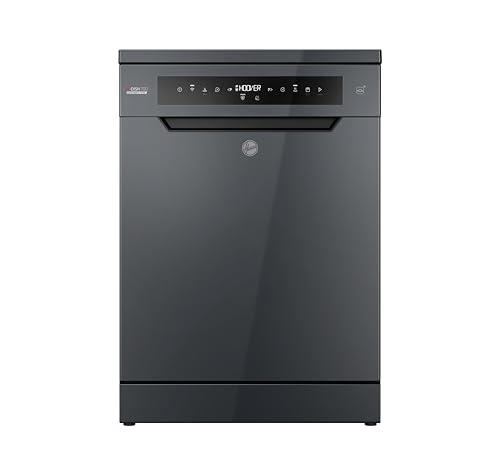
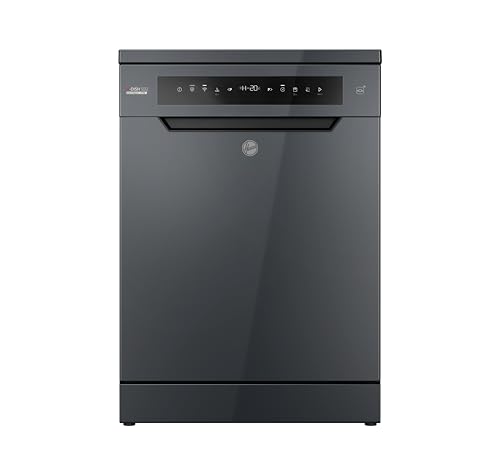
Hoover dishwashers emphasize high capacity and connected functions at moderate prices. Selected H-DISH and H-DISH 500 models combine 14–16-place Maxi TUB interiors, inverter motors, automatic door opening, and hOn monitoring or maintenance alerts.
Hoover dishwashers vary sharply in noise, efficiency, drying, and rack refinement, with simpler models reaching 47–49 dB. Buyers should compare plate clearance, third-rack design, energy use, installation hardware, and local service before prioritizing Wi-Fi or headline capacity.
The chart below compares Hoover with other dishwasher brands by average overall score.
[horizontal-chart-05146734171668731297071529236993497072053739813640]
What are the main advantages of Hoover dishwashers?
The main advantages of Hoover dishwashers are as follows:
- Capacity: Full-size models can hold 14–16 place settings and selected Maxi Tub designs increase usable space.
- Connectivity: hOn is common and supports remote status, program assistance, maintenance alerts, and energy information.
- Automatic drying: Door opening appears on most products and improves moisture release.
- Efficiency options: Classes A–C are well represented within the matching range.
- Value: Many models cost approximately £300-£430 while offering inverter motors, third racks, or rapid programs.
What are the main disadvantages of Hoover dishwashers?
The main disadvantages of Hoover dishwashers are as follows:
- Noise is often above the open-plan target: Hoover models span about 42–49 dB, with 46 dB near the midpoint and several products at 47–49 dB. That difference is clearly audible beside living space, and an inverter motor does not guarantee quiet draining, spray impact, or end signals.
- Eco programs can approach five hours: Typical durations run about 234–289 minutes, or 3 h 54 min to 4 h 49 min, with a midpoint near 237 minutes. Rapid or Wash&Dry modes shorten suitable cycles but may use more temperature or resources and can impose load or drying restrictions.
- High capacity can be difficult to use: Hoover ranges from 10 to 16 place settings, but Maxi TUB and dense racks do not automatically fit large pans, tall glasses, and cutlery together. Buyers should check upper-rack adjustment, third-level depth, folding tines, and spray-arm clearance rather than rely on the setting count.
- The range is relatively narrow: Prices commonly sit around £300-£440, with a midpoint near £340, but fewer models are available than from Bosch, Beko, or Candy. This reduces choice in width, hinge type, energy class, rack generation, and exact drying configuration.
- hOn and service add dependencies: Connected functions require setup, an account, Wi-Fi coverage, compatible software, and continuing support, while they do not correct 49 dB noise or weak rack geometry. Local Haier Europe technician and parts coverage should be confirmed for pumps, racks, electronics, and automatic-opening hardware.

Who makes Hoover dishwashers?
Hoover home appliances are made and marketed in Europe through Haier Europe, part of Haier Smart Home. Haier acquired the Candy Hoover appliance business in 2019, bringing Hoover and Candy into the same group.
Manufacturing location and technical platform vary by model. Check the rating plate, full product code, hOn region compatibility, warranty issuer, and local service documents.
How do Hoover built-in and freestanding dishwashers compare?
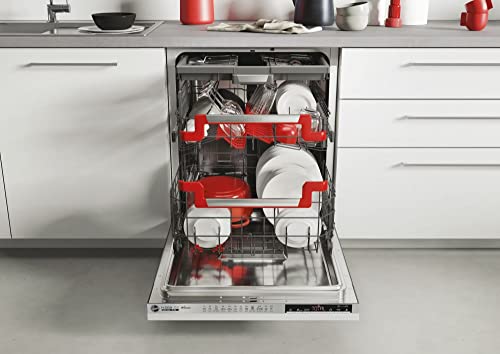
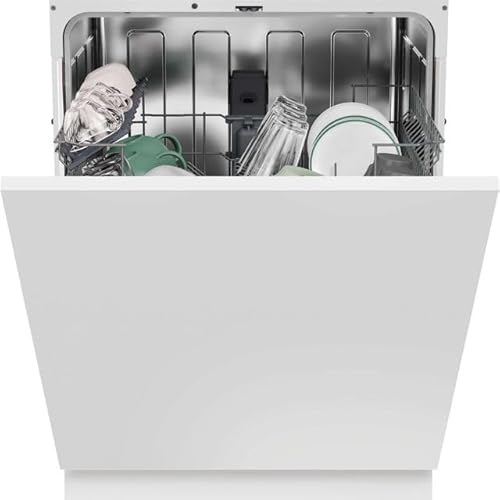
Hoover built-in dishwashers are better for a continuous fitted-kitchen appearance, while freestanding models are easier to install, inspect, replace, and move. Cleaning depends on the exact machine rather than whether the front is concealed.
A standard integrated model is commonly about 60 cm wide, 82 cm high, and 55–57 cm deep; freestanding models are usually about 85 cm high and 60 cm deep. Slim products are around 45 cm wide. Integrated installation additionally requires correct panel weight, hinge movement, plinth, ventilation, and status indication.
Freestanding models provide visible controls and finished sides but still need leveling, hose routing, and open-door clearance. Compare identical capacity, noise, class, racks, hOn functions, and automatic drying before paying extra for either format.
How much do Hoover dishwashers cost?
Hoover dishwashers generally cost about £300-£520. Width, installation, capacity, energy class, noise, racks, motor, drying, and hOn equipment explain most differences.
Around £300-£340, expect simpler 10–14-place models, approximately 46–49 dB, and core programs. From £300-£400, 14–16 settings, classes B–C, inverter motors, better racks, automatic opening, and connectivity become more common.
Above about £430, look for class A–B efficiency, approximately 42–44 dB, Maxi Tub, premium third racks, stronger displays, or specialized integrated hardware. Do not pay more solely for Wi-Fi when noise and rack quality remain unchanged.
The chart below shows the price distribution of Hoover dishwashers.
[vertical-chart-11850247316142871034090243131538674941393124303888]
What should you consider when choosing a Hoover dishwasher?
Before buying a Hoover dishwasher, consider the following factors:
- Format and installation: Installation requirements include 45 or 60 cm width, niche height and depth, freestanding versus integrated construction, hinge and furniture-panel limits, plinth clearance, hoses, ventilation, and open-door projection. Automatic-opening models need unobstructed clearance, while integrated versions need a status light or sound that remains useful behind the furniture front.
- Capacity and Maxi Tub layout: Capacity ranges from 10 settings for about 1–3 people to 13–14 for 3–5 people and 15–16 for 4–6 people; judge it by loading the household’s largest plates, pans, trays, bottles, glasses, and cutlery. Maxi Tub can increase internal volume, but check upper-basket adjustment, third-level storage, folding supports, detergent-door clearance, and whether a dense 16-setting layout is genuinely usable.
- Wash system and cycle speed: Relevant wash options include Auto, Eco, Intensive, rapid, hygiene, zone washing, and any Wash&Dry or short-cycle modes. Faster cycles generally use greater temperature, pump intensity, or resources, so they should not be treated as equivalent to Eco for energy or difficult dried soil.
- Drying and plastics: Drying equipment may include automatic door opening and extra-dry options, while cycle-end temperature, plastic results, steam exposure, and disable controls still need attention. Angle concave containers and inspect rinse-aid adjustment because even automatic opening cannot drain pooled water.
- Noise and motor specification: The declared Eco figure is suitable for open-plan use around 42–44 dB, while 47–49 dB is much more noticeable. Confirm the exact Speed-Drive or inverter-motor warranty, and remember that drain pumps, end signals, dishes touching spray arms, and loose panels can dominate perceived sound.
- Energy, water, and hOn functions: For Hoover, about 0.63–0.73 kWh and 9–9.5 L per Eco cycle is good; more than 0.77 kWh or 10.9 L is a weaker result unless the capacity or program justifies it. hOn compatibility, Wi-Fi, diagnostics, and energy monitoring should remain secondary to those figures and complete offline controls.
- Protection, parts, and service: Ownership considerations include inlet and base leak protection, filter access, water-softener adjustment, rack and pump parts, warranty issuer, and local Haier Europe service coverage. A lower purchase price is less attractive if the rack layout is awkward or a routine replacement part is difficult to source.