Which brands make the best 45 cm dishwashers?
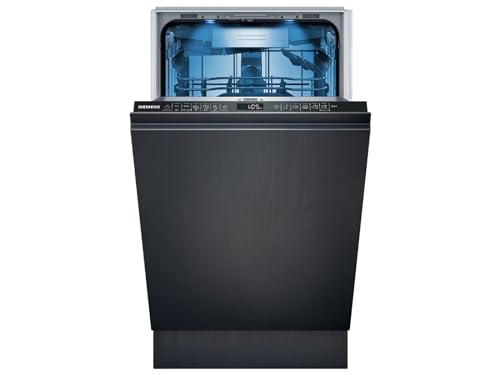
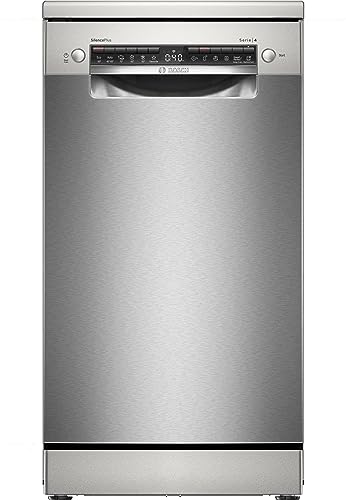
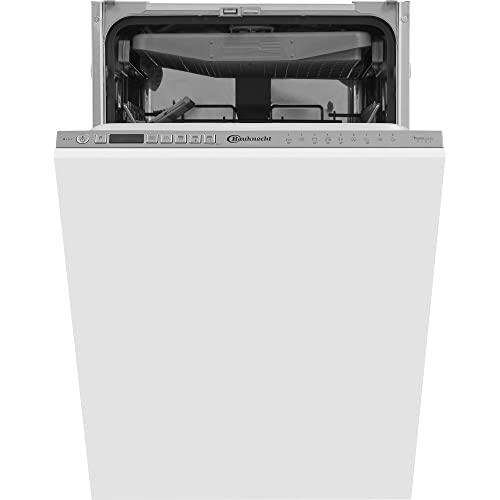
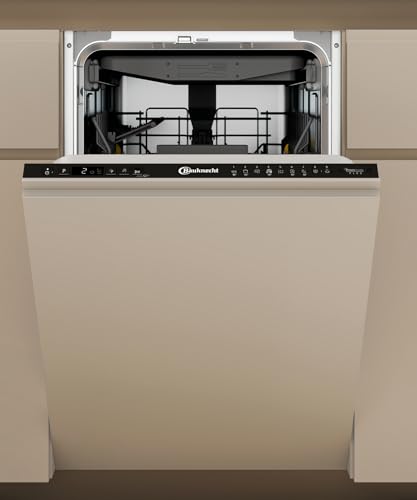
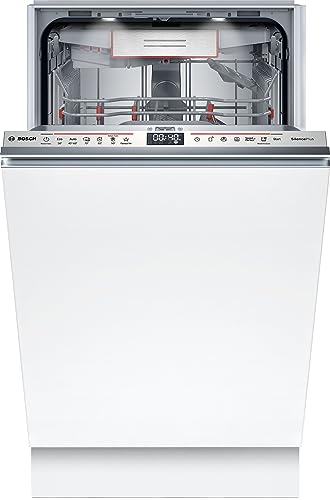
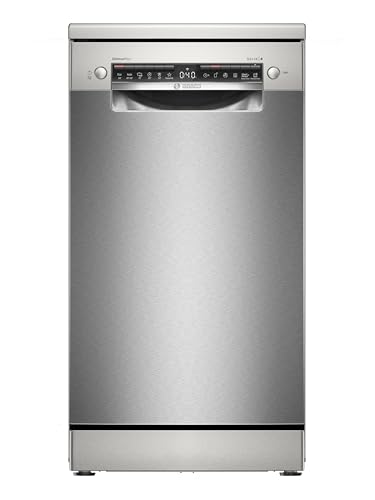
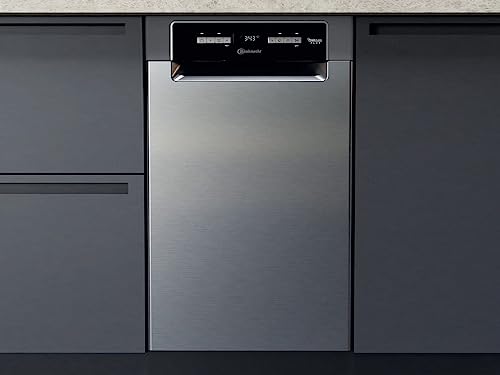
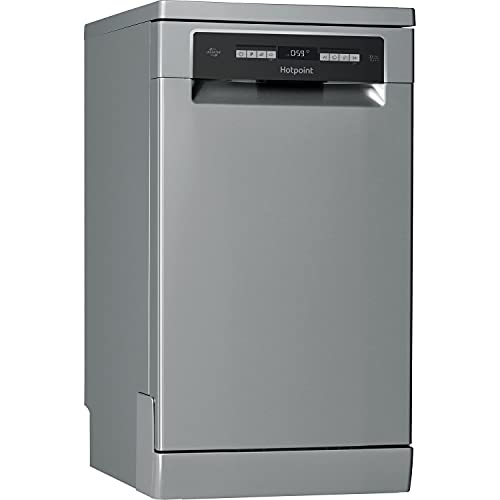
The best 45 cm dishwasher brands are ranked below:
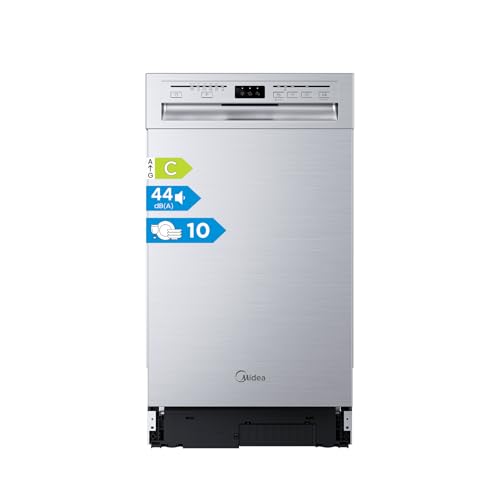
- Midea (Average overall score: 8.7)
- Bauknecht (Average overall score: 8.6)
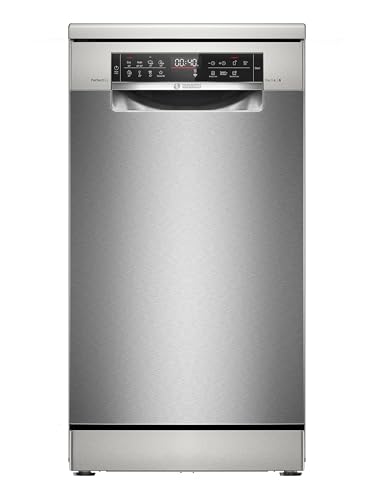
- Bosch (Average overall score: 8.3)
The chart below ranks 45 cm dishwasher brands by average overall score.
[horizontal-chart-01343867909003497807053767447448200929410787679594]
What are the main trade-offs of a 45 cm dishwasher?
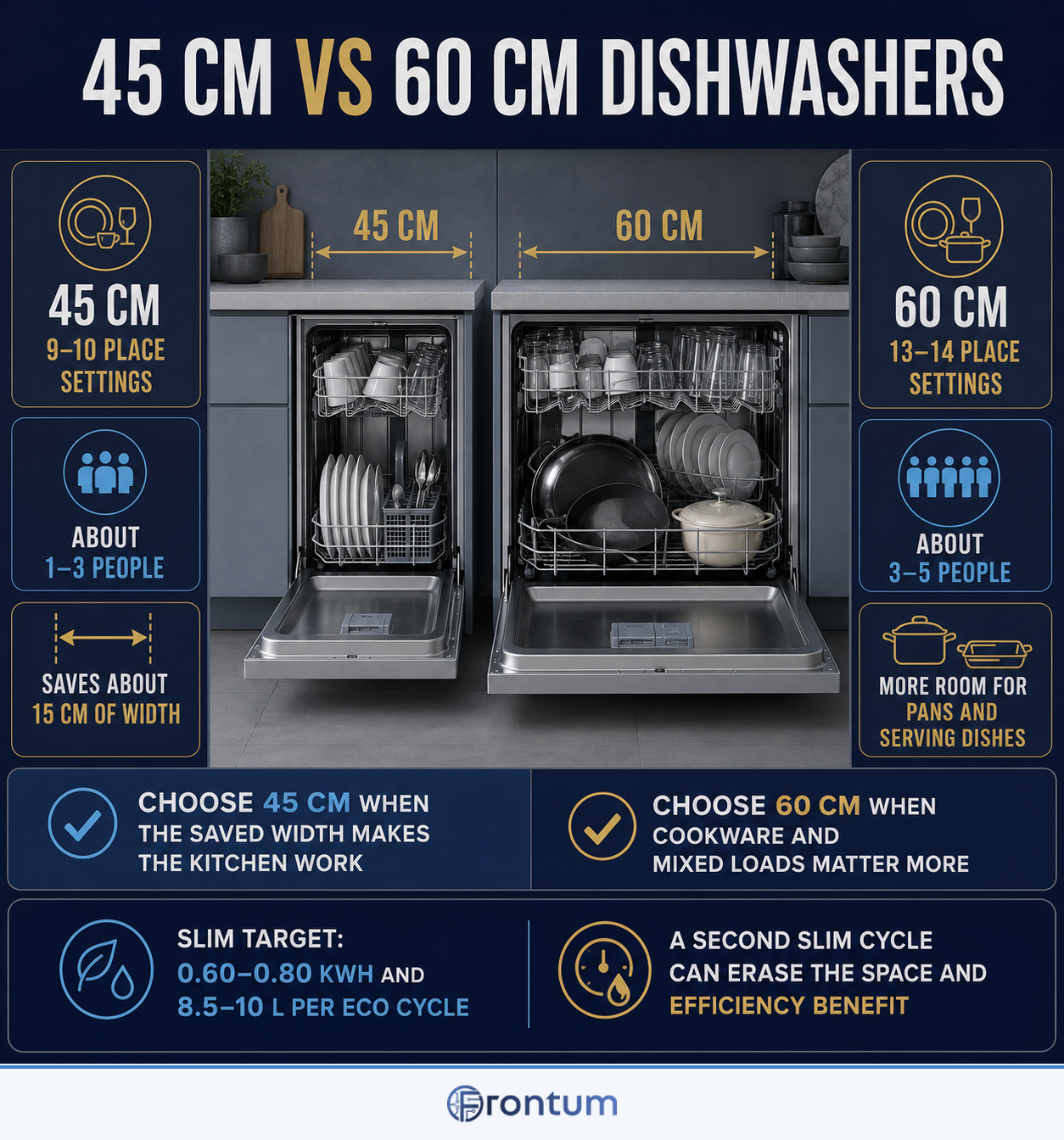
The main trade-off of a 45 cm dishwasher is reduced loading flexibility in exchange for saving about 15 cm of width. Most hold 9–10 place settings rather than the 13–14 commonly offered by full-size machines.
The narrower basket is less forgiving of pans, serving dishes, large plates, and tall glasses. Fixed tines or a shallow upper rack can matter more than the headline setting count, so the loading diagram and maximum plate diameter deserve close attention.
A smaller cabinet does not automatically mean proportionally lower running costs. A well-loaded slim machine uses less per cycle than many full-size models, but needing a second cycle can remove that advantage.
The benefit is genuine where a 60 cm opening is unavailable or where daily loads are modest. For larger households, frequent cooking, or entertaining, full width usually provides better convenience and room for mixed loads.
How many place settings fit in a 45 cm dishwasher?
A 45 cm dishwasher normally holds 9–10 place settings, with some models reaching 11. This commonly suits one or two people and can work for three when loads are modest and the machine runs daily.
Place settings describe standardized tableware rather than cookware. Check plate diameter, upper-rack height, folding supports, cutlery storage, and space beneath the spray arms; pans and serving pieces can displace several nominal settings.
The chart below shows the place-setting capacities of 45 cm dishwashers.
[vertical-chart-05666688368006859857070099032599810653750677106867]
Are 45 cm dishwashers better than 60 cm models for small kitchens?
A 45 cm dishwasher is better than a 60 cm model when the saved 15 cm makes the kitchen layout workable and the smaller basket fits normal loads. It can preserve drawer or cabinet width and may be easier to place in a compact galley or apartment.
A 60 cm machine is better when floor width is available and loads regularly include cookware, several meals, or entertaining. Its larger basket reduces awkward stacking and the risk of running a second cycle.
Measure both the appliance opening and the storage you would gain or lose. Choose slim for a real space constraint, not merely because the household is small; cooking habits and dish volume are the deciding factors.
Do 45 cm dishwashers use less energy and water?
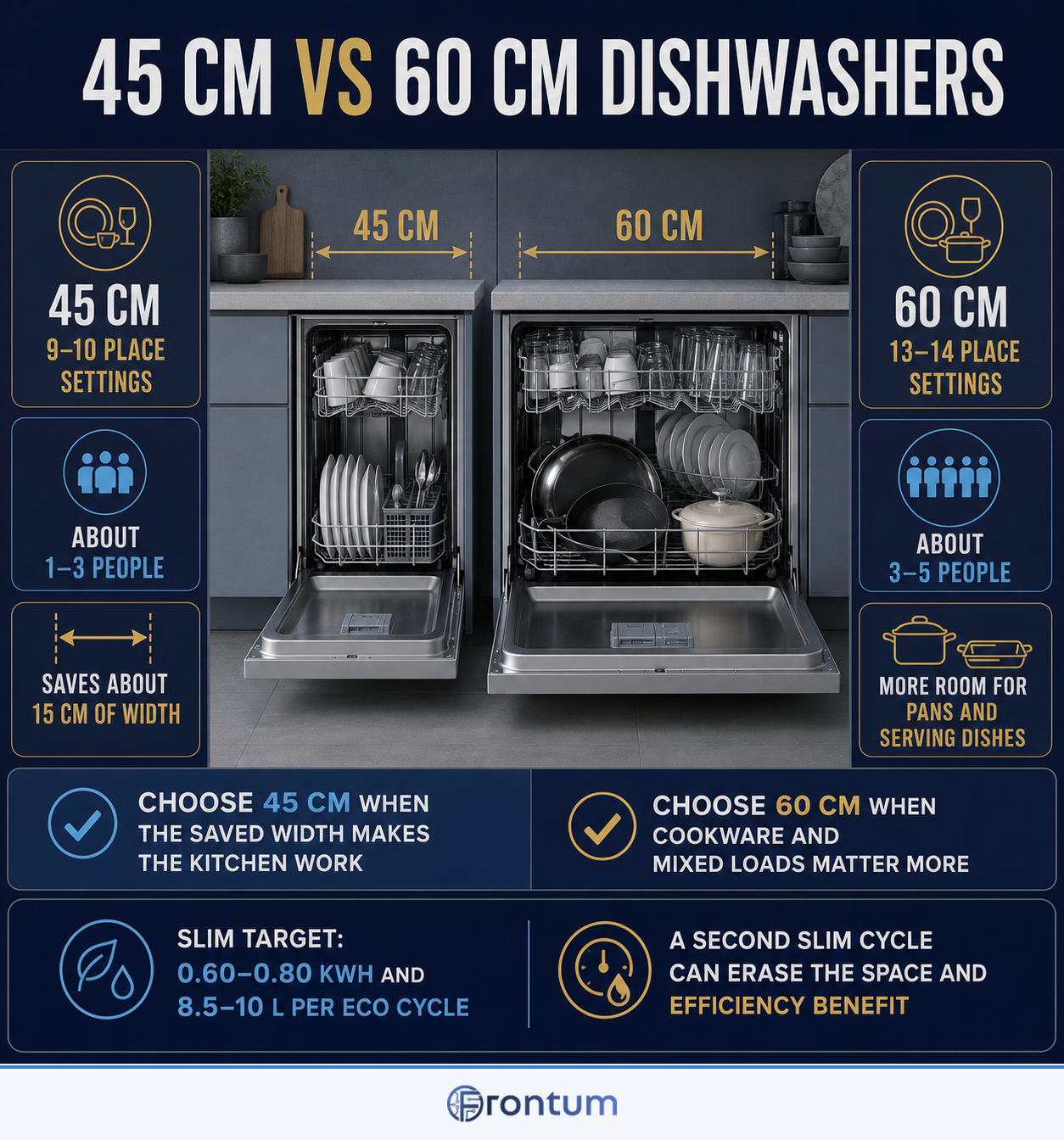
A 45 cm dishwasher generally uses less energy and water per cycle than a full-size model, but not necessarily less per item washed. Efficient slim machines commonly use about 0.5–0.8 kWh and 8.5–10 L on Eco, while capacity is usually 9–10 place settings.
A full 13- or 14-setting machine can spread somewhat higher cycle consumption across more dishes. If a slim model needs two cycles for the same load, its apparent saving disappears.
Compare energy per 100 Eco cycles, water per Eco cycle, rated capacity, and Eco duration. Use the machine only when sensibly loaded and choose rack flexibility that prevents rewashing.
Installation type does not determine efficiency: integrated and freestanding 45 cm models can both perform well. Program choice, water heating, drying, load size, and maintenance have a larger effect on actual use.
How much do 45 cm dishwashers cost?
Dishwashers around 45 cm wide generally cost about £300-£600, across both freestanding and integrated designs. Installation type, rack flexibility, efficiency, noise, drying, controls, and hinge requirements affect the price.
Below £340, expect 9–10 place settings, basic baskets, core programs, and conventional drying. From £340-£470, adjustable racks, folding supports, automatic cycles, quieter operation, stronger protection, and improved drying or status displays become more common.
Above £470, models may add very low noise, premium cutlery trays, advanced drying, time projection, interior lighting, connectivity, and sophisticated integrated hinges. For built-in choices, include the furniture panel and fitting before comparing total prices.
The chart below shows the price distribution of 45 cm dishwashers.
[vertical-chart-17510671262229732517133453158607126758290677262933]
What should you consider when choosing a 45 cm dishwasher?
Before buying a 45 cm dishwasher, consider the following factors:
- Installation type and exact fit: Decide between freestanding and integrated, then measure width, height, depth, hoses, ventilation, panel or worktop requirements, and open-door clearance. Nominal 45 cm width does not guarantee that every niche, hinge, or connection detail will match.
- Required capacity: Most models hold 9–10 settings, which generally suits 1–3 people; 11 settings add useful reserve for a small family that cooks frequently. Compare that figure with peak dish and cookware volume because repeated cycles undermine the space, energy, and time savings.
- Rack flexibility: Check upper-basket adjustment, folding supports, cutlery storage, glass holders, maximum plate diameter, and spray-arm clearance. Narrow chambers need adaptable geometry to prevent pans and tall dishes from blocking other items.
- Energy and water consumption: For a slim dishwasher, about 0.60–0.80 kWh and 8.5–10 L per Eco cycle is a good target; values above roughly 0.90 kWh or 11 L are high for the capacity. Eco may take 3–5 hours, while quick, intensive, hygiene, and extra-dry programs can use more resources.
- Noise level: Around 44–46 dB or below is useful near living areas, while installation and leveling also affect perceived sound. Integrated furniture panels may soften some noise but do not change the rated figure.
- Wash performance and programs: Eco, automatic, intensive, quick, and glass cycles are normally sufficient if sensors, filtration, spray coverage, and detergent dispensing work well. Pay particular attention to cleaning when the narrow racks are crowded.
- Drying performance: Compare plastic results and systems such as automatic door opening, heat exchange, fans, minerals, or extra heat. Confirm that steam and door movement suit the worktop, panel, plinth, and walkway.