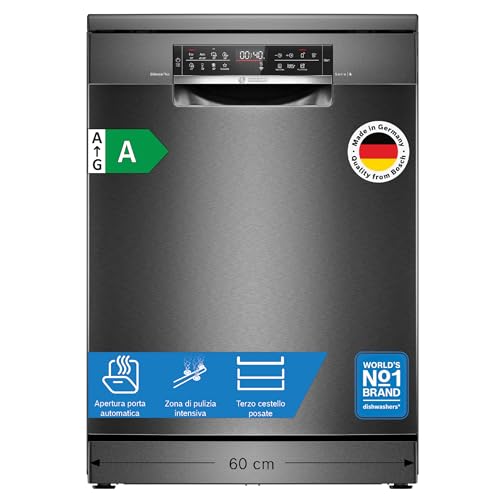
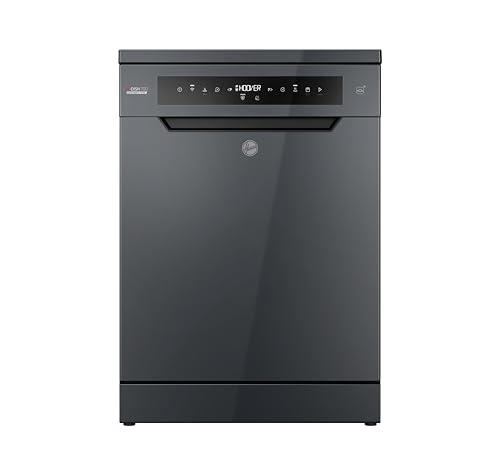
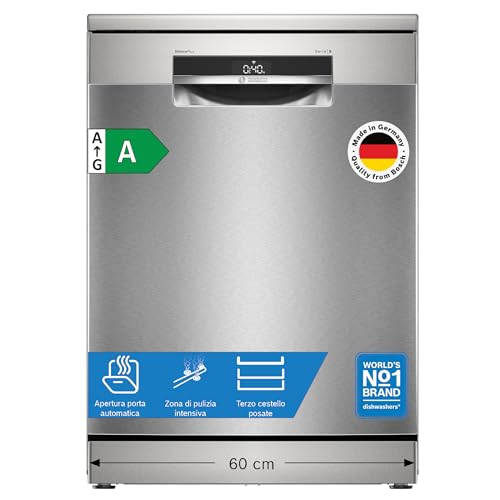
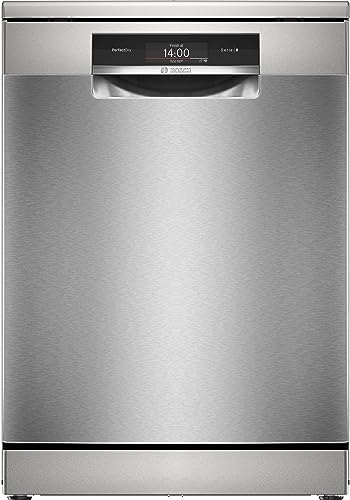
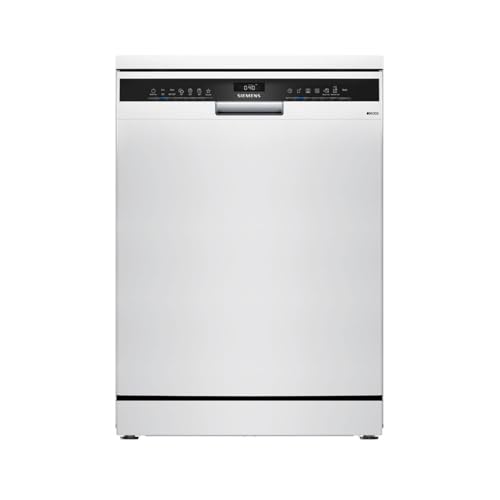
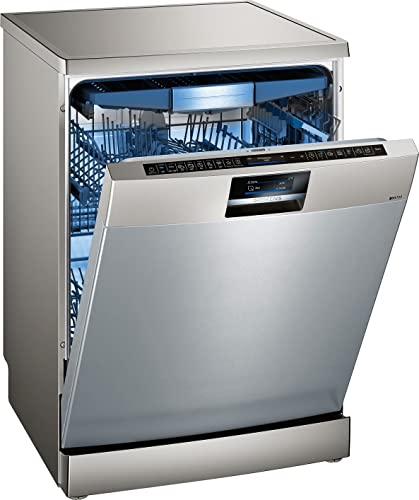
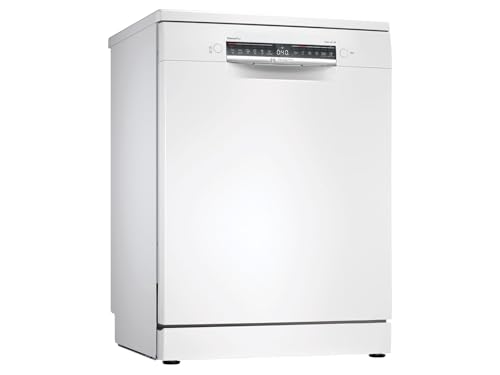
Which brands make the best freestanding 60 cm dishwashers?
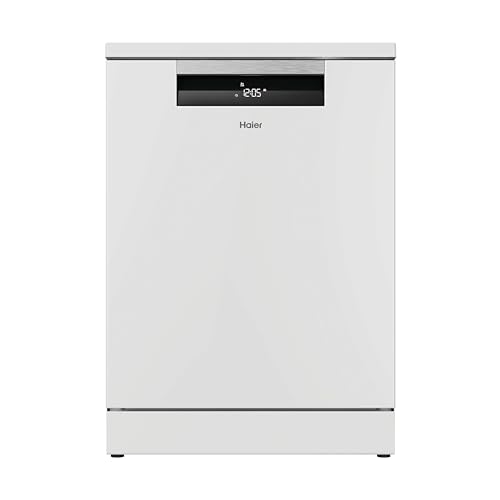
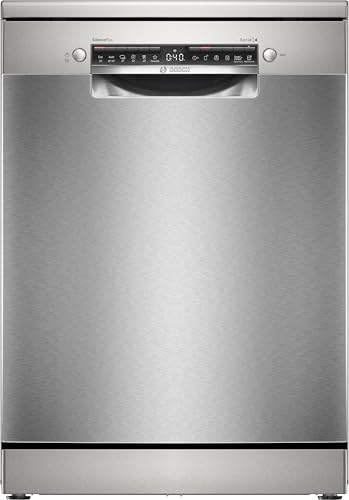
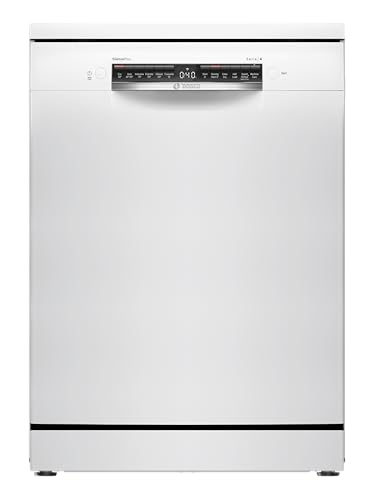
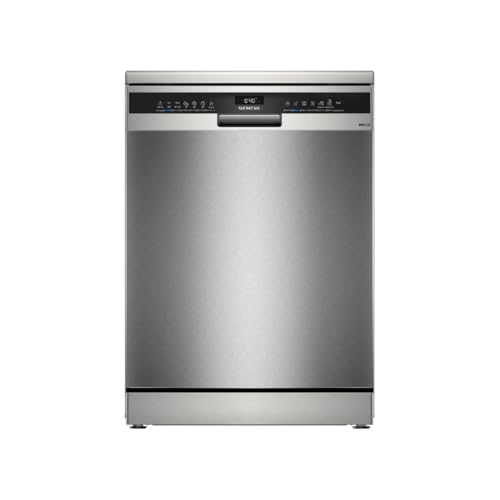
The best freestanding 60 cm dishwasher brands are ranked below:
- Siemens (Average overall score: 8.7)
- Haier (Average overall score: 8.6)
- Bosch (Average overall score: 8.5)
The chart below ranks freestanding 60 cm dishwasher brands by average overall score.
[horizontal-chart-04572148475638891027009735242693054840133948538129]
How many place settings fit in a freestanding 60 cm dishwasher?
A freestanding 60 cm dishwasher normally holds 13–14 place settings, enough for many three- to five-person households. Fifteen- or 16-setting models provide extra flexibility for entertaining and bulky mixed loads, while 12 settings may be adequate when the machine runs daily.
Place-setting capacity is standardized tableware, not a promise that cookware will fit. Check the third rack or cutlery basket, upper-basket adjustment, folding supports, maximum plate diameter, and clearance for pans and glasses.
Choose some spare capacity for peak loads rather than only the average weekday. A flexible 14-setting layout can outperform a cramped 16-setting design, and running one well-loaded full-size cycle is generally preferable to repeated partial loads.
The chart below shows the place-setting capacities of freestanding 60 cm dishwashers.
[vertical-chart-01174017905408702567089355279173069959751834018855]
How much do freestanding 60 cm dishwashers cost?
Freestanding 60 cm dishwashers generally cost about £260-£650, with premium models priced above that range. Capacity, energy class, noise, basket flexibility, drying performance, finish, and warranty explain much of the variation.
Below £340, expect full-size capacity with standard racks, essential programs, basic drying, and often higher noise or consumption. From £300-£500, adjustable baskets, third racks, automatic cycles, improved leak protection, quieter operation, and stronger drying become more common.
Above £520, models may provide very low noise, advanced drying, flexible interiors, interior lighting, connectivity, premium finishes, and better service coverage. Add delivery, removal, adapters, and connection work when comparing the complete purchase cost.
The chart below shows the price distribution of freestanding 60 cm dishwashers.
[vertical-chart-16312238251639666740010169643067701393693457021283]
What should you consider when choosing a freestanding 60 cm dishwasher?
Before buying a freestanding 60 cm dishwasher, consider the following factors:
- Dimensions and connections: Measurements should cover width, height, body depth, hoses, ventilation, handle projection, and open-door clearance. Verify inlet, drain, power, and under-counter requirements, including whether the removable top may be taken off safely.
- Required capacity: Thirteen to 14 settings generally suit 3–5 people, while 15–16 suit 4–6 people, frequent entertaining, or cookware-heavy loads. Select enough headroom for peak use without routinely running a large machine half empty.
- Rack design: Check third-rack depth, upper-basket adjustment, folding tines, plate diameter, stemware supports, cutlery storage, and pan clearance. A flexible 14-setting layout can outperform a rigid 16-setting basket.
- Energy and water consumption: For a full-size 60 cm dishwasher, about 0.55–0.75 kWh and 8.5–10 L per Eco cycle is good, 0.76–0.90 kWh and 10–11 L is acceptable, and more than 0.90 kWh or 11 L is relatively high. Review intensive, quick, hygiene, and extra-dry consumption separately if those modes will be used often.
- Noise level: Around 44 dB or below is preferable near living spaces, whereas a utility room may tolerate more. Correct leveling, stable flooring, and clearance from cabinets help prevent vibration noise.
- Wash performance and programs: Eco, automatic, intensive, quick, and glass cycles cover most needs when sensors, spray arms, filtration, and detergent release are effective. Check cleaning of pans and crowded loads rather than choosing by program count.
- Drying performance: Compare condensation, automatic-door, fan-assisted, heat-exchanger, or mineral drying, particularly for plastics. Consider cycle time, energy use, steam release, and whether the open door blocks the kitchen.