Which brands make the best powerful corded vacuums in 2026?
The best powerful corded-vacuum brands in 2026 are ranked below:
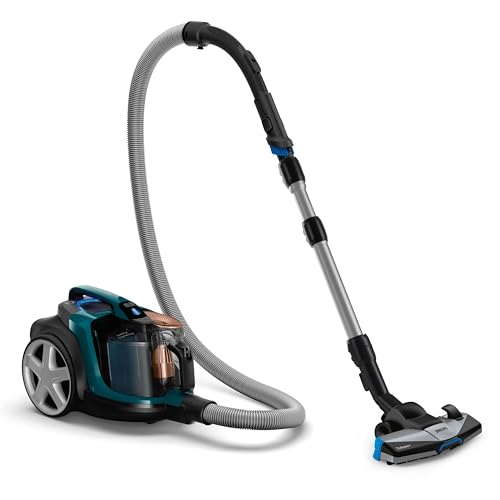
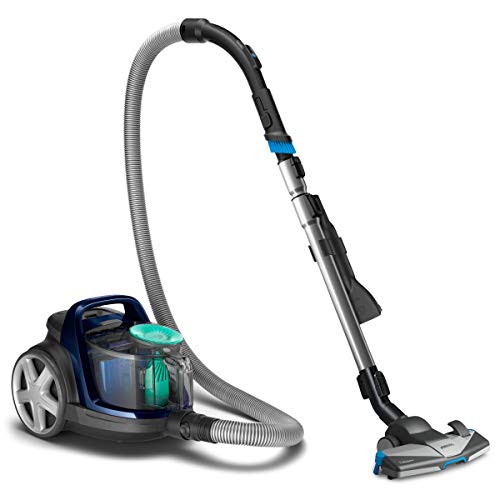
- Philips (Average overall score: 7.3)
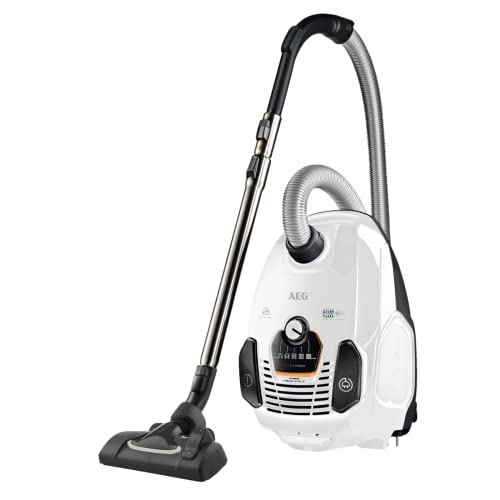
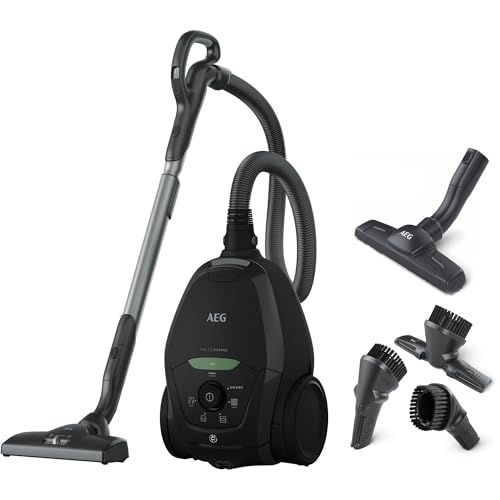
- AEG (Average overall score: 6.9)
- Dyson (Average overall score: 6.9)
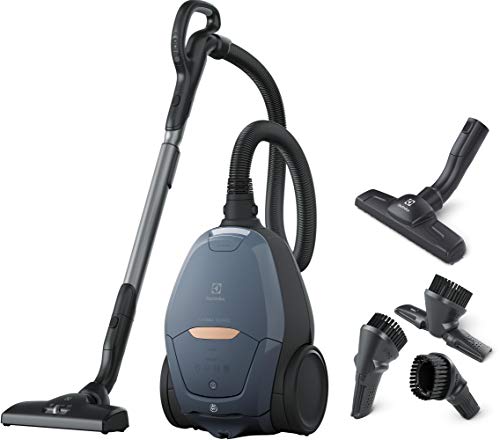
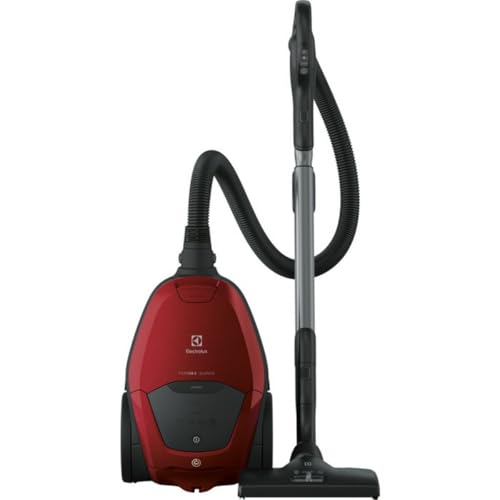
- Electrolux (Average overall score: 6.8)
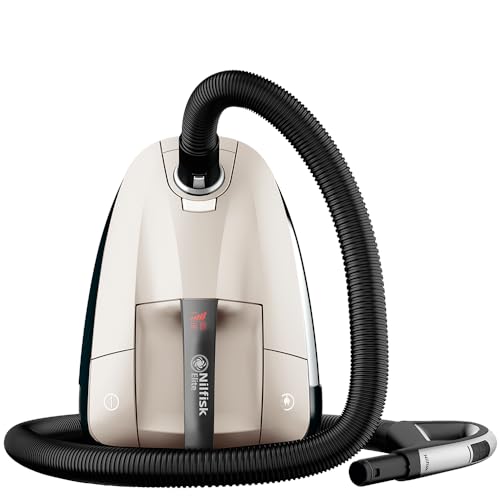
- Nilfisk (Average overall score: 6.6)
The chart below ranks powerful corded-vacuum brands by average overall score.
[horizontal-chart-16562573386572990426147268758215133670034135653037]
When should you consider buying a powerful corded vacuum?
You should consider a powerful corded vacuum if you often deep-clean carpet, collect heavy debris, or run the vacuum long enough that maximum cordless runtime becomes restrictive. Continuous mains power is especially useful when suction above 150 AW is needed across several rooms rather than for a short boost.
The format also suits workshops and large homes when a 2–3 L or larger container reduces interruptions. A canister body keeps most of the 5–7 kg mass on the floor, while the hose and wand provide reach under furniture and on stairs.
High suction is not always useful on lightweight rugs or thick carpet if the floorhead clamps to the surface. An adjustable suction control or bypass vent makes a powerful machine easier to push and protects delicate materials.
For light hard-floor dust, a smaller corded or cordless machine is usually easier to handle. Choose the high-output model when its stronger airflow, head design, and uninterrupted operation solve a repeated cleaning problem.
How much do powerful corded vacuums cost?
Powerful corded vacuums generally cost about £90-£300, although simpler high-output models can start near £40-£90. Premium canisters and specialist machines with stronger filtration, large tool sets, or advanced floorheads reach approximately £300-£400.
The price should reflect more than a 150+ AW claim. Compare sustained airflow, adjustable suction, cable and hose reach, head construction, sealing, bags or filters, and the cost of replacement wear parts.
The chart below shows the price distribution of powerful corded vacuums.
[vertical-chart-16768653069363000587147126440522955569312070759634]
What should you check before buying a powerful corded vacuum?
You should check the following factors before buying a powerful corded vacuum:
- Suction output: Treat 150 AW as the minimum for this guide, with roughly 180–250 AW representing strong household output and 300–430 AW the upper end. Compare air watts at the same measurement point and operating mode; kilopascals and motor-input watts cannot replace an AW comparison.
- Airflow and sealing: Around 25–40 L/s supports debris transport once suction lifts it, while roughly 15–25 kPa indicates useful pressure when compared on the same basis. A sealed hose, clean filter, and controlled head opening determine whether those figures remain useful as the container fills.
- Motor input and controls: About 600–900 W is common, but some specialist models draw 1,200–2,000 W. Input power measures electricity use rather than pickup, so look for adjustable suction or a bypass vent instead of ranking machines by watts alone.
- Cable and operating radius: A 7–8 m cord is typical for this group, while 9–15 m suits large floors and workshops. Add hose and wand reach for canisters, and check automatic rewind or stable cord hooks for storage.
- Capacity, weight, and width: Around 2–3 L, 5–7 kg, and a 250–300 mm cleaning path suit many canister designs. Larger 5–15 L wet/dry containers reduce emptying but increase the loaded weight and storage footprint.
- Noise, head, and maintenance: Approximately 70–75 dB is restrained for a powerful corded vacuum, while 80 dB or more is loud during a long session. Check carpet agitation, hard-floor protection, edge pickup, sealed filtration, and local availability of bags, filters, belts, rollers, and hoses.
The chart below shows the air-watt distribution of powerful corded vacuums.
[vertical-chart-01569908772319254555140508287575512425932058248250]