
Are Leica cameras good?
Leica cameras have an average overall score of 6.2, ranking #8 among comparable camera brands, and a user rating of 8.5, placing them at #11 based on user reviews.
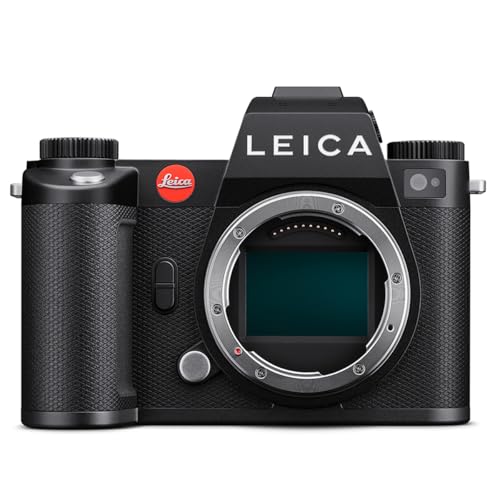
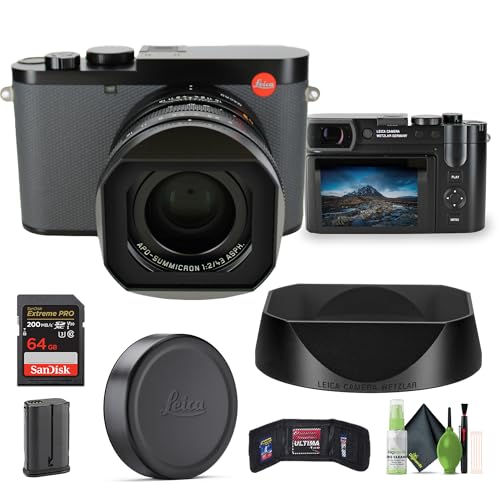
Leica cameras are very good when their focused design matches the photographer, particularly for documentary, street, travel, portrait, and fine-art work. M cameras offer a quiet, deliberate manual-focus rangefinder experience and access to compact M lenses; Q models combine a high-resolution full-frame sensor with a fast fixed lens; and SL bodies provide the autofocus, stabilization, weather resistance, and video tools expected from a modern professional mirrorless system.
Recent M11, Q3, and SL3-generation cameras use 60 MP-class full-frame sensors, and Leica’s Summicron, Summilux, and APO lenses can retain strong contrast and fine detail at wide apertures. Monochrom variants remove color capture to maximize black-and-white tonal detail. The trade-offs are substantial: M bodies lack conventional autofocus, Q models fix the buyer to a 28 mm or 43 mm prime, and SL kits become large and expensive with professional zooms. Leica suits photographers who value handling, optics, and simplicity more than autofocus speed, video depth, or specifications per euro.
The chart below compares Leica with other camera brands by average overall score.
[horizontal-chart-01577259834648091757105710739110051238292053984796]
What are the main advantages of Leica cameras?
The main advantages of Leica cameras are as follows:
- Purpose-built camera families: The M, Q, and SL lines solve distinctly different problems instead of sharing one generic body formula. Buyers can choose a compact manual rangefinder, a fixed-lens full-frame camera, or a modern L-mount system without losing Leica's emphasis on direct controls.
- Exceptional lens choices: Leica M and SL lenses include compact Summicron primes, faster Summilux designs, and optically corrected APO models. Many retain high central contrast and useful edge detail at wide apertures, which is especially valuable for available-light, portrait, and fine-art photography.
- Direct handling and restrained interfaces: Aperture rings, shutter-speed controls, clear viewfinders, and comparatively uncluttered menus keep attention on exposure and composition. The effect is most pronounced on M cameras, but Q and SL bodies also avoid the feature-heavy feel of many rivals.
- Strong full-frame image quality: Recent 60 MP-class M11, Q3, and SL3 models provide substantial cropping freedom and detailed RAW files, while lower-resolution SL variants trade some resolution for speed and video flexibility. Dedicated Monochrom bodies provide true black-and-white capture without a color filter array.
- Durable construction and long system life: Metal bodies, tight assembly, firmware support, repair services, and long-running mount compatibility can make a Leica viable for many years. The M mount is especially valuable to photographers who want to use lenses spanning several decades, although compatibility details still need checking.
What are the main disadvantages of Leica cameras?
The main disadvantages of Leica cameras are as follows:
- Very high purchase price: Current full-frame bodies commonly cost about £4,300-£8,600 before an interchangeable lens is added, and premium M or SL lenses can cost several thousand euros each. The price premium pays partly for construction, optical design, low-volume production, and brand positioning rather than a proportionate increase in every measurable feature.
- Uneven autofocus capabilities: M cameras rely on manual rangefinder focusing, while older Q and SL generations trail the latest specialist sports cameras in subject recognition and tracking. Even on newer autofocus bodies, buyers should test their subjects and lenses instead of assuming Leica's image quality also means class-leading action performance.
- Specialized designs impose real limits: A Q has a permanently attached 28 mm or 43 mm lens, an M lacks through-the-lens autofocus, and a V-Lux uses a much smaller sensor than the full-frame lines. These are deliberate design choices, but they can become expensive mistakes when the intended photography changes.
- SL kits can be large and costly: The SL bodies are substantial, and fast L-mount zooms can create a kit that is heavier than the minimalist Leica image suggests. Sigma and Panasonic L-mount lenses reduce cost and broaden choice, but a complete Leica-branded kit remains a major investment.
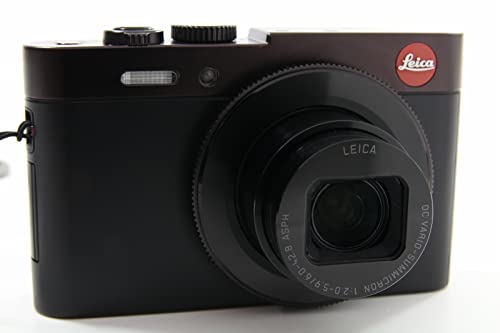
- Compact models do not offer the same proposition as core Leica systems: D-Lux and V-Lux cameras have historically shared substantial hardware with Panasonic counterparts. Their Leica styling, profiles, warranty, and bundled software may still appeal, but buyers should compare the corresponding Lumix specification and price before paying extra.

Who makes Leica cameras?
Leica cameras are made by Leica Camera AG, a German camera and optics manufacturer headquartered in Wetzlar, Hesse. The company traces its camera history to Ernst Leitz in Wetzlar and engineer Oskar Barnack, whose compact Ur-Leica prototype of 1913–1914 helped lead to the Leica I commercial camera in 1925. The Leica name derives from “Leitz Camera,” and the early system played a major role in establishing 35 mm film as a practical format for small, high-quality still cameras.
Leica Camera AG develops the core M rangefinder system, Q fixed-lens full-frame cameras, SL full-frame mirrorless system, and specialist products such as Monochrom variants. Camera and lens engineering remains closely associated with Wetzlar, while Leica also has a long-established production facility in Famalicão, Portugal. Components, assembly, and finishing can therefore involve both German and Portuguese operations; the exact country marking depends on the product.
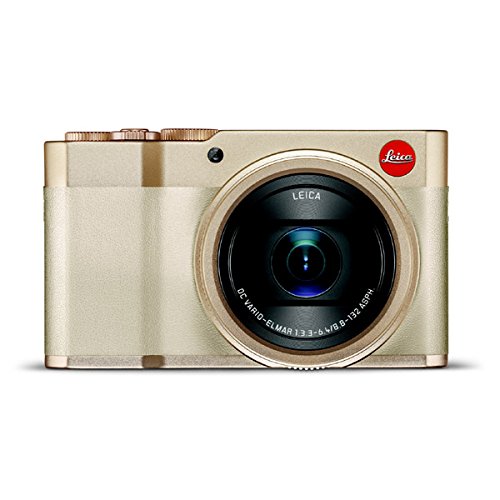
Not every Leica-branded camera follows the same development and manufacturing path. Core M, Q, and SL products are Leica's own premium systems, while compact lines such as D-Lux and V-Lux have historically been created in cooperation with Panasonic and share substantial hardware with related Lumix models. This distinction matters because a buyer considering a Leica M or Q is paying for a different design and system proposition from someone comparing a D-Lux with its Panasonic counterpart.
What are the main Leica camera models?
The main Leica camera models and families are as follows:
- M system: The M11, M11-P, and M11 Monochrom represent Leica's classic full-frame rangefinder line, built around manual focusing and compact M-mount lenses. The 60 MP generation offers high resolution in a body intended for deliberate street, documentary, travel, and fine-art photography; it is a poor fit for buyers who need autofocus tracking or long telephoto lenses.
- Q series: The Q3 combines a 60 MP full-frame sensor with a fixed 28 mm f/1.7 Summilux lens, while the Q3 43 uses a 43 mm f/2 APO-Summicron lens for a more natural or portrait-oriented perspective. Both provide autofocus, stabilization, an electronic viewfinder, and digital crop modes, but neither lens can be changed.
- SL system: The SL3 is a high-resolution 60 MP L-mount mirrorless body, while the SL3-S emphasizes faster operation and stronger hybrid stills/video use with a lower-resolution sensor. The system accepts Leica, Panasonic, and Sigma L-mount lenses, making it Leica's most flexible option for autofocus, zoom lenses, studio work, and video, although bodies and professional lenses are comparatively large.
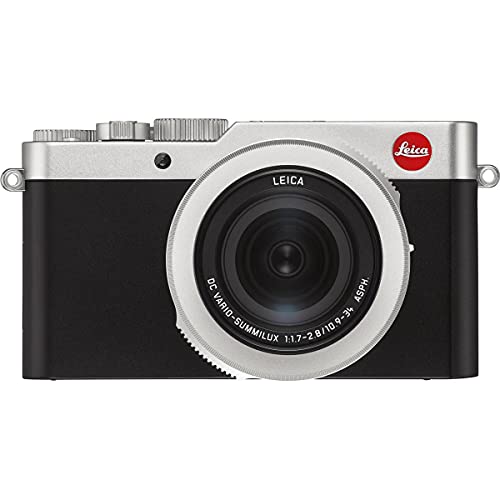
- D-Lux series: The D-Lux 8 is a premium compact with a Four Thirds-type sensor and a built-in 24–75 mm-equivalent f/1.7–2.8 zoom. It suits travel and everyday photography when carrying separate lenses is undesirable, but its smaller sensor and partnership-based Panasonic roots distinguish it from the full-frame M, Q, and SL families.
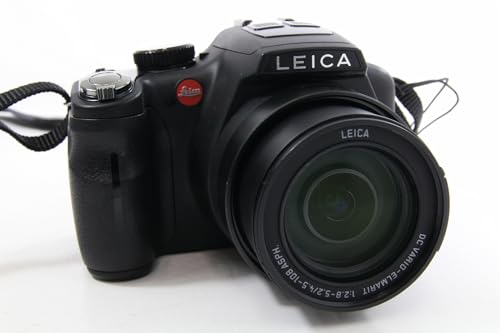
- V-Lux series: The V-Lux 5 is a bridge camera built around a 1-inch-type sensor and a fixed 25–400 mm-equivalent f/2.8–4 zoom. Its broad focal range is useful for travel, wildlife in good light, and family use, but low-light quality and background separation cannot match a full-frame Leica with a fast lens.
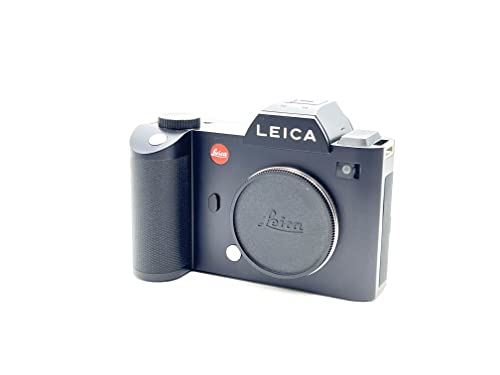
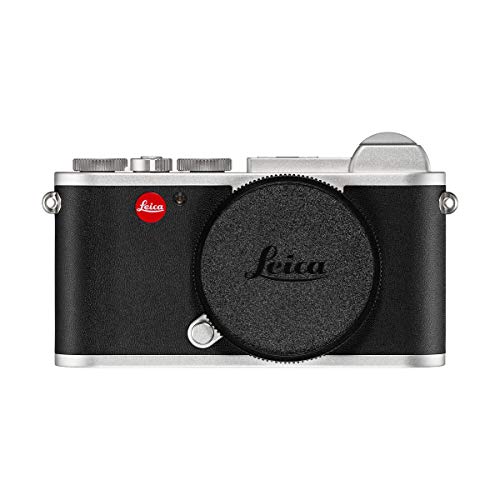
- S system and earlier APS-C lines: The S3 is a specialist medium-format DSLR with a 64 MP sensor intended for controlled commercial, landscape, and studio work; it is expensive, slow by modern action standards, and now a niche legacy-system choice. Discontinued CL, TL, and T APS-C bodies can be compact entry points into Leica ownership, but buyers must account for the end of the APS-C system and limited future lens development.
How much do Leica cameras cost?
New Leica cameras generally cost about £1,400-£8,600, depending on the camera family and whether the lens is built in or purchased separately. A D-Lux compact is the least expensive current route into the range, while Q cameras include a premium fixed lens and current M bodies occupy the highest-volume price tier before a separate lens is added.
The D-Lux 8 costs roughly £1,400-£1,500 and includes its 24–75 mm-equivalent f/1.7–2.8 zoom. The V-Lux line is not a central current system in the same way as M, Q, or SL, so buyers should confirm whether a listed V-Lux is active new stock, an older discontinued model, or a retailer-specific listing before comparing it with the current D-Lux.
Q-series cameras cost roughly £5,200-£6,000 with a fixed lens: the Q3 combines a 60 MP sensor with a 28 mm f/1.7, while the Q3 43 uses a 43 mm f/2. SL bodies are about £4,300-£6,000 without a lens; Sigma or Panasonic L-mount lenses can lower the system cost, while Leica SL optics often add several thousand euros. M bodies generally cost £6,900-£8,600 before a lens, and new M lenses commonly start around £2,200-£2,600 but can exceed £8,600. A realistic budget must therefore compare complete body-and-lens kits.
How do Leica cameras compare with Fujifilm models?
Leica cameras prioritize premium construction, manual control, distinctive fixed-lens and rangefinder experiences, while Fujifilm offers more accessible APS-C systems, stronger autofocus value, and medium format at a lower entry price. Leica is the luxury specialist; Fujifilm is the broader practical recommendation.
Leica’s M series is unique for manual rangefinder focusing, the Q combines a full-frame sensor with a fixed prime, and SL provides an autofocus L-mount system. Fujifilm counters with compact X-series bodies, the fixed-lens X100, Film Simulations, and GFX medium format; it is generally better for action, video, and buyers who need several affordable lenses.
Current Leica cameras cost about £1,400-£8,600, with M lenses commonly adding £2,200 or more. Fujifilm X bodies are roughly £800-£2,200, an X100VI around £1,500, and GFX bodies about £3,400-£5,800; Leica makes sense when its specific handling or lens character is the goal, not when price-to-specification value leads the decision.
What should you consider while choosing the best Leica camera?
Consider the following Leica-specific points before choosing a camera:
- Camera family and focusing method: Decide first between an M rangefinder, fixed-lens Q, interchangeable-lens SL, D-Lux compact, or V-Lux bridge camera. An M requires manual rangefinder focusing, whereas Q and SL cameras provide autofocus; this single difference matters more than small specification changes between generations.
- Fixed lens versus interchangeable mount: Q3 buyers commit to a 28 mm f/1.7 lens, while Q3 43 buyers commit to a 43 mm f/2 lens, so test the focal length before spending around £5,200-£6,000. M and SL bodies accept interchangeable lenses, but the cost, size, minimum focusing distance, and focusing method of the intended lenses should be included in the decision.
- M rangefinder compatibility: Check whether the viewfinder frame lines suit the focal lengths you use and whether your eyesight allows accurate focusing at wide apertures. Older or adapted M lenses may require six-bit coding, live view, an accessory electronic viewfinder, or calibration, and very wide or long lenses are less natural on an optical rangefinder.
- Resolution and computer workflow: Recent M11, Q3, and SL3 models produce files at up to roughly 60 MP, giving useful crop flexibility but also demanding more storage and processing power. Verify whether lower-resolution capture modes, internal memory, card type, tethering, and RAW software support fit your workflow rather than buying resolution you will not use.
- Autofocus, stabilization, and burst speed: Q and SL generations differ substantially in subject detection, tracking, in-body stabilization, buffer depth, and rolling-shutter behavior. Photograph moving subjects with the intended lens and shooting mode; a camera that is excellent for portraits may still be unsuitable for birds, field sports, or rapidly moving children.
- Video and connectivity: SL models are the logical Leica choice for demanding video, while M cameras are stills-first and Q or compact models have more limited rigging flexibility. Check frame rates, crop factors, recording formats, heat limits, microphone and headphone support, HDMI output, USB charging, and whether the screen articulation works for the intended setup.
- Lens-system cost and alternatives: Price the complete kit, including the lens, spare battery, cards, hood, filters, and any grip or viewfinder. L-mount users can reduce cost with Sigma or Panasonic lenses, but M buyers should compare Leica lenses with compatible options from Voigtländer and Zeiss while checking rangefinder coupling and optical behavior.
- Current support and discontinued systems: Confirm that the chosen model has active firmware support, readily available batteries and accessories, and an appropriate Leica service or repair route in your region. CL, TL, T, and other discontinued lines can still appear in product listings, but their ended system development and limited future lens support make them less suitable for buyers who want a growing current platform.
- Partnership-based compact models: Compare D-Lux and V-Lux cameras with the related Panasonic Lumix model when one exists. Leica styling, profiles, warranty, and bundled software can have value, but the underlying sensor, zoom, and core performance may be similar enough that the price difference should be justified explicitly.