

Are Fujifilm cameras good?
Fujifilm cameras have an average overall score of 6.1, ranking #9 among comparable camera brands, and a user rating of 9.3, placing them at #1 based on user reviews.
Fujifilm cameras are very good for photographers who value strong JPEG output, compact APS-C lenses, tactile exposure controls, and a system with a distinctive creative identity. X-series bodies cover travel, street, family, portrait, action, and serious hybrid video, while GFX cameras deliver exceptional resolution and tonal detail from a 44 × 33 mm sensor.
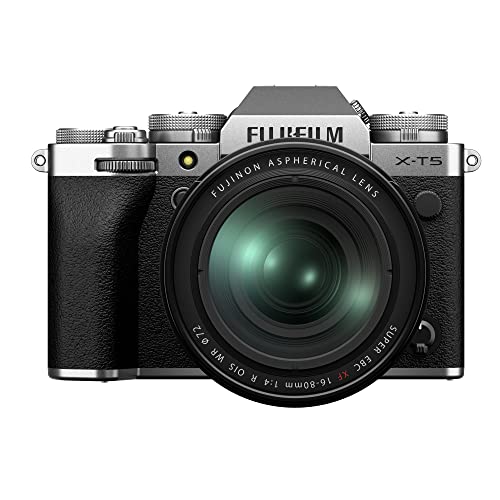
Film Simulations including Provia, Velvia, Classic Chrome, Acros, Eterna, and Reala Ace adjust color or monochrome rendering while preserving RAW capture. Recent X-Trans CMOS 5 bodies offer either 40 MP resolution or a 26 MP stacked sensor, subject detection, advanced video, and in-body stabilization on models such as X-T5, X-H2, X-H2S, and X-S20. Difficult subject tracking can trail the best Sony or Canon systems, older lenses may focus more slowly, and compact bodies may omit IBIS. There is no full-frame tier: moving beyond APS-C requires costlier GFX, while X100 and GFX100RF lenses are fixed.
The chart below compares Fujifilm with other camera brands by average overall score.
[horizontal-chart-01577259834648091757105710739110051238292053984796]
What are the main advantages of Fujifilm cameras?
The main advantages of Fujifilm cameras are as follows:
- Film Simulations and JPEG workflow: Fujifilm provides carefully tuned color and monochrome profiles inspired by its film heritage, with controls for grain, highlight/shadow tone, color, sharpness, and white-balance shifts. Photographers can produce distinctive finished JPEGs in-camera while retaining RAW files for later editing.
- APS-C system designed as a destination: X-mount includes compact primes, weather-resistant zooms, fast portrait lenses, macro options, and long telephotos made specifically around the 1.5× crop format. This creates smaller balanced kits without treating APS-C lenses as temporary products on the way to full frame.
- Tactile body choices: X-T, X-Pro, X-E, and X100 cameras offer dedicated shutter-speed, exposure-compensation, aperture, or ISO controls that keep important settings visible. X-S and X-H models also provide conventional PASM handling for users who prefer command dials and custom modes.
- Distinct sensor options: High-resolution 40 MP X-Trans bodies support detailed stills and high-resolution video, while X-H2S uses a 26 MP stacked sensor for faster bursts and reduced rolling shutter. GFX adds 50 or 100 MP-class 44 × 33 mm sensors when tonal depth, resolution, and large-format rendering matter more than speed or portability.
- Strong hybrid and fixed-lens choices: X-H2/X-H2S and newer X-series cameras offer 10-bit recording, high-resolution modes, F-Log, and professional accessories, while X100VI packages a 35 mm-equivalent f/2 lens, hybrid viewfinder, and IBIS into one camera. The range therefore supports both expandable systems and disciplined one-lens shooting.
What are the main disadvantages of Fujifilm cameras?
The main disadvantages of Fujifilm cameras are as follows:
- Autofocus depends heavily on generation and setup: Recent X-Trans 5 bodies recognize more subject types and track much better than early X-series cameras, but difficult birds, erratic sport, or subjects crossing busy backgrounds can still be less consistent than the strongest rivals. Firmware, lens motor, focus-area choice, and release priority can materially change results.
- There is no full-frame bridge between X and GFX: X-series users who need a larger sensor cannot move lenses onto GFX because X and GF are separate mounts. GFX bodies and lenses are larger, slower, and substantially more expensive, so the upgrade is a system change rather than a simple body step.
- IBIS and handling are inconsistent across compact models: X-H2, X-H2S, X-T5, X-S20, X-T50, and X100VI include stabilization, while bodies such as X-M5 and several older X-T/X-E/X100 generations do not. Small retro grips can also become uncomfortable with fast zooms or long telephotos.
- High-resolution sensors increase technical demands: Forty-megapixel APS-C files reveal lens weakness, focus error, diffraction, and camera movement more readily and consume more card and storage space. Conventional high-resolution sensors can also show rolling shutter during fast electronic-shutter action or quick video pans.
- Popularity and system cost can undermine value: High-demand fixed-lens models may be difficult to obtain at normal retail pricing, premium red-badge XF zooms are not cheap, and GFX lenses quickly raise the total into professional territory. Compare actual body-and-lens availability rather than assuming Fujifilm always produces the smallest or least expensive kit.

Who makes Fujifilm cameras?
Fujifilm cameras are made by Fujifilm Corporation, the Japanese technology and imaging company within Fujifilm Holdings Corporation, headquartered in Tokyo. The business was founded in 1934 as Fuji Photo Film Co. to manufacture photographic film, and that film-science heritage still shapes the color profiles, printing products, and branding of its modern cameras.
Fujifilm diversified far beyond film into medical imaging, healthcare, materials, optics, printing, and digital imaging, but it retained a dedicated consumer and professional imaging business. Its modern camera range includes X-series APS-C cameras and XF lenses, GFX medium-format cameras and GF lenses, fixed-lens X100 and GFX100RF products, and Instax instant cameras and printers.
The current X system grew from premium fixed-lens and interchangeable-lens products introduced in the early 2010s, while GFX extended Fujifilm into mirrorless medium format later in the decade. Fujifilm designs the cameras, processors, color science, lenses, and system integration; manufacturing location varies by model and component, so buyers should check the marking on a specific product rather than assuming every Fujifilm body or lens comes from one factory.
What are the main Fujifilm camera models?
The main Fujifilm camera models and families are as follows:
- X-H series: X-H2 is the high-resolution 40 MP hybrid, while X-H2S uses a faster 26 MP stacked sensor for action, wildlife, and reduced-rolling-shutter video. Both use deep grips, IBIS, advanced 10-bit recording, CFexpress support, and professional-style controls rather than traditional top-plate shutter dials.
- X-T series: X-T5 combines a 40 MP sensor, IBIS, tilting screen, and dedicated exposure dials in a compact stills-focused body, while X-T50 brings many current-generation features to a smaller single-card design. Earlier X-T generations remain important, but autofocus, battery, stabilization, sensor resolution, and video capability vary sharply.
- X-S and X-M series: X-S20 uses PASM controls, a substantial grip, IBIS, and strong hybrid video in a compact body; X-M5 is smaller and creator-oriented but omits an electronic viewfinder and IBIS. These families suit users who want Fujifilm color and lenses without the traditional dial-heavy X-T layout.
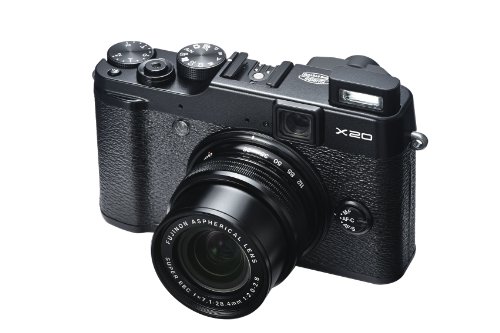
- X-Pro and X-E series: These rangefinder-style X-mount cameras emphasize discreet street and documentary photography, with the X-Pro family known for its hybrid optical/electronic viewfinder and X-E bodies for compact interchangeable-lens simplicity. Development cadence is slower than the mainstream X-T/X-S lines, so current availability and generation-specific autofocus should be checked.
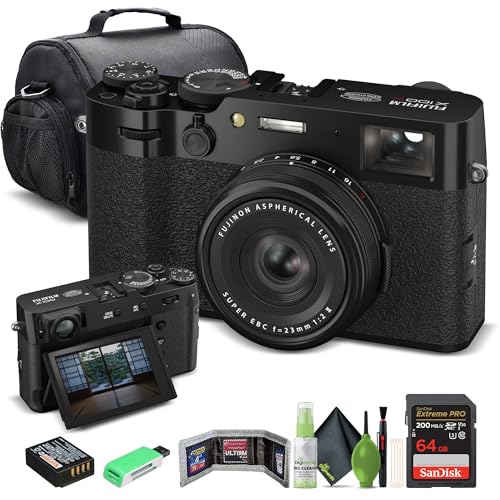
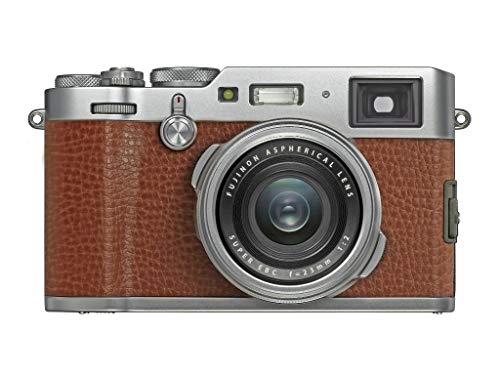
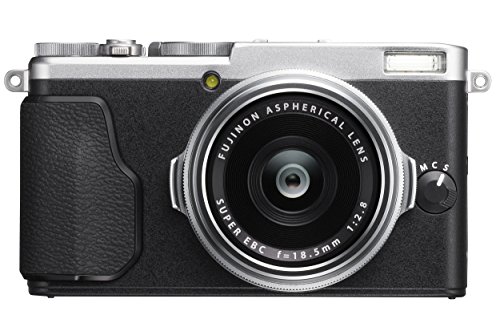
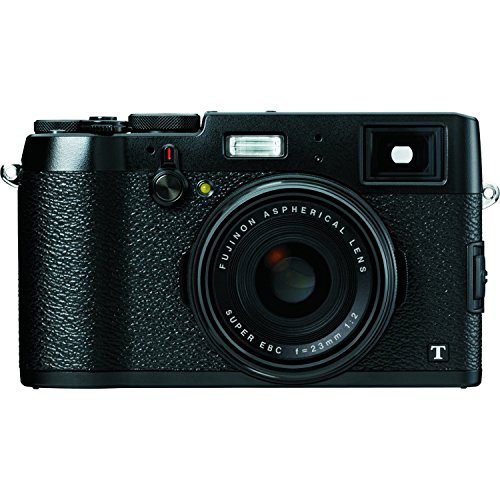
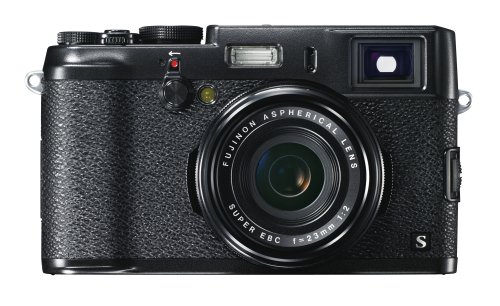
- X100 series: X100VI pairs a 40 MP APS-C sensor with a fixed 23 mm f/2 lens, giving a 35 mm-equivalent view, and adds IBIS to the hybrid-viewfinder concept. It is ideal for street, travel, documentary, and everyday photography when one focal length is acceptable, but the lens cannot be changed and availability can affect value.
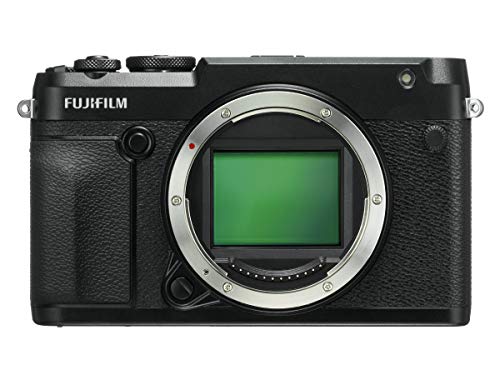
- GFX and GFX100RF: GFX bodies use a 44 × 33 mm medium-format sensor and GF lenses for high-resolution portrait, studio, landscape, reproduction, and commercial work. GFX100S II offers a compact interchangeable-lens design, GFX100 II adds professional controls and speed, and GFX100RF combines a 100 MP-class sensor with a fixed wide-angle lens in a travel-oriented body.
- Instax family: Instax Mini, Square, and Wide cameras create physical instant prints, while hybrid digital models can select or edit images before printing. They are social and output-focused products rather than substitutes for X or GFX image quality, and ongoing film-pack cost is part of the purchase.
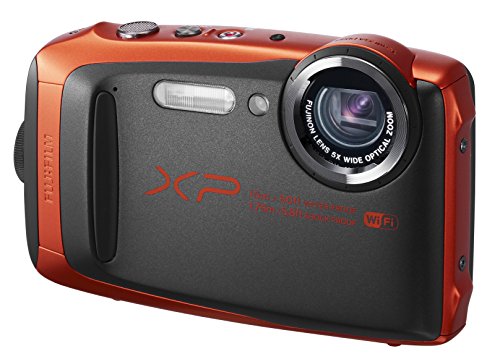
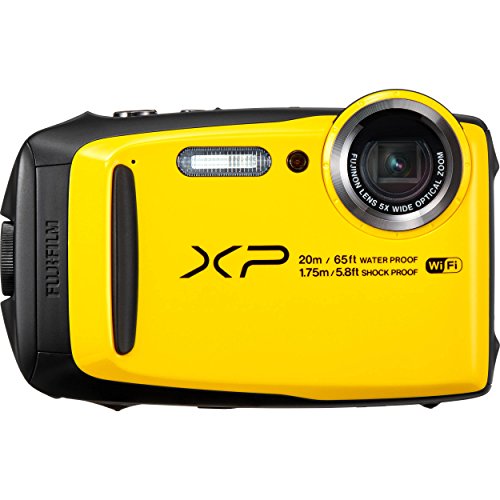
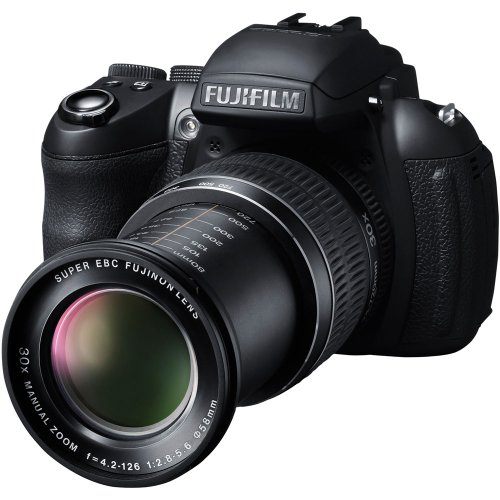
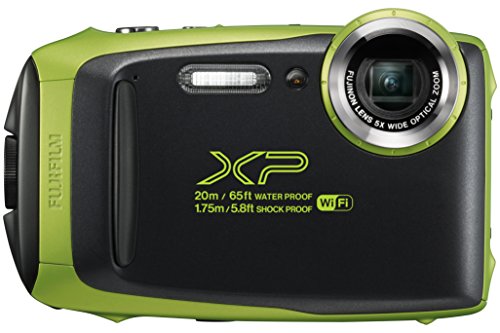
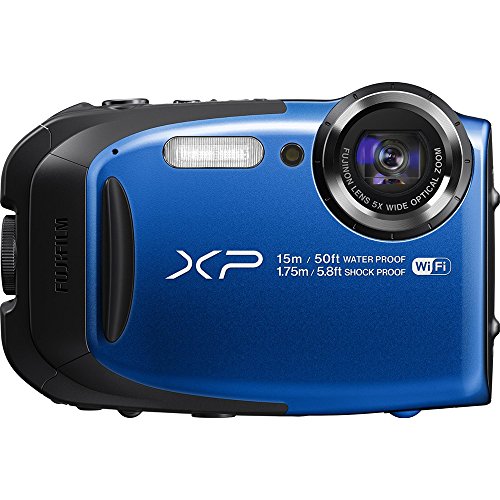
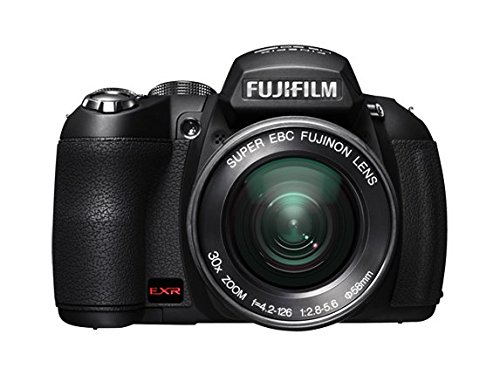
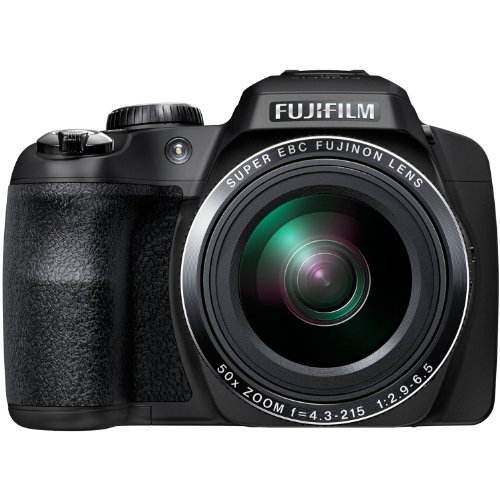
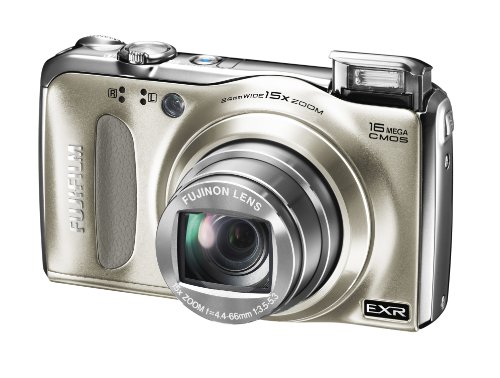
- FinePix and XP legacy compacts: FinePix once covered pocket cameras, bridge superzooms, EXR models, and specialist products, while XP models emphasized waterproof/rugged use. Most are now historical or discontinued lines and should not be used to judge current X/GFX autofocus, sensors, software support, or pricing.
How much do Fujifilm cameras cost?
Current new Fujifilm cameras generally cost about £80-£5,800, but that range spans instant cameras, APS-C X bodies, premium fixed-lens models, and medium-format GFX equipment that should be budgeted separately.
Instax cameras typically cost about £80-£220, with recurring film-pack costs for every print. Current X-system bodies generally occupy roughly £800-£2,200: X-M5 and X-S20 sit toward the accessible end, X-T50/X-T5/X100VI/X-H2 cluster around £1,300-£1,600, and the stacked-sensor X-H2S costs more for speed and readout.
X100VI costs around £1,500 with a fixed 35 mm-equivalent f/2 lens, while GFX100RF is near £4,700 with a 100 MP-class medium-format sensor and integrated wide-angle lens. Because neither changes focal length, compare each as a complete camera. GFX interchangeable-lens bodies generally cost £3,400-£5,800, with GF lenses adding roughly £430 to several thousand more. X-system lenses range from affordable primes and kit zooms to f/1.0 or red-badge optics above £1,300-£1,700. Fast cards, NP-W235 batteries, grips, cooling accessories, and large-file storage increase X-H and GFX costs.
How do Fujifilm cameras compare with Sony models?
Fujifilm cameras are generally the more distinctive choice for compact APS-C bodies, physical controls, Film Simulations, and medium-format stills, while Sony offers stronger subject tracking, broader full-frame choice, and a deeper video and lens ecosystem. The better brand depends on whether shooting experience or system breadth matters more.
Fujifilm’s X series centers on APS-C cameras such as the X-T, X-S, X-H, and X100 families, while GFX targets high-resolution medium format. Sony spans APS-C, full-frame Alpha, creator-focused ZV, cinema-oriented FX, and premium compacts, making it easier to move between stills, action, and professional video without changing mounts.
Most Fujifilm X cameras cost about £800-£2,200, while Sony APS-C and mainstream full-frame bodies commonly span £470-£2,600. Fujifilm GFX bodies rise to roughly £3,400-£5,800, and Sony specialist flagships can reach £6,500; compare lens prices too, because Fuji’s compact APS-C kit may cost less than an equivalent full-frame Sony setup.
What should you consider while choosing the best Fujifilm camera?
Consider the following points while choosing a Fujifilm camera:
- Choose the product family first: Instax is for instant prints, X100 and GFX100RF are fixed-lens digital cameras, X-series bodies use interchangeable X-mount lenses, and GFX bodies use separate GF lenses. These categories do not share the same sensor, lens path, output, or budget, so they should not be compared as simple upgrades.
- Decide between APS-C and medium format: X-series APS-C uses a 1.5× field-of-view crop and balances image quality with compact lenses, while GFX uses a 44 × 33 mm sensor with an approximately 0.79× crop relative to full-frame focal-length notation. GFX improves resolution and tonal flexibility but increases body, lens, file, and focusing demands; Fujifilm offers no full-frame middle tier.
- Match the X-Trans generation and readout: Current X-Trans CMOS 5 HR bodies use roughly 40 MP conventional sensors for detail, while X-H2S uses a 26 MP stacked sensor for speed and reduced rolling shutter. Earlier 24/26 MP generations can still produce excellent images, but subject detection, menu options, codecs, and autofocus processing differ.
- Verify autofocus with the intended lens and subject: Newer bodies recognize people, animals, birds, cars, motorcycles, bicycles, aircraft, and trains, but available subjects and tracking behavior vary by firmware and model. Older XF lenses with slower motors may not exploit the latest body performance, so test continuous AF, eye detection, burst behavior, and focus transitions in the required mode.
- Check IBIS and shutter behavior: X-H2/X-H2S, X-T5, X-S20, X-T50, X100VI, and current GFX bodies provide stabilization, while X-M5 and many older compact bodies do not. For action or video, compare mechanical and electronic shutter rates, rolling shutter, flicker handling, blackout, buffer depth, and whether high burst speeds crop or change file format.
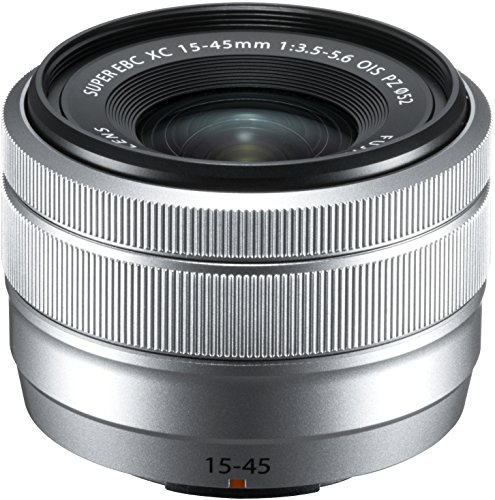
- Build the correct lens plan: XF lenses are designed for APS-C X mount, GF lenses for GFX, and neither mount is interchangeable; X100/GFX100RF lenses are permanently attached. Compare focal-length equivalence, aperture, linear-motor speed, optical stabilization, weather sealing, filter size, and total weight, including third-party X-mount options where appropriate.
- Inspect the complete video mode: Check resolution, oversampling, crop, frame rate, bit depth, codec, F-Log generation, recording duration, heat, HDMI size, and card requirement. X-H2/X-H2S support demanding high-resolution and ProRes workflows, while compact bodies may have shorter endurance, fewer connectors, slower readout, or no headphone monitoring.
- Choose controls and workflow deliberately: X-T/X100-style dials make exposure settings visible, X-H/X-S PASM bodies are faster for custom-mode hybrid work, and X-Pro/X-E rangefinder layouts suit discreet photography. Also decide whether Film Simulation JPEGs, RAW processing, Capture One/Lightroom support, smartphone transfer, battery type, dual cards, and large GFX/40 MP storage fit the intended workflow.