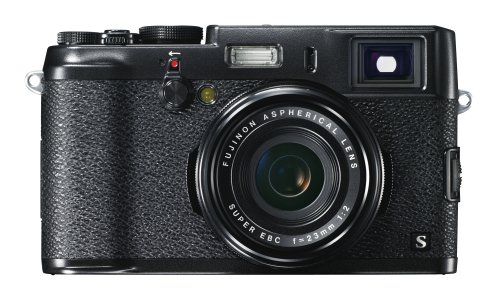
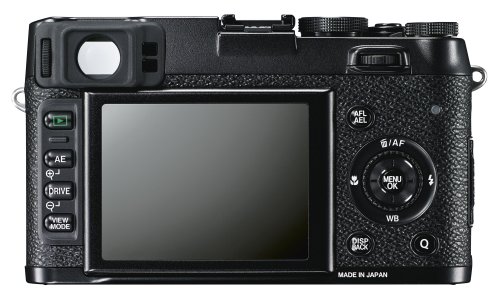
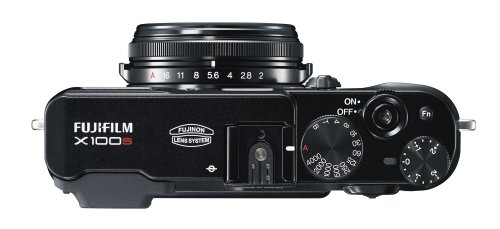
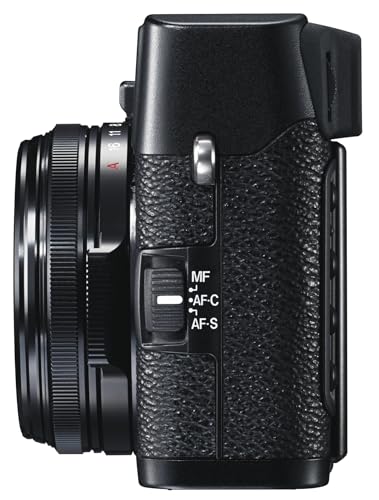
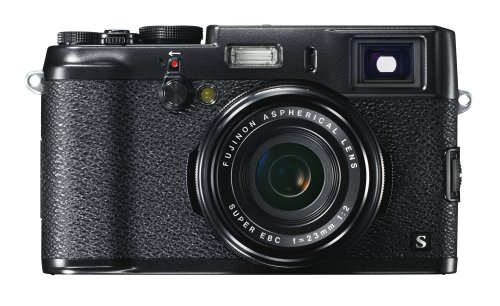
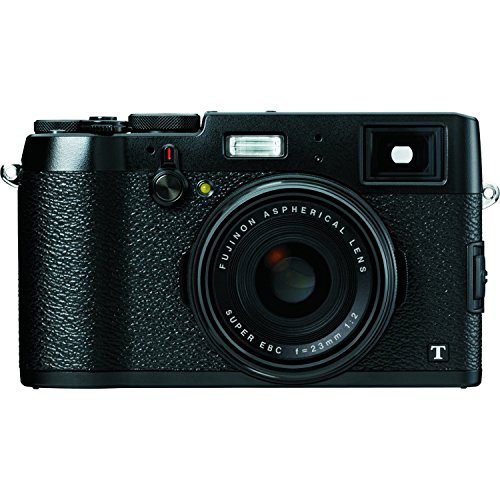
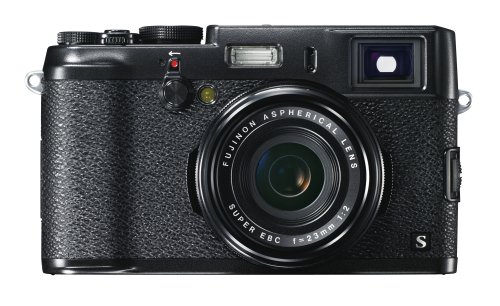
Fujifilm X100S review. Compare 108 technical specifications and user reviews to see how it ranks among cameras and if it is worth buying.
Overall score
What it is: An overall evaluation of the camera's quality, based on technical analyses and user reviews.
When it matters: When you need a quick reference to identify the best cameras on the market.
Score components:
90.0%
Technical Score
10.0%
User score
Technical Score
What it is: An assessment of the camera's technical performance, covering eight key areas: image quality, autofocus, video features, stabilization, lens compatibility, connectivity, battery, and design.
When it matters: When you want to compare cameras based on technical performance and available features.
Score components:
28.0%
Sensor & Image
25.0%
Photo Features
18.0%
Video & Audio
14.0%
Display & Design
8.0%
Battery & Power
7.0%
Connectivity & Storage
User score
What it is: A rating that combines user reviews and the total number of reviews received by the camera.
When it matters: When real-world owner satisfaction and review volume matter to your decision.
Score components:
70.0%
User reviews
30.0%
Popularity
Score components:
25.0%
Sensor size
20.0%
Main camera megapixels
20.0%
Dual card slots
15.0%
N. of focus points
10.0%
RAW photo capture
10.0%
Phase-detection autofocus (photos)
Score components:
35.0%
Weight
30.0%
Battery life (CIPA)
20.0%
Sensor-shift stabilization
15.0%
GPS
Score components:
30.0%
Price
20.0%
Weight
20.0%
AF tracking
20.0%
Battery life (CIPA)
10.0%
Touchscreen
Score components:
30.0%
Main camera megapixels
25.0%
Sensor size
20.0%
Main camera pixel size
15.0%
Sensor-shift stabilization
10.0%
RAW photo capture
Score components:
30.0%
Weight
25.0%
Thickness
20.0%
AF low-light sensitivity
15.0%
Sensor-shift stabilization
10.0%
Eye detection AF (human)
Score components:
30.0%
Sensor size
25.0%
Main camera pixel size
20.0%
Eye detection AF (human)
15.0%
Main camera megapixels
10.0%
Sensor-shift stabilization
Score components:
30.0%
Weight
25.0%
Battery life (CIPA)
20.0%
Min operating temperature
15.0%
Sensor-shift stabilization
10.0%
GPS
Available: ranking among products currently available (including other versions of this product).
All: ranking among all products in the database.
#9 in Best Fujifilm Cameras
#17 in Best Compact Cameras
#17 in Best Point & Shoot Cameras
#103 in Best Cameras under £300
#163 in Best Cameras
#163 in Best Digital Cameras
#345 in Best Travel Cameras
#378 in Best Cameras for Hiking
What it is: An assessment of the camera's technical performance, covering eight key areas: image quality, autofocus, video features, stabilization, lens compatibility, connectivity, battery, and design.
When it matters: When you want to compare cameras based on technical performance and available features.
Score components:
28.0%
Sensor & Image
25.0%
Photo Features
18.0%
Video & Audio
14.0%
Display & Design
8.0%
Battery & Power
7.0%
Connectivity & Storage
What it is: A rating that combines user reviews and the total number of reviews received by the camera.
When it matters: When real-world owner satisfaction and review volume matter to your decision.
Score components:
70.0%
User reviews
30.0%
Popularity
What it is: An indicator that combines the camera's overall rating with its cost.
When it matters: When you want to know how much overall quality you get for the price.
Score components:
60.0%
Overall score
40.0%
Price
Importance: HIGH
Good value: Full frame or larger
Importance: HIGH
Good value: At least 20 MP
Importance: HIGH
Good value: At least 3.5 µm
Importance: LOW
Importance: MEDIUM
Good value: At least ISO 25,600
Importance: MEDIUM
Importance: MEDIUM
Good value: At least 14-bit
Importance: LOW
Importance: LOW
Importance: LOW
Importance: LOW
Importance: LOW
Importance: LOW
Importance: LOW
Importance: LOW
Importance: MEDIUM
Importance: LOW
Importance: LOW
Importance: LOW
Importance: LOW
Importance: LOW
Importance: HIGH
Good value: At least 200 points
Importance: HIGH
Importance: MEDIUM
Importance: LOW
Importance: LOW
Importance: MEDIUM
Importance: MEDIUM
Importance: HIGH
Good value: At least 5 stops
Importance: LOW
Importance: MEDIUM
Good value: At least 10 fps
Importance: LOW
Importance: LOW
Importance: LOW
Importance: LOW
Importance: LOW
Importance: LOW
Importance: LOW
Importance: LOW
Importance: LOW
Importance: LOW
Importance: LOW
Importance: LOW
Importance: LOW
Importance: LOW
Importance: LOW
Importance: LOW
Good value: At least 200,000 actuations
Importance: LOW
Good value: At least 10x
Importance: HIGH
Good value: At least 3840 px
Importance: MEDIUM
Good value: At least 200 Mbps
Importance: MEDIUM
Good value: At least 10-bit
Importance: LOW
Importance: LOW
Importance: LOW
Importance: LOW
Importance: LOW
Importance: LOW
Importance: LOW
Good value: At least 30 min
Importance: LOW
Importance: LOW
Importance: LOW
Importance: LOW
Importance: LOW
Good value: At least 2 microphones
Importance: LOW
Importance: LOW
Importance: LOW
Importance: LOW
Importance: MEDIUM
Good value: 500 g or less
Importance: LOW
Importance: LOW
Importance: LOW
Importance: MEDIUM
Importance: MEDIUM
Good value: At least 2.36 million dots
Importance: LOW
Good value: 100%
Importance: LOW
Importance: LOW
Good value: At least 120 Hz
Importance: MEDIUM
Good value: At least 3 in
Importance: LOW
Importance: LOW
Importance: LOW
Importance: LOW
Importance: LOW
Importance: LOW
Importance: LOW
Good value: At least 10 m
Importance: LOW
Importance: LOW
Importance: LOW
Importance: LOW
Importance: MEDIUM
Good value: At least 400 shots
Importance: LOW
Good value: At least 1,500 mAh
Importance: LOW
Importance: LOW
Importance: LOW
Importance: LOW
Importance: LOW
Importance: LOW
Importance: LOW
Importance: LOW
Importance: LOW
Importance: LOW
Importance: LOW
Importance: LOW
Importance: LOW
Importance: LOW
Importance: LOW
Importance: LOW
Importance: LOW
Importance: LOW
Importance: MEDIUM
Importance: HIGH
Importance: HIGH
Good value: At least 3.5 µm
Importance: LOW
Importance: LOW
Good value: At least 1,500 mAh
Importance: HIGH
Good value: At least 200 points
Importance: MEDIUM
Importance: LOW
Importance: MEDIUM
Good value: At least 3 in
Importance: LOW
Importance: MEDIUM
Good value: 500 g or less
Importance: LOW
(Reviews last updated: July 2026)
The DPReview evaluation of the Fujifilm X100S highlights it as a highly responsive, premium fixed-lens camera, featuring a 16.3MP X-Trans CMOS II sensor that delivers exceptional JPEG image quality, high sharpness, and improved low-light resolution. Key pros include the sharp 23mm F2 lens, a versatile hybrid viewfinder, significantly improved autofocus speeds, and innovative manual focusing aids. Conversely, the review notes significant limitations, with cons centering on poor video quality—marked by lack of stabilization and high susceptibility to moiré—and frustratingly small, non-customizable rear controls. Additional drawbacks include a non-functional histogram in manual mode and an LCD screen that struggles with glare in bright sunlight.
The Fujifilm X100S is a fixed-lens compact camera featuring a 16-megapixel X-Trans II APS-C sensor and a built-in hybrid optical/electronic viewfinder, priced at $1,299. This model addresses the major usability flaws of its predecessor, the original X100, by offering vastly improved processing speeds, virtually instantaneous write times, and an intuitive new "Q" quick menu layout. Auto-focus speed has doubled in good lighting conditions due to the integration of phase-detection pixels, while manual focusing has been thoroughly revamped with highly effective focus peaking and a digital split-image mode. Image quality remains superb with exceptionally high dynamic range and highly optimized high-ISO noise performance, although the transition to the X-Trans sensor architecture gives images a slightly flatter, more "digital" look compared to the organic feel of the original 12-megapixel sensor. The review highlights several prominent pros, including its compact retro design, stiffer tactile control dials, faster overall operational performance, and a higher-resolution electronic viewfinder with no display lag. It also praises the built-in ND filter for bright-light shooting and an improved close-focus capability that functions down to 0.21 metres without requiring macro...
The Fujifilm X100S is a highly capable, unobtrusive rangefinder-style street camera that offers substantial performance and usability upgrades over its predecessor, the original X100. Key strengths include its outstanding overall image quality, exceptional sharpness from f/2 onwards, and beautiful skin tone and color rendition, even when shooting in JPEG mode. Photographers will appreciate its gorgeous hybrid viewfinder, fast physical controls for aperture and exposure, and a new Quick-Menu (Q-Button) for rapid setting adjustments. A standout feature is its silent leaf shutter, which allows for high-speed flash synchronization up to 1/4000s, enabling users to easily overpower the sun when pairing the camera with off-camera flash and the built-in 3-stop ND filter. On the downside, the camera suffers from poor battery life, a slippery body design that requires a strap for secure handling, and a rear control wheel that lacks stiffness. While the autofocus is a major step ahead of the original model in good lighting, it slows down and pumps continuously in low-light situations. Additionally, the camera yields significantly soft images when shooting wide open at f/2 in macro mode, requiring...
The Fujifilm X100S is a retro-styled compact camera featuring a 16.3-megapixel X-Trans CMOS II sensor and a fixed 23mm f/2 lens, offering exceptional image quality with high-ISO performance and vibrant color. It is highlighted for its unique hybrid viewfinder, allowing seamless switching between optical and electronic views, along with improved performance, including a 5.7 fps continuous shooting rate and a responsive, nostalgic Digital Split-Image Focus Assist system. However, the camera's autofocus, while improved in daylight, becomes sluggish and inconsistent in low light or with moving subjects. Other drawbacks include a cumbersome AF point selection process, a slippery grip, easily bumped dials, a low-resolution LCD, and poor video quality plagued by artifacts.
The Fujifilm X100s is a highly capable, portable, and stylish 16-megapixel camera equipped with a fixed f/2 lens (35mm equivalent focal length) that excels across multiple genres, including documentary, street, macro, low-light, and long-exposure landscape photography. In real-world testing throughout Northern Ireland, the camera delivered remarkably sharp images, vibrant colour rendition, excellent dynamic range, and a wide variety of rich black-and-white tones. It is versatile enough to be paired with advanced filter systems like the Lee Seven5 for long exposures, yet discreet enough to shoot candid backstage celebrity portraits and live music without drawing the aggressive attention typical of a large DSLR. Its compact profile is further enhanced when paired with the original leather case, which provides exceptional physical durability, keeping the camera looking brand new even after a year of everyday use. The camera features notable strengths but is accompanied by a few functional limitations. On the positive side, its major pros include exceptional image quality that rivals professional DSLR systems, fast overall performance, a useful macro close-focus mode with pleasing bokeh, outstanding low-light handling, and an automated 'A'...
In his review, Marius Masalar characterizes the Fujifilm X100S as a highly confident, purposefully designed tool, highlighting its intuitive physical interface, tactile manual controls, and the exceptional image quality produced by the 16.3-megapixel X-Trans CMOS II sensor. The camera is praised for its ability to produce sharp, high-detail images directly from the sensor by omitting the optical low-pass filter, offering a refreshing experience for users focusing on traditional photography. However, the review outlines significant limitations, specifically noting that the autofocus speed remains a weakness that cannot effectively track fast-moving subjects. Furthermore, the X100S lacks modern conveniences such as built-in Wi-Fi and GPS, which the author attributes to a deliberate focus on the core shooting experience over connectivity. Medium ·Marius Masalar
In this personal, long-term review of the Fuji X100s, photographer Alain Briot evaluates the mirrorless camera based on real-world use at social venues, car shows, and secondary landscape shoots. The review highlights numerous pros, including its elegant, retro rangefinder design that provides a classy appearance for social events without drawing unwanted attention. Mechanically, Briot praises the hybrid optical and electronic viewfinder (EVF), the flawless accuracy of the auto white balance, and a highly functional auto ISO selection that helps control motion blur and digital noise in changing light. Furthermore, the camera features an innovative non-Bayer X-Trans sensor that eliminates the anti-aliasing filter for superior sharpness while natively resisting moiré artifacts. The camera also delivers a robust high ISO performance up to 6400 in RAW format and includes "creative modes" that accurately simulate classic Fuji film stocks directly inside the viewfinder. However, Briot reveals several notable cons regarding the camera's processing artifacts, interface, and hardware layout. A significant technical drawback is a "painterly" or posterized effect in the rendering of clouds—a phenomenon driven by how standard raw converters like Lightroom translate...
The Photography Life review characterizes the Fuji X100S as a well-balanced, retro-styled camera featuring a 16.3-megapixel X-Trans CMOS II sensor that delivers exceptional sharpness and high-ISO performance. Key strengths include its compact form factor, superior image quality, and the fixed 23mm f/2 lens, which produces excellent contrast and color. However, the review notes significant RAW rendering issues with Adobe software and a drop in AF performance in low-light conditions. Additionally, the lens requires stopping down to f/8 to achieve optimal edge-to-edge sharpness for landscapes.
The Fujifilm X100s is a highly portable, vintage-styled compact camera featuring a fixed 23mm f/2 pancake-style lens and a unique hybrid viewfinder. A major standout of the camera is its exceptional, rich JPEG colour output that beautifully mimics classic film profiles, allowing users to bypass the washed-out RAW files that require extensive Lightroom editing. Additional pros include its near-silent leaf shutter, an integrated 3-stop Neutral Density (ND) filter, precise autofocus performance, and physical dials that provide a satisfying tactile shooting experience. However, the reviewer highlights several notable design quirks and performance limitations. The camera suffers from soft macro performance at close distances and an annoying "aperture hunting" behaviour where the blades move constantly before a half-shutter press. From a hardware standpoint, Fujifilm awkwardly engineered the lens with backwards male threads, forcing users to buy a separate adaptor just to attach standard 49mm filters or the lens hood. Finally, the camera enforces a frustrating 1/1000-second shutter speed cap when shooting wide open at f/2 in automatic mode, features mediocre battery life, and has an electronic focus-by-wire manual focus system that feels...
The Fujifilm X100S is a compact, retro-style APS-C camera featuring a fixed Fujinon 23mm f/2 lens (35mm equivalent field of view), making it a highly capable, stealthy tool for street and everyday photography 0.1.1. Built with a solid magnesium alloy body, the camera weighs just under one pound and provides tactile, manual control dials that slow down the shooting process for more deliberate compositions 0.1.1. In terms of image quality, its lens delivers exceptional central sharpness even when shot wide open at f/2, and it boasts near-perfect control over vignetting 0.1.1. Its daylight autofocus performance is decent, thanks to the phase-detection pixels integrated into its 16.3-megapixel X-Trans CMOS II sensor, which also provides smooth, non-distracting bokeh and solid high ISO performance up to ISO 4000 0.1.1. However, the camera exhibits several notable drawbacks and quirks that show its age 0.1.1. The focus-by-wire manual focusing system lacks resistance, making it feel sluggish and inefficient when turning the focus ring 0.1.1. Furthermore, the camera severely struggles and hunts for autofocus in dark conditions, requiring workarounds like zone pre-focusing or shooting strictly under...
The Fujifilm X100S is a premium retro-style compact camera priced at €1,200 that successfully replicates the analog "Leica feeling" for a fraction of the cost. Built with an APS-C sensor (approx. 3.7 cm²) and a fixed 35mm-equivalent f/2 lens, it provides outstanding, detailed, and low-noise image quality even at high ISO sensitivities up to 1600 or 3200. A major highlight is its vastly improved speed over the original X100, dropping laboratory focus-to-shutter times from 0.69 seconds down to 0.44 seconds. Manual shooters will appreciate its traditional top control dials, lens aperture ring, a fast-access "Q" settings menu, and a distinct hybrid optical/digital viewfinder that now features a helpful digital split-image focusing aid. Despite its high-end performance, the camera has notable limitations, particularly concerning its optics and rear display. While the fixed lens delivers exceptional sharpness at the center of the image and at smaller apertures like f/11 (aided by the omission of a low-pass filter), it suffers from a significant drop-off in resolution and sharpness toward the edges when shooting wide open. Additionally, the 2.8-inch rear screen is heavily criticised,...
In this review from the Neunzehn72 blog, photographer Patrick Ludolph shares his emotional yet highly practical experience with the Fujifilm X100S, a retro-styled compact camera equipped with a fixed 23mm f/2 lens (35mm full-frame equivalent). He highly praises its robust magnesium build quality, near-silent leaf shutter operation, and the vastly improved, snappier autofocus compared to its sluggish predecessor. Furthermore, Ludolph highlights its exceptional ISO performance up to 6400, excellent dynamic range and edge-to-edge sharpness when processing RAW files, and a standout 1/4000s flash sync speed that works flawlessly with studio strobes without causing gradient issues. The innovative hybrid optical/electronic viewfinder and the helpful built-in 3-stop ND filter also receive positive marks. On the downside, the reviewer points out several ergonomic and optical limitations. The small command wheel next to the display is described as finicky and prone to accidental clicks when turned, while changing the autofocus point requires an annoying extra button press. Optically, shooting in macro mode at f/2.0 or f/2.8 yields very soft images described as "mushy," requiring the user to step down to at least f/4.0 for...
The digitalkamera.de review highlights the Fujifilm X100S as a high-performance, premium compact featuring an upgraded 16.3-megapixel APS-C X-Trans CMOS II sensor without a low-pass filter, delivering 20 to 50 percent higher resolution and exceptional sharpness, particularly with its fixed 23mm f/2 lens. The camera is praised for its rapid 0.44-second hybrid autofocus, superior high-ISO noise handling, and precise JPEG colors, making it an excellent tool for street photography. Conversely, the analysis notes that while autofocus is improved, it still lags behind modern Micro Four Thirds systems, limiting its use for action. The fixed 35mm equivalent lens provides no versatility, and the camera faces significant, slow, and limited RAW buffer performance, along with restricted, non-manual video shooting capabilities.
The Fujifilm Finepix X100S is a premium retro-style compact camera built from metal and magnesium, heavily targeting enthusiast photographers with its manual control dials and 35mm equivalent fixed focal length lens. It features a large APS-C image sensor without a low-pass filter, delivering exceptional center sharpness of 1,958 line pairs per picture height and remarkably low noise levels up to ISO 1,600, rivaling the performance of some full-frame DSLRs. Additionally, it boasts a versatile hybrid viewfinder that lets users seamlessly switch between optical and electronic modes, backed by a quick autofocus acquisition speed of 0.42 seconds and a 5.5 frames-per-second burst mode. However, the camera has noticeable drawbacks, particularly regarding visibility in bright environments. Both the electronic viewfinder and the 2.8-inch display suffer from low brightness under direct sunlight, making image composition difficult. While center sharpness is superb, lab testing reveals that sharpness drops off significantly towards the lens corners, and the internal noise filter tends to be overly aggressive in its default settings. Weighing 445 grams, it is also relatively bulky and heavy for a compact camera, and its...
The review evaluates a used black Fujifilm X100S camera purchased on eBay for approximately €360 as a compact, everyday carry option. Released in 2013 as the successor to the original X100, this retro-styled camera features a 16.3-megapixel APS-C sensor paired with a high-quality, fixed 23mm f/2.0 lens (offering a 35mm full-frame equivalent field of view). The reviewer notes that while the camera originally cost €1,200, it currently represents excellent value at around €400 for photographers who can adapt to a single fixed focal length. On the positive side, the X100S features an appealing retro design, an excellent built-in lens, and robust noise performance that makes it highly reliable in low-light or nighttime conditions. It also improves upon its predecessor's sluggish autofocus system. However, the cons include a lower-resolution 16.3-megapixel sensor compared to newer models and the inherent limitation of a fixed focal length, which requires the photographer to adjust to a single perspective.
The Fujifilm X100S review on fotowissen highlights the digital compact camera as an exceptional, stylish choice specifically optimized for travel, street, and documentary photography. The reviewer heavily praises its iconic retro aesthetic, noting that the analog-style dials and tactile handling offer an inspiring, decelerated shooting experience. A key feature is the innovative hybrid viewfinder, which allows photographers to seamlessly switch between an optical framing window and a high-resolution electronic viewfinder (EVF). Driven by a 16-megapixel APS-C X-Trans CMOS II sensor paired with a fixed, ultra-sharp Fujinon 23mm f/2 lens (35mm full-frame equivalent), the camera delivers outstanding image quality with beautiful out-of-camera JPEGs, excellent background blur (bokeh), and great performance under challenging, low-light conditions. Additional creative tools like diverse film simulation modes and a built-in 3-stop ND filter add considerable value to everyday artistic workflows. However, the review details a few notable limitations. The primary technical drawback is the high power consumption compounded by a low-capacity battery, which severely limits shooting duration and mandates carrying multiple spares for full-day excursions. The camera also falls short regarding ergonomics and display functionality, missing...
The Fujifilm X100S is a compact retro-style camera that features a 16-megapixel sensor capable of delivering high-quality, film-like images. Users praise its excellent build quality, premium tactile materials, and a well-balanced form factor. A standout positive feature is its highly functional hybrid rangefinder, which seamlessly switches between an optical and an electronic viewfinder to add genuine versatility to different shooting scenarios. Overall, the community finds it to be an incredibly fun, inspiring, and portable device that motivates people to go out and shoot. However, the camera shows its age in terms of speed and electronic hardware. The autofocus is slow, sluggish, and struggles significantly to lock onto targets in low-light environments. This sluggishness makes it poorly suited for tracking fast-moving subjects. Additionally, the lens loses sharpness in extreme macro/close-up settings, the low-light performance shows technical limitations, and the built-in digital display is too dim to be easily read on bright summer days.
Design and Physical Handling The FujiFilm X100S is a premium compact camera featuring a distinct retro-styled body crafted from high-quality materials. It is equipped with an APS-C sized X-Trans CMOS II sensor and a fixed 35mm equivalent F2.0 lens. A major strength is its physical interface, which offers tactile dedicated rings for aperture and manual focus directly on the lens, alongside top-mounted dials for shutter speed and exposure compensation. It also incorporates a unique front-facing lever to switch between a large electronic viewfinder and an optical hybrid viewfinder. However, the ergonomics present some drawbacks; the built-in handgrip is quite small, and the synthetic leather wrapping lacks sufficient texture for a secure, slip-free hold. Operational Features and Expansion In terms of functionality, the camera benefits from an efficient Quick Menu button that grants rapid access to essential shooting settings like ISO sensitivity, white balance, and display brightness without diving into the main menu. Expansion options include compatibility with the external EF-20 flash units and support for a specialized WCL-X100 wide-angle conversion lens. This converter attaches to the lens thread after unscrewing...
The Fujifilm X100S review by Les Numériques highlights it as a highly appealing, retro-styled compact expert camera that introduces significant, yet measured, upgrades over its predecessor. Its greatest asset is the 16-megapixel APS-C X-Trans CMOS II sensor, which lacks a low-pass filter to maximize sharpness and delivers spectacular, virtually noiseless image quality up to ISO 6400. Performance is also improved; the fixed 23mm f/2 lens achieves excellent center sharpness starting at f/2.8 and peaks at f/4. Operationally, the camera stands out for its near-silent shutter cliquetis, an innovative hybrid optical/electronic viewfinder, a responsive manual focus system with a digital split-image stigmometer, and a well-designed Quick Menu. Additionally, phase-detection pixels speed up autofocusing under clear lighting, and startup latency is reduced to 1.5 seconds. Despite these strengths, the review notes several persistent physical and technical flaws. Structurally, the body feels slippery due to a shallow grip, lacks weather-sealing, utilizes an awkward battery slot without a physical safety check, and places the SD card slot directly underneath the camera base, blocking access when mounted on a tripod. Image stabilization is entirely missing,...
The Fujifilm X100S is a premium hybrid compact camera that blends retro aesthetic design with highly capable modern performance, serving as an ideal everyday companion or secondary body for expert and professional photographers. The camera excels in portability and low-light versatility, producing clean and directly usable JPEG files up to ISO 3200 and 6400 due to its advanced X-Trans sensor technology. Reviewers highlight its highly tactile ergonomics, featuring dedicated mechanical dials for manual exposure controls alongside an exceptional optical viewfinder that layers real-time data transparently. Notable functional pros include a built-in 3-stop ND filter, instantaneous phase-detection autofocus, handy manual focusing aids like "Digital Split Image" and "Focus Peaking", and a leaf shutter that enables near-silent operation and high-speed flash sync up to 1/2000s. Despite its impressive image quality, the X100S exhibits several notable limitations, starting with its steep launch price of around €1000 and a fairly sparse selection of included accessories. It lacks a lens hood out of the box, relies on a cheap plastic neck strap, and suffers from poor battery life that necessitates carrying multiple spares. While the...
In his review, David Ken describes the Fujifilm X100S as a stunning camera that outperforms its predecessor with incredibly fast startup times and a highly convincing autofocus system. The photographer praises the iconic, discreet design for street photography, although he notes the significant drawback of poor battery life, advising users to carry two extra batteries. David Ken Photographe
The Les Numériques review awards the Fujifilm FinePix X100s a 4 out of 5 rating, describing it as a subtle but highly effective evolution of its predecessor. The standout strength of this camera is its spectacular image quality, driven by the pairing of a fixed 35mm f/2 lens and a 16-megapixel APS-C X-Trans CMOS II sensor. Additional pros include its premium all-metal build quality, an exceptional high-ISO handling capacity that delivers clean files up to ISO 6400, and a heavily upgraded 2.36-million-dot hybrid viewfinder. The review also praises the addition of the "Digital Split Image" system to aid manual focusing, a halved startup time (under 1.5 seconds), and a reduced minimum focus distance of 50 cm without relying on macro mode. On the downside, the reviewer identifies several prominent weaknesses, most notably the complete absence of image stabilisation. Ergonomically, the camera fails to fix past issues: the battery compartment lacks a foolproof orientation guard, the rear command wheel remains loose and imprecise, and the Digital Split Image tool suffers from rear screen inaccuracy. Performance limits are also a hassle, such...
Based on the provided review, the Fujifilm X100s is an expert compact camera featuring a high-quality 16-megapixel APS-C sensor paired with a fixed 35mm equivalent f/2 lens. The reviewer heavily praises its excellent optical sharpness and spectacular image quality, noting that the ISO performance easily handles up to 3200 and remains highly usable even at 6400. The physical build introduces a few thoughtful layout improvements, such as enhanced AF-S/AF-C selectors and a redesigned mode dial that helps photographers locate the automatic mode by feel while looking through the viewfinder. However, the camera falls short due to significant usability and mechanical flaws. The autofocus system performs very poorly, frequently hunting and failing to lock onto subjects during low-light testing, which ultimately forced the reviewer to rely entirely on manual focus. Additionally, the physical dials are described as overly sensitive and imprecise, and the shutter speed dial restricts normal long exposures by capping out at 1/4 of a second, forcing users into Bulb mode for night photography. The review concludes that while it is an ideal companion for advanced photographers seeking a...
The Fujifilm X100S, recognized by Camerarace for its compact design, ranks in the top 25% of its category with an overall score of 47. It is highly praised for its small size, lightweight build (445 grams), and excellent performance in portrait, landscape, and sports photography, aided by a convenient LCD display. Camerarace However, the review highlights significant limitations, including a lack of weather sealing (not tropicalised) and poor battery life, allowing for only 330 shots per charge. Additionally, the X100S lacks modern wireless connectivity for image transfers. Camerarace
The Fujifilm X100S is a premium compact camera featuring a fixed Fujinon 23mm f/2 lens (35mm equivalent) and a 16.3-megapixel APS-C X-Trans II sensor designed specifically to optimize image resolution and contrast without an optical low-pass filter. The reviewer praises the camera as an exceptional tool for documentary and social photography due to its classic, discreet aesthetic that seamlessly blends into settings, allowing photographers to remain unnoticed. Key positive aspects include its high-quality construction, direct manual exposure controls (dedicated shutter speed and aperture rings), a versatile hybrid optical/electronic viewfinder, and superb high-ISO performance up to 3,200 ISO that closely rivals full-frame DSLR cameras. Additionally, it offers a highly accurate metering system, excellent automatic white balance, faithful skin tone reproduction, and a leaf shutter that enables flash synchronization at any shutter speed up to 1/4,000s. Despite its high praise and a perfect personal rating score, the reviewer highlights a few prominent areas for improvement. The camera lacks built-in image stabilization, and the 2.8-inch rear LCD screen is somewhat outdated with a modest resolution of 460,000 pixels. From a handling perspective, the...
The author reviews the Fujifilm X100S after four years of use and 11,121 photos, explaining their decision to move away from the Fujifilm X series due to a mix of affection and frustration. On the positive side, the review highly praises the camera's beautiful retro aesthetic and its robust metal construction featuring excellent tactile manual controls for aperture, shutter speed, ISO, and exposure. The electronic viewfinder (EVF) is highlighted for its useful real-time preview, and the camera's compact size with a flush fixed lens makes it highly portable, which ultimately encouraged the author to carry it everywhere and take more photographs. Conversely, the review identifies critical drawbacks, starting with a sluggish and poor autofocus system that required manual point selection and struggled severely in low-light street photography. Additionally, the optical viewfinder (OVF) proved imprecise due to parallax error, the fixed 23mm lens restricted focal flexibility, and the battery life was low at just 200 shots per charge. The author was also frustrated by Fujifilm's lack of meaningful firmware updates—particularly the omission of the Classic Chrome profile—and experienced the notorious "watercolor"...
The Fujifilm X100S is reviewed as a massive upgrade over its predecessor, keeping the classic Leica-inspired retro design while completely transforming its internal performance. On the positive side (pros), it introduces a new 16.3-megapixel X-Trans CMOS II sensor without an optical low-pass filter, resulting in exceptional sharpness, vivid color fidelity, and low-noise performance at high ISOs that rivals full-frame DSLRs. Photographers will appreciate its discreet, unobtrusive build—perfect for candid reportage—alongside tangible physical fixes like a stiffer exposure compensation dial and a dedicated Quick (Q) menu button. Mechanically, it boasts a lightning-fast autofocus speed of 0.07 seconds using hybrid phase detection, halved startup times, an upgraded 2.36M-dot electronic viewfinder, and tactile manual focus aids like digital split-image mirroring and focus peaking. Conversely, the review highlights notable limitations and drawbacks (cons) inherent to its fixed-lens form factor. The core constraint is its permanent 23mm f/2 lens (35mm equivalent), which restricts composition options unless users purchase secondary accessories like the WCL wide-angle adapter. Additionally, despite being much bulkier and heavier than typical modern compact or mirrorless cameras, it lacks the flexibility of interchangeable...
The Tutto Digitale review highlights the Fujifilm FinePix X100S as a highly capable, "super" upgraded version of its predecessor, the original X100, retailing at €1,999.99. While maintaining the popular retro-tech aesthetic with magnesium alloy top and bottom plates and a synthetic leather grip, the camera undergoes a massive internal overhaul. The primary pros center around its advanced 16.3 MP APS-C X-Trans II sensor and EXR Processor II, which remove the optical low-pass filter to maximize light intake and deliver razor-sharp details. Performance speed is a standout upgrade, featuring a blazing-fast Intelligent Hybrid AF system that locks focus in 0.08 seconds, an instantaneous 0.01-second shutter lag, a 0.5-second startup time, and a 6 fps burst rate. Additionally, street photographers will appreciate the superb low-light noise control, innovative manual focus aids like Digital Split Image, and upgraded video capabilities that bridge the gap to Full HD at 60fps. However, the review outlines several prominent cons that somewhat impact its versatility. The fixed 23mm f/2 Fujinon lens (a 35mm equivalent), while optically excellent with a 9-blade diaphragm, naturally limits framing flexibility for those...
The Fotocamerapro review highly praises the Fujifilm X100S, describing it as a solid, high-end compact camera tailored for manual focus lovers and street photography. Powered by a 16.3-megapixel APS-C X-Trans CMOS II sensor, the camera delivers beautiful image quality with exceptional clarity and low-noise performance, remaining impressively sharp up to ISO 6400. Its charming retro aesthetic features manual control rings for aperture, exposure, and shutter speed, offering a robust build and a satisfyingly tactile shooting experience. Performance is significantly upgraded over its predecessor, utilizing a hybrid phase-detection autofocus system that makes it highly responsive, firing up in 1.5 seconds and supporting continuous burst shooting up to 6 fps. Video capabilities are also improved, jumping to a sharper 1080p resolution at 60 fps. Despite these high-end capabilities, the reviewer highlights a few notable downsides. The camera lacks a dedicated physical movie recording button, and the overall video quality—while decent—does not match its stellar photography performance. Furthermore, RAW format shooting is restricted and unsupported at the highest extended sensitivities of ISO 12,800 and 25,600. The autofocus system can occasionally be inconsistent, and...
Direct Review Summary The Riflessi Fotografici review highlights the Fujifilm X100S as a deeply redesigned, highly mature evolution of its predecessor that provides an exceptionally reactive shooting experience. The pros center on its internal overhaul: the 16.3MP X-Trans CMOS II sensor eliminates the low-pass filter to deliver an "impressive" leap in edge-to-edge sharpness and detail at maximum apertures, while maintaining flawless color consistency. Operationally, the camera eliminates past lag with immediate startup, fast image writing, and a fast hybrid autofocus system that seamlessly blends contrast and phase detection. Manual focus enthusiasts also benefit from a smoother physical focus ring and innovative digital assist tools like "Digital Split Image" and "Focus Peak Highlight". Ergonomically, the layout is highly praised for relocating the 'AF' and 'Drive' buttons so that right-thumb focus point adjustments mirror professional DSLRs, alongside an integrated 'Q' menu button. The cons mentioned in the review are minimal and largely structural or aesthetic rather than performance-based. The reviewer notes that the camera is "maledettamente uguali" (damnably identical) to the older X100, which caused accidental confusion when grabbing the wrong body...
details the Fujifilm X100S, an updated version of the highly successful original X100. While the premium, vintage-inspired exterior remains largely unchanged, the core internal hardware has been deeply overhauled. Built around a 16-megapixel APS-C X-Trans CMOS II sensor, the camera strips away the optical low-pass filter to generate noticeably sharper details, superior dynamic range, and exceptional high-ISO noise reduction that rivals full-frame systems. The review incorporates data from the Centro Studi Progresso Fotografico, evaluating critical lab performance metrics like resolution, sensor sensitivity curves, exposure latitude, and shutter velocity. Key Pros and Cons Pros: The camera delivers outstanding image clarity and punchy color rendering due to the upgraded 16Mpxl X-Trans sensor. Operation is significantly enhanced by a re-engineered hybrid optical/electronic viewfinder and an intelligent hybrid autofocus system integrating on-sensor phase detection for faster speeds. It also offers robust continuous shooting speeds up to 6 frames per second and an innovative digital split-image mode to assist manual focusing. Cons: The camera's form factor remains limited by a fixed, non-interchangeable 23mm f/2 lens, which restricts users to a single 35mm-equivalent focal length unless...
The review on the Club del Bokeh blog evaluates whether upgrading from the classic Fujifilm X100 to the Fujifilm X100S is worth the investment. The primary advantage of the X100S is its new 16-megapixel X-Trans II sensor, which eliminates the anti-aliasing filter and significantly outperforms the old 12-megapixel CMOS sensor at high ISO settings, offering excellent noise control and shadow recovery up to 6400 ISO. Additionally, the X100S is powered by the EXR II processor, which brings noticeable pros in operational speed, such as a halved startup time, immediate buffer clearing during continuous shooting (6 fps), upgraded 1080p video at 60fps, a higher-resolution 2.35 mpx electronic viewfinder, and a vastly improved rear layout featuring a dedicated Quick (Q) menu button. However, the review highlights several notable cons and areas where the X100S fails to reach its full potential. While the autofocus is faster in bright conditions, it remains sluggish in low light, exhibiting occasional missed focus due to the limitations of the fixed lens motor. Furthermore, despite sharing the same processor as the superior X-E2, the X100S electronic viewfinder suffers...
of the Fujifilm X100S This review characterises the Fujifilm X100S as a high-quality camera severely undermined by a critical design flaw in its physical leaf shutter system. The author notes that the camera cannot shoot at high shutter speeds when using wide apertures; for example, it is restricted to a maximum shutter speed of 1/1000s at f/2, 1/2000s at f/4, and can only reach its top speed of 1/4000s at f/8. This limitation poses a major issue when trying to use Fujifilm’s unique DR400 Dynamic Range expansion feature, which requires a baseline of ISO 800. On bright days, the combination of ISO 800 and wide apertures forces the camera into shutter speeds it cannot physically achieve, trapping photographers in a frustrating cycle where they cannot control depth of field or maintain exposure flexibility without constantly navigating menus to toggle the built-in 3-stop ND filter. Despite this prominent drawback, the camera boasts outstanding hardware and exceptional imaging performance. Among its pros are a lightweight, travel-friendly body, phenomenal overall image quality with excellent sharpness, low noise at high ISO settings, and beautiful,...
The featured user review from the Fuji X Forum focuses on a custom review written for Zoom.NL magazine regarding the Fujifilm X-M5. The discussion highlights that being selected to review this hybrid mirrorless camera for a prominent magazine is a great honor and a testament to the high quality of the user's ongoing photography. The consensus within the thread celebrates the camera's capability as an entry-level powerhouse, positioning it as a highly attractive option for travel photography, everyday shooting, and social media content creation. Key Pros and Cons of the Fujifilm X-M5 Pros: High Portability: The body is incredibly compact and lightweight, weighing only 355 grams, making it perfect for street and travel use. Excellent Image and Video Quality: Equipped with a 26.1-megapixel X-Trans CMOS 4 sensor and X-Processor 5, it delivers superb sharpness and advanced AI subject-tracking autofocus. It also supports impressive 6.2K open-gate video recording. Creative Controls: It features a dedicated Film Simulation dial for instant access to classic Fujifilm color profiles. Vlogger Friendly: Includes a fully articulating touchscreen, an advanced 3-microphone directional system, and a 9:16 short...
The review by Jesse Kraal highlights the Fujifilm X100S as an exceptional companion for street photography, praised for its discrete footprint that allows photographers to blend into the background without drawing the invasive questioning often caused by bulky DSLRs. The camera retains its highly appreciated classic retro aesthetic—drawing design cues from iconic analog cameras like the Leica M and Contax G-series—and utilizes a highly effective 23mm f/2 lens (a 35mm full-frame equivalent) alongside a versatile hybrid optical and electronic viewfinder. The most critical improvement over its predecessor is a massive boost in overall operational speed. Key pros include an incredibly fast 0.5-second startup time, silent overall operation, a highly responsive eye sensor, and the ability to continue shooting while the camera writes images to the memory card. Furthermore, thanks to the integration of phase-detection pixels on the new 16-megapixel X-Trans sensor, autofocus is noticeably fast and accurate, while manual focusing is greatly improved by a focus ring that dynamically responds to how fast it is turned. On the downside, the reviewer points out that image review and playback speeds are...
The FUJIFILM X100S review by Robert David highlights the camera as an excellent, lightweight alternative to heavy DSLR setups like Canon gear. The author praises its high-quality construction, stating that it offers exceptional image quality while remaining highly portable for everyday carry. A key pro highlighted in the review is the camera's high integration with dedicated accessories, such as the WCL-X100 wide conversion lens, which matches the camera's existing material textures and colors perfectly while expanding the field of view to a 28mm equivalent. Additionally, the manufacturer's commitment to releasing continuous firmware updates to improve usability over time is noted as a significant positive aspect of the system. In terms of cons, the review notes that the initial model in the lineup was known for having distinct functional quirks, which initially made the reviewer hesitate before positive reviews of the upgraded "S" version convinced them to buy. Furthermore, using the wide conversion lens introduces a minor ergonomic hurdle, as users must completely remove the front ring, adapter ring, or lens hood before they can attach the conversion glass directly onto...
The Fujifilm X100S review from the Belgian photography website Shoot.be highlights the premium compact camera as a significant, highly responsive upgrade over its predecessor, praise-worthy for its retro charm. Key advantages emphasized in the evaluation include its beautifully tactile, lightweight magnesium alloy body and a vastly improved 16.3-megapixel X-Trans CMOS II sensor that lacks an optical low-pass filter, resulting in exceptionally sharp images and fantastic low-light performance. Reviewers also lauded the innovative hybrid optical/electronic viewfinder, the newly added quick-access Q-menu, and the inclusion of a built-in ND filter which greatly aids daylight shooting. Conversely, the review notes distinct limitations that prospective buyers must contend with, particularly regarding its fixed 23mm f/2 lens (35mm equivalent) which offers no zoom or option to swap lenses. Performance bottlenecks include a maximum shutter speed that is strictly limited to 1/1000s when shooting wide open at f/2—often leading to overexposure in bright sunlight unless the ND filter is engaged—and a macro mode that yields somewhat soft images when used at its widest aperture. Finally, the camera's full HD video functionality is criticized as a definitive...
The Fujifilm X100S is a great, retro-looking crop-sensor camera that serves as a highly capable, lightweight alternative to heavy DSLR gear. It features a fixed 23mm f/2 lens, physically dedicated control dials, and a highly praised hybrid optical/electronic viewfinder (OVF/EVF). On the positive side, the camera delivers superb image quality and beautiful, direct-from-camera JPEGs that greatly reduce the need for computer editing. It is also perfect for street photography due to its completely silent, ultra-fast leaf shutter and a built-in Neutral Density (ND) filter. However, the reviewer highlights a few drawbacks to keep in mind before buying. The battery drains quite fast when using the camera heavily, making it essential to carry spares for long shooting days. While the physical buttons can be deeply customized, the camera requires a bit of time to learn and navigate through all the setting combinations. Finally, early issues with handling Fujifilm’s specific RAF (RAW) files in software like Adobe Lightroom pushed the reviewer to shoot entirely in JPEG, though updates have since begun fixing this software bottleneck. Overall, the camera is not cheap but...
Compare