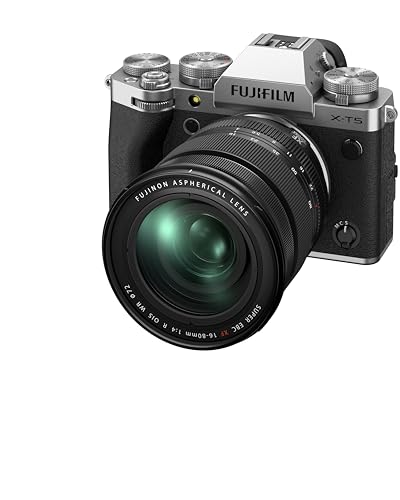
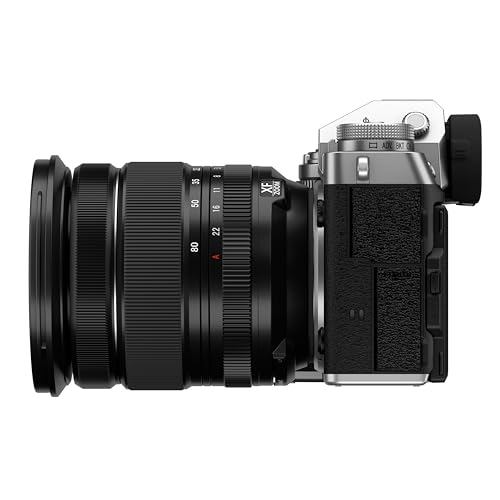
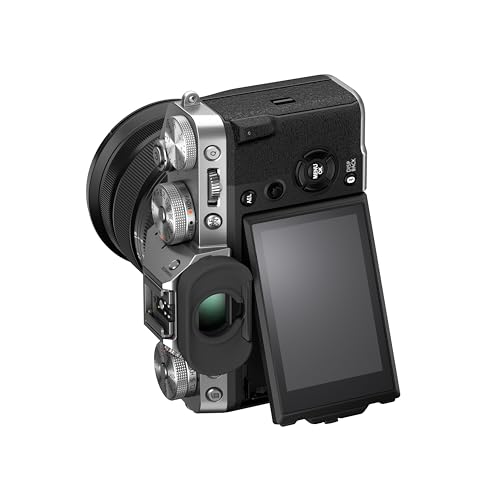
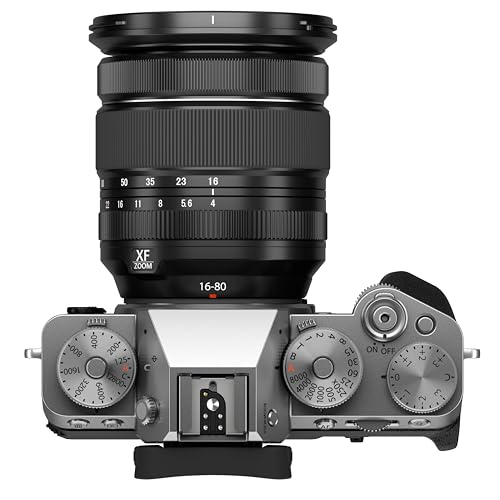
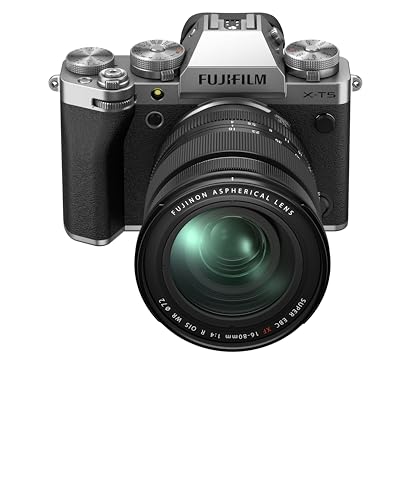
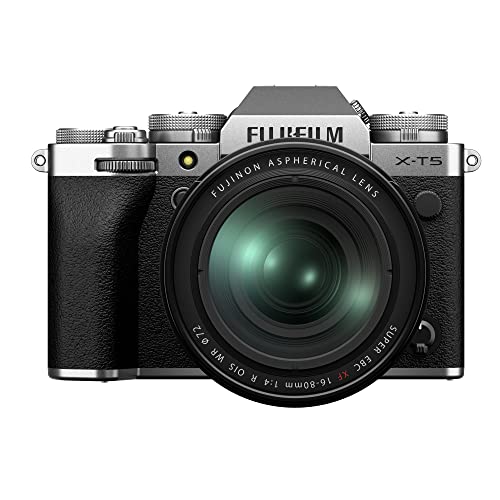
Fujifilm X-T5 review. Compare 108 technical specifications and user reviews to see how it ranks among cameras and if it is worth buying.
Overall score
What it is: An overall evaluation of the camera's quality, based on technical analyses and user reviews.
When it matters: When you need a quick reference to identify the best cameras on the market.
Score components:
90.0%
Technical Score
10.0%
User score
Technical Score
What it is: An assessment of the camera's technical performance, covering eight key areas: image quality, autofocus, video features, stabilization, lens compatibility, connectivity, battery, and design.
When it matters: When you want to compare cameras based on technical performance and available features.
Score components:
28.0%
Sensor & Image
25.0%
Photo Features
18.0%
Video & Audio
14.0%
Display & Design
8.0%
Battery & Power
7.0%
Connectivity & Storage
User score
What it is: A rating that combines user reviews and the total number of reviews received by the camera.
When it matters: When real-world owner satisfaction and review volume matter to your decision.
Score components:
70.0%
User reviews
30.0%
Popularity

(Reviews last updated: July 2026)
Score components:
25.0%
Sensor size
20.0%
Main camera megapixels
20.0%
Dual card slots
15.0%
N. of focus points
10.0%
RAW photo capture
10.0%
Phase-detection autofocus (photos)
Score components:
35.0%
Weight
30.0%
Battery life (CIPA)
20.0%
Sensor-shift stabilization
15.0%
GPS
Score components:
30.0%
Price
20.0%
Weight
20.0%
AF tracking
20.0%
Battery life (CIPA)
10.0%
Touchscreen
Score components:
30.0%
Main camera megapixels
25.0%
Sensor size
20.0%
Main camera pixel size
15.0%
Sensor-shift stabilization
10.0%
RAW photo capture
Score components:
30.0%
Weight
25.0%
Thickness
20.0%
AF low-light sensitivity
15.0%
Sensor-shift stabilization
10.0%
Eye detection AF (human)
Score components:
30.0%
Sensor size
25.0%
Main camera pixel size
20.0%
Eye detection AF (human)
15.0%
Main camera megapixels
10.0%
Sensor-shift stabilization
Score components:
30.0%
Weight
25.0%
Battery life (CIPA)
20.0%
Min operating temperature
15.0%
Sensor-shift stabilization
10.0%
GPS
Available: ranking among products currently available (including other versions of this product).
All: ranking among all products in the database.
#1 in Best Fujifilm Cameras
#5 in Best Cameras for Hiking
#13 in Best Travel Cameras
#23 in Best Cameras
#23 in Best Digital Cameras
#23 in Best Mirrorless Cameras
#23 in Best 4K Cameras
#23 in Best Cameras for Portraits
What it is: An assessment of the camera's technical performance, covering eight key areas: image quality, autofocus, video features, stabilization, lens compatibility, connectivity, battery, and design.
When it matters: When you want to compare cameras based on technical performance and available features.
Score components:
28.0%
Sensor & Image
25.0%
Photo Features
18.0%
Video & Audio
14.0%
Display & Design
8.0%
Battery & Power
7.0%
Connectivity & Storage
What it is: A rating that combines user reviews and the total number of reviews received by the camera.
When it matters: When real-world owner satisfaction and review volume matter to your decision.
Score components:
70.0%
User reviews
30.0%
Popularity

(Reviews last updated: July 2026)
What it is: An indicator that combines the camera's overall rating with its cost.
When it matters: When you want to know how much overall quality you get for the price.
Score components:
60.0%
Overall score
40.0%
Price
Importance: HIGH
Good value: Full frame or larger
Importance: HIGH
Good value: At least 20 MP
Importance: HIGH
Good value: At least 3.5 µm
Importance: LOW
Importance: MEDIUM
Good value: At least ISO 25,600
Importance: MEDIUM
Importance: MEDIUM
Good value: At least 14-bit
Importance: LOW
Importance: LOW
Importance: LOW
Importance: LOW
Importance: LOW
Importance: LOW
Importance: LOW
Importance: LOW
Importance: MEDIUM
Importance: LOW
Importance: LOW
Importance: LOW
Importance: LOW
Importance: LOW
Importance: HIGH
Good value: At least 200 points
Importance: HIGH
Importance: MEDIUM
Importance: LOW
Importance: LOW
Importance: MEDIUM
Importance: MEDIUM
Importance: HIGH
Good value: At least 5 stops
Importance: LOW
Importance: MEDIUM
Good value: At least 10 fps
Importance: LOW
Importance: LOW
Importance: LOW
Importance: LOW
Importance: LOW
Importance: LOW
Importance: LOW
Importance: LOW
Importance: LOW
Importance: LOW
Importance: LOW
Importance: LOW
Importance: LOW
Importance: LOW
Importance: LOW
Importance: LOW
Good value: At least 200,000 actuations
Importance: LOW
Good value: At least 10x
Importance: HIGH
Good value: At least 3840 px
Importance: MEDIUM
Good value: At least 200 Mbps
Importance: MEDIUM
Good value: At least 10-bit
Importance: LOW
Importance: LOW
Importance: LOW
Importance: LOW
Importance: LOW
Importance: LOW
Importance: LOW
Good value: At least 30 min
Importance: LOW
Importance: LOW
Importance: LOW
Importance: LOW
Importance: LOW
Good value: At least 2 microphones
Importance: LOW
Importance: LOW
Importance: LOW
Importance: LOW
Importance: MEDIUM
Good value: 500 g or less
Importance: LOW
Importance: LOW
Importance: LOW
Importance: MEDIUM
Importance: MEDIUM
Good value: At least 2.36 million dots
Importance: LOW
Good value: 100%
Importance: LOW
Importance: LOW
Good value: At least 120 Hz
Importance: MEDIUM
Good value: At least 3 in
Importance: LOW
Importance: LOW
Importance: LOW
Importance: LOW
Importance: LOW
Importance: LOW
Importance: LOW
Good value: At least 10 m
Importance: LOW
Importance: LOW
Importance: LOW
Importance: LOW
Importance: MEDIUM
Good value: At least 400 shots
Importance: LOW
Good value: At least 1,500 mAh
Importance: LOW
Importance: LOW
Importance: LOW
Importance: LOW
Importance: LOW
Importance: LOW
Importance: LOW
Importance: LOW
Importance: LOW
Importance: LOW
Importance: LOW
Importance: LOW
Importance: LOW
Importance: LOW
Importance: LOW
Importance: LOW
Importance: LOW
Importance: LOW
Importance: HIGH
Good value: At least 200 points
Importance: MEDIUM
Importance: HIGH
Importance: HIGH
Good value: At least 3840 px
Importance: HIGH
Good value: At least 20 MP
Importance: MEDIUM
Good value: At least 200 Mbps
Importance: MEDIUM
Good value: At least 10 fps
Importance: HIGH
Good value: At least 5 stops
Importance: MEDIUM
Good value: 500 g or less
Importance: LOW
Importance: LOW
Importance: LOW
Importance: LOW
(Reviews last updated: July 2026)
The DPReview in-depth review identifies the Fujifilm X-T5 as a top-tier APS-C camera tailored for stills photographers, highlighting its 40.2-megapixel sensor, robust 7-stop IBIS, and tactile controls. Its compact, photography-first design includes a 3-way tilting screen and a 15 fps mechanical shutter, making it ideal for high-resolution photography. Conversely, the X-T5 is less suited for videographers due to slower sensor readout and a less robust autofocus tracking system compared to competitors. Other drawbacks include a smaller grip and a mushy focus-check button, making it a specialized tool rather than a hybrid powerhouse. DPReview
The Fujifilm X-T5 excels as a photo-first APS-C camera, delivering exceptional image quality, stellar detail through its 40-megapixel sensor, and a tactile, analog-driven shooting experience that street and travel photographers will love. It packs this high resolution and signature film simulations into a highly portable body reminiscent of classic film cameras. Surprisingly, its video capabilities are equally impressive, inheriting professional features from the X-H2 like 6.2K recording, F-Log 2, and minimal rolling shutter, making it an excellent compact video tool or B-camera. However, severe shortcomings mar the overall user experience, most notably a disappointing, hit-or-miss autofocus system that frequently misses subjects' eyes in favor of their noses and lags significantly behind older competitors. The physical design presents further challenges; the extensive manual dials easily bump out of position inside bags, and the 40MP sensor introduces noticeable noise in low-light environments compared to full-frame rivals. Finally, the camera lacks a front tally light and a fully articulating flip-out screen, severely undermining its practicality for independent creators and vloggers.
The Amateur Photographer review hails the Fujifilm X-T5 as a top-tier enthusiast camera, highlighting its 40.2MP sensor for exceptional detail and classic analog controls. Key advantages include a lighter, more compact body, effective in-body image stabilization, and a versatile three-way tilting screen. Conversely, the review notes that the subject-detection autofocus can struggle in challenging, backlit situations, and the screen design lacks full articulation for self-recording. While offering strong 6.2K video capabilities, the X-T5’s design firmly prioritizes still photography over dedicated multimedia creation.
The Fujifilm X-T5 features an impressive 40-megapixel APS-C X-Trans 5 HR CMOS sensor and an efficient X-Processor 5 packed into a fully weather-sealed body that is smaller and lighter than its predecessor, the X-T4. It boasts dual UHS-II SD card slots, continuous shooting speeds up to 15 frames per second with a mechanical shutter, an upgraded 0.8x magnification viewfinder, and an innovative three-way tilting screen. The author highlights incredible battery life from the NP-W235 battery—easily pushing past 1,300 shots per charge—and a rugged, highly durable build that easily survived the extreme conditions, fine dust, and physical impacts of an active warzone in Ukraine. Additionally, the camera excels at dynamic range, provides a vastly upgraded and faster autofocus system, and offers appealing film simulations like Acros+R and Classic Negative that deliver beautiful image quality and a natural, pleasing "grain" at high ISO values up to 12,800. However, the reviewer noted that the massive jump in resolution does not provide a significantly noticeable increase in fine detail over older 26-megapixel sensors, nor does it yield drastically cleaner grain files. The camera's autofocus...
The Fujifilm X-T5 is an analog-inspired mirrorless camera built primarily for photography-first creators who also need dependable video features. Combining a retro, haptic design with an advanced 40-megapixel sensor and a fast, intelligent autofocus system, it produces highly detailed, deep RAW files that offer significant editing latitude. Photographers will heavily benefit from its 19 built-in film simulation modes, seven custom profiles, and an in-camera TIFF conversion feature that effortlessly preserves custom styling recipes. On the video front, the camera punches above its weight by offering 6.2K recording at 30P, 4K at 60P, 5-axis image stabilization, and the advanced ability to output ProRes or Blackmagic RAW via HDMI. Despite these high-end features, the camera has notable limitations and areas that require refinement. In terms of physical design, it drops the versatile flip-out LCD screen found on the X-H series, which intentionally compromises its utility for vloggers and selfie shooters in favour of a traditional photography craft. Its video workflow is slightly restricted by the absence of certain professional, dedicated video tools, and using wide dynamic range profiles like F-Log2 can introduce...
The Fujifilm X-T5 is a highly versatile, photography-focused 40-megapixel APS-C camera that physically downsizes from its predecessor, the X-T4, to offer a lighter, more compact body with an ergonomic grip concept. Powered by the X-Processor 5, it delivers lightning-fast performance, improved power efficiency extending battery life by roughly 20%, and an upgraded autofocus tracking system that marks a massive improvement for face and eye detection. It features a returning three-way tilting LCD screen popular with stills photographers, dual SD card slots, a stable 7-stop IBIS mechanism, and an ultra-fast electronic shutter speed reaching 1/180000 sec.
The MPB review highlights the Fujifilm X-T5 as a photography-focused APS-C mirrorless camera that combines retro tactile controls with a 40.2-megapixel sensor, delivering exceptional image quality and substantial cropping capability. Key strengths include an enhanced autofocus system featuring subject-detection tracking for diverse subjects and an ergonomic design that appeals to stills-focused photographers. However, the analysis notes that the autofocus speed shows no significant improvement over the X-T4, and the 160-megapixel Pixel Shift mode requires a tripod and external software, limiting its immediate utility. Furthermore, with a three-way tilting screen rather than a fully articulated one, the camera is positioned more for stills than video, representing a potential drawback for hybrid shooters.
The Fujifilm X-T5 is a retro-styled, SLR-style mirrorless camera designed primarily for serious photography enthusiasts who value physical, analog exposure dials for shutter speed, ISO, and exposure compensation. Smaller and lighter than its predecessor, it borrows the flagship 40.2MP X-Trans CMOS 5 HR sensor and X-Processor 5 from the X-H2, making it one of the highest-resolution APS-C cameras on the market. Key technical highlights include a 3-inch three-way tilting touchscreen that stays aligned with the lens axis, 5-axis in-body image stabilization (IBIS) offering up to 7 stops of compensation, 19 built-in Film Simulation presets, and a 160MP Pixel Shift Multi-Shot mode. Despite its photography-first focus, it remains a capable video tool, capturing 10-bit 4:2:2 footage at 6.2K/30P and supporting advanced formats like F-Log2, Apple ProRes RAW, and Blackmagic RAW via external HDMI recorders. The review highlights distinct advantages and drawbacks of the camera system. On the positive side (pros), the X-T5 delivers exceptional fine-detail resolution that outperforms many APS-C rivals, produces highly malleable RAW files with up to 3 stops of highlight recovery, and boasts an efficient processor that extends...
The Fujifilm X-T5 stands out as a stills-focused, 40.2-megapixel APS-C mirrorless camera that elegantly balances high performance with a compact, highly portable body. It marks a deliberate return to Fujifilm’s photographic roots by swapping the video-centric fully articulating screen of its predecessor for a photographer-friendly three-way tilting LCD. Equipped with the X-Processor 5 and up to 7 stops of in-body image stabilization (IBIS), the camera excels in delivering exceptional colour tonality, rich detail, and flexible cropping headroom without sacrificing high ISO performance. Its modular nature makes it incredibly versatile: when paired with small "Fujicron" f/2 prime lenses, it serves as a lightweight, discreet companion for travel and family photography, but it can easily transform into a professional-grade workhorse by adding an external L-grip and premium f/1.2 or f/1.4 primes. The review highlights several key advantages and drawbacks to consider before purchasing. On the positive side, the X-T5 features a robust build with 56 weather seals, intuitive physical locking control dials, dual UHS-II SD card slots, and seamless connectivity via the highly reliable Fuji X-App. Its autofocus system is consistently accurate...
The Fujifilm X-T5 remains a premier APS-C mirrorless camera years after its late 2022 release, prized for its retro, lightweight, and highly ergonomic body design. Its core strength lies in an unrivalled 40MP stabilized sensor that delivers exceptional resolution and crisp handheld shots unmatched by crop-sensor rivals. However, the camera is held back by a modest buffer capacity that severely restricts sustained burst shooting speeds when capturing raw files. Additionally, while its subject-detection autofocus is highly capable, it lags behind the more advanced, predictive action-tracking systems offered by competitors like Sony and Canon. Anticipation is building for the rumored September release of the Fujifilm X-T6, which could address these limitations through five key hardware upgrades. Introducing a next-generation processor alongside a faster CFexpress Type B card slot would dramatically improve burst shooting lengths and power efficiency. Upgrading to a stacked or partially stacked sensor would provide quicker readout speeds, better dynamic range, and enhanced low-light performance. Furthermore, the successor is expected to feature a more versatile vari-angle display, a brighter electronic viewfinder with a higher refresh rate, and an upgraded...
Fujifilm X-T5 Review Summary The Fujifilm X-T5 marks a significant upgrade for the X-T series, incorporating the 5th-generation 40-megapixel X-Trans CMOS 5 HR image sensor and X-Processor 5 inherited from the flagship X-H2. It caters heavily to traditionalists by retaining classic physical dials for shutter speed, ISO, and exposure compensation. It improves usability over the X-T4 with enhanced grip ergonomics, larger rear buttons, and a 5% reduction in overall camera body volume that sheds about 50 grams of weight. Key technical highlights include a native ISO starting at 125, a 160MP Multi-Shot Pixel-Shift mode, deep-learning subject detection autofocus, and internal 4:2:2 10-bit video recording at 6.2K/30p and 4K/60p with F-Log2. Pros and Cons Pros: Outstanding 40MP image resolution, an improved 0.8x magnification EVF with faster eye-sensor reaction times, an enhanced in-body image stabilization (IBIS) system offering up to 7 stops of shake correction, and robust AI-powered tracking autofocus for diverse subjects like animals and vehicles. Cons: Limited buffer depth clearance when shooting action due to sticking with dual UHS-II SD card slots rather than faster CFexpress, a lack of 8K...
The Fujifilm X-T5 features a 40-megapixel APS-C sensor packaged in a compact, lightweight, and stylish body that is highly discreet and portable for street and travel photography. A major benefit for landscape photographers is the return to the X-T3's multi-directional flip-out screen, which significantly simplifies shooting vertical compositions at low angles. Performance-wise, the camera delivers outstanding image quality with sharp results, allowing users to aggressively crop files in post-production while retaining excellent pixel detail. Additionally, its robust build quality handles extreme weather environments reliably, operating smoothly in temperatures ranging from -7°C in Scotland up to 38°C in Dubai. However, the camera has a few drawbacks, starting with an ergonomic design that features a relatively small grip for users with large hands, though this can be mitigated by adding an aftermarket Smallrig L-bracket or cage. Lens compatibility with the dense 40-megapixel sensor can also be selective; for instance, the reviewer noted that the popular XF 10-24mm f/4 lens performed worse on the X-T5 than on older bodies, prompting them to sell it. While autofocus is adequate for static landscapes, commenters note...
The Fujifilm X-T5 is highlighted as a highly portable, tactile camera that addresses previous battery limitations while offering physical analog dials for immediate, menu-free control over key settings. A major advantage is the quick menu button, which streamlines workflow by enabling rapid adjustments to film simulations and white balance during use. Medium ·Marjan Krebelj While lauded for performance, the camera is not without minor technical quirks that require adjustment, even though the updated battery resolves prior, more significant power issues. The review ultimately positions the device as a fast and reliable,, albeit not perfect, tool that preserves the best aspects of the Fujifilm system. Medium
The Fujifilm X-T5 marks a significant shift back to a photography-first focus, boasting an upgraded 40.2-megapixel APS-C X-Trans-CMOS-5-HR sensor and an advanced deep-learning subject-recognition autofocus system. In laboratory testing, this sensor delivers an outstanding boost in image clarity, achieving 2,806 line pairs per picture height at ISO 125. Performance remains exceptionally quick, offering high-speed burst shooting at up to 15 frames per second mechanically or 20 frames per second electronically. Furthermore, Fujifilm managed to slightly shrink the weather-sealed retro body, making it 50 grams lighter than its predecessor, while also expanding the battery capacity to capture up to 1,190 images when shooting exclusively through the electronic viewfinder. Despite these stellar photographic capabilities, the camera introduces notable drawbacks, particularly regarding its display design and video workflow. In a departure from modern vlogging trends, the 3-inch touch screen uses a traditional 3-way tilting mechanism that cannot be flipped forward for selfies or self-recording. While the camera can now record highly detailed 6.2K video at 30 fps, video professionals and creators may be frustrated by the omission of a dedicated headphone jack, the...
The Fujifilm X-T5 is praised by digitalkamera.de as a compact, high-performance camera featuring a 40-megapixel APS-C sensor, AI-driven autofocus, and 5-axis in-body stabilization, all housed in a premium metal-topped body. However, the review notes significant limitations, including the lack of a vertical battery grip, a plastic rear chassis, reduced burst shooting speeds, and a lack of a dedicated headphone jack.
The Heise review praises the Fujifilm X-T5 as a photography-focused, mirrorless APS-C camera that successfully blends tactile, traditional control dials with top-tier digital performance. Featuring a 40.2-megapixel sensor and advanced autofocus, the camera offers excellent image resolution and, despite its compact design, includes a powerful 7-stop in-body image stabilization (IBIS) system. On the other hand, the review notes a key limitation is the three-way tilting display, which, while beneficial for stills, is less versatile for video compared to a fully articulating screen. Additionally, the high-resolution 40MP files demand faster storage, and the small grip may feel imbalanced with larger lenses.
Fujifilm X-T5 Review Summary However, the camera comes with notable downsides, particularly for videographers and heavy studio users. Fujifilm has decided not to offer a battery grip for the X-T5, which may alienate photographers who shoot extensively in portrait orientation or need a larger physical grip. The package also leaves out an external battery charger, forcing users to charge directly inside the camera unless they buy a charger separately. From a video perspective, although it supports impressive 6.2K 10-bit internal recording and external RAW via HDMI, it lacks a dedicated headphone jack on the body and suffers from a crop factor during 4K and 6k video capture. Finally, users should be prepared for slower file processing speeds and higher storage demands due to the massive 40-megapixel resolution.
Fujifilm X-T5 Review Summary Key Pros and Cons Pro: Excellent 40MP resolution offering massive cropping flexibility. Pro: Reintroduced compact form factor and intuitive mechanical dials. Pro: Return of the photographer-friendly tilting display. Pro: High-performing, long-lasting battery life. Con: No external battery charger included in the box (only a USB-C cable). Con: Overly convoluted menus and poorly translated interface settings. Con: Unreliable and clunky smartphone Remote App connectivity. Con: Occasional electronic viewfinder (EVF) fogging and card write errors in extreme cold.
The Fujifilm X-T5 is a retro-designed APS-C system camera that excels in delivering high-resolution imagery via its 40-megapixel sensor, achieving a "good" test score of 1.8. Backed by the X-Processor 5, the camera captures extreme details that easily outclass rival APS-C models like the Canon EOS R7, approaching the territory of pricier full-frame cameras when paired with high-quality lenses. Its high-speed autofocus system is inherited from premium siblings (the X-H2 and X-H2S), offering 425 selectable focus points along with advanced subject tracking for humans, animals, and vehicles. Key strengths include exceptional daylight image quality, a large 0.80x electronic viewfinder that operates fluidly at 100 fps, a versatile multi-tilting screen, and fast burst shooting up to 14 frames per second with the mechanical shutter. Despite these strengths, the high-resolution sensor introduces notable limitations in low-light environments. Image sharpness and detail retention degrade rapidly beyond ISO 1600, with noise reduction electronics causing fine details to look flat or "washed out" at ISO 6400. Additionally, its buffer capacity is quite brief, managing its top continuous shooting speed for only four and a half...
The Fujifilm X-T5 is an APS-C retro-style mirrorless camera that balances classic dial-based handling with a high-resolution 40.2-megapixel X-Trans 5 sensor and the fast X-Processor 5. It is highly praised for its exceptional image quality, 5-axis In-Body Image Stabilisation (IBIS) that delivers up to 3 EV of real-world stabilization, and a highly efficient NP-W235 battery that consumes 20% less energy than on the X-T4. Dedicated tactile controls for ISO, shutter speed, and exposure compensation allow purists to adjust critical settings without menus, while a multi-tilt screen layout benefits street and portrait photographers. Additionally, it features an advanced deep-learning autofocus system capable of precise subject tracking for animals, birds, and vehicles, alongside a fast electronic shutter speed of up to 1/180,000 second to assist shooting wide-open in bright conditions. However, the review highlights several critical compromises, particularly regarding the 40-megapixel sensor's steep demands on optics and hardware. Many older or budget lenses, including popular choices like the XF 18-55mm kit lens and the XF 10-24mm Mk I, fail to resolve enough detail, leading to corner softness and requiring users to upgrade...
The Fujifilm X-T5 marks a return to the roots of the X-T series by focusing heavily on traditional photography over videography, opting for a lighter and more compact body than its predecessor, the X-T4. It inherits the powerful X-Processor 5 and a high-resolution 40.2-megapixel APS-C sensor from the higher-end X-H2. This hardware delivers exellent image clarity, sharp detail, and performance matching full-frame standards at low ISO ranges (up to ISO 800). It features a classic tactile control scheme with dedicated physical dials, a quick hybrid autofocus system with intelligent subject tracking, an efficient 5-axis image stabilization system offering up to 7 EV of compensation, and a three-axis tilting LCD screen that remains aligned with the optical axis. Video performance remains strong, offering up to 6.2K recording at 30p and RAW video output via micro-HDMI. Despite these strengths, the X-T5 makes several compromises to maintain its smaller form factor and distinct market positioning from the X-H2. Its high pixel density places immense demands on lenses, meaning maximum sensor performance requires expensive, high-end optics. Image quality and detail levels drop sharply beyond...
Fujifilm X-T5 Review Summary The Fujifilm X-T5 stands out as a highly capable photography-focused flagship camera. It features a powerful 40-megapixel APS-C sensor that provides excellent high-resolution detail, making it highly beneficial for landscape photography and image cropping. The camera offers outstanding overall performance with zero navigation lag, alongside a reliable, updated autofocus system equipped with advanced subject tracking for humans, animals, and vehicles. Despite concerns surrounding the high-megapixel density, the sensor handles noise exceptionally well and does not degrade image quality compared to older models. Additional major strengths include an effective 5-axis image stabilisation system offering up to 7 stops of compensation, long battery life extending up to 800 shots in real-world scenarios, and compatibility with the redesigned, user-friendly Fujifilm XApp. However, the reviewer notes a few drawbacks, particularly regarding build quality and lens demandingness. While the construction remains solid and on par with competing modern brands, it fails to match the premium, heavy-duty tactile feel of older Japanese-manufactured bodies like the X-T2—evidenced by slight differences in button pressure points, rubber grip material, and dials. Furthermore, reader feedback highlights...
The Les Numériques review characterizes the Fujifilm X-T5 as a highly capable, photo-centric APS-C camera that successfully blends retro charm with modern technical performance. Built around the same 40.2-megapixel X-Trans CMOS 5 HR sensor and X-Processor 5 as its bulkier sibling, the X-H2, it brings exceptional image resolution to a more compact, vintage-inspired body defined by dedicated mechanical dials. On the positive side, the review praises its robust, weather-sealed construction, excellent built-in sensor stabilization, and a highly versatile video suite capable of internal 6.2K recording. Additionally, it scores well for general operational responsiveness and features an efficient subject-tracking autofocus system, alongside convenient USB-C charging that allows the camera to be powered while in use. However, the review outlines several prominent drawbacks that keep the camera from perfection. The autofocus tracking, while generally fast, is noted to be erratic at times—occasionally jumping focus inexplicably or detecting non-existent faces—and is further hindered by limited autofocus zone management. The 40.2-megapixel sensor also pushes the limits of APS-C engineering, resulting in a somewhat narrow dynamic exposure range (.6 IL highlight recovery limit) and noticeable...
The Fujifilm X-T5 is a premium retro-styled APS-C mirrorless camera tailored primarily for photographers who want advanced technology packed into a lightweight, compact body. It features a class-leading 40.2 MP X-Trans CMOS 5 HR sensor paired with the X-Processor 5, enabling sharp imagery with incredible detail and a 160 MP Pixel Shift high-resolution mode. The camera boasts excellent physical handling with dedicated manual dials for ISO, shutter speed, and exposure compensation. Performance-wise, it offers deep-learning-assisted autofocus that tracks humans, animals, and vehicles, alongside a solid 15 fps mechanical burst rate. For video, it records up to 6.2K at 30 fps in 4:2:2 10-bit color, though it applies a 1.23x crop in this high-resolution mode. While the camera excels in image quality and vintage ergonomics, it comes with several design and performance trade-offs. A notable downgrade for videographers and selfie-shooters is the screen, which reverted to a 2-axis tilting mechanism rather than the fully articulating vari-angle screen of the X-T4. The 5-axis image stabilisation underperforms compared to competitors, struggling to capture sharp handheld shots beyond 1/4 of a second. Action shooters...
The Fujifilm X-T5 is a retro-styled hybrid mirrorless camera featuring a high-resolution 40-megapixel APS-C sensor, the same one found in the popular X100VI. According to Labo Fnac’s laboratory testing, the camera excels in definition, achieving a perfect score of 10, and it offers great versatility with distinctive, highly appealing "Fuji colors" that score an 8 in colorimetry. This aesthetic appeal is heavily praised by users, who highlight its highly customizable physical buttons, retro ergonomics that diverge from traditional PASM dials, and excellent overall image dynamics. Evaluated with a Fujinon XF 16-55mm f/2.8 LM WR lens, the setup performs consistently across multiple focal ranges, scoring 6.4 for wide-angle shots and 6.8 for both standard and telephoto tracking. Despite these strengths, the review highlights significant optical imperfections and awards the camera an overall rating of 3 out of 5 stars. The lab detected notable optical defects, including chromatic aberrations and image artifacts, resulting in a low optical quality sub-score of 2.8. Furthermore, the X-T5 struggles in low-light environments, earning a weak score of 4.7 for low-light performance and a daylight sensitivity score...
Fujifilm X-T5 Review Summary The Fujifilm X-T5 Silver is a high-end, vintage-inspired APS-C mirrorless camera designed primarily for expert and advanced amateur photographers who prioritise image quality and portability. Equipped with a 40.2 MP X-Trans CMOS 5 HR sensor and the X-Processor 5, it delivers exceptional sharpness, color accuracy, and fine detail that rivals some medium-format systems, especially when using its unique 160 MP Pixel Shift Multi Shot mode. Field tests highlight its highly efficient 5-axis in-body image stabilisation (IBIS) offering up to 7 stops of compensation, which is crucial for maintaining clarity at such high resolution during handheld or low-light shooting. Its physical ergonomics are highly praised, featuring three traditional control dials for shutter speed, ISO, and exposure compensation, alongside a weather-sealed body, dual UHS-II SD card slots, a crisp 3.69-million-dot tilting EVF, and 19 iconic film simulations (including Nostalgic Neg). Despite its stellar performance in landscape, portrait, street, and travel photography, the X-T5 exhibits a few specific limitations. Its 425-point AI-driven autofocus tracks subjects reliably for everyday scenarios but falls slightly behind competitors like Sony and Canon when...
The MPB review of the Fujifilm X-T5 highlights a photography-focused mirrorless camera featuring a 40.2-megapixel APS-C sensor that delivers exceptional detail, dynamic range, and a tactile, vintage-style shooting experience. Key advantages include an advanced subject-detection autofocus system, improved 5-axis IBIS with up to 7 stops of compensation, and the return to a three-way tilting screen, making it ideal for traditional, high-resolution photography. Conversely, the review identifies significant drawbacks, including a rapidly saturating buffer due to the reliance on dual UHS-II SD cards rather than faster formats, which restricts long continuous shooting bursts. While video capabilities are strong, the camera lacks professional codecs, cannot use an external battery grip, and demands high-quality lenses to fully leverage the high-resolution sensor, notes the review. YouTube ·Les Guides Fujifilm
The Fujifilm X-T5 is a high-end, expert-level APS-C mirrorless camera heavily geared toward stills photographers who appreciate a retro aesthetic combined with modern power. It sets itself apart with a lightweight, compact body made of robust magnesium alloy, and it brings back a user-favorite three-way tilting screen that is perfect for street photography but less ideal for videographers. On the inside, it shares the same powerhouse 40.2-megapixel X-Trans sensor and X-Processor 5 found in the more expensive X-H2, delivering outstanding image detailing, an impressive dynamic range, and excellent low-light performance up to 6400 ISO. It features advanced subject-tracking autofocus (capable of detecting faces, eyes, animals, and vehicles), a robust 5-axis image stabilization system providing up to 7 stops of compensation, and highly sought-after built-in film simulations like "NOSTALGIC Neg.". Despite these formidable strengths, the review notes a few key limitations that prevent the camera from being a purely action-focused or high-end hybrid video machine. Its biggest drawback is an incredibly constrained buffer that maxes out at roughly 20 RAW frames during a continuous 15 fps burst, meaning the top speed...
The review by Les Numériques awards the Fujifilm X-T5 a perfect score of 10/10, highlighting its exceptional balance of portability, speed, and image detail. Shifting from the design choices of its predecessor, the X-T4, the X-T5 returns to its vintage roots with a more compact body and physical, manual control dials that heavily appeal to traditional photographers. Underneath its retro aesthetic, the camera shares identical core architecture with the flagship X-H2, housing the same high-speed X-Processor 5 and a 40.2-megapixel X-Trans CMOS 5 HR sensor, making it the highest-resolution APS-C camera available on the market at its release. While primarily marketed as a stills-focused camera, it still retains robust video capabilities, effectively competing with premium full-frame and APS-C rivals alike. The primary pros identified in the review include its impressive high-definition image quality, lightning-fast reactivity, and a downsized, highly ergonomic form factor that mirrors the beloved geometry of the older X-T3. Conversely, the explicit cons center around a notable launch price increase of €200 compared to the X-T4. Additionally, the camera faces fierce internal and external competition; the nearly identical...
The Fujifilm X-T5 marks a strong, photography-first evolution from its predecessor, centering its performance around a high-resolution 40.2-megapixel X-Trans CMOS 5 HR APS-C sensor paired with the advanced X-Processor 5. This review praises the camera's exceptional image quality, outstanding dynamic range, and superb high-ISO performance, which rivals many full-frame sensors. Photographers will appreciate the return to classic Fujifilm ergonomics, featuring dedicated physical dials for ISO and shutter speed, an upgraded 3-axis tilting screen aligned with the lens axis, 20% better battery life, and advanced deep-learning autofocus subject detection. Surprisingly for a photo-centric camera, its video features are highly competent, supporting up to 6.2K at 30p, F-Log2, and RAW video output via HDMI. Despite these stellar attributes, the reviewer notes that specific engineering trade-offs position the €1,999 camera firmly in the mid-range market rather than the top-tier segment occupied by the X-H line. The most significant drawback is its severely limited buffer memory—shrinking by 55% from the X-T4 down to just 19 RAW frames—meaning the camera cannot sustain action, wildlife, or sports photography without stalling. The dual SD card slots struggle...
The Labo Fnac review gives the Fujifilm X-T5 hybrid mirrorless camera a maximum rating of 5 out of 5 stars. The lab praises the device as a powerful camera that excels in almost any shooting scenario when paired with its kit lens. Its biggest strengths include a high-resolution 40.2-megapixel APS-C sensor, flawless optical quality, and a highly versatile standard zoom lens. The lab gave top marks (10 out of 10) for both optical quality and definition. However, the review highlights one major flaw: the camera performs poorly in low-light conditions. It received a very low score of 3.3 out of 10 for low-light performance because digital noise quickly ruins poorly exposed images. Additionally, the review notes that Fujifilm's unique color profile management might require some user research, as it impacted how the lab scored the camera's color accuracy. Despite these issues, client reviews listed on the site remain highly positive, praising its precise autofocus and travel-friendly lightweight design.
The FINDMAX review establishes the Fujifilm X-T5 Silver as a premier photography-focused APS-C mirrorless camera tailored for demanding enthusiasts and professionals. Standout advantages highlighted in the field test include its 40.2 MP X-Trans CMOS 5 HR sensor which delivers exceptional, medium-format-rivaling detail, and its versatile 160 MP Pixel Shift Multi Shot mode designed for static precision work. The camera also wins high marks for its 5-axis IBIS offering up to 7 stops of stabilization, a robust weather-sealed compact chassis weighing 557 grams, an ergonomic three-dial manual control layout, a high-magnification 3.69M-dot OLED EVF, dual UHS-II SD slots, and a long-lasting 740-shot battery life. Conversely, the review notes clear limitations that make it less ideal for certain fields. Its autofocus tracking lags behind competitors like Sony and Canon during extreme sports and fast action, and a limited buffer memory means sequential burst shots can quickly choke without expensive V90 cards. Video creators and vloggers will also face hurdles due to the lack of a fully articulating screen, the absence of a dedicated vlog interface, and a missing headphone jack that requires...
The Fujifilm X-T5 is reviewed as a highly capable, photography-centric mirrorless camera that successfully balances massive resolution with portability. It serves as a direct successor in Fujifilm’s most popular line, positioning itself just under the flagship X-H2 and X-H2s models. By inheriting the 40.2-megapixel X-Trans CMOS 5 HR sensor and X-Processor 5 from its bigger siblings, the X-T5 packs immense detail into a lighter, more compact body with classic analogue control dials. Pros Exceptional Image Quality: The 40.2MP sensor provides incredible detail, and the unique 160-megapixel Pixel Shift Multi-Shot mode offers maximum resolution for static subjects. Ergonomics and Controls: It retains the beloved physical dials for ISO, shutter speed, and exposure compensation, giving it a classic feel. In-Body Image Stabilisation (IBIS): Features up to 7 stops of stabilization, which allowed designers to reduce the camera's body size and weight by 10%. Upgraded Performance: Features faster dual-band Wi-Fi AC connectivity, USB 3.1 Gen 2, and improved tracking autofocus via phase detection points. Cons Screen Limitations for Video: The reversal to a tilting screen instead of the X-T4's fully articulating screen makes...
The Fujifilm X-T5 and X-H2 introduce noticeable autofocus improvements for everyday photography, driven by an increased number of phase-detection pixels (3.33 million) across the sensor and enhanced Deep Learning AI for subject recognition. For general use like travel, street, and family photography, the single autofocus (AF-S) is highly reliable, giving users absolute confidence with both native and third-party lenses. The face and eye detection tracking have taken a major leap forward, making it dependable enough to entirely automate portrait sessions. Additionally, the dense phase-detection coverage boosts performance in low-contrast environments and significantly upgrades macro photography tracking, enabling reliable autofocus usage on older, slower lenses. However, the autofocus system does not represent a "revolutionary" jump for high-speed action photography and remains a step behind some industry competitors. Because the 40-megapixel sensor forces the X-Processor 5 to crunch massive amounts of data, the continuous autofocus (AF-C) calculation rate drops to 26fps—which is lower than the older X-T4's 40fps. Consequently, when tracking fast or erratically moving subjects, the camera suffers from a reduced accuracy hit-rate, leading to a pattern of hit, miss, and...
The Fujifilm X-T5 is reviewed as a pure, photography-focused mirrorless camera that integrates the advanced 40.2-megapixel APS-C X-Trans CMOS 5 HR sensor and X-Processor Pro 5 shared with the more expensive X-H2 model. Emphasising a portable and lightweight body (557 grams), it maintains the classic vintage design with physical top dials for instant exposure feedback. The review highlights its exceptional image quality, impressive dynamic range, and strong high-ISO noise management up to ISO 3200 and 6400. Furthermore, its deep-learning autofocus system features advanced tracking for animals, birds, and vehicles, while its internal video capabilities are surprisingly robust, offering 6.2K recording at 30fps with a 4:2:2 10-bit codec and F-Log 2 support. Despite its strong performance, the review outlines specific design compromises tailored toward photographers over hybrid shooters. The primary disadvantage is the complete lack of electronic contacts or support for an external vertical battery grip, a removal heavily criticised by the reviewer for long shooting events. Additionally, the camera omits a dedicated headphone jack, requiring users to employ a USB Type-C adapter that can complicate workflows when the port is...
The Fujifilm X-T5 is an APS-C mirrorless camera designed primarily for classic photography rather than hybrid video production, combining a vintage aesthetic with advanced hardware. It features a high-resolution 40.2 MP X-Trans CMOS 5 HR sensor, an X-Processor 5 engine, and a 5-axis in-body image stabilization (IBIS) system providing up to 7 stops of compensation. Key pros highlighted in the review include its exceptional image quality with impressive dynamic range, a body that is 50 grams lighter and more compact than its predecessor (the X-T4), and a highly efficient battery life capable of reaching up to 580 shots per charge. Additionally, its hybrid autofocus offers fast and accurate tracking for humans, animals, and vehicles, making it a powerful tool for traditional photographers. Despite its excellent photographic capabilities, the camera falls short for dedicated videographers due to specific hardware choices and cons. Its 3-inch LCD screen uses a tilting mechanism rather than a fully articulating design, making vlogging and off-angle video framing highly inconvenient. The electronic viewfinder (EVF) is also noted as disappointing, featuring a lower resolution (3.69 MP) compared to...
The Fujifilm X-T5 marks a return to the line's roots as a lightweight, vintage-style camera tailored specifically for street photography and reportage, stepping away from the hybrid powerhouse role forced onto the X-T4. It shares premium internal specifications with the flagship X-H2, incorporating a high-resolution 40.2-megapixel APS-C X-Trans CMOS 5 HR sensor, a powerful X-Processor 5, and an upgraded 7-stop In-Body Image Stabilization (IBIS) system to eliminate micro-blur from the dense sensor. Its autofocus system relies on 425 phase-detection points backed by AI algorithms that effortlessly track humans, animals, and vehicles even from a distance or when turned away. Furthermore, it boasts an improved electronic viewfinder with a 0.8x magnification ratio and retains an intuitive physical layout with dedicated dials for ISO, shutter speed, and exposure compensation that enhance the physical connection to shooting. On the downside, the reviewer notes that the X-T5 makes some intentional omissions to distance itself from studio/cinema flagships, such as dropping vertical battery grip support and lowering video capabilities to 6.2K at 30p rather than the X-H2's 8K. While the AI-driven autofocus is highly tenacious,...
The Fujifilm X-T5 represents a major hardware leap over its predecessor, upgrading to a high-resolution 40-megapixel X-Trans CMOS 5 HR APS-C sensor paired with the faster X-Processor 5. On the positive side, this camera excels in delivering highly detailed RAW files that offer significant cropping freedom for photographers. Its physical dial system offers an intuitive, nostalgic tactile experience reminiscent of 1970s film cameras, which combines seamlessly with modern touchscreen functionality. Furthermore, the body remains compact, lightweight, and highly portable, sporting excellent in-body sensor stabilization that crucially mitigates blur on the dense 40MP sensor. Battery life has also seen improvements due to the more energy-efficient processor. When paired with DxO PhotoLab software, the camera manages digital noise remarkably well, producing exceptionally clean files at ISO 1600 and highly usable images up to ISO 3200. However, the reviewer highlights several notable drawbacks, particularly regarding ergonomics and hardware design. The small body structure leaves the camera susceptible to accidental setting changes, such as inadvertently pushing the ISO lever or clicking the clickable rear command dial while rotating it. Additionally, the 3-way tilting screen...
in English: The Fujifilm X-T5 is a photography-first mirrorless camera designed to provide a traditional, dials-based user experience rather than acting as a heavily hybridised video-photo tool like its sibling, the X-H2. On the positive side, it features a powerful 40.2-megapixel X-Trans CMOS 5 HR sensor and a faster X-Processor 5 inherited from higher-end models, backed by an improved 5-axis image stabilisation system offering up to 7 stops of compensation. Its Deep Learning AI-driven autofocus tracks complex subjects like animals and vehicles seamlessly. Additionally, by scaling back professional 8K video features, it uses more affordable dual SD card slots instead of expensive CFexpress cards. It also manages to improve battery life over its predecessor while maintaining comfortable, lightweight ergonomics. However, the camera comes with notable downsides, particularly for users expecting hybrid versatility or specific physical additions. Its high-resolution APS-C sensor exhibits clear noise limitations at higher ISO levels, with noise becoming quite apparent by ISO 3200. Ergonomically, Fujifilm completely omitted a vertical battery grip option due to a lack of electronic contacts on the camera body, which may alienate a...
The Fujifilm X-T5 is a highly recommended upgrade for photographers moving from an X-T3 or older X-T series mirrorless camera, though it may not be necessary for X-T4 users. The author praises the camera's return to a photographer-centric 3-way tilting screen, moving away from the X-T4's fully articulating display. Key performance advantages include a massive resolution jump to a 40.2 MP X-Trans CMOS 5 HR sensor paired with a faster X-Processor 5, which delivers sharper details and massive cropping flexibility. Additionally, the camera introduces a highly effective in-body image stabilization (IBIS) system providing up to 4 stops of stabilization for X-T3 users, a significantly faster and AI-driven continuous autofocus tracking system, and a larger NP-W235 battery that extends life from 400 to roughly 700 shots,,. However, the review highlights several distinct drawbacks resulting from these upgrades. The high-density 40.2 MP sensor results in massive file sizes—nearly 90MB for an uncompressed RAW—requiring consumers to buy faster V90 SDXC II memory cards and utilize a high-powered computer for post-processing,. Ergonomically, the physical metering lever has been replaced with a Still/Movie toggle, and...
The Fujifilm X-T5 marks a positive return to photography-first design, featuring a more ergonomic body that is slightly smaller than its predecessor, the X-T4. A key highlight is the introduction of the 40-megapixel X-Trans CMOS 5HR APS-C sensor, paired with an excellent in-body image stabiliser that performs reliably in low-light or overcast conditions. Users will appreciate the return of traditional exposure dials for a more immersive shooting experience, a high-performing buffer that handles continuous shooting at 20 frames per second, and dual SD card slots. Furthermore, the 3-way tilting rear screen is a major pro for photographers, keeping the display perfectly aligned with the lens axis for seamless image composition. On the downside, the camera's heavy emphasis on photography means video features take a back seat, making it less suitable for dedicated videographers who might prefer the fully articulating screen of the X-H2. The most notable flaw is the complete lack of electronic contacts for a vertical battery grip. This omission restricts handling comfort when shooting vertically and prevents users from extending battery capacity—even though improved energy efficiency appears to...
The Saggiamente review characterizes the Fujifilm X-T5 as a photography-focused camera, departing from the hybrid design of its predecessor with a 40-megapixel BSI sensor, an upgraded deep-learning autofocus system, and a compact, lightweight body featuring a three-way tilting screen. Key advantages also include 7 stops of in-body image stabilization (IBIS) and dual UHS-II slots, targeting enthusiasts who prioritize stills over video. Conversely, the review notes drawbacks including the lack of support for an external battery grip and limited video features compared to the Fujifilm X-H2, making it less suitable for dedicated videographers. Furthermore, the review identifies technical issues with the IBIS stuttering during video recording and describes the menu system as fragmented regarding the new subject-tracking options. YouTube
The FOTO Cult review highlights the Fujifilm X-T5 as an exceptionally compact, lightweight, and beautifully constructed APS-C mirrorless camera that stays true to the line's iconic, retro design philosophy. Geared heavily toward spontaneous photography like street shooting and reportage, it balances a classic layout of dedicated physical dials with the same record-breaking 40-megapixel resolution sensor found in the more modern X-H2. Reviewer Simone Moda emphasizes that while its ergonomics are solid, the camera's highly miniaturised body makes it less ideal for handling long, heavy lenses compared to its bulkier siblings. The review explicitly outlines several key pros and cons of the camera system: Pros: Standout features include its weather-sealed (tropicalised) build, a highly responsive tilting touchscreen, dual SD card slots, and an excellent electronic viewfinder. On the performance side, it delivers an outstanding RAW dynamic range, 6.2K video capabilities, great battery life, and excellent out-of-camera JPEGs featuring superb sharpness and color representation. Physical click-switch controls for drive modes and focus add to its tactile handling. Cons: On the downside, the camera lacks a dedicated headphone jack (requiring an included USB...
Fujifilm X-T5 Review Summary The Fujifilm X-T5 is a highly praised, photography-centric APS-C mirrorless camera that inherits its powerful 40.2-megapixel sensor and processor from the more expensive X-H2 flagship. It is widely celebrated by expert reviewers for its outstanding image quality, vast resolution, and excellent class-leading dynamic range, making it a favorite for pure photographers. Its retro-inspired body design features tactile physical dials for ISO, shutter speed, and exposure compensation, delivering an intuitive, analog-like shooting experience. Key hardware upgrades include a lighter and more compact form factor weighing just 557 grams, up to 7 stops of 5-axis in-body image stabilization (IBIS), a new 3-way tilting touchscreen ideal for waist-level street photography, and a massive battery capacity that yields up to 1,190 shots per charge. Furthermore, users love Fujifilm's signature 19 built-in film simulations and the advanced deep-learning autofocus system capable of smart subject tracking. However, the X-T5 makes clear compromises to remain a photography-first option rather than a hybrid powerhouse. Its biggest drawbacks lie in video performance, as its 4K and 6.2K video modes suffer from an un-oversampled crop that...
Fujifilm X-T5 The Fujifilm X-T5 marks a triumphant return to the brand’s photographic roots, utilizing a 40.2 MP X-Trans CMOS 5 HR sensor paired with a high-speed X-Processor 5. Designed primarily for traditional photographers, the camera revives its beloved analogue layout with physical, locking dials for ISO, shutter speed, and exposure compensation, maintaining a highly intuitive "back to origin" philosophy. The pros include an ultra-high 40.2 MP photo resolution, an upgraded 5-axis In-Body Image Stabilisation (IBIS) offering up to five stops of compensation, 19 film simulation modes, and an AI-driven autofocus system capable of identifying deep-learning subjects like animals, vehicles, and intricate textures. Furthermore, it is exceptionally travel-friendly, weighing just 557 grams—which is 50 grams lighter than its predecessor, the X-T4—and boasts an impressive battery life rating of 740 shots per charge. Despite its photography focus, the X-T5 remains highly capable for video, delivering 6.2K at 30P and oversampled 4K HQ recordings with 13 stops of dynamic range via F-Log2. However, the review highlights several cons tailored specifically to multimedia creators. The most significant drawback is the new 3-inch LED...
The DIGIFOTO Pro review by Kevin Vervoort highlights the FUJIFILM X-T5 as a highly capable and nostalgic mirrorless camera that perfectly merges analog-style physical controls with cutting-edge digital performance. Vervoort praises its lighter and more compact 557-gram body, its exceptional 40.2-megapixel APS-C sensor, and an expanded base ISO of 125 that drastically reduces image noise. In real-world street photography testing throughout Rotterdam, the camera excelled due to its deep-learning subject-detection autofocus, a brilliant three-way tilting LCD screen that remains legible under direct sunlight, and a powerful 5-axis in-body image stabilisation (IBIS) offering up to seven stops of shake reduction. Ultimately, the reviewer found that the camera outputs razor-sharp JPEG images with signature vibrant colors that require virtually no post-processing. Despite his overwhelming enthusiasm, Vervoort notes that the camera is not entirely flawless, acknowledging that a "perfect camera does not exist". While he lists major pros—such as top-tier resolution, intuitive retro handling, lightweight ergonomics, and superb low-light capabilities—he notes a minor practical caveat: although the camera is technically lighter on the scale, the physical difference in weight is barely noticeable during...
This review offers a highly critical perspective on the Fujifilm X-T5, concluding that while it remains an enjoyable camera for creative experimentation, it has pushed the technical and financial boundaries of the APS-C sensor to its absolute limit. The author argues that the 40-megapixel resolution is excessive for this sensor size, resulting in overly harsh, artificially recalculated edge sharpness and digital artifacts that become visible in large-format prints. Furthermore, the author is deeply critical of the high retail price (around €1,899 to €1,999), noting that the camera body has grown too large—matching full-frame competitors like the Nikon Z5, which offers superior image dynamics and value for a significantly lower price. Additionally, long-standing Fujifilm issues remain unresolved, such as a faulty, incomplete histogram display that fails to show accurate exposure data across four generations of cameras, an excessive number of redundant "gimmick" film simulations, and fiddly, small buttons.
The Shoot.be review highlights that despite sharing the exact same 40.2-megapixel X-Trans 5 HR sensor and X-Processor 5, the Fujifilm X-H2 and X-T5 are built for entirely different types of creators. The Fujifilm X-T5 is positioned as a photography-first camera, boasting a noticeably more compact and lightweight body than its sibling, making it even smaller than the older X-T4. A major advantage of the X-T5 is its retro, tactile layout featuring dedicated analog dials for shutter speed and ISO, paired with a photography-centric 3-way tilting LCD screen. Furthermore, its high-resolution sensor manages low-light conditions exceptionally well, maintaining excellent image quality up to ISO 3200–4000. However, its core downsides stem from this photo-centric focus: it has a much smaller image buffer (dropping to lower speeds after just 19 RAW frames), uses a smaller micro-HDMI port, lacks a headphone jack, and is entirely incompatible with an external battery grip. YouTube · Conversely, the Fujifilm X-H2 acts as a robust, hybrid flagship tool designed with a chunkier, more comfortable deep handgrip. The prominent pros of the X-H2 include its superior 8K video recording...
Compare