
Are Fujifilm Instax cameras good?
Fujifilm Instax cameras are excellent for parties, travel journals, guest books, gifts, creative portraits, and anyone who wants a physical print with lower cost and more predictable development than traditional Polaroid film.
Choose the film format first: Mini produces a 62 × 46 mm image, Square 62 × 62 mm, and Wide 99 × 62 mm; their 10-shot cartridges are not interchangeable. Mini is the most portable, Square suits balanced compositions, and Wide gives groups more room. Then choose analog or hybrid. Analog models expose and eject a frame with every press, while Mini Evo, Mini LiPlay, and Wide Evo preview digital captures and print only selected images. Instax film develops in about 90 seconds, but focus, flash control, exposure latitude, and close-range framing remain more limited than on a digital camera.
What are the main Fujifilm Instax camera series?
The main Fujifilm Instax series and models are as follows:
- Instax Mini 12 and Mini 41: These automatic analog cameras use Mini film, adjust exposure electronically, and provide a close-up/selfie mode with parallax correction for nearby subjects. Mini 12 has a playful rounded design, while Mini 41 presents similar straightforward operation in a more traditional-looking body.
- Instax Mini 99: Mini 99 is the premium analog Mini camera, adding zone focusing, exposure compensation, bulb and double-exposure modes, vignette control, and internal LED color effects. It still exposes film directly with no preview, so its controls improve creative intent rather than guaranteeing a digital-style result.
- Instax Mini Evo and Mini LiPlay: These hybrid cameras capture a small digital file, show it on a rear display, and let the photographer choose which images become Mini prints. Mini Evo emphasizes lens and film effects with physical controls, while LiPlay focuses on portability, phone printing, and QR-linked audio features depending on generation.
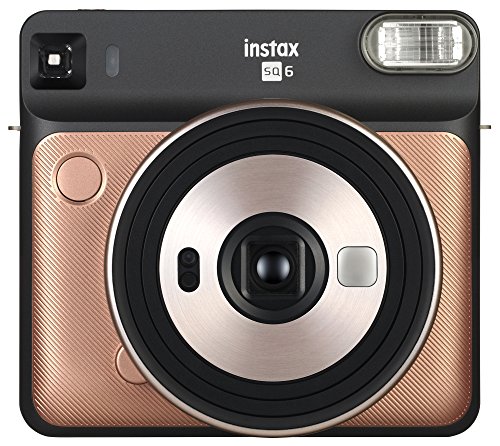
- Instax Square SQ1 and SQ40: These analog cameras produce a 62 × 62 mm square image and emphasize automatic exposure, simple close-up operation, and direct film output. SQ40 uses a more classic exterior, while SQ1 is more colorful; neither offers the extensive manual control of a premium hybrid model.
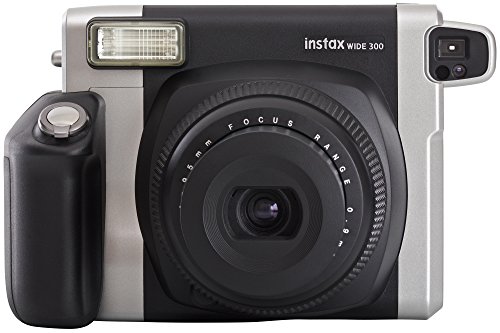
- Instax Wide 400: Wide 400 is an analog camera for the 99 × 62 mm Wide image, making it better for groups, landscapes, events, and table scenes than Mini. Automatic exposure and simple focusing keep operation easy, but the camera and film packs are substantially larger.
- Instax Wide Evo and earlier hybrid Square models: Wide Evo combines a digital camera, screen, effects, phone connectivity, and selectable Wide printing, avoiding wasted film when a frame is unsuccessful. Earlier SQ10 and SQ20 cameras applied the same hybrid idea to Square film, but current buyers should distinguish those generations from today's analog SQ range.

How much do Fujifilm Instax cameras cost?
New Fujifilm Instax cameras generally cost about £70-£340, while 10-shot film packs commonly cost around £10-£15.
Entry analog Mini cameras such as Mini 12 are typically around £70-£90, while Mini 41 is roughly £90-£110. Mini 99 generally costs about £150-£190. Hybrid Mini LiPlay and Mini Evo models usually sit around £150-£200 because they add a digital sensor, screen, memory, effects, and selective printing.
Analog Square cameras such as SQ1 or SQ40 commonly cost about £100-£140. Wide 400 is generally around £130-£150, while the more complex hybrid Wide Evo can cost roughly £300-£340. The lens is built into every Instax camera, so there is no separate interchangeable-lens expense. A 10-shot Mini pack normally costs about £10, Square roughly £10, and Wide around £10. Special borders or limited editions can cost more. At 100 photographs, expect approximately £80-£100 for Mini film and about £90-£130 for Square or Wide, making recurring film cost more important than small differences in camera price.
How do Fujifilm Instax cameras compare with Polaroid models?
Fujifilm Instax is generally cheaper, faster to develop, and more consistent than Polaroid, while Polaroid provides a larger classic square image and a softer, more experimental look. Instax also offers Mini, Square, and Wide formats, giving buyers more choices in print size and camera shape.
Instax cameras cost roughly £70-£340, with 10-shot film packs around £10-£15; current Polaroid cameras run about £100-£600, with eight-shot standard film packs around £20. Choose Instax for events and frequent printing, or Polaroid when its larger frame and distinctive rendering justify the higher recurring cost.
What should you consider while choosing the best Fujifilm Instax camera?
Consider the following points while choosing a Fujifilm Instax camera:
- Film format: Mini, Square, and Wide cartridges are physically incompatible, so choose the print size before choosing the camera. Mini is easiest to carry, Square favors balanced compositions, and Wide provides the most space for groups, landscapes, and display.
- Analog versus hybrid operation: Analog Instax cameras expose and eject film with every shutter press, while Mini Evo, LiPlay, and Wide Evo record digitally and print only selected frames. Hybrid models reduce wasted film and can print phone images, but the digital sensor and screen change the immediate analog experience.
- Print dimensions: Mini's image is approximately 62 × 46 mm, Square is 62 × 62 mm, and Wide is 99 × 62 mm. Compare the image area rather than the outer frame alone, especially when planning albums, guest books, labels, or wall displays.
- Focus and close-up mode: Entry cameras may switch between normal and close-up/selfie ranges, while Mini 99 provides more deliberate zone-focus control and hybrids use digital autofocus. Check minimum focus distance and viewfinder parallax; a subject centered in the finder can shift within the final frame at close range.
- Exposure and flash: Many analog Instax cameras automate exposure and fire the flash in conditions determined by the camera, with limited override. Premium models provide brightness, flash, bulb, or multiple-exposure controls, but film has less latitude than a digital RAW file.
- Film speed and development: Instax color film is daylight-balanced ISO 800 and normally becomes visible in about 90 seconds, although temperature changes the timing. Let the print develop naturally without shaking, bending, squeezing, or opening the film door before the pack is empty.
- Running cost: A standard pack contains 10 exposures, usually around £10 for Mini and £10 for Square or Wide. Estimate event-level film use and special-border premiums because consumables can exceed the camera price after a few hundred photographs.
- Camera power: Basic analog models may use replaceable AA batteries, while premium analog and hybrid cameras may use rechargeable lithium batteries. Confirm the charging connector, expected packs per charge, and whether spare power is practical for travel or events.
- Hybrid storage and phone features: Mini Evo, LiPlay, and Wide Evo can save digital images, use internal memory or a memory card, connect to a phone, and act as printers, but exact transfer and reprint functions vary. Check whether the camera can save an unprinted image, transfer it to a phone, or reprint it after power-off.
- Size, controls, and intended audience: Mini models suit casual carrying, Square balances print size and camera bulk, and Wide bodies require a larger bag and more deliberate handling. Choose simple automatic controls for parties or children, and premium analog or hybrid controls when exposure effects and selective printing matter.