Fujifilm X70 review. Compare 108 technical specifications and user reviews to see how it ranks among cameras and if it is worth buying.
Overall score
What it is: An overall evaluation of the camera's quality, based on technical analyses and user reviews.
When it matters: When you need a quick reference to identify the best cameras on the market.
Score components:
90.0%
Technical Score
10.0%
User score
Technical Score
What it is: An assessment of the camera's technical performance, covering eight key areas: image quality, autofocus, video features, stabilization, lens compatibility, connectivity, battery, and design.
When it matters: When you want to compare cameras based on technical performance and available features.
Score components:
28.0%
Sensor & Image
25.0%
Photo Features
18.0%
Video & Audio
14.0%
Display & Design
8.0%
Battery & Power
7.0%
Connectivity & Storage
User score
What it is: A rating that combines user reviews and the total number of reviews received by the camera.
When it matters: When real-world owner satisfaction and review volume matter to your decision.
Score components:
70.0%
User reviews
30.0%
Popularity
Score components:
25.0%
Sensor size
20.0%
Main camera megapixels
20.0%
Dual card slots
15.0%
N. of focus points
10.0%
RAW photo capture
10.0%
Phase-detection autofocus (photos)
Score components:
35.0%
Weight
30.0%
Battery life (CIPA)
20.0%
Sensor-shift stabilization
15.0%
GPS
Score components:
30.0%
Price
20.0%
Weight
20.0%
AF tracking
20.0%
Battery life (CIPA)
10.0%
Touchscreen
Score components:
30.0%
Main camera megapixels
25.0%
Sensor size
20.0%
Main camera pixel size
15.0%
Sensor-shift stabilization
10.0%
RAW photo capture
Score components:
30.0%
Weight
25.0%
Thickness
20.0%
AF low-light sensitivity
15.0%
Sensor-shift stabilization
10.0%
Eye detection AF (human)
Score components:
30.0%
Sensor size
25.0%
Main camera pixel size
20.0%
Eye detection AF (human)
15.0%
Main camera megapixels
10.0%
Sensor-shift stabilization
Score components:
30.0%
Weight
25.0%
Battery life (CIPA)
20.0%
Min operating temperature
15.0%
Sensor-shift stabilization
10.0%
GPS
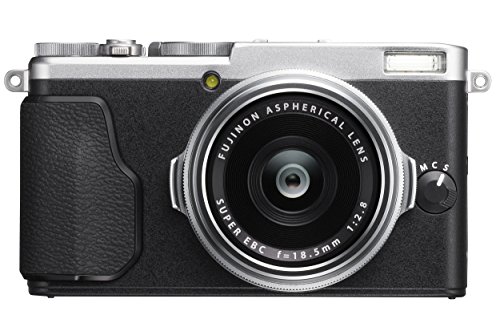
Available: ranking among products currently available (including other versions of this product).
All: ranking among all products in the database.
#1 in Best Cameras for Travel
#5 in Best Compact Cameras
#6 in Best Fujifilm Cameras
#31 in Best Cameras for Beginners
#49 in Best Cameras under £300
#81 in Best Cameras for Portraits
#101 in Best Cameras
#101 in Best Digital Cameras
#230 in Best Travel Cameras
#239 in Best Cameras for Hiking
What it is: An assessment of the camera's technical performance, covering eight key areas: image quality, autofocus, video features, stabilization, lens compatibility, connectivity, battery, and design.
When it matters: When you want to compare cameras based on technical performance and available features.
Score components:
28.0%
Sensor & Image
25.0%
Photo Features
18.0%
Video & Audio
14.0%
Display & Design
8.0%
Battery & Power
7.0%
Connectivity & Storage
What it is: A rating that combines user reviews and the total number of reviews received by the camera.
When it matters: When real-world owner satisfaction and review volume matter to your decision.
Score components:
70.0%
User reviews
30.0%
Popularity
What it is: An indicator that combines the camera's overall rating with its cost.
When it matters: When you want to know how much overall quality you get for the price.
Score components:
60.0%
Overall score
40.0%
Price
Importance: HIGH
Good value: Full frame or larger
Importance: HIGH
Good value: At least 20 MP
Importance: HIGH
Good value: At least 3.5 µm
Importance: LOW
Importance: MEDIUM
Good value: At least ISO 25,600
Importance: MEDIUM
Importance: MEDIUM
Good value: At least 14-bit
Importance: LOW
Importance: LOW
Importance: LOW
Importance: LOW
Importance: LOW
Importance: LOW
Importance: LOW
Importance: LOW
Importance: MEDIUM
Importance: LOW
Importance: LOW
Importance: LOW
Importance: LOW
Importance: LOW
Importance: HIGH
Good value: At least 200 points
Importance: HIGH
Importance: MEDIUM
Importance: LOW
Importance: LOW
Importance: MEDIUM
Importance: MEDIUM
Importance: HIGH
Good value: At least 5 stops
Importance: LOW
Importance: MEDIUM
Good value: At least 10 fps
Importance: LOW
Importance: LOW
Importance: LOW
Importance: LOW
Importance: LOW
Importance: LOW
Importance: LOW
Importance: LOW
Importance: LOW
Importance: LOW
Importance: LOW
Importance: LOW
Importance: LOW
Importance: LOW
Importance: LOW
Importance: LOW
Good value: At least 200,000 actuations
Importance: LOW
Good value: At least 10x
Importance: HIGH
Good value: At least 3840 px
Importance: MEDIUM
Good value: At least 200 Mbps
Importance: MEDIUM
Good value: At least 10-bit
Importance: LOW
Importance: LOW
Importance: LOW
Importance: LOW
Importance: LOW
Importance: LOW
Importance: LOW
Good value: At least 30 min
Importance: LOW
Importance: LOW
Importance: LOW
Importance: LOW
Importance: LOW
Good value: At least 2 microphones
Importance: LOW
Importance: LOW
Importance: LOW
Importance: LOW
Importance: MEDIUM
Good value: 500 g or less
Importance: LOW
Importance: LOW
Importance: LOW
Importance: MEDIUM
Importance: MEDIUM
Good value: At least 2.36 million dots
Importance: LOW
Good value: 100%
Importance: LOW
Importance: LOW
Good value: At least 120 Hz
Importance: MEDIUM
Good value: At least 3 in
Importance: LOW
Importance: LOW
Importance: LOW
Importance: LOW
Importance: LOW
Importance: LOW
Importance: LOW
Good value: At least 10 m
Importance: LOW
Importance: LOW
Importance: LOW
Importance: LOW
Importance: MEDIUM
Good value: At least 400 shots
Importance: LOW
Good value: At least 1,500 mAh
Importance: LOW
Importance: LOW
Importance: LOW
Importance: LOW
Importance: LOW
Importance: LOW
Importance: LOW
Importance: LOW
Importance: LOW
Importance: LOW
Importance: LOW
Importance: LOW
Importance: LOW
Importance: LOW
Importance: LOW
Importance: LOW
Importance: LOW
Importance: LOW
Importance: HIGH
Importance: LOW
Importance: LOW
Importance: HIGH
Good value: At least 3.5 µm
Importance: LOW
Importance: LOW
Importance: LOW
Importance: LOW
Importance: MEDIUM
Importance: LOW
(Reviews last updated: July 2026)
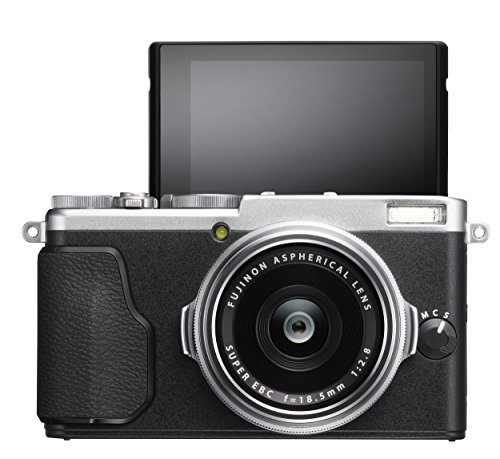
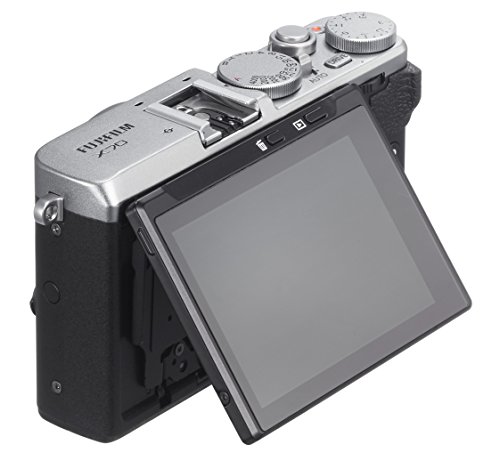
The Fujifilm X70 is a highly pocketable, premium compact camera featuring an APS-C X-Trans II sensor and a fixed 28mm-equivalent f/2.8 lens, offering superb JPEG colors, an 180-degree touchscreen, and effective in-camera raw conversion. The camera is noted for its excellent physical customization, quiet leaf shutter, and faster low-light autofocus compared to competitors like the Ricoh GR II. However, the X70 is limited by a lens that lacks edge-to-edge sharpness at 100% crop and a 16MP sensor that produces "waxy" skin tones at high ISOs. Additional drawbacks include the lack of a built-in viewfinder, cramped, flush controls, and an autofocus system that tends to hunt.
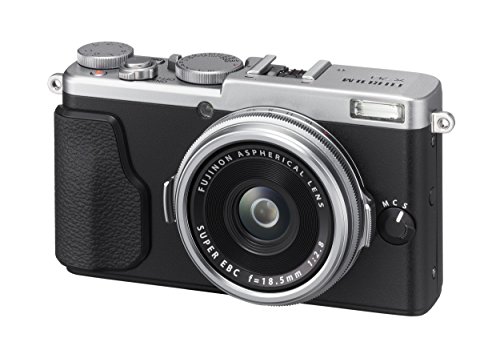
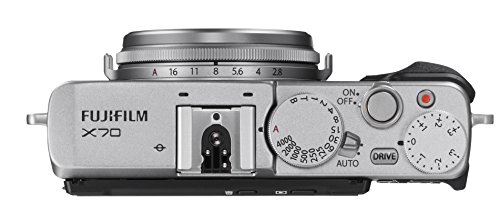
The Fujifilm X70 is a premium compact camera featuring a retro aluminum design, an APS-C X-Trans II 16-megapixel sensor, and a leaf shutter that enables silent operation and high flash sync speeds. True to Fujifilm’s traditional physical layout, the camera relies on mechanical top dials for shutter speed and exposure compensation, alongside an aperture ring on the lens. It is heavily tailored toward street and travel photographers looking for an inconspicuous, fast snapshot tool. Its core strengths include a newly designed 18.5mm f/2.8 pancake lens (a 28mm full-frame equivalent) that delivers exceptional edge-to-edge sharpness even at its 10cm close-focusing distance. It also breaks new ground for the X-series by introducing a clever 3.0-inch tilting touchscreen display, allowing users to select focus points and pull off candid, waist-level shots easily. However, the camera makes notable compromises that may alienate certain photographers. The most significant omission is the lack of any built-in viewfinder (OVF or EVF), meaning users must buy an external optical accessory or adapt to shooting exclusively via the LCD. Additionally, several software restrictions limit its flexibility: the built-in 35mm...
Marius Masalar’s review highlights the Fujifilm X70 as an exceptionally agile, pocketable travel camera featuring a premium APS-C sensor, fast autofocus, and a versatile 180-degree tilting touchscreen. Key strengths include excellent "Classic Chrome" film simulation output, reliable performance, and a discreet design, making it an ideal tool for street photography and vlogging. However, the fixed 28mm lens requires close-up "zooming with feet," which may prove challenging for some, while the digital tele-converter produces gimmicky, lower-resolution crops. Further limitations include a cramped shutter button, poor battery life, and a combined battery/SD slot, marking it as a specialized, albeit capable, niche camera. Marius Masalar
The Fujifilm X70 is a premium, fixed-focal-length compact camera designed for street and casual photographers seeking DSLR-quality images in a pocketable form factor. It features an 18.5mm f/2.8 lens (28mm equivalent) that delivers exceptional sharpness across most of the frame, swift autofocus utilizing 9 central phase-detection points, and an LCD screen that tilts 180 degrees for selfies. It is also the first Fuji camera to include a touch-enabled screen, allowing for smartphone-like swipe and pinch gestures during playback and easy touch-to-focus capabilities. Additionally, its highly compact, ultra-lightweight design makes it incredibly discreet for one-handed operation and inconspicuous shooting in public environments. However, the camera's extreme miniaturization results in significant ergonomic and performance trade-offs. The physical controls are cramped, featuring a frustratingly stiff left D-pad button, a slippery focus mode selector switch, and poorly positioned playback and delete buttons on the top bezel of the screen. Optically, the extreme corners of the image are very soft when shooting wide open at f/2.8, and the lens lacks a built-in ND filter to manage bright light. Users must also deal with a camera...
The Fujifilm X70 is a remarkably small, lightweight, and pocket-friendly camera that packs a solid, robust build quality. Equipped with the highly regarded 16-megapixel X-Trans CMOS II sensor found in larger models like the X-T1, it delivers identical, top-tier image quality and beautiful film simulation options. The camera features an outstanding, highly customizable button layout and an intuitive control ring around its fixed 18.5mm f/2.8 lens, which allows for dynamic, wide-angle street and contextual photography. It is also praised for its highly responsive, flippable touchscreen that rotates 180 degrees for seamless selfies, alongside an integrated in-camera digital cropping tool that effectively interpolates images to 35mm and 50mm fields of view without noticeable loss in quality. However, the review points out several design flaws that compromise user experience. The physical button layout has specific ergonomic issues, notably a left directional pad cursor that sits too close to the LCD frame, making it awkward to press, and a top-mounted video record button that is so deeply recessed it is nearly impossible to activate easily. The compact camera also skips on a built-in...
Fujifilm X70 Review Summary The Fujifilm X70 is a highly pocketable and robustly built APS-C mirrorless camera that stands out for its exceptional tactile experience and superb image clarity. Its standout feature is a fixed 18.5mm f/2.8 Fujinon lens (28mm full-frame equivalent) paired with a 16.3-megapixel X-Trans CMOS II sensor, delivering clinically sharp images from corner to corner, even when shooting wide open at its impressive 10-centimetre minimum focus distance. Users will enjoy its fast and accurate 77-point autofocus system, a multi-angle tilting touchscreen that flips 180 degrees for selfies, excellent Wi-Fi connectivity, and high-quality built-in film simulation modes. The premium aluminum body lacks locking mechanisms on its dials, offering mechanical precision that makes daily casual shooting, street photography, and travel photography incredibly fun and spontaneous. However, the camera has notable limitations that may deter certain photographers, most significantly the complete lack of a built-in eye-level viewfinder. Manual focusing is also a weak point, relying on a loose, non-mechanical "focus-by-wire" electronic system that lacks the refined physical precision found on classic cameras. Additionally, the fixed 28mm-equivalent wide focal length makes...
The B&H Photo Explora review highlights the Fujifilm X70 as a capable, compact camera featuring a 16.3MP APS-C X-Trans CMOS II sensor for excellent image detail without a low-pass filter. It is praised for its robust build, responsiveness, and a high-quality 28mm equivalent fixed lens that captures sharp, detailed images. B&H Photo While the lens offers impressive performance, the review notes slight edge softness and vignetting when shooting wide open at f/2.8, which is quickly corrected by stopping down. Overall, the X70 is recommended for its portability and performance, provided users accept these minor wide-open optical characteristics.
The Fuji X70 review praises this camera as a highly portable option that packs a large, high-quality sensor into a pocket-sized body. Major pros include excellent image quality from its APS-C X-Trans sensor, vibrant colors, and strong low-light performance up to ISO 3200. It is light enough for sports and completely silent when using its leaf shutter. The 18.5mm fixed lens offers great flexibility for everyday photography. Users will also appreciate the snappy autofocus, firm physical dials, built-in Wi-Fi, and a versatile tilting touchscreen that can even act as a virtual tripod. However, the reviewer notes several distinct cons to keep in mind. The camera completely lacks a viewfinder, forcing you to rely entirely on the screen. While the touchscreen is generally great, the touch-and-release shooting feature suffers from a frustrating delay. Furthermore, battery life is mediocre and drops quickly, making a spare battery necessary. Finally, the f/2.8 aperture lens offers a somewhat limited bokeh effect, meaning you cannot blur out backgrounds as heavily as you would with a full-frame portrait lens.
The Fujifilm X70 is highlighted as an exceptionally lightweight, pocketable, and premium metal-bodied compact camera ideal for ultralight backpacking and travel. It stands out by integrating a large 16MP APS-C sensor that delivers professional-grade image quality equivalent to larger models like the X-T1, alongside dedicated hardware manual dials for aperture and shutter speed. Key advantages include its fully articulated 180° tilting touchscreen, a flexible 77-point hybrid autofocus system, built-in Wi-Fi for remote control and image transfer, and convenient USB charging that allows users to power the device via a solar panel or power bank while on the trail. However, the reviewer notes several trade-offs, most notably the complete absence of a viewfinder and the lack of weather sealing. Its fixed 18.5mm f/2.8 pancake lens (28mm full-frame equivalent) provides a wide field of view that suits mountain landscapes but lacks the versatile reach of a zoom lens. Additionally, it lacks a hardware ISO dial, relies on a less common NP-95 battery that is physically incompatible with most other Fujifilm cameras, and at 356g, it weighs slightly more than competing models like...
The ePHOTOzine review highlights the Fujifilm X70 as a premium, pocketable compact camera featuring exceptional build quality, a stylish metal body, and direct manual controls. It delivers superb image quality via an APS-C X-Trans sensor and a fast f/2.8 lens, complemented by a useful 3-inch tilting touchscreen and MicroUSB charging. Conversely, the review identifies ergonomic drawbacks, specifically awkward rear button placement and a difficult-to-press video button, alongside limited RAW shooting at ISO 200–6400. Additionally, the camera lacks built-in image stabilisation and features a touch-screen interface that does not fully integrate with the Q menu. ePHOTOzine
However, the X70's specialised design brings several notable limitations, primarily the complete absence of a built-in viewfinder and the total lack of optical image stabilisation. The missing stabilisation means users must rely on higher ISO settings in low-light environments to avoid camera shake, making it less effective against static subjects compared to stabilised 1-inch sensor rivals. Furthermore, its video capabilities are weak, topping out at 1080p without 4K support, and it unforgivably restricts the touchscreen from being used to pull focus while filming. The fixed 28mm focal length is also prone to edge distortion, making it poorly suited for traditional individual head-and-shoulder portraits unless the photographer steps back for a waist-up composition.
The Expert Reviews article highlights the Fujifilm X70 as a beautifully designed compact camera that blends retro physical controls with modern features. Its standout pros include an SLR-sized 16-megapixel APS-C sensor and an f/2.8 prime lens that together deliver outstanding image quality, razor-sharp central focus, exceptional dynamic range, and excellent low-light noise management. It is exceptionally slim and portable, passing the "jeans pocket" test, while offering tactile aluminum exposure dials alongside an articulated touchscreen for flexible shooting angles. Performance is snappy with quick startup times, responsive autofocus for stills, and highly customisable physical control rings.
summary of Patrick's initial impressions of the camera from the Finding Range article: The Fuji X70 is highly praised for packing a large APS-C sensor into an ultra-compact body. The reviewer notes that its overall physical footprint is as small as typical high-end point-and-shoots like the Sony RX100. Unlike those competitors, it has a flat, tiny lens that comfortably fits into a pocket without sticking out. Key pros include excellent overall build quality with a solid frame, fast autofocus capable of capturing moving subjects like festival performers, and the inclusion of dedicated analog controls for shutter speed, aperture, and EV compensation. Performance-wise, it outputs the same excellent image quality, deep depth, and contrast as the bulkier Fuji X-T1 because it shares the same 16MP X-Trans CMOS II sensor. It also introduces the first-ever 3.0-inch 1.04m-dot tilting touchscreen to the X-series lineup. Despite these positive traits, the reviewer points out clear cons based on personal shooting preferences. The most prominent drawback is that the X70 completely lacks a viewfinder, which can make framing less desirable for traditional photographers. Additionally, the fixed...
The Fujifilm X70 is a compact, 12.2-ounce street-photography camera featuring a 16.3-megapixel APS-C X-Trans II sensor and a fixed 28mm-equivalent f/2.8 lens. Its primary pros include exceptional retro-inspired ergonomics, providing tactile physical controls like a dedicated shutter speed dial, exposure compensation dial, and manual lens aperture ring. It delivers superb image quality with highly detailed JPEGs, flexible RAW files, popular built-in Film Simulations (such as Velvia and Classic Chrome), and impressive high ISO performance that remains clean up to ISO 1600 and 3200. Additionally, the camera features a snappy 8.6fps burst mode with a fast-clearing buffer, integrated Wi-Fi for remote control, and a sharp 3-inch LCD touchscreen that tilts 180 degrees for flexible framing. However, the camera has several notable cons, starting with the complete omission of a built-in viewfinder, forcing reliance entirely on the rear screen. The Intelligent Hybrid autofocus system proves inconsistent, struggling significantly to lock focus in low light or accurately track moving subjects. Video performance is highly underwhelming, limited to 1080p at 60fps and plagued by noticeable color moiré, aliasing artifacts, and an awkwardly recessed, unresponsive...
However, the reviewer highlights significant cons, most notably the complete lack of a viewfinder, which creates composition and exposure challenges when shooting in bright, sunny conditions. The camera's autofocus can also be unreliable at times, occasionally missing the intended subject, and the lens's low physical profile can make manipulating the manual focus and aperture rings difficult for users with larger hands. Despite being discontinued in 2016 and lacking a physical ISO dial, the X70 remains a cult favourite that holds its value incredibly well on the secondhand market, often selling for more than its original retail price.
The Fujifilm X70 is highlighted as an exceptionally well-designed, decade-old compact APS-C camera that remains highly relevant despite Fujifilm abandoning the product line. Celebrated for its elegant and genuinely pocketable 340-gram form factor, the camera establishes its own unique identity with a sharp, fixed 18.5mm f/2.8 lens that delivers an engaging 28mm equivalent field of view. Key design strengths that elevate the shooting experience include a predictive 3-inch tilting touchscreen—perfect for discreet, waist-level street photography—and a built-in flash for close-range fill light. Furthermore, its refined mechanical leaf shutter provides near-silent operation, making it a polite and non-intrusive companion for candid and environmental moments. However, evaluating the camera reveals clear limitations imposed by its aging hardware. The modest 16.3-megapixel X-Trans CMOS II sensor cannot compete on paper with modern high-resolution alternatives, and the autofocus system feels quite dated compared to newer systems. The camera also lacks any form of In-Body Image Stabilization (IBIS), and its battery life is merely acceptable, relying on the discontinued NP-95 battery. Finally, users must look past the lack of a built-in viewfinder, though the review notes...
The Fujifilm X70 is a highly customizable, pocket-sized street camera featuring tactile, analog-style controls and a 180-degree tilting touchscreen that provides excellent handling for close-up and waist-level shooting. Its 28mm-equivalent pancake lens delivers superb corner-to-corner sharpness, while the camera offers extensive customization, including nine assignable buttons. However, the X70 lacks a built-in viewfinder, forcing reliance on the LCD screen, and its reduced size leads to less-premium dial adjustments. Furthermore, video functionality is hindered by a lack of 4K, noisy autofocus, and jerky exposure transitions.
The Fujifilm X70 is a highly capable and compact luxury digital camera that delivers outstanding, system-camera-level image quality despite its pocket-sized, 340-gram body. Equipped with a 16-megapixel X-Trans CMOS II APS-C sensor, the camera produces sharp, detailed, and remarkably low-noise images even in low-light environments up to ISO 3,200. It features a fast 28mm-equivalent f/2.8 prime lens, an autofocus system with 77 focus points, and a burst shooting speed of 8 frames per second (though performance stutters after 13 consecutive shots). Designed for flexibility and modern convenience, the X70 integrates built-in Wi-Fi, dedicated physical dials for shutter speed and exposure compensation, and a 3-inch, 180-degree tilting touchscreen that is highly suitable for selfies. Furthermore, its innovative digital teleconverter uniquely scales images up to 35mm and 50mm equivalents while fully preserving the 16-megapixel resolution. While the camera offers professional-grade performance for its roughly €700 price tag, it does come with a few notable compromises. A primary limitation of its compact lens design is that edge sharpness visibly degrades compared to the center, dropping from 1,730 line pairs per picture height down...
However, the camera suffers from notable limitations, particularly its 28mm equivalent fixed focal length lens, which exhibits disappointing sharpness outside the centre and suffers heavily near its minimum focus distance. Its continuous shooting endurance is heavily throttled by a shallow buffer that limits bursts to just 14 JPEGs or 7 RAW files before dropping in speed. Video capability is also a weak point; the full-HD footage quality is outdated, autofocus tracking is unreliable, and there is no optical image stabilization to counteract hand tremors. Finally, the mechanical shutter is limited to 1/1.000 second at wide-open apertures, and the camera's compact footprint makes some physical buttons awkwardly small to operate comfortably.
The Fujifilm X70 is a highly capable and compact camera that packs the powerful 16-megapixel APS-C X-Trans CMOS Sensor II into a body barely larger than a deck of cards. Weighing just 340 grams, it delivers impressive, full-frame-level image quality with excellent sharpness, rich details, and remarkably low noise even in low-light conditions up to ISO 3,200. The camera features a fixed 28mm-equivalent f/2,8 lens that allows for great subject isolation. It stands out for its fast performance, boasting a responsive 77-point autofocus system that handles snapshots well in dim settings, an 8 frames-per-second burst mode, and a silent electronic shutter reaching speeds up to 1/32,000 of a second. Additionally, it introduces a sharp 3.0-inch 180-degree tilting touchscreen display for flexible shooting angles and selfie capability. Despite its top-tier performance, the review highlights several distinct drawbacks. The flat, compact design of the fixed lens causes a noticeable drop in sharpness from the center toward the edges of the frame (falling from 1,730 down to 1,286 line pairs per picture height in lab tests). While the built-in digital teleconverter extends the...
In this review, Claus Sassenberg shares his hands-on experience with the Fujifilm X70, a pocket-sized camera equipped with an APS-C sensor. Having sold his larger X100T, he bought the X70 specifically to fill the "pocketability factor" gap for situations where he wants DSLR-like quality without carrying a large camera. On the positive side (pros), the author praises the camera's ultra-compact, robust build, noting that it easily fits into a cycling jersey or coat pocket. He highlights the 180-degree tilting touchscreen display as a major benefit for composing shots from the hip or over the head, especially since the camera lacks a built-in viewfinder. Furthermore, he applauds its rapid and accurate autofocus, intuitive physical control dials, and excellent image quality derived from the invariant sensor and iconic built-in film simulations. However, the reviewer balances his praise with several notable criticisms (cons). A major frustration is that Fujifilm does not include an external battery charger in the box, forcing users to plug the camera directly into the wall via USB. In terms of performance, the camera's fixed 28mm equivalent lens shows edge...
The Fujifilm X70 review on Qimago highlights it as an excellent, premium "always-with-you" camera designed to replace smartphone photography for casual and street photographers. Built with a high-quality, solid metal chassis that fits in one hand, it delivers standard high-end Fujifilm image quality by utilizing a 28mm equivalent f/2.8 fixed pancake lens paired with an APS-C sensor. Key pros emphasized in the review include its highly responsive performance with minimal shutter lag, a practical 180-degree tilting touchscreen (perfect for low angles and selfies), a reliable face detection system that even works in profile, and very quick autofocus utilizing sensor phase-detection pixels. Additionally, its physical ergonomics are surprisingly comfortable without needing an extra grip, and its built-in Wi-Fi makes transferring images to smartphones stable and fast. However, the reviewer points out several notable cons and functional limitations that buyers must accept. Crucially, the camera completely lacks a built-in viewfinder and does not feature an interchangeable or zoom lens. On the technical side, the reviewer experienced intermittent "card errors" with normal memory cards, and found that the camera was not yet supported...
The Fujifilm X70 is a highly portable, premium compact camera that shares the same image sensor and processing engine as the larger X-T1, ensuring identical, high-quality results in a pocket-sized form factor. It features a fixed 28mm-equivalent lens, which the reviewer finds ideal for travel, casual walks, and city outings. Key advantages include its swift startup time, tactile physical controls that mirror other Fujifilm systems (minus an ISO dial), and a highly natural automatic built-in flash. Additionally, the reviewer praises its convenient micro-USB in-camera charging—which provided ample power for over 100 shots during an 8-hour hike—and the inclusion of a dedicated physical switch to instantly activate full-auto mode, making it easy to hand off to others. However, the camera has notable drawbacks, particularly regarding its autofocus and software performance. The reviewer experienced focusing issues when shooting close-up objects at around 30cm, where the camera persistently focused on the background instead of the subject, as well as struggles with low-contrast scenes like snowy mountains against a cloudy sky. On the software side, the official Fujifilm Android application is a major failure;...
Based on Martin Friedrich's review on 3P-Photographie, the Fujifilm X70 is a highly capable premium compact camera that serves as the perfect "always-with-you" device. The author highlights several major pros, including its impressive build quality, retro design aesthetic, and high-utility physical dials that provide a satisfying tactile handling experience. Despite its ultra-compact dimensions, it retains a large APS-C sensor that delivers exceptional, professional-grade image quality. Additionally, the reviewer praises its modern technical upgrades, notably the quick autofocus tracking system, built-in Wi-Fi connectivity for seamless smartphone app control, and a versatile tilting touchscreen display that features a dedicated 180-degree selfie mode. However, the review notes a few cons and distinct design compromises inherent to its miniature form factor. To make the body as portable as possible, Fujifilm completely omitted an integrated viewfinder, forcing users to rely entirely on the rear screen for image composition. The camera also lacks an external standalone charger right out of the box, which makes maintaining a fully charged spare battery less convenient during long shooting sessions. While its fixed, wide-angle lens is remarkably sharp, the lack...
The reviewer purchased the compact Fujifilm X70 in black as an "always with me" camera, choosing it over competitors like the Ricoh GR II because of its articulating touchscreen, Instax printer connectivity, and superior Wi-Fi system. On the positive side, the author praises the camera's significantly improved and snappy autofocus compared to older Fuji models, its highly customisable menus and programmable buttons, and its tactile manual control dials for shutter speed, exposure compensation, and aperture. A standout feature is a dedicated button next to the lens that allows the control ring to be repurposed for quick adjustments like film simulations or digital teleconverters. Additionally, the camera produces highly usable out-of-camera JPEGs and cleverly features dual "nubs" on the aperture ring to prevent confusing it with the adjacent focus ring. However, several drawbacks were noted during initial testing. The X70's weight and bulk make it noticeably heavier and thicker than the Ricoh GR II, largely due to the inclusion of the tilt screen. The reviewer critiqued physical design elements, such as the awkwardly protruding strap lugs and a tripod mount that...
The Fujifilm X70 is a stylish, retro-inspired premium compact camera featuring a large 16.3-megapixel APS-C X-Trans II sensor paired with a fixed 18.3 mm f/2.8 lens (a 28 mm full-frame equivalent). Designed for enthusiasts who appreciate physical, manual controls like an aperture ring and dedicated shutter speed/exposure dials, this camera delivers outstanding image quality with excellent detail up to ISO 800 and highly usable results up to ISO 3200. Its standout design features include a lightweight 340-gram body, a 180° tilting screen—a first for the series to feature touch functionality—and built-in Wi-Fi coupled with Fuji's iconic film simulation filters. However, the camera suffers from notable ergonomics and performance bottlenecks. The touch interface is limited to single-point focusing or triggering and cannot be used to navigate the cluttered menu system. Performance-wise, it is hindered by slow startup times and sluggish, inconsistent autofocus in low-light environments. Its greatest letdown is the video capability, which maxes out at Full HD 60 fps (lacking 4K), produces severe color artifacts, and hides the record button in an un-clickable, flush position behind the exposure compensation dial.
This review provides an initial hands-on look at two Fujifilm cameras aimed at completely different audiences: the high-end X-Pro2 for professionals and well-funded amateurs, and the highly compact X70 for those wanting better image quality than a smartphone without the bulk. The X-Pro2 serves as Fujifilm's flagship, upgrading from a 16 to a 24-megapixel APS-C sensor. Its core pros include an ultra-solid, lightweight build (495g) reminiscent of a Leica M camera, dual SD card slots, and a highly mature, responsive electronic viewfinder that fixes the lag found in the X-T1. Additionally, its new processor delivers a fast and precise autofocus that holds its own against heavier full-frame DSLRs like the Canon 5D Mark III. No specific cons are noted for the X-Pro2 body in this preview, though comments hint that the viewfinder window is slightly smaller than a standard DSLR. The pocket-sized Fujifilm X70 is designed for extreme portability, weighing just 340g, though it is still a bit too thick to comfortably slide into tight pants pockets. On the plus side, it inherits the excellent 16-megapixel APS-C sensor from the...
The Ricoh GR II emerges as the winner in this head-to-head comparison of 16-megapixel APS-C compact cameras due to its superior image quality and faster performance. In terms of image details, the GR II delivers exceptional sharpness, edge-to-edge uniformity, and fine micro-contrasts. It also captures full RAW+JPEG files across its entire ISO range (100–25,600) and boasts faster autofocus speeds in both bright and low light compared to its rival. However, the GR II suffers from noticeable chromatic aberrations, color artifacts, and aggressively sharpened JPEGs. Furthermore, its overall responsiveness is significantly slower than the original Ricoh GR, and its video mode is heavily flawed due to poor focus stabilization. The Fujifilm X70 stands out for its superior physical ergonomics, handling, and video resolution options. Key strengths include a highly functional tilting touchscreen, a manual control ring, and softer, cleaner JPEG images entirely free of chromatic aberrations. It also shoots Full HD video up to 60 fps, doubling the frame rate of the Ricoh. On the downside, the X70 produces softer images overall with heavy digital smoothing at high ISO settings. Its...
The Fujifilm X70 is a premium, pocket-sized compact camera featuring a 16-megapixel APS-C sensor paired with a fixed 28mm f/2.8 lens designed specifically for street photography. It stands out for its robust, highly dense build quality, physical control dials, and an intuitive grip system that ensures excellent handling. A major highlight of the X70 is its tilting touchscreen display—a first for Fujifilm—which aids in composing tricky vertical or selfie angles. In terms of performance, the camera delivers outstanding JPEG image quality with superb colour reproduction, impressive image sharpness that edges out rivals like the Ricoh GR II, and excellent low-light capability with clean results up to ISO 3200 and 6400. Despite its high-quality imaging and structural durability, the X70 has several notable shortcomings in daily operation. Its primary drawback is the complete absence of a built-in viewfinder, leaving photographers frustrated and entirely dependent on the rear screen for framing. Ergonomically, the camera falls short compared to its direct competitor, the Ricoh GR II, as its physical controls are derived from bulkier rangefinder and DSLR systems rather than being fully optimized...
The Fujifilm X70 is a highly portable, travel-friendly compact camera equipped with a 16-megapixel APS-C X-Trans sensor, a 18.3mm f/2.8 fixed lens, and built-in Wi-Fi for quick smartphone photo sharing. The reviewer praises its lightweight and ergonomic retro design, physical control dials for manual shooting, and a 7.5cm touchscreen that tilts 180 degrees for selfies. Ultimately, it serves as an excellent everyday alternative to a smartphone due to its superior image quality and discreet profile. However, the camera has a few distinct drawbacks. A major downside is the total absence of a viewfinder, which makes framing shots difficult when using the LCD screen in bright sunlight. Additionally, despite the camera's otherwise great ergonomics, the video recording button is awkwardly placed and difficult to access.
The Fujifilm X70 is recognized as a premium, highly portable compact camera, ranking in the top 5% of its category with exceptional image quality (48) and speed performance (51). Key advantages include its lightweight, pocket-sized design ideal for daily use, built-in wireless connectivity, microphone input, and efficient subject-tracking autofocus. Limitations identified in the review include the absence of built-in image stabilization and the lack of a built-in viewfinder, necessitating reliance on the rear LCD screen. Furthermore, despite its classification, the X70 is notably larger and heavier than many direct competitors within the pocket-sized compact segment.
The Fujifilm X70 is a premium compact camera featuring an APS-C X-Trans II sensor with 16.3 megapixels, a fixed 18.5mm f/2.8 lens (28mm equivalent), and a 3-inch tilting touchscreen. Designed with a distinct retro style, it delivers professional-grade image quality comparable to mid-to-high-end DSLRs, offering rich details, medium-high contrast, and high color fidelity. The camera is highly praised for its excellent build quality, intuitive analogue dial system, accurate 256-zone photometry, and reliable automatic white balance. Additionally, its hybrid autofocus system is fast and precise, reaching speeds up to 0.1 seconds, while its ISO performance remains excellent up to ISO 3,200. Priced around €665, it represents a more affordable, travel-friendly alternative to the popular X100 series, making it highly suitable for street photography. However, the reviewer highlights several notable drawbacks, most significantly the complete omission of a built-in viewfinder, though an external optical viewfinder can be purchased separately for under €150. The f/2.8 aperture is also considered slightly limiting in comparison to the faster lenses of its sister models. Video performance is identified as the camera's weakest aspect; despite recording in...
The Saggiamente review highlights the Fujifilm X70 as a robust, pocket-sized camera, praised for its premium metal build, tactile controls, and 180-degree tilting touchscreen, making it ideal for street photography. It delivers high-quality images via a 16.3-megapixel APS-C X-Trans CMOS II sensor, featuring excellent film simulations, though it relies on a fixed 18.5mm f/2.8 lens. jonasrask | Key disadvantages include the lack of a built-in viewfinder, making shooting in bright sunlight difficult, and the absence of optical image stabilization on the lens. Additionally, the camera suffers from mediocre video quality, a small, awkward record button, and AF that struggles in low-light, contrasty situations. YouTube
The Fujifilm X70 is a highly compact, pocket-friendly camera that features a 16-megapixel X-Trans II sensor paired with a fixed 18.5mm f/2.8 lens (a 28mm equivalent in 35mm format). Weighing just 340 grams and measuring under 4.5 cm in thickness, it offers exceptional portability and discretion, making it ideal for street, travel, and candid photography without drawing unwanted attention. The addition of a 180-degree tilting touchscreen is a major highlight, enabling quick autofocus point selection, touch-to-shoot capabilities, and effortless framing from extreme low-angle perspectives. Performance-wise, the new lens delivers strong image definition with an appealing, three-dimensional bokeh and minimal barrel distortion or chromatic aberration. Despite its high quality, the camera has notable physical and technical drawbacks. Its severe miniaturisation means some physical buttons are exceptionally small, which might cause handling difficulties for users with larger hands. Crucially, the camera completely lacks a built-in viewfinder, which sacrifices precision shooting unless users purchase the optional external optical viewfinder accessory. Additionally, while the camera includes a digital crop feature to simulate 35mm and 50mm focal lengths, this relies on software interpolation and results...
Here is a specific summary of the Fujifilm X70 review based on the provided text: Review Summary The Fujifilm X70 is a highly portable, lightweight camera (weighing around 340 grams) that balances a classic vintage design with robust modern technology, making it an excellent alternative to heavy DSLRs for travel. Its core strengths lie in its high-quality 16-megapixel APS-C "X-Trans CMOS II" sensor and an f/2.8 wide-angle lens, which together deliver excellent image quality even in low-light conditions up to 3200/6400 ISO. It features tactile physical dials for manual adjustments (shutter speed, exposure compensation, and aperture) alongside an easy-to-use fully automatic mode. Additionally, it integrates a 3-inch 180-degree tilting touchscreen display ideal for selfies and offers a dedicated "Camera Remote" app that compresses image files to about 700 KB for rapid, data-friendly social media sharing. Despite its high quality, the camera requires several compromises that might not appeal to every photographer. The primary drawback is the complete lack of a viewfinder, which was sacrificed to maintain the device's compact footprint, forcing users to rely entirely on the LCD screen. Furthermore,...
The Fujifilm XF10 is a highly pocket-friendly compact camera engineered specifically for street and travel photography. It moves away from the classic design of its predecessor, the X70, adopting a minimalist layout equipped with a rear touchscreen, an autofocus joystick, and a PASM mode dial. At its core, the camera pairs a large 24-megapixel APS-C Bayer-matrix CMOS sensor (borrowed from the X-T100) with a fixed 18.5mm f/2.8 lens, providing a 28mm full-frame equivalent field of view. The primary advantages highlighted in the review are its excellent, sharp resolution optimized at wide apertures (f/2.8 to f/4), impressive low-light performance with uniform noise control up to ISO 1600, and beautiful built-in Fujifilm film simulations like Classic Chrome. Additionally, its permanent Bluetooth and Wi-Fi connectivity allows for seamless background image transfers to smartphones, making it highly competitive for social media sharing at a very aggressive price point of €519. However, its pocketable form factor introduces significant design compromises. The most notable drawbacks are the complete lack of an image stabilization system and the absence of an electronic viewfinder, which can make framing difficult...
The Ricoh GR II is a pocket-sized, lightweight (248 grams) compact camera that features a large 16 MP APS-C CMOS sensor and a fixed 28mm-equivalent f/2.8 lens. Its standout pros include a superb, sharp lens that maintains consistency from the centre to the edges, an integrated ND filter, a wide ISO range up to 25,600, and highly customisable controls with simple menus. Street photographers will particularly benefit from its "Snap Focus" mode, which allows users to preset a focus distance for instantaneous shooting. Additionally, it offers exceptional black-and-white conversion performance and outputs high-quality, vibrant Adobe DNG RAW files directly out of the camera. However, the camera requires several compromises due to its emphasis on portability over manual controls. Its primary cons include a lack of image stabilisation and an f/2.8 maximum aperture that can feel limiting, making it less than ideal for low-light photography. The autofocus can be slow and unreliable under dark conditions. Furthermore, there is no integrated viewfinder, the automatic white balance can be unreliable by introducing an annoying yellow tint in artificial light, and the standard out-of-camera...
The Photofacts review of the Fujifilm X-70 highlights it as a highly enjoyable, compact, and retro-styled camera that behaves like the smaller sibling of the Fujifilm X100T. Equipped with a 16-megapixel X-Trans sensor and a fixed 18.5mm f/2.8 lens (providing a 28mm full-frame equivalent field of view), the camera delivers outstanding image quality with impressive noise performance up to ISO 6400. Major pros emphasized in the review include its intuitive physical dials for aperture, shutter speed, and exposure compensation, which encourage creative shooting and manual control. Additionally, its 180-degree tilting touchscreen acts as a built-in stand and enables effortless shooting from unusual angles and selfies. The inclusion of a physical "auto-switch" lever is also praised for instantly turning the complex camera into a straightforward point-and-shoot device. However, the reviewer explicitly notes several cons and design limitations. A significant functional flaw is the automatic autofocus (AF) system, which consistently struggles to isolate foreground subjects when there is a large distance to the background, particularly in natural landscapes. From a design perspective, the camera feels somewhat plastic compared to the premium X100T,...
The Fujifilm X70 is a premium, pocket-sized camera featuring a 16.3-megapixel APS-C X-Trans CMOS II sensor and a fixed 18.5mm f/2.8 lens, delivering excellent image quality and low-light performance. It is praised for its durable, retro all-metal design, intuitive manual controls, and highly responsive autofocus, making it an ideal tool for street photography. YouTube · Key limitations include the absence of a built-in viewfinder, forcing reliance on the rear screen, and limited touchscreen functionality which only supports focus selection and playback. Additional drawbacks noted in reviews include the lack of an internal ND filter and optical image stabilization, along with a somewhat cramped button layout. Despite these issues, it is considered a highly capable, portable alternative to the X100 series. YouTube ·This Week in Photo (TWiP)
The reviewer, Kevin van Diest, praises the Fujifilm X70 as a retro-styled compact camera that seamlessly merges modern technology with a fashionable aesthetic suitable for street style enthusiasts. On the positive side, he highlights its large 16-megapixel APS-C sensor and fast, fixed 28mm f/2.8 lens, which collectively deliver excellent low-light performance and beautiful image quality. Additionally, the inclusion of retro physical dials makes manual setting adjustments quick and easy, while the built-in touchscreen operates seamlessly for both focusing and triggering shots. Conversely, the review notes a major limitation in the camera's fixed 28mm wide lens, meaning it entirely lacks a zoom option. While the reviewer points out that this wide focal length guarantees high-quality images that can be heavily cropped in post-production, it still forces the user to accommodate a fixed field of view. Beyond the fixed lens constraint, the review focuses primarily on these design choices without diving into other standard hardware metrics, positioning the pocket-sized device as a highly capable and stylish everyday photography tool.
Compare